<?xml version="1.0" encoding="UTF-8"?>
<!DOCTYPE html PUBLIC "-//W3C//DTD XHTML 1.1//EN" "http://www.w3.org/TR/xhtml11/DTD/xhtml11.dtd">
<html xmlns="http://www.w3.org/1999/xhtml" xml:lang="en">
<head>
<meta content="text/html; charset=UTF-8" http-equiv="content-type" />
<meta http-equiv="Content-Language" content="en" />
<meta name="generator" content="Pressbooks 5.33.1" />
<meta name="pb-editors" content="Modupe Labode (National Museum of American History, Smithsonian Institution)" />
<meta name="pb-editors" content="William S. Walker (Cooperstown Graduate Program, SUNY Oneonta)" />
<meta name="pb-editors" content="Robert Weible (State Historian of New York Emeritus)" />
<meta name="pb-authors" content="American Association for State and Local History (AASLH)" />
<meta name="pb-authors" content="National Council on Public History (NCPH)" />
<meta name="pb-title" content="The Inclusive Historian's Handbook" />
<meta name="pb-language" content="en" />
<meta name="pb-cover-image" content="https://inclusivehistorian.pressbooks.sunycreate.cloud/wp-content/uploads/sites/11/2020/12/EBook-Cover3-scaled.jpg" />
<meta name="pb-book-license" content="cc-by-sa" />
<meta name="pb-custom-copyright" content="You are free to:Share — copy and redistribute the material in any medium or formatAdapt — remix, transform, and build upon the material for any purpose, even commercially.The licensor cannot revoke these freedoms as long as you follow the license terms.Under the following terms:Attribution — You must give appropriate credit, provide a link to the license, and indicate if changes were made. You may do so in any reasonable manner, but not in any way that suggests the licensor endorses you or your use. ShareAlike — If you remix, transform, or build upon the material, you must distribute your contributions under the same license as the original. No additional restrictions — You may not apply legal terms or technological measures that legally restrict others from doing anything the license permits." />
<meta name="pb-about-50" content="This dynamic reference source supports inclusive and equity-focused historical work in public settings by sharing a knowledge base that invites more people to engage in history projects. This handbook provides concrete examples of how to make history work more relevant. It centers on equity, inclusivity, diversity, and public service while offering accessible windows into the many ways public historians work. The online version is available at https://inclusivehistorian.com/." />
<title>The Inclusive Historian's Handbook</title>
</head>
<body lang='en' >
<div id="half-title-page"><h1 class="title">The Inclusive Historian&#039;s Handbook</h1></div><div id="title-page">
			<h1 class="title">The Inclusive Historian&#039;s Handbook</h1>
		<h2 class="subtitle"></h2>
					<p class="author">American Association for State and Local History (AASLH) and National Council on Public History (NCPH)</p>
								<p class="publisher"></p>
		<p class="publisher-city"></p>
	</div>
<div id="copyright-page">
	<div class="ugc">
					
<div class="license-attribution"><p><img src="https://inclusivehistorian.pressbooks.sunycreate.cloud/wp-content/themes/pressbooks-book/packages/buckram/assets/images/cc-by-sa.svg" alt="Icon for the Creative Commons Attribution-ShareAlike 4.0 International License" /></p><p>The Inclusive Historian's Handbook by American Association for State and Local History (AASLH) and National Council on Public History (NCPH) is licensed under a <a rel="license" href="https://creativecommons.org/licenses/by-sa/4.0/">Creative Commons Attribution-ShareAlike 4.0 International License</a>, except where otherwise noted.</p></div>

							<div id="deed-rights" class="row" dir="ltr"><div class="col-sm-offset-2 col-sm-8"><h4>You are free to:</h4><ul class="license-properties"><li class="license share"><strong>Share</strong> — copy and redistribute the material in any medium or format</li><li class="license remix"><strong>Adapt</strong> — remix, transform, and build upon the material for any purpose, even commercially.</li></ul></div></div><div class="row"><p>The licensor cannot revoke these freedoms as long as you follow the license terms.</p></div><div class="row"><div class="col-md-offset-1 col-md-10"><hr /></div></div><div id="deed-conditions" class="row"><h4>Under the following terms:</h4><ul class="license-properties col-md-offset-2 col-md-8" dir="ltr"><li class="license by"><strong>Attribution</strong> — You must give <a id="appropriate_credit_popup" class="helpLink" tabindex="0" title="" href="https://creativecommons.org/licenses/by-sa/4.0/#" data-original-title="">appropriate credit</a>, provide a link to the license, and <a id="indicate_changes_popup" class="helpLink" tabindex="0" title="" href="https://creativecommons.org/licenses/by-sa/4.0/#" data-original-title="">indicate if changes were made</a>. You may do so in any reasonable manner, but not in any way that suggests the licensor endorses you or your use. <span id="by-more-container"></span></li><li class="license sa"><strong>ShareAlike</strong> — If you remix, transform, or build upon the material, you must distribute your contributions under the <a id="same_license_popup" class="helpLink" tabindex="0" title="" href="https://creativecommons.org/licenses/by-sa/4.0/#" data-original-title="">same license</a> as the original. <span id="sa-more-container"></span></li></ul></div><div class="row"><ul id="deed-conditions-no-icons" class="col-md-offset-2 col-md-8"><li class="license"><strong>No additional restrictions</strong> — You may not apply legal terms or <a id="technological_measures_popup" class="helpLink" tabindex="0" title="" href="https://creativecommons.org/licenses/by-sa/4.0/#" data-original-title="">technological measures</a> that legally restrict others from doing anything the license permits.</li></ul></div>
							</div>
</div>
<div id="toc">
	<h1>Contents</h1>
	<ul>
					<li class="front-matter miscellaneous">
	<a href="#front-matter-about">
		<span class="toc-chapter-title">About</span>
							</a>
	</li>

					<li class="part display-none">
	<a href="#part-main-body">
					Main Body
			</a>
</li>

					<li class="chapter standard">
	<a href="#chapter-accessibility">
		<span class="toc-chapter-title">Accessibility</span>
							<span class="chapter-author">Cynthia G. Falk</span>
					</a>
	</li>

					<li class="chapter standard">
	<a href="#chapter-civic-engagement">
		<span class="toc-chapter-title">Civic Engagement</span>
							<span class="chapter-author">Denise D. Meringolo</span>
					</a>
	</li>

					<li class="chapter standard">
	<a href="#chapter-civics-education">
		<span class="toc-chapter-title">Civics Education</span>
							<span class="chapter-author">K Allison Wickens</span>
					</a>
	</li>

					<li class="chapter standard">
	<a href="#chapter-collaborative-practice">
		<span class="toc-chapter-title">Collaborative Practice</span>
							<span class="chapter-author">Bill Bryans</span>
					</a>
	</li>

					<li class="chapter standard">
	<a href="#chapter-digital-history">
		<span class="toc-chapter-title">Digital History</span>
							<span class="chapter-author">Sheila A. Brennan</span>
					</a>
	</li>

					<li class="chapter standard">
	<a href="#chapter-diversity-and-inclusion">
		<span class="toc-chapter-title">Diversity and Inclusion</span>
							<span class="chapter-author">Chris Taylor</span>
					</a>
	</li>

					<li class="chapter standard">
	<a href="#chapter-food-history">
		<span class="toc-chapter-title">Food History</span>
							<span class="chapter-author">Michelle Moon and Cathy Stanton</span>
					</a>
	</li>

					<li class="chapter standard">
	<a href="#chapter-heritage-tourism">
		<span class="toc-chapter-title">Heritage Tourism</span>
							<span class="chapter-author">Cordell Reaves</span>
					</a>
	</li>

					<li class="chapter standard">
	<a href="#chapter-historic-house-museums">
		<span class="toc-chapter-title">Historic House Museums</span>
							<span class="chapter-author">Kenneth C. Turino and Nina Zannieri</span>
					</a>
	</li>

					<li class="chapter standard">
	<a href="#chapter-historic-preservation">
		<span class="toc-chapter-title">Historic Preservation</span>
							<span class="chapter-author">Priya Chhaya</span>
					</a>
	</li>

					<li class="chapter standard">
	<a href="#chapter-humanities-councils">
		<span class="toc-chapter-title">Humanities Councils</span>
							<span class="chapter-author">Mary Rizzo</span>
					</a>
	</li>

					<li class="chapter standard">
	<a href="#chapter-holocaust-history">
		<span class="toc-chapter-title">Holocaust History</span>
							<span class="chapter-author">Adina Langer</span>
					</a>
	</li>

					<li class="chapter standard">
	<a href="#chapter-leadership-principles">
		<span class="toc-chapter-title">Leadership Principles</span>
							<span class="chapter-author">Brian Alexander</span>
					</a>
	</li>

					<li class="chapter standard">
	<a href="#chapter-lost-cause-myth">
		<span class="toc-chapter-title">Lost Cause Myth</span>
							<span class="chapter-author">Christopher A. Graham</span>
					</a>
	</li>

					<li class="chapter standard">
	<a href="#chapter-material-culture">
		<span class="toc-chapter-title">Material Culture</span>
							<span class="chapter-author">Rebecca Shrum</span>
					</a>
	</li>

					<li class="chapter standard">
	<a href="#chapter-memorials-and-monuments">
		<span class="toc-chapter-title">Memorials and Monuments</span>
							<span class="chapter-author">Seth C. Bruggeman</span>
					</a>
	</li>

					<li class="chapter standard">
	<a href="#chapter-outdoor-history-museums">
		<span class="toc-chapter-title">Outdoor History Museums</span>
							<span class="chapter-author">Jessie Swigger</span>
					</a>
	</li>

					<li class="chapter standard">
	<a href="#chapter-plantations">
		<span class="toc-chapter-title">Plantations</span>
							<span class="chapter-author">Ashley Rogers</span>
					</a>
	</li>

					<li class="chapter standard">
	<a href="#chapter-public-folklore">
		<span class="toc-chapter-title">Public Folklore</span>
							<span class="chapter-author">Robert Baron</span>
					</a>
	</li>

					<li class="chapter standard">
	<a href="#chapter-reconstruction">
		<span class="toc-chapter-title">Reconstruction</span>
							<span class="chapter-author">Jill Ogline Titus</span>
					</a>
	</li>

					<li class="chapter standard">
	<a href="#chapter-sexuality">
		<span class="toc-chapter-title">Sexuality</span>
							<span class="chapter-author">GVGK Tang</span>
					</a>
	</li>

					<li class="chapter standard">
	<a href="#chapter-u-s-bicentennial-1976">
		<span class="toc-chapter-title">U.S. Bicentennial, 1976</span>
							<span class="chapter-author">M.J. Rymsza-Pawlowska</span>
					</a>
	</li>

					<li class="chapter standard">
	<a href="#chapter-u-s-founders">
		<span class="toc-chapter-title">U.S. Founders</span>
							<span class="chapter-author">Marla R. Miller</span>
					</a>
	</li>

					<li class="chapter standard">
	<a href="#chapter-u-s-presidents">
		<span class="toc-chapter-title">U.S. Presidents</span>
							<span class="chapter-author">Cynthia M. Koch</span>
					</a>
	</li>

					<li class="chapter standard">
	<a href="#chapter-urban-renewal">
		<span class="toc-chapter-title">Urban Renewal</span>
							<span class="chapter-author">Ann Pfau; David Hochfelder; and Stacy Sewell</span>
					</a>
	</li>

					<li class="chapter standard">
	<a href="#chapter-view-from-the-field-equity-oriented-and-anti-racist-curatorial-practice">
		<span class="toc-chapter-title">View from the Field: Equity-oriented and Anti-racist Curatorial Practice</span>
							<span class="chapter-author">Elena Gonzales</span>
					</a>
	</li>

					<li class="chapter standard">
	<a href="#chapter-view-from-the-field-the-challenges-to-being-inclusive-in-museum-collections">
		<span class="toc-chapter-title">View from the Field: The Challenges to Being Inclusive in Museum Collections</span>
							<span class="chapter-author">Marian Carpenter</span>
					</a>
	</li>

					<li class="back-matter miscellaneous">
	<a href="#back-matter-key-resources">
		<span class="toc-chapter-title">Key Resources</span>
							</a>
	</li>

			</ul>
</div>
<div class="front-matter miscellaneous " id="front-matter-about" title="About">
	<div class="front-matter-title-wrap">
		<p class="front-matter-number">1</p>
		<h1 class="front-matter-title">About</h1>
			</div>
	<div class="ugc front-matter-ugc">
					<p class="short-title">About</p>
				 <h2><strong>About <em>The Inclusive Historian’s Handbook</em></strong></h2> <p>This book-style adaptation of <a href="https://inclusivehistorian.com/" data-url="https://inclusivehistorian.com/"><em>The Inclusive Historian’s Handbook</em></a> is based on the original web version. This dynamic reference source supports inclusive and equity-focused historical work in public settings by:</p> <ul><li>Sharing a knowledge base that invites more people to engage in history projects.</li> <li>Providing concrete examples of how to make history work more relevant.</li> <li>Centering equity, inclusivity, diversity, and public service.</li> <li>Offering accessible windows into the many ways public historians work.</li> </ul> <p><em>The Inclusive Historian’s Handbook</em> is co-sponsored by the <a href="https://aaslh.org/" target="_blank" rel="noopener noreferrer" data-url="https://aaslh.org/">American Association for State and Local History (AASLH)</a> and the <a href="https://ncph.org/" target="_blank" rel="noopener noreferrer" data-url="https://ncph.org/">National Council on Public History (NCPH)</a>. It aligns with AASLH’s and NCPH’s goals of building diversity and inclusion across the historical community.</p> <p>The <em>Handbook </em>provides easily accessible information for historians working in multiple contexts. Authored by field experts, the entries combine practical advice with critical reflections and telling examples. Because it is a multi-authored project, it does not speak with a single, authoritative voice. Rather, authors offer their perspectives and share ideas and recommendations drawn from experiences in the field.</p> <p>The <em>Handbook </em>is for individuals and groups engaged in historical work in a wide range of settings—not just paid professionals or academic scholars. It is intended to provide community groups, educators, museum professionals (paid and unpaid), students, scholars, activists, historical societies, preservationists, archivists, and others with easy-to-find information that is directly applicable to inclusive history practice. We hope that the content is accessible to all people who are doing historical work, including those who may not identify as historians.</p> <h2><em><b>Why “Inclusive Historians”?</b></em></h2> <p>The overarching goal—of opening up historical practice to the widest possible audience—makes the <em>Handbook </em>an essential text for empowering people to make history as well as study it.</p> <p>We recognize that although many public historians and history organizations state their desire to be more inclusive, diverse, equitable, and service-oriented, we have often failed to change our practices in ways that would fundamentally open up the field and fully recognize and acknowledge the multiplicity of voices that are already engaged in doing history. Frequently, well-intentioned individuals and organizations do not have the tools or knowledge to bring new practitioners and audiences into their institutions and to ensure the full inclusion of all people in history-based projects. It is our hope that this resource contributes to ongoing efforts to meet this pressing need.</p> <p>The <em>Handbook</em>’s editors and advisory committee have not attempted to craft a single definition of “inclusion” or “inclusivity” for the whole resource; rather, we have allowed authors to define these ideas in multiple ways. We recognize that “inclusion” is a problematic concept for some readers, especially for readers in communities of color who have experienced a great deal of exclusion in U.S. society and elsewhere, particularly from historically white institutions. We hope the <em>Handbook</em> will catalyze many productive conversations about inclusion. Many of the authors address issues of power, privilege, and inequality, both past and present, and demonstrate how historians can confront these issues in their work. The entries provide a wide range of methods and recommendations for public historians to consider, reflect upon, and incorporate into their work.</p> <h2><strong>How to Use the <em>Handbook</em></strong><strong><em>&nbsp;</em></strong></h2> <p>We have tried to keep the <em>Handbook</em>’s structure and design as straightforward as possible. The easiest way to get started is to browse the alphabetical list of entries.</p> <p>Most of the entries have a single word or phrase as a title, such as “Accessibility” or “Civic Engagement.” Each entry provides an introduction to the topic, critical interpretations, helpful examples, and suggested resources. In addition, readers will find “View from the Field” entries, which provide personal reflections on individuals’ experiences as practicing historians, emphasizing issues of equity, inclusion, and service.</p> <p>Each entry has several tags, which lead readers to related content within the <em>Handbook</em>. The tags are deliberately broad and are intended to serve as guideposts rather than strict categories. They may help readers find content that is most relevant to their work.</p> <p>The entries also contain links to external content, some of which has been produced by our sponsoring institutions (AASLH and NCPH), but much of which comes from other organizations. At the end of each entry, readers will find a short list of references for further exploration. We hope you will use the <em>Handbook</em> as an entry point to discover helpful resources across the internet and in print.</p> <p>Here are some ideas for how readers might use the <em>Handbook</em> in their practice:</p> <ul><li>Share it with community partners and use the readings to shape collaborations.</li> <li>Discuss it with administrators, collaborators, colleagues, or boards of trustees who may not fully grasp the importance of equity, inclusion, and service in historical work or who may be unsure about how to approach these issues.</li> <li>Assign selections to students or interns. Discuss ways they can implement the ideas and recommendations in their careers.</li> <li>Engage in personal reflection on one’s own work. Note areas for improvement or ideas to bring to current or future projects.</li> <li>Select specific essays for a team to read together as they embark on a new project.</li> <li>Include it as part of professional development/continuing education initiatives with staff and volunteers.</li> <li>Mine it for additional resources. Follow the links and read the suggested books and articles.</li> <li>Contribute by writing an essay that fills gaps in content.</li> </ul> <h2><strong>Propose an Entry </strong></h2> <p>If you wish to write an entry, share your ideas with the editors and advisory committee by emailing us at <a href="mailto:inclusivehistorian@aaslh.org" data-url="mailto:inclusivehistorian@aaslh.org">inclusivehistorian@aaslh.org</a>. Include a possible title or topic (generally one word or phrase), one-paragraph summary, and brief bio. While we cannot guarantee that we will accept all proposals, we will discuss them collaboratively and provide feedback.</p> <p>In addition to inviting proposals, we welcome general feedback and suggestions to improve the <em>Handbook</em>.</p> <p>As a digital resource, the <em>Handbook</em> is a living document. Throughout 2019 and 2020, we will be regularly adding content until there are approximately 100 entries in total. By the end of 2020, the “first edition” will be complete. Future “editions,” however, will follow as content is updated and the field continues to grow and change. The editors and advisory committee have intentionally built flexibility into the project’s design. Although the basic structure will remain in place, we have the opportunity to augment the number of entries and easily revise the content. The advantage of a digital resource is that the <em>Handbook</em> can be both iterative and responsive. As the field changes and more practitioners are identified, the <em>Handbook</em> will be transformed.</p> <h2><strong>Acknowledgments</strong></h2> <p>The editors and advisory committee began developing the <em>Handbook</em> in 2016. Throughout a three-year process of development, our team has strived to model open, collaborative, and inclusive practices. We have convened multiple in-person meetings and sessions at the AASLH and NCPH annual conferences, and we have corresponded with advisors, potential authors, and other interested parties. Because of the collaborative nature of the project, we have accumulated many debts. First, we would like to thank all of the authors, many of whom agreed to contribute when the project was still inchoate and helped us sort out crucial details as we went along. We would also like to thank the various participants and discussants in sessions and meetings at the AASLH and NCPH annual conferences in Detroit, Austin, Kansas City, and Hartford. Your ideas and feedback have been invaluable in shaping and refining our vision for the project. Special thanks to the Cooperstown Graduate Program, SUNY Oneonta for their support of this project throughout its development process. A big thank you as well to NCPH and AASLH staff, especially Darah Fogarty, and to our web designer, John Mahon, and graphic designer, Jim Booth. AASLH President John Dichtl and NCPH Executive Director Stephanie Rowe have been incredibly supportive of the project from the beginning and have been actively engaged in the process of the <em>Handbook</em>’s creation. Your remarkable leadership of the public history community has made this possible.</p> <h2><strong>Editors and Advisory Committee</strong></h2> <p>Co-Editors:</p> <p>Modupe Labode (National Museum of American History, Smithsonian Institution)<br /> William S. Walker (Cooperstown Graduate Program, SUNY Oneonta)<br /> Robert Weible (State Historian of New York Emeritus)</p> <p>Advisory Committee:</p> <ul><li>Sheila Brennan (Independent; formerly, Roy Rosenzweig Center for History and New Media)</li> <li>Aleia Brown (University of Maryland, #MuseumsRespondtoFerguson)</li> <li>Bill Bryans (Oklahoma State University)</li> <li>Priya Chhaya (National Trust for Historic Preservation)</li> <li>Allison Marsh (University of South Carolina)</li> <li>Denise Meringolo (University of Maryland Baltimore County)</li> <li>Ashley Rogers (Whitney Plantation)</li> <li>Julia Rose (Homewood Museum, Johns Hopkins University)</li> <li>Kimberly Springle (Charles Sumner School Museum and Archives)</li> <li>Gretchen Sullivan Sorin (Cooperstown Graduate Program, SUNY Oneonta)</li> <li>Jessie Swigger (Western Carolina University)</li> <li>Chris Taylor (State of Minnesota)</li> <li>Amy Wilson (Editor, AASLH <em>Encyclopedia of Local History</em>)</li> </ul> 
	</div>


	</div>
<div class="part-wrapper" id="part-main-body-wrapper">
    <div class="chapter standard introduction " id="chapter-accessibility" title="Accessibility">
	<div class="chapter-title-wrap">
		<p class="chapter-number">1</p>
		<h1 class="chapter-title">Accessibility</h1>
			</div>
	<div class="ugc chapter-ugc">
					<p class="short-title"></p>
	<p class="chapter-author">Cynthia G. Falk</p>
				 <div class="wp-caption aligncenter" style="width: 450px"><img class="" src="http://inclusivehistorian.pressbooks.sunycreate.cloud/wp-content/uploads/sites/11/2020/12/Figure-1-Voter-Parking-e1554144061111-768x1024-1.jpg" srcset="https://inclusivehistorian.pressbooks.sunycreate.cloud/wp-content/uploads/sites/11/2020/12/Figure-1-Voter-Parking-e1554144061111-768x1024-1-225x300.jpg 225w, https://inclusivehistorian.pressbooks.sunycreate.cloud/wp-content/uploads/sites/11/2020/12/Figure-1-Voter-Parking-e1554144061111-768x1024-1-65x87.jpg 65w, https://inclusivehistorian.pressbooks.sunycreate.cloud/wp-content/uploads/sites/11/2020/12/Figure-1-Voter-Parking-e1554144061111-768x1024-1-350x467.jpg 350w, https://inclusivehistorian.pressbooks.sunycreate.cloud/wp-content/uploads/sites/11/2020/12/Figure-1-Voter-Parking-e1554144061111-768x1024-1.jpg 768w" alt="" width="450" height="600" title="" /><div class="wp-caption-text">Artifacts from the exhibition American Democracy: A Great Leap of Faith, National Museum of American History, Washington, D.C. In visually displaying the struggle and realization of voting rights, NMAH includes signage for accessible voter parking that uses a common disability symbol: a person in a wheelchair. Photograph by Cynthia Falk, June 2018.</div></div> <p>When public historians talk about making spaces and programs accessible, they can mean anything from affordable pricing to multi-lingual offerings to age-appropriate content. Yet in recent years, the term accessibility has most frequently come to mean ensuring access for people with disabilities. Often the focus is on elevators and restrooms, with a strong emphasis on providing facilities that serve those with physical limitations. A recent Project Access white paper entitled “<a href="http://www.artbeyondsight.org/mei/wp-content/uploads/WP_Beyond-the-Ramps.pdf" data-url="http://www.artbeyondsight.org/mei/wp-content/uploads/WP_Beyond-the-Ramps.pdf">Beyond Ramps</a>” appropriately asks readers to think more broadly about barriers, although the focus remains on mobility rather than sensory or cognitive disabilities.</p> <p>In planning for accessibility, it is important to remember that disabilities are far from uniform. In addition to mobility, physical impairments may affect sight or hearing. Cognitive abilities may be diminished by dementia. Sensory sensitivities may result from autism. Mental illness may cause anxiety or phobias that make public places difficult to navigate. The <a href="https://www.ada.gov/archive/adastat91.htm" data-url="https://www.ada.gov/archive/adastat91.htm">Americans with Disabilities Act</a> (section 12102) defines a disability as “a physical or mental impairment that substantially limits one or more major life activities,” such as walking, standing, working, learning, communicating, reading, thinking, or even breathing. Although a common symbol for accessibility is a schematic of a person in a wheelchair, the reality is that impairments are often invisible and do not have to involve recognizable assistive devices.</p> <p>Most people will experience a disability at some point in their lives. In 2010, almost 19 percent of all Americans, or 56,672,000 individuals, <a href="https://www2.census.gov/library/publications/2012/demo/p70-131.pdf" data-url="https://www2.census.gov/library/publications/2012/demo/p70-131.pdf">reported</a> a disability. As a person’s age increased, so did the likelihood of an impairment. Among those 65 years of age and older, almost 39 percent <a href="https://www2.census.gov/library/publications/2014/acs/acs-29.pdf" data-url="https://www2.census.gov/library/publications/2014/acs/acs-29.pdf">reported</a> at least one disability, while the number jumped to more than 72 percent among those 85 and over. Add to this temporary impairments due to injuries, illnesses, or medical procedures, and it is more likely than not that anyone reading this will at some time experience a physical or cognitive limitation.</p> <h2><strong>Legal Framework</strong></h2> <p>In the United States, several Federal anti-discrimination laws protect people with disabilities. The Architectural Barriers Act, enacted in 1968, regulates buildings designed, constructed, or altered by the Federal government; the Rehabilitation Act of 1973 applies to federally funded programs or activities. Congress enacted more sweeping legislation in 1990 with the passage of the Americans with Disabilities Act (ADA), which applies not only to federally supported enterprises but also to other places, including those that are privately owned and operated, where public access is expected. The ADA is important civil rights legislation that establishes a minimum threshold for the inclusion of people with disabilities in American society. Among its stated goals are “equality of opportunity, full participation, independent living, and economic self-sufficiency” (Section 12010). Failure to comply with the ADA constitutes discrimination, just as excluding people based on their skin color or national background would.</p> <p>Several portions of the Americans with Disabilities Act apply to those working in the public history sector. Title I concerns employment and makes it illegal to discriminate against individuals on the basis of disability. Title II applies to public services provided by entities of state or local government, including some museums, libraries, educational institutions, and arts organizations. At the state or local level, Title II of the ADA requires that a public entity not deny “the benefits of services, programs, or activities” to individuals with disabilities (Section 12132). It is important to note that Title II emphasizes programming, so it may not be legally necessary to make all facilities physically accessible, although this should always be the goal.</p> <p>Title III of the ADA applies to public accommodations and services operated by private entities, a category that includes most history organizations. Section 12182 of the law prohibits owners or operators of public accommodations from discriminating against anyone with a disability. The ADA further specifies that providing unequal benefits or separate benefits constitutes discrimination, and the law lays the groundwork for the provision of integrated spaces that serve people with disabilities as well as those who are able-bodied.</p> <div class="wp-caption aligncenter" id="attachment_3623" aria-describedby="caption-attachment-3623" style="width: 450px"><img class="wp-image-3623" src="http://inclusivehistorian.pressbooks.sunycreate.cloud/wp-content/uploads/sites/11/2020/12/Figure-2-Paul-Revere-House-e1555081913652-768x1024-1.jpg" alt="" width="450" height="600" title="" /><div class="wp-caption-text" id="caption-attachment-3623">Paul Revere House, Boston, Massachusetts, as seen from Lathrop Place. Access to the first floor of the Paul Revere House for those in wheelchairs is through a ramped and widened doorway to an early kitchen addition, the same entrance used by all visitors to the site. Second-floor access is by a bridge from the neighboring Lathrop Place, an 1835 building that was rehabilitated with an elevator for visitor use. Photograph by Cynthia G. Falk, May 2017.</div></div> <h2><strong>Historic Sites</strong></h2> <p>The need for physically accessible facilities can present special challenges at historic sites or in historic buildings (<em>e.g</em>., stairs or narrow doors or passages that do not accommodate wheelchairs). The ADA includes provisions that specifically address resources listed on, or eligible for, the National Register of Historic Places, as well as those designated at the state or local level. Building owners are not required to undertake accessibility measures that threaten or destroy historic resources. Yet if the goal is to provide access to the public, refusing to address accessibility is counterproductive. Some champions of disability rights have argued that not providing access to public buildings is akin to using Confederate symbols: it harkens back to a period of widespread discrimination before universal civil rights in the United States.<a href="#_edn1" data-url="https://inclusivehistorian.pressbooks.sunycreate.cloud/chapter/accessibility/#_edn1" id="_ednref1">[1]</a> Nevertheless, the National Park Service walks a fine line in its <a href="https://www.nps.gov/TPS/how-to-preserve/briefs/32-accessibility.htm" data-url="https://www.nps.gov/TPS/how-to-preserve/briefs/32-accessibility.htm">Preservation Brief</a> on the topic of access, calling for “balance” between historic preservation and accessibility.</p> <p>The goal at historic properties should be for all visitors, regardless of ability, to have the same positive experience. Ramped entrance to the first floor should be a minimum standard, keeping in mind that all visitors should use the same entrances. If upper or lower floors are an integral part of the experience, people who cannot use stairs will need to be provided with access through alternative means (<em>e.g.</em>, audio-visual materials). Some sites have been able to bypass stairs with an appropriately placed elevator or lift.</p> <p>Physical access is not the only way historic places should serve people with disabilities. Historic sites provide ideal environments for tactile engagement, and staff should be prepared with touchable materials, as well as verbal descriptions, for those who are blind or have low vision. As a guided tour is often the primary avenue for experiencing a historic site, printed materials should be available for those who have difficulty hearing a docent. Sites that have significant visitation, especially within confined spaces, may consider adding special hours or special programs for those on the autism spectrum and their caregivers, during which time loud noises and other disruptions are minimized. Moreover, enacting policies that welcome service and emotional support animals are critical to avoiding controversies at sites that otherwise do not allow animals.</p> <h2><strong>Universal Design</strong></h2> <p>Public history sites should strive to exceed the standards set in the Americans with Disabilities Act, which is now more than twenty-five years old. Simply creating or refashioning spaces and programs to meet the legislated obligations of ADA is not enough, and professionals should seek more holistic solutions that recognize the broad range of abilities among individuals. Public history organizations should make inclusive design their overall objective and create environments that serve the greatest number of people. Designers who once used a “standard” male body to determine the appropriate measurements for architectural elements, for example, need to recognize that size, strength, mobility, or sensory perception vary person to person.</p> <p>Ronald Mace coined the term Universal Design in 1985 to denote “the design of products and environments to be usable by all people, to the greatest extent possible, without the need for adaptation or specialized design.” By offering multiple intellectual entry points and seeking aesthetic solutions that are easy to use and easy to communicate, Mace’s principles can help public historians meet audiences where they are and engage people through informal learning opportunities. Today some designers question the possibility of truly <em>universal</em> design<a href="#_edn2" data-url="https://inclusivehistorian.pressbooks.sunycreate.cloud/chapter/accessibility/#_edn2" id="_ednref2">[2]</a> and are employing terms such as inclusive design or <a href="https://humancentereddesign.org/" data-url="https://humancentereddesign.org/">human-centered design</a>, which recognize the range of human diversity, physical and otherwise. Still, the seven principles of Universal Design—Equitable Use, Flexibility in Use, Simple and Intuitive Use, Perceptible Information, Tolerance for Error, Low Physical Effort, and Size and Space for Approach and Use—still remain good <a href="https://projects.ncsu.edu/design/cud/" data-url="https://projects.ncsu.edu/design/cud/">guidelines for planning</a>.</p> <div class="wp-caption aligncenter" id="attachment_3743" aria-describedby="caption-attachment-3743" style="width: 600px"><img class="wp-image-3743" src="http://inclusivehistorian.pressbooks.sunycreate.cloud/wp-content/uploads/sites/11/2020/12/FDR-horizontal-1024x768-1.jpg" alt="" width="600" height="450" title="" /><div class="wp-caption-text" id="caption-attachment-3743">Franklin Delano Roosevelt Memorial, Washington, D.C. The FDR Memorial includes multiple sculpted images, including this one of the president by Robert Graham, which was added in 2001 after the 1997 opening of the site. The National Organization on Disability raised funds for its inclusion so that the memorial would include a visual representation of Roosevelt using a wheelchair due to the effects of polio. Photograph by Cynthia G. Falk, June 2018.</div></div> <h2><strong>Eliminating Barriers</strong></h2> <p>In 2011, the World Health Organization (WHO) and World Bank began the first chapter of the <a href="http://www.who.int/disabilities/world_report/2011/report.pdf" data-url="http://www.who.int/disabilities/world_report/2011/report.pdf">World Report on Disability</a> with the statement: “Disability is part of the human condition.” The report marked an important transition in how disability is understood. Western society has long seen impairments as medical problems to be solved. This <a href="http://www.artbeyondsight.org/dic/module-2-understanding-our-stakeholders-the-disability-community/understanding-our-stakeholders-the-disability-community/#Models" data-url="http://www.artbeyondsight.org/dic/module-2-understanding-our-stakeholders-the-disability-community/understanding-our-stakeholders-the-disability-community/#Models">medical approach</a> calls for treatment and, when that fails, charity, and has often led to the institutionalization of people with physical or cognitive impairments. Today, the medical model has been combined with, and increasingly replaced by, a social model of disability, which recognizes the role that environment, both physical and attitudinal, plays in how an impairment is experienced. According to the WHO, environmental factors—including products and technology, the natural and built environment, attitudes, services, systems, support networks, and policies—can be either facilitators or barriers.</p> <p>Public historians have an obligation, as stewards of tangible and intangible resources for the public good, to create positive encounters for people with disabilities. For organizations such as libraries, museums, historical societies, and historic house museums, this means considering the whole experience, from pre-visit planning to transportation and wayfinding to interactions with staff or volunteers to services to ensure a comfortable visit. Some accessibility solutions are easy and relatively inexpensive: creating wide and uncluttered aisles, flexible seating for programming, and scheduled times for those who require quieter, less-crowded spaces.</p> <p>Public historians should be prepared to collaborate with organizations that specialize in serving people with disabilities. It is difficult to be an expert in every aspect of accessibility, so history organizations must be willing to learn from those who live with impairments, their caregivers, and the groups that serve them. Not everyone may agree on the one best solution, but getting to know members of the local community and their preferences will allow for better access and better relationships. <a href="https://adata.org/find-your-region" data-url="https://adata.org/find-your-region">Regional ADA Centers</a> are great resources as well.</p> <p>Communication is key to avoiding misunderstandings and perpetuating stereotypes. Training is necessary to ensure that staff and volunteers are prepared to answer questions, advertise opportunities, and explain policies. Information about accessibility should always be conveyed in online and print publications. Marketing materials should provide contact information for those who wish to make arrangements for accommodations. Website design should follow the principles developed by the <a href="https://www.w3.org/WAI/fundamentals/accessibility-intro/" data-url="https://www.w3.org/WAI/fundamentals/accessibility-intro/">Web Accessibility Initiative</a>. Websites can be easily audited using a free online tool such as <a href="http://www.webaccessibility.com" data-url="http://www.webaccessibility.com">www.webaccessibility.com</a> to ensure that they serve users who cannot see well or do not have the dexterity to navigate the internet using a touchscreen, mouse, or similar device. Audio-visual materials used onsite or on the internet should be captioned, and the need for braille text and American Sign Language interpretation should be assessed for exhibits and programs.</p> <p>Spoken and written words should always seek to humanize all visitors, and public historians should use people-first language and recognize that people with disabilities are first and foremost individuals who should not be defined by their impairments. In addition, people-first language means avoiding categorizing able-bodied people as “normal” and those with disabilities as “handicapped.”</p> <p>Just as language is important, so is the content public historians offer to their audiences. When representing the human form in signage and exhibits, consider including people who use assistive devices such as canes, wheelchairs, or scooters. When developing exhibition or program topics, explore the history of disability; there are often compelling stories to tell, and lessons to be learned, about local institutions such as hospitals, schools, and mental health facilities, as well as the experiences of soldiers returning from conflict zones with war-related injuries and psychological trauma. Many historical societies have collections that include artifacts related to the ways in which people with physical or cognitive disabilities have become more independent or found creative outlets, and public historians should make better use of these collections.</p> <p>Accessibility is fundamentally about empowerment. For too long society has marginalized those with disabilities. We can reverse that trend by providing accessible spaces and activities, communicating clearly what we offer and where we need help, and bringing the topic of disability from the sidelines to the center. We should be advocates for and models of inclusive design, people-first language, and recognizing the centrality of physical and cognitive limitations to the human experience. Too often people argue that accessibility is not necessary or important because people with impairments do not visit and costs are too high to make it worthwhile. The reality is that we, as public historians, have to convey to those with disabilities that we have something to offer and we are willing to invest in making sure every experience is complete and meaningful.</p> <h2>Notes</h2> <p><a href="#_ednref1" data-url="https://inclusivehistorian.pressbooks.sunycreate.cloud/chapter/accessibility/#_ednref1" id="_edn1">[1]</a> Wanda Liebermann, “Architectural Heritage, Disabled Access, and the Memory Landscape,” paper presented at the Society of Architectural Historians annual meeting, St. Paul, Minnesota, April 20, 2018.</p> <p><a href="#_ednref2" data-url="https://inclusivehistorian.pressbooks.sunycreate.cloud/chapter/accessibility/#_ednref2" id="_edn2">[2]</a> Bess Williamson, “Getting a Grip: Disability in American Industrial Design of the Late Twentieth Century,” <em>Winterthur Portfolio</em> 46, no. 4 (Winter 2012): 232-234.</p> <h2>Suggested Readings</h2> <p>Art Beyond Sight. Museum Education Institute. <a href="http://www.artbeyondsight.org/mei/" data-url="http://www.artbeyondsight.org/mei/">http://www.artbeyondsight.org/mei/</a>.</p> <p>Clary, Katie Stringer. <em>Programming for People with Special Needs: A Guide for Museums and Historic Sites</em>. Lanham, MD: Rowman and Littlefield/AASLH, 2014.</p> <p>Ginley, Barry. “Museums: A Whole New World for Visually Impaired People.” <em>Disability Studies Quarterly </em>33, no. 3 (2013). <a href="http://dsq-sds.org/article/view/3761/3276" data-url="http://dsq-sds.org/article/view/3761/3276">http://dsq-sds.org/article/view/3761/3276</a><em>.</em></p> <p>Hamraie, Aimi. <em>Building Access: Universal Design and the Politics of Disability</em>. Minneapolis: University of Minnesota Press, 2017.</p> <p>Jester, Thomas C. and Sharon C. Park, “Making Historic Properties Accessible.” <em>Preservation Briefs</em> 32. <a href="https://www.nps.gov/tps/how-to-preserve/preservedocs/preservation-briefs/32Preserve-Brief-Accessible.pdf" data-url="https://www.nps.gov/tps/how-to-preserve/preservedocs/preservation-briefs/32Preserve-Brief-Accessible.pdf">https://www.nps.gov/tps/how-to-preserve/preservedocs/preservation-briefs/32Preserve-Brief-Accessible.pdf</a>.</p> <p>Kudick, Catherine. “The Local History Museum, So Near and Yet So Far.” <em>The Public Historian </em>27, no. 2 (Spring 2005): 75-81.</p> <p>Museum Access Consortium. “Working Document of Best Practices: Tips for Making All Visitors Feel Welcome.” 2015. <a href="https://macaccess.org/rescources/working-document-of-best-practices-tips-for-making-all-visitors-feel-welcome/" data-url="https://macaccess.org/rescources/working-document-of-best-practices-tips-for-making-all-visitors-feel-welcome/">https://macaccess.org/rescources/working-document-of-best-practices-tips-for-making-all-visitors-feel-welcome/</a>.</p> <p>Smithsonian Accessibility Program. “Smithsonian Guidelines for Accessible Exhibition Design.”&nbsp;<a href="https://www.si.edu/Accessibility/SGAED" data-url="https://www.si.edu/Accessibility/SGAED">https://www.si.edu/Accessibility/SGAED</a>.</p> <h2>Author</h2> <p>~ <em>Cynthia G. Falk</em> is Professor at the Cooperstown Graduate Program, a master’s degree program in museum studies at the State University of New York College at Oneonta. Falk is the author of the books <em>Barns of New York: Rural Architecture of the Empire State </em>and <em>Architecture and Artifacts of the Pennsylvania Germans: Constructing Identity in Early America. </em>She served as the co-editor of <em>Buildings &amp; Landscapes</em>, the journal of the Vernacular Architecture Forum, from 2012 to 2017 and is currently Deputy Mayor of the Village of Cooperstown. Falk can be reached by email at <a href="mailto:cynthia.falk@oneonta.edu" data-url="mailto:cynthia.falk@oneonta.edu">cynthia.falk@oneonta.edu</a>.</p> 
	</div>


	</div>
<div class="chapter standard " id="chapter-civic-engagement" title="Civic Engagement">
	<div class="chapter-title-wrap">
		<p class="chapter-number">2</p>
		<h1 class="chapter-title">Civic Engagement</h1>
			</div>
	<div class="ugc chapter-ugc">
					<p class="short-title"></p>
	<p class="chapter-author">Denise D. Meringolo</p>
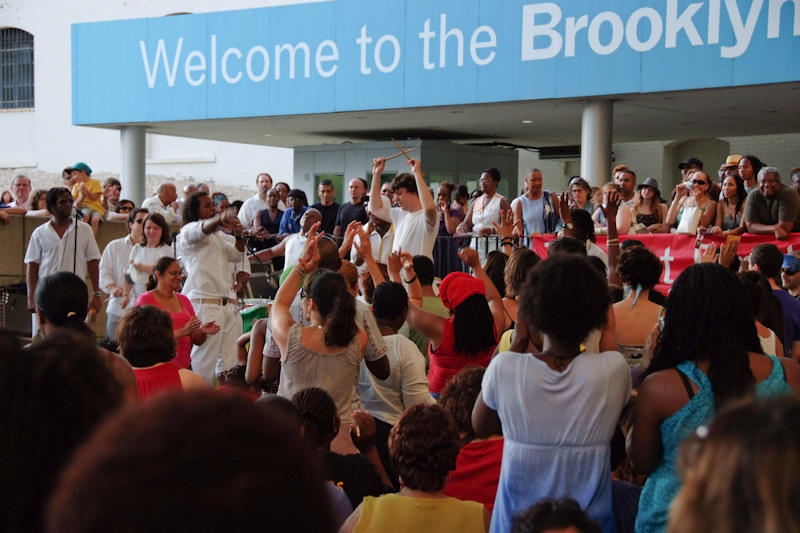
				 <div class="wp-caption aligncenter" id="attachment_3708" aria-describedby="caption-attachment-3708" style="width: 600px"><img class="wp-image-3708" src="http://inclusivehistorian.pressbooks.sunycreate.cloud/wp-content/uploads/sites/11/2020/12/3784254812_b8e2d5220a_o.jpg" alt="" width="600" height="400" title="" /><div class="wp-caption-text" id="caption-attachment-3708">Brooklyn Museum, First Saturday Party, July 2009. Photo credit: Eric, brooklynmuseum_073, Flickr.</div></div> <p>The term “<a href="https://href.li/?https://www.britannica.com/topic/civic-engagement" data-url="https://href.li/?https://www.britannica.com/topic/civic-engagement">civic engagement</a>” refers to both formal political practices and informal organizational activities that promote democracy by expanding citizen participation in problem solving and broadening access to social and political capital. Historians play at least three crucial roles in the promotion of civic engagement. First, they provide access to historical content and context which inform analyses of contemporary social, cultural, or political issues. Second, they promote collaborative practice, reflection-in-action, and facilitated dialogue as essential components of productive and inclusive political discourse. Finally, they participate in and often lead efforts to open up museums, historic sites, archives, libraries, and other institutional spaces for a variety of civic uses by individuals and communities. Because public historians, in particular, are employed in a variety of cultural institutions and in a growing number of colleges and universities, they have influenced the expansion of civic engagement as a defining value in both education and professional practice.</p> <h3><strong>Historical Perspective</strong></h3> <p>The rise of civic engagement as a central process of public history practice can be viewed through either a short or a long historical lens, but a truncated history tends to dominate the literature on civic engagement in academic and public history institutions. Throughout most of this literature, civic engagement appears to have emerged in response to the culture wars of the 1990s, a period during which political leaders repeatedly vilified universities and museums. A series of high profile controversies regarding federally funded museum exhibitions reflected a general sense that American cultural institutions had become too disconnected from their audiences and stakeholders. According to critics, this disconnection—not the conservative impulses embedded in institutional structures, collections, and interpretations—was to blame for a variety of ills including controversies, budget crises, and shrinking audiences. Politicians and citizens alike questioned the use of public funds to support institutions that appeared to serve so few. In response, museums and universities developed programs to demonstrate their civic value. The American Alliance of Museums, the leading professional association for museums in the United States (then called the American Association of Museums), initiated a challenge for museums to become more inclusive, making an effort to connect with their communities.<a href="#_edn1" data-url="https://inclusivehistorian.pressbooks.sunycreate.cloud/chapter/civic-engagement/#_edn1">[i]</a></p> <p>Viewing civic engagement as a recent phenomenon can lead to a rather cynical reading of its value. The assessment of these programs has been focused on internal institutional impacts: student learning, curator and faculty research, success in winning grants, development of administrative infrastructure, and financial stability. The literature highlighting this recent history clearly indicates that strategies of civic engagement—including community partnerships and collaborative research—have indeed had a profoundly positive impact on both universities and cultural institutions. City administrators tout the value of civic engagement for improving fiscal management and promoting urban development. Experts on pedagogy have analyzed the value of civic engagement for improving students’ political awareness, empathy, and inter-personal skills. Experts on museums and other cultural institutions have accepted civic engagement as an essential component of best practices, a tool for diversifying audiences, enhancing the relevance of museums, and illuminating new perspectives on the past. Because there has been little emphasis on identifying and analyzing external impacts, however, civic engagement appears in the literature to best serve as a response to institutional crisis, not necessarily as a response to community needs and desires.<a href="#_edn2" data-url="https://inclusivehistorian.pressbooks.sunycreate.cloud/chapter/civic-engagement/#_edn2">[ii]</a>&nbsp;In contrast, even a cursory effort to identify a longer history suggests that civic engagement is a potentially radical practice with deep roots.</p> <h2><strong>Connections to Anti-Racist Projects</strong></h2> <p>Looking for precedents and antecedents allows us to begin to recognize civic engagement’s potential value for addressing community interests. While recent trends helped institutionalize civic engagement as a value of public history, the practices that define it originated in older, experimental efforts to build inclusive forms of historical practice on a foundation of commitment to the common good. Many of these early experiments supported anti-racist intellectual projects, broadly conceived. In the early twentieth century, for example, Carter G. Woodson established a collaborative set of processes for the promotion and expansion of African American history. Recognizing the crucial importance of historical representation, he engaged university scholars as well as primary school teachers and members of commemorative organizations in a wide-ranging effort to preserve, interpret, and celebrate African American history.<a href="#_edn3" data-url="https://inclusivehistorian.pressbooks.sunycreate.cloud/chapter/civic-engagement/#_edn3" id="_ednref3">[iii]</a>&nbsp;The organization he established in 1915, the&nbsp;<a href="https://href.li/?https://asalh.org/" data-url="https://href.li/?https://asalh.org/">Association for the Study of African American Life and History</a>, remains a broadly inclusive organization with members from a wide range of educational and cultural institutions. Similarly, the founding directors and curators in the black museums movement, which scholars trace to the middle of the twentieth&nbsp;century, recognized preservation and interpretation as relevant for addressing the immediate needs of black communities.<a href="#_edn4" data-url="https://inclusivehistorian.pressbooks.sunycreate.cloud/chapter/civic-engagement/#_edn4" id="_ednref4">[iv]</a>&nbsp;Finally, the values and commitments that underpin civic engagement in institutions of higher learning have been most fully realized in Historically Black Colleges and Universities (HBCU). HBCU founders, faculty, and administrators recognized their essential role in providing solutions to the problems faced by black communities in the United States and emphasized responsiveness as their guiding principle. While the forms of civic engagement codified during the late twentieth&nbsp;and early twenty-first&nbsp;centuries tended to reinforce, however unintentionally, a hierarchical relationship between universities and communities, this was not typically the case for HBCUs and the communities they served. Black students and faculty tended to have closer connections with surrounding communities, and they were more likely to view local people as peers and colleagues than clients.<a href="#_edn5" data-url="https://inclusivehistorian.pressbooks.sunycreate.cloud/chapter/civic-engagement/#_edn5" id="_ednref5">[v]</a></p> <p>Viewed from the perspective of this deeper history, the potential of civic engagement becomes visible. Educational and cultural institutions can become more permeable and transparent spaces that foster inclusiveness and emphasize the co-creation of knowledge over top-down instruction. Approaching these aims can challenge deeply institutionalized beliefs about the nature and parameters of professionalism.</p> <h2><strong>Effective Models of Civic Engagement</strong></h2> <p>In the twenty-first&nbsp;century, <a href="https://www.merriam-webster.com/dictionary/crowdsourcing" data-url="https://www.merriam-webster.com/dictionary/crowdsourcing">crowdsourced</a> digital collecting practices have emerged as an effective method for engaging average people in shaping the historical record. While the vast majority of crowdsourced digital collections remain subject to collections policies and curatorial discretion that impose some limits on collaborative practices, they nonetheless make collections processes more transparent and inclusive. Notably, a small but growing number of crowdsourced digital collections actively confront institutional practices that limit or control contributors’ efforts to define historical materials and their meaning. For example, the&nbsp;<a href="https://href.li/?http://www.archivingpoliceviolence.org/" data-url="https://href.li/?http://www.archivingpoliceviolence.org/">People’s Archive of Police Violence in Cleveland</a>&nbsp;actively involves Cleveland residents in decision making and empowers them to retain control of the collection. The collection is maintained through cooperation between&nbsp;<em>Puncture the Silence</em>, a local activist organization in Cleveland and an independent collective of archivists from around the country who are committed to its long-term preservation.</p> <p>Examining the long history of civic engagement further suggests that leaders in museums, cultural institutions, colleges, and universities must be able to identify and respond to rapidly changing economic, social, and political conditions. Fostering this kind of responsiveness requires the development and maintenance of meaningful relationships between organizations and the communities they serve. Organizations are most successful in this work when it is integrated into their mission. For example, both the&nbsp;<a href="https://href.li/?https://www.hullhousemuseum.org/" data-url="https://href.li/?https://www.hullhousemuseum.org/">Jane Addams Hull House Museum</a>&nbsp;in Chicago, IL, and the&nbsp;<a href="https://href.li/?https://www.harrietbeecherstowecenter.org/" data-url="https://href.li/?https://www.harrietbeecherstowecenter.org/">Harriet Beecher Stowe Center</a>&nbsp;in Hartford, CT, have successfully made the case that active political engagement with their stakeholders is not simply important; it is central to each site’s history and preservation. Hull House founder, Jane Addams, established the settlement as a site for local residents to meet, organize, and problem solve. The institution’s staff continues that tradition, providing space for community meetings, English language classes, and other uses. Located in a historic structure associated with the abolitionist and author of <em>Uncle Tom’s Cabin</em>, the Harriet Beecher Stowe Center puts the methods of historical inquiry to work to promote dialogue and action around issues of incarceration, enslavement, and injustice.</p> <p>Other institutions actively work to develop meaningful relationships with local residents and other stakeholders by encouraging innovative collaboration. For example, the&nbsp;<a href="https://href.li/?https://www.brooklynmuseum.org/" data-url="https://href.li/?https://www.brooklynmuseum.org/">Brooklyn Museum</a>&nbsp;in New York has developed a process for enabling the community to design and lead museum programs. Anyone can submit a program proposal, and the museum staff accepts and reviews them on a rolling basis. Once a proposal has been adopted, museum staff can provide support and advice to aid community members in organizing their event. These community-designed programs are not “special events.” Rather, they are fully integrated into the museum’s regular schedule of weekend events, monthly First Saturdays, and weekly Thursday evenings. More importantly, community-led programming is a mode of reciprocal communication. It empowers local people to actively define their relationship with the museum, and it enables the museum staff to remain engaged with community needs and interests.</p> <p>Finally, exploring the development of civic engagement over time suggests its highest aims are best served when practitioners recognize themselves as serving not only their typical constituencies, but also a wider community. The development of networks of practice can expand community engagement, amplify and broaden interpretive processes, and foster dialogue among people with divergent perspectives, beliefs, and experiences. For example, the&nbsp;<a href="https://href.li/?https://www.humanitiesactionlab.org/" data-url="https://href.li/?https://www.humanitiesactionlab.org/">Humanities Action Lab</a>&nbsp;is a collective of universities, action organizations, and public spaces dedicated to the design and implementation of community-based history projects that provide a response to urgent contemporary issues. Action Lab projects have included the Guantanamo Public Memory Project, States of Incarceration, and Migration and Environmental Justice, each of which seeks to shed light on injustice and foster dialogue about the future. Similarly, the&nbsp;<a href="https://href.li/?https://www.sitesofconscience.org/en/home/" data-url="https://href.li/?https://www.sitesofconscience.org/en/home/">International Coalition of Sites of Conscience</a>&nbsp;provides educational resources and support to organizations and individuals who wish to use memorial sites, museums, and historic places to promote dialogue and reconciliation.</p> <h2><strong>Conclusion</strong></h2> <p>As these examples suggest, civic engagement is a means by which historians can challenge exclusive pasts and promote a more just and inclusive future. By valuing responsiveness and connection, by working to treat different ways of knowing and analyzing events as equally relevant for problem solving, and by privileging inclusiveness over authority, public history can play a role in expanding democracy and craft a strong foundation from which average citizens can become stronger advocates and agitators for social justice causes.</p> <h2>Notes</h2> <p><a href="#_ednref1" data-url="https://inclusivehistorian.pressbooks.sunycreate.cloud/chapter/civic-engagement/#_ednref1">[i]</a> American Association of Museums,&nbsp;<em>Mastering Civic Engagement: A Challenge to Museums</em> (Washington, D.C.: American Association of Museums, 2002).</p> <p><a href="#_ednref2" data-url="https://inclusivehistorian.pressbooks.sunycreate.cloud/chapter/civic-engagement/#_ednref2">[ii]</a> Roger L. Kemp, ed.,&nbsp;<em>Town and Gown Relations: A Handbook of Best Practices&nbsp;</em>(Jefferson, NC: McFarland, 2013); Susan Benigni Cipolle,&nbsp;<em>Service Learning and Social Justice: Engaging Students in Social Change</em>&nbsp;(Lanham, MD: Rowman and Littlefield, 2010); Christine M. Cress, Peter J. Collier, Vicki L. Reitenauer, and Associates,&nbsp;<em>Learning Through Serving:&nbsp;A Student Guidebook for Service-Learning and Civic Engagement across Academic Disciplines and Cultural Communities&nbsp;</em>(Sterling, VA: Stylus Publishing, 2013); Barbara Jacoby and Associates,&nbsp;<em>Civic Engagement in Higher Education: Concepts and Practices&nbsp;</em>(San Francisco: Jossey-Bass, 2009); Gail Anderson, ed.&nbsp;<em>Reinventing the Museum: The Evolving Conversation and the Paradigm Shift&nbsp;</em>(Lanham, MD: AltaMira Press, 2012); Viv Golding and Wayne Modest, eds.,&nbsp;<em>Museums and Communities:&nbsp;Curators, Collections, and Collaboration&nbsp;</em>(New York: Bloomsbury Academic, 2013).</p> <p><a href="#_ednref3" data-url="https://inclusivehistorian.pressbooks.sunycreate.cloud/chapter/civic-engagement/#_ednref3" id="_edn3">[iii]</a> Pero Dagbovie,&nbsp;<em>The Early Black History Movement, Carter G. Woodson, and Lorenzo Johnston Greene</em>&nbsp;(Urbana: University of Illinois Press, 2007).</p> <p><a href="#_ednref4" data-url="https://inclusivehistorian.pressbooks.sunycreate.cloud/chapter/civic-engagement/#_ednref4" id="_edn4">[iv]</a> Andrea Burns,&nbsp;<em>From Storefront to Monument: Tracing the Public History of the Black Museums Movement</em>&nbsp;(Amherst: University of Massachusetts Press, 2013).</p> <p><a href="#_ednref5" data-url="https://inclusivehistorian.pressbooks.sunycreate.cloud/chapter/civic-engagement/#_ednref5" id="_edn5">[v]</a> Marybeth Gasman, Dorsey Spencer, and Cecilia Orphan, “‘Building Bridges not Fences’: A History of Civic Engagement at Private Black Colleges and Universities, 1944-1965,”&nbsp;<em>History of Education Quarterly&nbsp;</em> 55, No. 3 (August 2015): 346-379 (published online January 20, 2017),&nbsp;<a href="https://href.li/?https://doi.org/10.1111/hoeq.12125" data-url="https://href.li/?https://doi.org/10.1111/hoeq.12125">https://doi.org/10.1111/hoeq.12125</a>.</p> <h2>Suggested Readings</h2> <p>Adair, Bill, and Benjamin Filene, Editors.&nbsp;<em>Letting Go? Sharing Historical Authority in a User Generated World.&nbsp;</em>New York:&nbsp;Routledge, 2011.</p> <p>Blouin, Francis X. Jr., and William G. Rosenberg.&nbsp;<em>Processing the Past: Contesting Authority in History and the Archives.&nbsp;</em>New York:&nbsp;Oxford University Press, Reprint Edition, 2012.</p> <p>Coombes,&nbsp;Annie E.&nbsp;<em>History after Apartheid: Visual Culture and Public Memory in a Democratic South Africa.&nbsp;</em>Durham:&nbsp;Duke University Press, 2003.</p> <p>Gonzalez,&nbsp;Kenneth P.&nbsp;<em>Doing the Public Good: Latina/o Scholars Engage Civic Participation.&nbsp;</em>Stylus Publishing, 2007.</p> <p>Lonetree,&nbsp;Amy.&nbsp;<em>Decolonizing Museums: Representing Native America in National and Tribal Museums</em>. Chapel Hill:&nbsp;University of North Carolina Press, 2012.</p> <p>Onciul,&nbsp;Bryony.&nbsp;<em>Museums, Heritage, and Indigenous Voice: Decolonizing Engagement.&nbsp;</em>New York:&nbsp;Routledge, 2015.</p> <p>Rizzo,&nbsp;Mary. “Finding the Roots of Civic Engagement in the Public Humanities.” <em>History@Work</em>, July 21, 2014&nbsp;<a href="https://href.li/?http://ncph.org/history-at-work/finding-the-roots-of-civic-engagement/" data-url="https://href.li/?http://ncph.org/history-at-work/finding-the-roots-of-civic-engagement/">http://ncph.org/history-at-work/finding-the-roots-of-civic-engagement/</a></p> <p>Rocksborough-Smith,&nbsp;Ian.&nbsp;<em>Black Public History in Chicago: Civil Rights Activism from World War II into the Cold War.&nbsp;</em>Urbana:&nbsp;University of Illinois Press, 2018.</p> <p>Simon,&nbsp;Nina.&nbsp;<em>The Participatory Museum</em>.<em>&nbsp;</em>2010. <a href="http://www.participatorymuseum.org/" data-url="http://www.participatorymuseum.org/">http://www.participatorymuseum.org/</a>.</p> <h2>Author</h2> <p>~&nbsp;<em>Denise D. Meringolo</em>&nbsp;is Associate Professor of History and Director of Public History at the University of Maryland, Baltimore County.</p> 
	</div>


	</div>
<div class="chapter standard " id="chapter-civics-education" title="Civics Education">
	<div class="chapter-title-wrap">
		<p class="chapter-number">3</p>
		<h1 class="chapter-title">Civics Education</h1>
			</div>
	<div class="ugc chapter-ugc">
					<p class="short-title"></p>
	<p class="chapter-author">K Allison Wickens</p>
				 <div class="civics-education-"><div class="wp-caption aligncenter" id="attachment_211" aria-describedby="caption-attachment-211" style="width: 600px"><img class="wp-image-211" src="https://inclusivehistorian.pressbooks.sunycreate.cloud/wp-content/uploads/sites/11/2021/10/Be-Washington-use-MDP_20180207_DC-014.jpg" alt="JEB Stuart High School students playing Be Washington" width="600" height="400" srcset="https://inclusivehistorian.pressbooks.sunycreate.cloud/wp-content/uploads/sites/11/2021/10/Be-Washington-use-MDP_20180207_DC-014.jpg 1280w, https://inclusivehistorian.pressbooks.sunycreate.cloud/wp-content/uploads/sites/11/2021/10/Be-Washington-use-MDP_20180207_DC-014-300x200.jpg 300w, https://inclusivehistorian.pressbooks.sunycreate.cloud/wp-content/uploads/sites/11/2021/10/Be-Washington-use-MDP_20180207_DC-014-1024x682.jpg 1024w, https://inclusivehistorian.pressbooks.sunycreate.cloud/wp-content/uploads/sites/11/2021/10/Be-Washington-use-MDP_20180207_DC-014-768x512.jpg 768w, https://inclusivehistorian.pressbooks.sunycreate.cloud/wp-content/uploads/sites/11/2021/10/Be-Washington-use-MDP_20180207_DC-014-65x43.jpg 65w, https://inclusivehistorian.pressbooks.sunycreate.cloud/wp-content/uploads/sites/11/2021/10/Be-Washington-use-MDP_20180207_DC-014-225x150.jpg 225w, https://inclusivehistorian.pressbooks.sunycreate.cloud/wp-content/uploads/sites/11/2021/10/Be-Washington-use-MDP_20180207_DC-014-350x233.jpg 350w" title="" /><div class="wp-caption-text" id="caption-attachment-211">Be Washington employs perspective taking and source analysis for students onsite at Mount Vernon and online. Image credit: Dan Chung Photography.</div></div> <p class="import-Normal">The work that historians do is pivotal to the success of an inclusive civics education centered on debate, perspective taking, civil discourse, and knowledge of the rule of law. Sharing how evidence is gathered and analyzed to make arguments about the past prepares students for civic work in which they are <strong><em>asked</em></strong> <strong><em>why</em></strong> they think the way they do, instead of being <strong><em>told</em></strong> <strong><em>what</em></strong> to think. These skills are not merely important in a classroom setting but are lifelong skills students take into the real world when determining bias in media, understanding viewpoints different from their own, and contributing to civil discourse and compromise.</p> <p class="import-Normal">Current trends in civics instruction and curricula go beyond teaching students about the structure of participatory government. While understanding the rule of law at the national, state, and local levels is critical for young people to contribute to democracy, it is also essential for educational institutions to teach civic dispositions, such as an appreciation and understanding of free speech and willingness to engage with those whose perspectives are different from their own. Classrooms, museums, historic sites, and other educational spaces provide opportunities to practice and develop these skills and build confidence in civic behaviors, such as voting, volunteering, and voicing informed opinions at public meetings.<sup class="import-EndnoteReference"><a id="sdfootnote1anc" href="#sdfootnote1sym" data-url="https://inclusivehistorian.pressbooks.sunycreate.cloud/chapter/civics-education/#sdfootnote1sym">1</a></sup></p> <p class="import-Normal">Elevating historical examples that connect the past with the present—examples that link to issues students encounter in their daily lives—can have profound resonance and empower meaningful engagement.<sup class="import-EndnoteReference"><a id="sdfootnote2anc" href="#sdfootnote2sym" data-url="https://inclusivehistorian.pressbooks.sunycreate.cloud/chapter/civics-education/#sdfootnote2sym">2</a></sup></p> <h2 class="import-Normal"><strong>Historical Background</strong></h2> <p class="import-Normal">Instructing Americans on the “principles of virtue and of liberty; and inspir[ing] them with just and liberal ideas of government”<sup class="import-EndnoteReference"><a id="sdfootnote3anc" href="#sdfootnote3sym" data-url="https://inclusivehistorian.pressbooks.sunycreate.cloud/chapter/civics-education/#sdfootnote3sym">3</a></sup> was a key issue in the public discourse of the eighteenth century around the creation of a new national identity distinct from the rest of the world. Ensuring the nation’s civic life beyond the generation that formed the new government hinged on informed civic participation for those deemed eligible to participate in the process. Leading education philosophers—including Noah Webster in the 1700s, Horace Mann in the 1800s, and John and Evelyn Dewey in the 1900s—contributed to the educational foundation of civics knowledge and its practical application to activate citizens for a participatory democracy.</p> <p class="import-Normal">The work continues today, and in order to ensure all students are prepared to be full participants in a democracy, civics must be taught through an inclusive lens in contemporary classrooms and other educational spaces. This approach resonates with a younger generation whose learning landscape has been defined by heightened participatory experiences throughout their lives. The alternative approach, which prioritizes only civic knowledge without civic dispositions, limits students’ voices and hinders preparedness for civic life. The development of the skills needed to engage in political discourse and contribute to society in meaningful and productive ways are more critical than ever before within a “universe of unregulated information at our fingertips.”<sup class="import-EndnoteReference"><a id="sdfootnote4anc" href="#sdfootnote4sym" data-url="https://inclusivehistorian.pressbooks.sunycreate.cloud/chapter/civics-education/#sdfootnote4sym">4</a></sup></p> <h2 class="import-Normal"><strong>The Role of History in the Civics Classroom</strong></h2> <p class="import-Normal">Civics teachers value the joy that comes from their students making connections with the broader world, a world in which they are able to advocate to support or change existing policies. This objective can be achieved through lessons grounded in historical context and sources. When done right, teaching civics is difficult; the challenge of this work starts with harnessing student interest and focus. Some want to move directly to action without the historical context to inform their perspectives; while others bring indifference and need to be inspired to be participatory actors in their communities. This work is even harder when a community is held hostage by partisanship that deters teachers from creating healthy discussions around civics topics.</p> <p class="import-Normal">Teaching civics through the arc of U.S. history provides students untold examples of debates large and small, which show dialogue and discussion by everyday actors in real-life situations and shape the world in which we now operate. Historical content and sources make visible the bumps, cracks, and turns in what can be otherwise disguised as a smooth road and which may wrongly suggest a simple progressive narrative of political history. Historians activate the work of people in the past and help combat the perception that individuals are passive recipients of legislation, laws, and policies. This work can also make visible the individuals and groups that were excluded from civic participation and the world made by the marginalization of their voices. Using historical case studies provides the connection between the ideals of the more perfect union and how those ideals (through policies and institutions) have been created and sustained.<sup class="import-EndnoteReference"><a id="sdfootnote5anc" href="#sdfootnote5sym" data-url="https://inclusivehistorian.pressbooks.sunycreate.cloud/chapter/civics-education/#sdfootnote5sym">5</a></sup> This gives the impassioned students historical context through which to align or challenge their thinking. It also can empower the apathetic students who can study a place and time when someone with whom they identify had a voice that impacted history. Allowing students access to the sources, context, and the thinking process of this type of research builds on their capacity to see, contribute, and transform policies and institutions today and in the future.</p> <p class="import-Normal">Practicing historical thinking skills allows for civics classrooms to explore historical debates from multiple perspectives—with a critical eye on sourcing—while benefiting from the time-telescoped view of the context in which these debates occurred. Having students study the past through historical sources and events also provides valuable tools to see the continuity and changes between then and now. For each level of government—whether local, state, or national, or more importantly, the interplay between them in a federalist system—the challenges and limitations built into the infrastructure can be made visible by looking at them over time. In a world where social media democratizes and polarizes information sharing, students armed with these skills are better prepared to analyze, discern, and contribute to political dialogues and decision-making that shapes their lives.</p> <h2 class="import-Normal"><strong>Providing Historic</strong><strong>al</strong> <strong>Examples</strong></h2> <p class="import-Normal">Historians provide the rich historical narrative upon which civic instruction is built. Inclusive civics educators value contributions from historians and historical institutions that provide vetted sources, historical context, and voices on multiple sides of the debates or issues illustrated. Ideal primary source sets suited for civics classroom adoption should illustrate the successes of constructive government as well as visible failures to achieve compromise or enact positive legislation. Dedicated civics instructors sometimes find themselves (late at night) scouring the internet and doing the vetting to create a document set that shows more than one perspective for their students. Being able to work from research that historians have already done—and that is positioned to support civics lessons in dialogue with current events—creates a richer and more scholarly-sound learning environment.</p> <p class="import-Normal">Examples of this type of teaching resource are offered on a number of history and archival sites, including the website of the <a class="rId8" href="https://www.portal.hsp.org/" data-url="https://www.portal.hsp.org/"><span class="import-Hyperlink">Historical Society</span> <span class="import-Hyperlink">of Pennsylvania</span></a> (HSP). Using the sources from their collection and the expertise they bring in interpreting them, HSP has provided ideal building blocks for educators and students. The primary sources illustrate different perspectives organized by topic and are supported by historical context, essential questions, and background material. Their unit “<a class="rId9" href="https://hsp.org/education/unit-plans/economics-through-the-long-history-of-america%e2%80%99s-first-bank" data-url="https://hsp.org/education/unit-plans/economics-through-the-long-history-of-america%e2%80%99s-first-bank"><span class="import-Hyperlink">Economics </span><span class="import-Hyperlink">through the Long History of America’s First Bank</span></a>,” designed for an economics or history classroom, can be transferred to a civics classroom because it explores the relationship between capitalism and government. Going beyond the high standard of providing vetted source sets digitally, HSP also provides transparency regarding the author and the funder of the curriculum. As a result, the perspective of the institution that selected the sources and framed the questions is also open for student analysis.</p> <p class="import-Normal">Another example that reflects a more focused scope is the <a class="rId10" href="https://coloredconventions.org/" data-url="https://coloredconventions.org/"><span class="import-Hyperlink">Colored Conventions Project</span></a>, which provides documentary records and expert-curated document collections related to a series of civic meetings held in Black communities between 1830 and 1890 in the United States and Canada. The variety of sources and the historical inquiry approach model how students can see civic engagement in diverse ways. Newspaper archives combined with data visualizations sit alongside expert interpretation and inquiry prompts. Although men are most prominent in the newspaper accounts of these events, the site also brings to light the civic work women did in these communities to ensure the success of the conventions. The site includes named scholars who can speak further about the project so students have deeper access to experts beyond what is authored on the site.</p> <h2 class="import-Normal"><strong>Resources for Y</strong><strong>oung </strong><strong>C</strong><strong>ivics </strong><strong>L</strong><strong>earners</strong></h2> <p class="import-Normal">Learning about our nation’s history and government also means learning about the history of race in the United States. While integral to all civics coursework, race-based slavery and its continued legacy should be a part of young learners’ knowledge of how our past informs the present. The history of race is too often left out of elementary classrooms or limited to instruction about the achievements of leading figures such as Martin Luther King, Jr. and Harriet Tubman. Teaching students in these grades about all who participated in history is foundational; leaving out a group is the equivalent of excising part of the American story. Children’s historical literature, with context provided by historians and paired with primary sources, gives educators multiple platforms for young learners to have guided and foundational conversations about race and their world.</p> <p class="import-Normal">The Smithsonian’s National Museum of African American History and Culture provides a series of collections stories that bring context, quotes, and historic artifacts and documents together. <a class="rId11" href="https://nmaahc.si.edu/explore/stories/collection/lives-pieces" data-url="https://nmaahc.si.edu/explore/stories/collection/lives-pieces"><em class="import-Hyperlink">Lives in Pieces</em></a> addresses the four young Black girls killed at the 16<sup>th</sup> Street Baptist Church in Birmingham, Alabama, on September 15, 1963. The central object in the collection are shards of broken stained glass from the church window. Paired with <a class="rId12" href="https://cynthialevinson.com/books/weve-got-a-job/" data-url="https://cynthialevinson.com/books/weve-got-a-job/"><em class="import-Hyperlink">We’ve Got a Job: The 1963 Birmingham Children’s March</em></a> by Cynthia Levinson (non-fiction) and <a class="rId13" href="https://www.penguinrandomhouse.com/books/35779/the-watsons-go-to-birmingham--1963-by-christopher-paul-curtis/9780385382946/teachers-guide/" data-url="https://www.penguinrandomhouse.com/books/35779/the-watsons-go-to-birmingham--1963-by-christopher-paul-curtis/9780385382946/teachers-guide/"><em class="import-Hyperlink">The Watson’s Go to Birmingham-1963</em></a> by Christopher Paul Curtis (fiction), these objects can provide essential civics instruction through historical inquiry and sources.</p> <p class="import-Normal">At the elementary level, civics is intertwined with community lessons, U.S. history lessons, and classroom social and emotional learning standards. Ensuring that historical sources and research can be connected to civics for younger students will prepare them for more complex debates and arguments later in their scholastic study. The National Constitution Center partnered with the Rendell Center for Citizenship and Civics at Arcadia University to create eight elementary lessons that connect fourth-grade state-based civics instruction to student-led classroom responsibilities. <a class="rId14" href="https://constitutioncenter.org/learn/educational-resources/we-the-civics-kids" data-url="https://constitutioncenter.org/learn/educational-resources/we-the-civics-kids"><span class="import-Hyperlink">We the Civics Kids</span></a> includes a young readers civics literature list, organized by month to align with state and national holidays and commemorations. Each lesson provides historical context for civics topics that elementary students confront in their classrooms today.</p> <h2 class="import-Normal"><strong>Local History</strong><strong>’s Value</strong> <strong>to Civic</strong><strong>s</strong> <strong>Education</strong></h2> <p class="import-Normal">For students, discussions about government policies and structures at the national level may sometimes seem most pressing, but in reality, most state civics standards focus as much, if not more, on the unique features of state and local governments. Student engagement with state and local policies creates a more immediate impact on, and connection to, their communities. Historical research often provides a detailed look at a specific time and place, and the work historians do to illustrate the voices engaged in local governance and debate can translate powerfully to a classroom in the same community or state. Seeing the workings of government in which the local community has a more direct impact can inspire student participation in the civics process.</p> <p class="import-Normal">From 2009 to 2018 the Minnesota Department of Education and seven other state-wide organizations worked together on the Minnesota Center for Social Studies Education (CSSE). Focusing on a state-wide approach to social studies education enabled civics instructions materials to apply directly to state standards and the unique challenges facing students in preparing to contribute to their own governance. The sources and interpretation for the exhibition <a class="rId15" href="https://mnhum.org/native-nations-minnesota/why-treaties-matter/" data-url="https://mnhum.org/native-nations-minnesota/why-treaties-matter/"><em class="import-Hyperlink">Why Treaties Matter: Self-Government in the Dakota and Ojibwe Nations</em></a>, created by the Minnesota Humanities Center and Minnesota Indian Affairs Council, directly address the state’s high school civics standard: “Explain how tribal sovereignty establishes a unique relationship between American Indian Nations and the United States Government.” One of the <a class="rId16" href="http://treatiesmatter.org/exhibit/wp-content/uploads/2017/09/Updated-Sovereign-Nations1.pdf" data-url="http://treatiesmatter.org/exhibit/wp-content/uploads/2017/09/Updated-Sovereign-Nations1.pdf"><span class="import-Hyperlink">educator</span> <span class="import-Hyperlink">guide</span><span class="import-Hyperlink">s</span></a> takes a question framed about the U.S. federal government and tribal nations and localizes the content for the state in which the students live.</p> <p class="import-Normal">The fact that state learning standards include state history and government in their social studies curricula provides a great opportunity to pair civics learning and history learning with a regional focus. Indiana University’s Center on Representative Government, for example, provides a state-based civics instruction tool for Indiana high school students entitled <a class="rId17" href="http://citizin.org/" target="_blank" rel="noopener" data-url="http://citizin.org/"><span class="import-Hyperlink">CitizIN</span></a>.</p> <p class="import-Normal">Local history resources can also connect the civics of the students’ own communities with national stories covered in their history curriculum. The <a class="rId18" href="https://www.uml.edu/Tsongas/Resources/" data-url="https://www.uml.edu/Tsongas/Resources/"><span class="import-Hyperlink">Tsongas Industrial History Center</span></a> connects local students to the broader story of the Industrial Revolution through the Lowell Mills in nineteenth-century Massachusetts. They use digitized primary sources to show all the components of the Industrial Revolution in a local community thereby connecting individual lives to larger historical themes.</p> <h2 class="import-Normal"><strong>Activating </strong><strong>People who </strong><strong>L</strong><strong>ived in the Past</strong> <strong>through Games</strong></h2> <p class="import-Normal">For some students, a lack of interest in history and historical actors can be attributed to the passive nature in which those people who lived in the past are often portrayed. Historical contributions to civics education can be as simple as providing narratives and sources that demonstrate people in the past had an impact on the world in which they lived. The past is filled with people who are not given the agency in traditional textbooks that they possessed in life. A powerful way to shift this is through interactive games.</p> <p class="import-Normal">The interactive <a class="rId19" href="http://www.bewashington.org/" data-url="http://www.bewashington.org/"><em class="import-Hyperlink">Be Washington Experience</em></a>, created by George Washington’s Mount Vernon, activates George Washington’s role in history and provides the context and perspectives of others who shaped his decisions. Although a powerfully influential decision-maker in his time, students can still speak of his contributions in a passive way, “he was president” being the most common paraphrase of his contributions. The game asks students to make a decision Washington had to make, but before they do, they listen to eight other people and perspectives from the time. Sources Washington would have had access to inform students on different perspectives relating to the controversies like the <a class="rId20" href="https://www.mountvernon.org/library/digitalhistory/digital-encyclopedia/article/whiskey-rebellion/" data-url="https://www.mountvernon.org/library/digitalhistory/digital-encyclopedia/article/whiskey-rebellion/"><span class="import-Hyperlink">Whiskey </span><span class="import-Hyperlink">Rebellion</span></a> that pitted federal tax policy against states’ interests early in U.S. history. After making their choices, student answers are put in dialogue with the historical record and they can compare and contrast their perspective on the issue and how it differed or aligned with Washington’s. Applied in a civics context, the topic of states’ rights and federal authority that Washington wrestled with can be connected to the same debates happening at the national level today.<sup class="import-EndnoteReference"><a id="sdfootnote6anc" href="#sdfootnote6sym" data-url="https://inclusivehistorian.pressbooks.sunycreate.cloud/chapter/civics-education/#sdfootnote6sym">6</a></sup></p> <p class="import-Normal">The game site iCivics is known for its immersive and addictive games that teach government and the rule of law. In 2019 they launched their first historical game, designed to illustrate the origins of our governing documents. <a class="rId21" href="https://www.icivics.org/games/race-to-ratify" data-url="https://www.icivics.org/games/race-to-ratify"><span class="import-Hyperlink">Race to Ratify</span></a> sets players up to decide if they support or oppose the ratification of the U.S. Constitution while taking a position of a federalist (advocating for the Constitution) or anti-federalist (advocating against the Constitution, or the Constitution adopted with the Bill of Rights). They meet with diverse individuals from all 13 states. Their work is to understand the perspectives and interests of others and make arguments to persuade others of their opinions. What was once a lesson framed by faceless “states” approving foundational documents becomes a way to see the eighteenth century as one filled with diverse people who held differing and dynamic views. The game-based and personality-driven platform gives students a chance to not only learn about these historic events, but also practice the skills needed for participatory government.</p> <h2 class="import-Normal"><strong>Historical Thinking Skills = Media Literacy Skills</strong></h2> <p class="import-Normal"><a class="rId22" href="https://www.docsteach.org/" data-url="https://www.docsteach.org/"><span class="import-Hyperlink">DocsTeach</span></a>, the online tool for teaching with primary sources from the National Archives and Records Administration, illustrates how effectively moving beyond simply providing digital collections online impacts the effectiveness of applying those sources to civics instruction. With thousands of documents carefully selected for the platform, teachers use built-in tools to ensure that students do not merely learn from the sources but use those sources in improving their ability to apply their own analysis to larger ideas. The digital tools parallel the media literacy skills students need to participate effectively in, and advocate for, their ideas in public dialogue today. The site supports teachers in creating document sets that help students make connections, contextualize both time and place, weigh evidence based on validity and perspective, and interpret data to make meaning from statistics.</p> <p class="import-Normal">Stanford University created the <a class="rId23" href="https://sheg.stanford.edu/history-lessons" data-url="https://sheg.stanford.edu/history-lessons"><span class="import-Hyperlink">Reading Like a Historian</span></a> curriculum to support teachers in integrating historical thinking skills into their classrooms. As research has shown the positive impact of this type of teaching, they recently expanded their contributions to include the “<a class="rId24" href="https://cor.stanford.edu/" data-url="https://cor.stanford.edu/"><span class="import-Hyperlink">Civic Online Reasoning</span></a>” curriculum. Finally, <a class="rId25" href="https://engagingcongress.org/" data-url="https://engagingcongress.org/"><span class="import-Hyperlink">Engaging Congress</span></a> <span class="import-Hyperlink">is </span>a strong interactive tool that combines gaming elements with historic primary sources to develop media literacy skills. It <span class="import-caption-text">uses inquiry and drag-and-drop tools laid over source materials to teach the basic structures of government and the challenges they bring in the world today.</span></p> <h2 class="import-Normal"><strong>History Provides</strong> <strong>Students with </strong><strong>the Knowledge and Tools for Civic Participation</strong></h2> <p class="import-Normal">Civics is sometimes the first class students take in school where they learn that their opinions matter and they have a voice that will contribute to the world we all live in. The unique skills and talents that historical thinking develops play a critical role in sharpening students’ respect for others’ perspectives and the ability to articulate their own.<sup class="import-EndnoteReference"><a id="sdfootnote7anc" href="#sdfootnote7sym" data-url="https://inclusivehistorian.pressbooks.sunycreate.cloud/chapter/civics-education/#sdfootnote7sym">7</a></sup> By providing sources, contextualization, and viewpoints from a wide array of actors in history, historians contribute to a more inclusive civics classroom education. When history and civics are intertwined, students are better prepared for participation in government and have the skills to contribute to and shape institutions.</p> <h2>Notes</h2> <div id="sdfootnote1sym"><a href="#sdfootnote1anc" data-url="https://inclusivehistorian.pressbooks.sunycreate.cloud/chapter/civics-education/#sdfootnote1anc">1</a>&nbsp;Rebecca Winthrop, “The Need for Civic Education in 21st-Century Schools,” Brookings (Brookings, June 4, 2020), https://www.brookings.edu/policy2020/bigideas/the-need-for-civic-education-in-21st-century-schools/.</div> <div id="sdfootnote2sym"><a href="#sdfootnote2anc" data-url="https://inclusivehistorian.pressbooks.sunycreate.cloud/chapter/civics-education/#sdfootnote2anc">2</a> Comments ascribed to “teachers” and “classrooms” in this article are based on interviews with nine civics teachers teaching in FL, GA, MD, MO, OH, NY, KY, and PA. Interviews were conducted by the author over phone and email.</div> <div id="sdfootnote3sym"><a href="#sdfootnote3anc" data-url="https://inclusivehistorian.pressbooks.sunycreate.cloud/chapter/civics-education/#sdfootnote3anc">3</a> Noah Webster, “On the Necessity of Fostering American Identity after Independence, 1783 &amp; 1787, excerpts,” National Humanities Center (NHC, 2010/2013) https://americainclass.org/sources/makingrevolution/independence/text3/websteramericanidentity.pdf.</div> <div id="sdfootnote4sym"><a href="#sdfootnote4anc" data-url="https://inclusivehistorian.pressbooks.sunycreate.cloud/chapter/civics-education/#sdfootnote4anc">4</a> Samuel S. Wineburg, Why Learn History (When It’s Already on Your Phone) (Chicago: The University of Chicago Press, 2018), 8.</div> <div id="sdfootnote5sym"><a href="#sdfootnote5anc" data-url="https://inclusivehistorian.pressbooks.sunycreate.cloud/chapter/civics-education/#sdfootnote5anc">5</a> Stephen Sawchuk, “A ‘Roadmap’ for Teaching Civics and History Is Coming. Will It Restart an Old Curriculum War?,” Education Week, November 8, 2019, https://blogs.edweek.org/teachers/teaching_now/2019/11/roadmap_history_civics_neh_ed.html.</div> <div id="sdfootnote6sym"><a href="#sdfootnote6anc" data-url="https://inclusivehistorian.pressbooks.sunycreate.cloud/chapter/civics-education/#sdfootnote6anc">6</a> Kathleen Munn and K. Allison Wickens, “Public History Institutions: Leaders in Civics Through the Power of the Past,” Journal of Museum Education 43, no. 2 (March 2018): 91-103, https://doi.org/10.1080/10598650.2018.1453598.</div> <div id="sdfootnote7sym"><a href="#sdfootnote7anc" data-url="https://inclusivehistorian.pressbooks.sunycreate.cloud/chapter/civics-education/#sdfootnote7anc">7</a> Wineburg, 100.</div> <h2 class="import-Normal"><strong>Suggested Readings</strong></h2> <p class="import-Normal">Gould, Jonathan, Kathleen Hall Jamieson, Peter Levine, Ted McConnell, and David B. Smith, eds.&nbsp;Guardian of Democracy: The Civic Mission of Schools. The Leonore Annenberg Institute for Civics of the Annenberg Public Policy Center at the University of Pennsylvania and the Campaign for the Civic Mission of Schools, 2011. <a class="rId26" href="https://www.carnegie.org/publications/guardian-of-democracy-the-civic-mission-of-schools/" data-url="https://www.carnegie.org/publications/guardian-of-democracy-the-civic-mission-of-schools/"><span class="import-Hyperlink">PDF</span></a> available for download.</p> <p class="import-Normal">Levinson, Meira. <em>No Citizen Left Behind</em><strong><em>. </em></strong>Cambridge, MA: Harvard University Press, 2014.</p> <p class="import-Normal">National Council for the Social Studies.&nbsp;<em>The College, Career, and Civic Life (C3) Framework for Social Studies State Standards: Guidance for Enhancing the Rigor of K-12 Civics, Economics, Geography and History</em>.&nbsp;Silver Spring, MD:&nbsp;National Council for the Social Studies,&nbsp;2013. Revised <a class="rId27" href="https://www.socialstudies.org/sites/default/files/2017/Jun/c3-framework-for-social-studies-rev0617.pdf" data-url="https://www.socialstudies.org/sites/default/files/2017/Jun/c3-framework-for-social-studies-rev0617.pdf"><span class="import-Hyperlink">PDF</span></a> version (2017) available for download.</p> <p class="import-Normal">Nokes, Jeffery D. <em>Teaching History, Learning Citizenship: Tools for Civic Engagement</em>. New York: Teachers College Press, 2019.</p> <p class="import-Normal">Pennay, Anthony. <em>The Civic Mission of Museums.</em> Lanham: Rowman &amp; Littlefield, 2020.</p> <p class="import-Normal">Wineburg, Samuel S. <em>Why Learn History (When it’s Already on Your Phone)</em>. Chicago: The University of Chicago Press, 2018.</p> <p class="import-Normal">Non-partisan and non-profit organizations that collect and share history and civics resources for communities and schools:</p> <ul><li><span class="import-Hyperlink">Civics Renewal Network aggregates classroom resources for classroom civics instruction: </span><a class="rId28" href="https://www.civicsrenewalnetwork.org/" data-url="https://www.civicsrenewalnetwork.org/"><span class="import-Hyperlink">https://www.civicsrenewalnetwork.org/</span></a></li> <li><span class="import-Hyperlink">History Relevance provides tools to connect the events of the past with current events: </span><a class="rId29" href="https://www.historyrelevance.com/" data-url="https://www.historyrelevance.com/"><span class="import-Hyperlink">https://www.historyrelevance.com/</span></a></li> <li><span class="import-Hyperlink">History Made By Us seeks to connect millennials and Gen Z with historic perspectives to better serve the ongoing conversation about the future: </span><a class="rId30" href="https://historymadebyus.com/" data-url="https://historymadebyus.com/"><span class="import-Hyperlink">https://historymadebyus.com/</span></a></li> </ul> <h2 class="import-Normal"><strong>Author</strong></h2> <p class="import-Normal">–<em>K </em><em>Allison Wickens </em>is the Vice President for Education at George Washington’s Mount Vernon.</p> <div></div> </div> 
	</div>


	</div>
<div class="chapter standard " id="chapter-collaborative-practice" title="Collaborative Practice">
	<div class="chapter-title-wrap">
		<p class="chapter-number">4</p>
		<h1 class="chapter-title">Collaborative Practice</h1>
			</div>
	<div class="ugc chapter-ugc">
					<p class="short-title"></p>
	<p class="chapter-author">Bill Bryans</p>
				 <div class="wp-caption aligncenter" id="attachment_3961" aria-describedby="caption-attachment-3961" style="width: 599px"><img class="wp-image-3961" src="http://inclusivehistorian.pressbooks.sunycreate.cloud/wp-content/uploads/sites/11/2020/12/Sand-Creek-Massacre-A-Retrospective-10-year-anniversary1.jpg" alt="" width="599" height="300" title="" /><div class="wp-caption-text" id="caption-attachment-3961">Representatives of various tribes, the National Park Service, state officials, the Colorado Historical Society, and local officials after meeting to mark the tenth anniversary of the Sand Creek Massacre National Historic Site and discuss the status of the site and future plans. Photo by Karen Wilde, National Park Service, <a href="http://kiowacountyindependent.com/news/503-sand-creek-massacre-national-historic-site-a-retrospective." data-url="http://kiowacountyindependent.com/news/503-sand-creek-massacre-national-historic-site-a-retrospective.">Kiowa County Independent</a> (Eads, Colorado), May 10, 2017.</div></div> <p>Defining “public history” precisely and succinctly has proven elusive, yet many recognize collaboration as one of public history’s most salient characteristics. Doing history for, and increasingly with, the public is a complex endeavor that combines the insights and contributions of multiple disciplines and participants. The ranks of the public historian’s potential collaborators are many: other public and academic historians, scholars from various disciplines, students in public history classes, museum professionals, archivists, architects, planners, governmental agency staff, corporate representatives, personnel of non-profits, members of neighborhood organizations, and a multitude of other publics. Collaborative practice empowers the discipline to put history to “work in the world,” an idea that Carl Becker advanced in his 1931 address “Everyman His Own Historian.”<a href="#_edn1" data-url="https://inclusivehistorian.pressbooks.sunycreate.cloud/chapter/collaborative-practice/#_edn1">[i]</a> This idea lies at the center of public historians’ sense of professionalism.</p> <p>The public engagement that is inherently part of collaborative practice also highlights the role of history in civic culture. For much of the twentieth century, the American public valued history as an essential component of education and a contributor to national identity. Studying the past helped foster an understanding of American institutions and served to promote good citizenship and democratic change. By the 1970s, however, the importance of history in civic culture began to diminish. An employment crisis among university historians was partly to blame. So too were the budget cuts at the federal and state levels that ravaged many history-related institutions including museums, libraries, and historic sites. Arguably, the most significant factor concerned the growing insularity of academic historians who increasingly perceived their scholarly peers, not the public, as their primary audience. Research-focused colleges and universities have long considered peer-reviewed monographs and articles as the gold standard of scholarship, and these works intended for other academics became a requisite for faculty promotion and tenure. This trajectory only intensified in the volatile political climate after 1980 that, ironically, helped accelerate the rise of public history.</p> <p>Public historians welcome collaboration with the public. Many believe that a holistic, collaborative examination of the past that confronts both the good and the bad can promote positive social and political changes. This willingness to engage with the public, public historians contend, can help restore the discipline’s beneficial influence in the civic culture.</p> <h2><strong>Basic Principles of Collaboration</strong></h2> <p>In the direct collaborative practice of history, every project is different and presents unique challenges, but following a number of basic principles contributes significantly to successful partnerships. Engagement and communication are key. All the collaborators must be fully vested in the project and willing to listen and learn from one another. Ideally, this starts with the planning of a project and continues through its completion. Every stakeholder should be involved in formulating the research design. This assures that all perspectives receive their due. Similarly, the project timeline and the setting of benchmarks requires mutual agreement. Throughout the course of a project, all involved need to remain in touch with one another and discuss what, if any, changes might be necessary to the research design, timeline, or other project matters. This deliberative and ongoing methodology is part of what is termed reflective practice.</p> <h2><strong>Memorandum of Understanding</strong></h2> <p>A written Memorandum of Understanding (MOU) or Memorandum of Agreement (MOA) is an excellent tool with which to forge a collaboration. Although seldom legally binding, a carefully crafted memorandum addresses exactly what will be done, who is responsible for certain tasks, when these tasks will be completed, and by whom. It also stipulates any necessary information if compensation is involved. A well-executed MOU or MOA clearly delineates the roles and responsibilities of all parties involved and is essential for collaborative practice to be successful.<a href="#_edn2" data-url="https://inclusivehistorian.pressbooks.sunycreate.cloud/chapter/collaborative-practice/#_edn2">[ii]</a></p> <h2><strong>Professional-to-Professional Relationships</strong></h2> <p>As public history gained ascendancy in the mid-twentieth century, much of its collaborative practice entailed professional-to-professional relationships, many of them forged through the federal government. Section 106 of the National Historic Preservation Act of 1966 required assessing the impact of federal undertakings on historic resources and under certain circumstances mitigating adverse outcomes. Similarly, the National Environmental Policy Act of 1970 sought to protect the environment from harmful actions that accompanied federal projects. In addition to natural considerations, the law included determining impacts on the human environment, including historic sites and properties. Through these two pieces of legislation, public historians—some of them by establishing their own consulting firms—partnered with archeologists, architects, planners, engineers, and a variety of natural scientists. During this period, many federal agencies also increasingly valued the knowledge of the past as a foundation for formulating policy and helping to meet their stated missions. As a result, public historians found employment throughout the federal government, and their collaborators expanded to include bureaucrats. The same dynamic applied to public historians and state and, to a lesser degree, local governments. These alliances between public historians and other highly educated experts, sometimes including even academic historians, occasionally proved contentious. The advanced academic training and professionalism the partners shared, however, tended to facilitate the settling of differences.</p> <h2><strong>Collaborating with Stakeholders</strong></h2> <p>Since the 1980s, the collaborative practice of public history has progressively entailed the more challenging reality of professional practitioners working with partners having no formal academic training. These collaborators commonly are also among the project’s stakeholders. Oral history offers an excellent example. Professionally trained interviewers record informants who were involved in, or have special knowledge of, a project’s topic. Oral history informants work in partnership with skilled interviewers, engaging in a process of both historical inquiry and interpretation. Reconstructing and interpreting the past through oral history requires active participation by the trained professional and the interviewee. Their partnership produces the history. Similarly, a museum exhibit examining the role of a particular community—be it geographic, ethnic, racial, gender-based, political, economic, or social in nature—needs to be informed by members of that community. These public engagement practices in both oral history and museum exhibition have a long tradition, but have become even more common as the public history field has matured. The inclusion of non-academic partners in public history projects runs contrary to the traditional experience of many academic historians accustomed to self-defining and self-directing their own research. This collaborative practice of history with multiple, often non-academic, partners is one of the defining characteristics that sets public history apart from most academic history. It fundamentally involves doing history <em>for</em> and <em>with</em> the public.</p> <h2><strong>The Question of Authority</strong></h2> <p>Working with an array of collaborators, and especially those from outside the profession, potentially raises the question of authority. Where does authority rest when differences—subtle or profound—emerge among the partners? Where does agency lie? Who tells the story? Whose history is it? Public historians wisely recognize that the answers to such questions are rarely absolute. In wrestling with these conundrums, they have adopted the concept of shared authority, set forth originally by historian Michael Frisch. Born out of the dialogic methods of oral history, sharing authority entails taking into consideration the interpretations and perspectives of all stakeholders and collaborators, not just the trained professionals. It involves going beyond the scholar’s expertise as the sole basis for analysis and conclusions to include incorporating and respecting the viewpoints of all with an interest in the project. The intent is to create a more inclusive understanding of the past.</p> <p>Public historians thus often find themselves situated in a middle ground between their collaborators and academics. While sharing authority requires openness to multiple perspectives, it does not mean ignoring the historical method, historiography, or well-established facts that historians use to craft a coherent and defensible interpretation of the past. Nor does it result in self-serving relativism, history being whatever a particular group or party says without substantiating evidence. Sound scholarship serves as the foundation for the collaborative practice of history, whether the collaborators are project partners or the entire public. It enables the fulfillment of the historian’s role in civic culture, a critical achievement in a society in which demagogues and other self-interested manipulators promote “alternative facts” and “fake news.”</p> <p>Since there is no one way to practice history collaboratively or to pursue shared authority, the process can be messy and challenging. For example, one of the tasks faced by the National Park Service while establishing <a href="https://www.nps.gov/sand/index.htm" data-url="https://www.nps.gov/sand/index.htm">Sand Creek Massacre National Historic Site</a>, opened in 2007, was locating the exact site of the 1864 attack on Black Kettle’s village near present-day Eads, Colorado. Volunteer cavalry under Colonel John Chivington killed more than 150 Cheyenne and Arapaho, many of them women and children, in the brutal assault. To address this question, the Park Service brought together a variety of collaborators: Cheyenne and Arapaho elders; local landowners; academic and public historians; and, archeologists. At first, traditional, empirical evidence derived from historical research and archeology, along with the work of a historically minded ex-detective, seemed to decide the question. Cheyenne elders strenuously disagreed. Taking into account both the academic conclusions, and the stories shared among generations of tribal members with deeply personal spiritual connections, led project leaders to a different, synthetic, and arguably better understanding of how to interpret where the massacre occurred. The Park Service’s attempt to locate the massacre site certainly exemplified collaborative practice by bringing the stakeholders together, but it failed to answer the question definitively. The solution required the expansion of the site’s originally envisioned boundaries to include both locations. In effect, this transcended traditional scholarly methods by accepting two culturally different ways of revealing the past.<a href="#_edn3" data-url="https://inclusivehistorian.pressbooks.sunycreate.cloud/chapter/collaborative-practice/#_edn3">[iii]</a></p> <h2><strong>Ethical Issues</strong></h2> <p>Anyone navigating through the complexities of collaboration—and authority—will also need to consider related ethical issues. In 2007, the National Council on Public History issued its <em><a href="https://ncph.org/about/governance-committees/code-of-ethics-and-professional-conduct/" data-url="https://ncph.org/about/governance-committees/code-of-ethics-and-professional-conduct/">Code of Ethics and Professional Conduct</a></em>. This document organizes the ethical practice of public history around the public historian’s responsibilities, as well as those pertaining to three different constituencies: the public; clients and employers; and members of the profession. Guiding principles for all these categories apply to collaborative practice, but those attached to responsibility to the public are most germane. They recognize that many diverse publics exist and can complement or compete with one another in interpreting the meaning of the past. Nevertheless, the public historian has an ethical obligation to conduct research with scholarly integrity, while also striving to be culturally inclusive and respecting the interpersonal dynamics that the collaborative practice of history inherently entails. Sometimes this can be challenging. Strong-minded collaborators may be unable to reach a consensus, but the public historian bears the final responsibility for the ultimate results of a project.<a href="#_edn4" data-url="https://inclusivehistorian.pressbooks.sunycreate.cloud/chapter/collaborative-practice/#_edn4">[iv]</a></p> <h2><strong>Examples of Collaborative Practice</strong></h2> <p>Contemporary examples of collaborative practice in public history abound, simply because the interests of both professionals and non-professionals are intertwined. The Organization of American Historians and the National Park Service, for example, collaborate in a program designed to incorporate the best and most current scholarly research into historical interpretation at national parks. Museums, libraries, historical organizations, historic sites, and other history-related institutions routinely seek to give voice to the publics they serve in the history-making process by following the principles of collaborative practice. <em>Letting Go: Sharing Historical Authority in a User Generated World</em> (2011) provides intriguing case studies of this dynamic in museums seeking connections with the public in an increasingly digital world.<a href="#_edn5" data-url="https://inclusivehistorian.pressbooks.sunycreate.cloud/chapter/collaborative-practice/#_edn5">[v]</a> Public history educators commonly employ collaborative practice in their courses by having students undertake museum exhibits, conduct oral histories, and other projects with both on- and off-campus partners. One need not delve deep in the field’s literature to discover discussions of the influence of collaboration on the practice of public history. The winter 2006 volume of <em>The Public Historian</em>, organized around the theme “Public History as Reflective Practice,” is a valuable place to start exploring the many practical, ethical, and theoretical dimensions of doing public history collaboratively.<a href="#_edn6" data-url="https://inclusivehistorian.pressbooks.sunycreate.cloud/chapter/collaborative-practice/#_edn6" id="_ednref6">[vi]</a></p> <p>Doing public history almost always demands a degree of collaborative practice, and successful collaboration can often be challenging. It requires employing the deliberate planning and execution inherent in the concept of reflective practice. A willingness to be inclusive and share authority with different publics is absolutely essential. At the same time, the professional public historian must be mindful of the ethical considerations that arise between academics and their non-scholarly collaborators. Nor can the relevant academic scholarship and the historical method be ignored. Collaborative practice is often complex and messy, and sometimes succeeds and sometimes does not. At its best, the collaborative practice of public history provides valuable perspectives that help us better understand the present and envision the future by creating a history that is nuanced, inclusive, and useful to everyone.</p> <h2>Notes</h2> <p><a href="#_ednref1" data-url="https://inclusivehistorian.pressbooks.sunycreate.cloud/chapter/collaborative-practice/#_ednref1">[i]</a> Carl L. Becker, “Everyman His Own Historian,” <em>American Historical Review</em> 37 (January 1932): 221-236. Also available online at <a href="https://www.historians.org/about-aha-and-membership/aha-history-and-archives/presidential-addresses/carl-l-becker" data-url="https://www.historians.org/about-aha-and-membership/aha-history-and-archives/presidential-addresses/carl-l-becker">https://www.historians.org/about-aha-and-membership/aha-history-and-archives/presidential-addresses/carl-l-becker</a>. The National Council on Public History uses the phrase “putting history to work in the world” in its mission statement.</p> <p><a href="#_ednref2" data-url="https://inclusivehistorian.pressbooks.sunycreate.cloud/chapter/collaborative-practice/#_ednref2">[ii]</a> Searching “Memorandum of Understanding” or “Memorandum of Agreement” on the National Park Service’s web site, <a href="http://www.nps.gov" data-url="http://www.nps.gov">www.nps.gov</a>, will yield numerous example of such documents. They involve a variety of partners, the most numerous being other governmental agencies at the federal and state level. Despite the diversity of partnerships they reflect, all the memorandums include language that assures the purpose of the collaboration, the responsibilities of each party, timelines, and other details meant to assure a successful outcome. For an example of a Memorandums of Understanding used for student internships in a collegiate public history program, click on the link to Washington State University’s MOU, accessible though the web page <a href="https://history.wsu.edu/graduate-studies/public-history-track/public-history-internships/" data-url="https://history.wsu.edu/graduate-studies/public-history-track/public-history-internships/">https://history.wsu.edu/graduate-studies/public-history-track/public-history-internships/</a>.</p> <p><a href="#_ednref3" data-url="https://inclusivehistorian.pressbooks.sunycreate.cloud/chapter/collaborative-practice/#_ednref3">[iii]</a> The website for Sand Creek Massacre National Historic Site can be found at <a href="https://www.nps.gov/sand/index.htm" data-url="https://www.nps.gov/sand/index.htm">https://www.nps.gov/sand/index.htm</a>. The story of Sand Creek, the effort to determine the location of the massacre, and the influence of memory in establishing the site are the subject of Ari Kelman’s <em>A Misplaced Massacre: Struggling Over the Memory of Sand Creek</em> (Cambridge: Harvard University Press, 2016).</p> <p><a href="#_ednref4" data-url="https://inclusivehistorian.pressbooks.sunycreate.cloud/chapter/collaborative-practice/#_ednref4">[iv]</a> NCPH’s Code of Ethics and Professional Conduct can be found at <a href="http://ncph.org/about/governance-committees/code-of-ethics-and-professional-conduct/" data-url="http://ncph.org/about/governance-committees/code-of-ethics-and-professional-conduct/">http://ncph.org/about/governance-committees/code-of-ethics-and-professional-conduct/</a>.</p> <p><a href="#_ednref5" data-url="https://inclusivehistorian.pressbooks.sunycreate.cloud/chapter/collaborative-practice/#_ednref5">[v]</a> Bill Adair, Benjamin Filene, and Laura Koloski, eds., <em>Letting Go: Sharing Historical Authority in a User-Generated World</em> (Walnut Creek, CA: Left Coast Press, Inc., 2011).</p> <p><a href="#_ednref6" data-url="https://inclusivehistorian.pressbooks.sunycreate.cloud/chapter/collaborative-practice/#_ednref6" id="_edn6">[vi]</a> “Public History as Reflective Practice,” <em>The Public Historian</em> 28 (Winter 2006).</p> <h2>Suggested Readings</h2> <p>Babal, Marianne. “Sticky History: Connecting Historians with the Public.” <em>The Public Historian</em> 32 (Fall 2010): 76-84.</p> <p>Corbett, Katharine T., and Howard S. (Dick) Miller. “A Shared Inquiry into Shared Inquiry.” <em>The Public Historian</em> 28 (Winter 2006): 39-66.</p> <p>Frisch, Michael H. <em>A Shared Authority:&nbsp; Essays on the Craft and Meaning of Oral and Public History</em>. Albany: State University of New York Press, 1990.</p> <p>Lindsay, Anne. “Student and Community Organizations: Creating Productive Partnerships.” <a href="https://learn.aaslh.org/products/technical-leaflet-279-students-and-community-organizations-creating-productive-partnerships#tab-product_tab_overview" data-url="https://learn.aaslh.org/products/technical-leaflet-279-students-and-community-organizations-creating-productive-partnerships#tab-product_tab_overview">Technical Leaflet 279</a>. American Association for State and Local History.</p> <p>Tyrell, Ian. <em>Historians in Public: The Practice of American History, 1890-1970</em>. Chicago: University of Chicago Press, 2005.</p> <p>Weible, Robert. “What’s Happened to Historians.” <em>History News Network</em>, May 28, 2017.&nbsp; Available online at: <a href="https://historynewsnetwork.org/article/165805" data-url="https://historynewsnetwork.org/article/165805">https://historynewsnetwork.org/article/165805</a>.</p> <h2>Author</h2> <p>~ <em>Bill Bryans</em> has been putting history to work in the world for over forty years in a variety of capacities. During that time, he has been a consultant, and until his retirement in July 2019 directed the public history program at Oklahoma State University for thirty-one years. He also has served as president of the National Council on Pubic History, president of the Oklahoma Museums Association, and chair of the Oklahoma Humanities Council. Locally, he also has long served as a board member of the Payne County Historical Society and the Stillwater Museum Association.</p> 
	</div>


	</div>
<div class="chapter standard " id="chapter-digital-history" title="Digital History">
	<div class="chapter-title-wrap">
		<p class="chapter-number">5</p>
		<h1 class="chapter-title">Digital History</h1>
			</div>
	<div class="ugc chapter-ugc">
					<p class="short-title"></p>
	<p class="chapter-author">Sheila A. Brennan</p>
				 <div class="wp-caption aligncenter" id="attachment_3729" aria-describedby="caption-attachment-3729" style="width: 599px"><img class="wp-image-3729" src="http://inclusivehistorian.pressbooks.sunycreate.cloud/wp-content/uploads/sites/11/2020/12/Film_Optical_Sensing_Device_for_Input_to_Computers_FOSDIC.jpg" alt="" width="599" height="390" title="" /><div class="wp-caption-text" id="caption-attachment-3729">The United States Census Bureau used Film Optical Sensing Device for Input to Computers (FOSDIC) to transfer data from paper questionnaires to microfilm from the 1960 through 1990 Censuses. U.S. Census Bureau, 1960s, <a href="https://commons.wikimedia.org/wiki/File:Film_Optical_Sensing_Device_for_Input_to_Computers_(FOSDIC).jpg" data-url="https://commons.wikimedia.org/wiki/File:Film_Optical_Sensing_Device_for_Input_to_Computers_(FOSDIC).jpg">Wikimedia Commons</a>.</div></div> <p>Digital history is an approach to researching and interpreting the past that relies on computer and communication technologies to help gather, quantify, interpret, and share historical materials and narratives. It empowers individuals and organizations to be active participants in preserving and telling stories from the past, and it unlocks patterns embedded across diverse bodies of sources. Making technology an integral component of the historian’s craft opens new ways of analyzing patterns in data and offers means to visualize those patterns, thereby enriching historical research. Moreover, digital history offers multiple pathways for historians to collaborate, publish, and share their work with a wide variety of audiences. Perhaps most important, digital methods help us to access and share marginalized or silenced voices and to incorporate them into our work in ways not possible in print or the space of an exhibition gallery. This essay provides an overview of the multiple ways historians are using digital tools to research and share inclusive histories with broad audiences.</p> <h2><strong>The Growth of Digital History</strong></h2> <p>Over the last twenty-five years, digital history has grown into a subfield of its own. Using computers to assist in both historical analysis and the sharing of historical narratives is not new. Economic and social historians began adopting computer-based statistical methods in the 1960s to analyze historical data as means for documenting and quantifying different communities. In the 1980s and 1990s, as personal computers became more available and accessible, some historians created simple databases of sources, transcriptions, and numerical data derived from their own research. The birth of the Web and the first modern browser, Mosaic, in 1993, opened new means for sharing, networking, and collaborating in ways not previously possible. Using computer languages designed for the Web, historians found opportunities for crafting and publishing narratives filled with links to other resources, creating non-linear pathways that encouraged new ways of reading.</p> <p>An important milestone occurred in the 1990s when cultural heritage institutions began creating digital copies of their holdings and sharing them online for free. The Library of Congress’s&nbsp;<a href="https://href.li/?https://memory.loc.gov/ammem/browse/updatedList.html" data-url="https://href.li/?https://memory.loc.gov/ammem/browse/updatedList.html"><em>American Memory</em></a>&nbsp;and the New York Public Library’s first iteration of the&nbsp;<a href="https://href.li/?https://www.nypl.org/about/locations/schomburg/digital-schomburg" data-url="https://href.li/?https://www.nypl.org/about/locations/schomburg/digital-schomburg"><em>Digital Schomburg</em></a>&nbsp;collection were path-breaking resources that facilitated access to sources for historians and students. Genealogists, collectors, and enthusiasts benefited from these collections, and the Web provided a means for them to share their passion and connect with others. Genealogists, in particular, benefited from digitized databases of passenger records from the Statue of Liberty-Ellis Island Foundation records documenting immigrants entering Ellis Island. In this period, the Church of Jesus Christ of Latter-Day Saints also began its long history of providing access to digitized U.S. Census records and other public records.<a href="#_edn1" data-url="https://inclusivehistorian.pressbooks.sunycreate.cloud/chapter/digital-history/#_edn1">[i]</a>&nbsp;Collector Omar Khan launched a website filled with his collections,&nbsp;<a href="https://href.li/?http://old.harappa.com" data-url="https://href.li/?http://old.harappa.com"><em>Harappa: The Indus Valley and the Raj in India and Pakistan</em></a>, driven by his personal interest in the histories of South Asia. Soon after the site launched in 1995, Khan connected with scholars in and of the region and the&nbsp;<em>Harappa</em>&nbsp;grew beyond a hobbyist’s project into an impressive online resource containing collections and exhibitions on two distinct eras in South Asian history.<a href="#_edn2" data-url="https://inclusivehistorian.pressbooks.sunycreate.cloud/chapter/digital-history/#_edn2">[ii]</a> Motivated by the potential to expose and document voices from underserved and under-heard communities, individuals and organizations gravitated to the Web to harness the power of computers to collect, analyze, and present digitized data.</p> <h2><strong>Digital Collections</strong></h2> <p>Today, digitized collections of primary sources from thousands of libraries, archives, and museums continue to facilitate access to existing collections. Many of these collections replicate existing archival structures and collections. As such, digital collections can reproduce the power structures, and absences, involved in the creation of the original physical archives. At the same time, digital scanning and photography, combined with web protocols, have allowed individuals and organizations to build, curate, and share more inclusive collections around themes and communities. Online collaborative research collections, such as the&nbsp;<a href="https://dloc.com/" data-url="https://dloc.com/">Digital Library of the Caribbean</a>, combine resources from multiple organizations to serve an international and multi-lingual audience and promote the study of Caribbean history and culture. Since their founding in 2004, their governance model is designed with principles of equity and inclusion: decision-making is shared and the combined monetary and professional resources are distributed equitably across more than forty institutions.<a href="#_edn3" data-url="https://inclusivehistorian.pressbooks.sunycreate.cloud/chapter/digital-history/#_edn3">[iii]</a> When designated physical spaces for certain types of archival material do not exist (or are limited), people are creating digital spaces to fill the gap.</p> <p>An important example of digital collections work documenting under-heard voices is the&nbsp;<a href="https://href.li/?http://coloredconventions.org/" data-url="https://href.li/?http://coloredconventions.org/"><em>Colored Conventions Project</em></a>. Led by Gabrielle Foreman and a large collaborative team at the University of Delaware, it brings together newly-digitized sources related to Black political conventions from the 1830s to 1890s into a website that includes minutes from local, regional, state, and national meetings discoverable by year, place, and subject tags. To make the scanned documents fully text searchable, Foreman and her team collaborate with students and community groups, including African American churches, to transcribe documents and research the lives of individuals mentioned in meeting minutes, most of whom are not national figures. Through this community-sourced research, a new story of African American political activism is emerging.<a href="#_edn4" data-url="https://inclusivehistorian.pressbooks.sunycreate.cloud/chapter/digital-history/#_edn4">[iv]</a></p> <p>Many digital collections projects begin outside of academic institutions. The&nbsp;<a href="https://href.li/?https://www.saada.org/" data-url="https://href.li/?https://www.saada.org/"><em>South Asian American Digital Archive</em></a>&nbsp;(SAADA), led by Michelle Caswell and Samip Mallick, began as a way for the organizers to see themselves and their community in history. After ten years of collecting digitally, it holds thousands of items making it the largest collection of South Asian American history.<a href="#_edn5" data-url="https://inclusivehistorian.pressbooks.sunycreate.cloud/chapter/digital-history/#_edn5">[v]</a> When the Smithsonian’s National Museum of African American History and Culture (NMAAHC) first formed, they lacked a physical collection and turned to digital means to jumpstart their efforts. The museum launched an online Memory Book in 2007 that asked visitors to share their stories, family photos, or traditions. These early contributions influenced how curators shaped their interpretative priorities and helped them build their physical and digital collections. This practice also informed their digital strategy from the institution’s earliest stages.<a href="#_edn6" data-url="https://inclusivehistorian.pressbooks.sunycreate.cloud/chapter/digital-history/#_edn6">[vi]</a> These digital collections provided building blocks for writing and teaching more inclusive histories.</p> <h2><strong>Teaching and Learning</strong></h2> <p>Some of the earliest digital history projects sought to bring students into direct contact with digitized primary sources and multi-media interactives to teach historical methods and analysis.&nbsp;<a href="https://href.li/?http://historymatters.gmu.edu" data-url="https://href.li/?http://historymatters.gmu.edu"><em>History Matters</em></a>&nbsp;offered one of the first free online U.S. history courses designed for high school and college classrooms, based on the textbook and CD-ROM,&nbsp;<em>Who Built America?</em>.<em>&nbsp;</em>By assembling different types of primary sources to represent many voices from the past and publishing guides to help students interpret different kinds of evidence,&nbsp;<em>History Matters</em>&nbsp;demonstrated the potential for building inclusive and synthetic teaching materials for the Web—such materials are now collectively known as Open Educational Resources (OERs).<a href="#_edn7" data-url="https://inclusivehistorian.pressbooks.sunycreate.cloud/chapter/digital-history/#_edn7" id="_ednref7">[vii]</a>&nbsp;Since these early projects, educators have posted lesson plans, activities, and other materials online, which has created a need to aggregate these sources in central places for teachers, leading to sites such as&nbsp;<em>EDSITEment</em>&nbsp;and&nbsp;<em>Teaching History.org</em>.<a href="#_edn8" data-url="https://inclusivehistorian.pressbooks.sunycreate.cloud/chapter/digital-history/#_edn8" id="_ednref8">[viii]</a></p> <p>Immersive websites and games have also played an important role in history education. In&nbsp;<a href="https://href.li/?https://canadianmysteries.ca/sites/robinson/home/indexen.html" data-url="https://href.li/?https://canadianmysteries.ca/sites/robinson/home/indexen.html"><em>Who Killed William Robinson?</em></a>, launched in the late 1990s, Canadian historians experimented with an immersive site that invited students to closely examine primary and secondary evidence pertaining to a specific historical event. Designed to help undergraduates understand historical methods and uncertainties in the record, the project asked students to spend time reading about the contexts surrounding the murder and associated events, then dig through a collection of primary sources and different interpretations of the events<strong>.&nbsp;</strong>Students using the website quickly learned how murky evidence presented at trial led to the conviction and execution of a Chemainus Indian and many questioned the verdict. Project co-creators, Ruth Sandwell and John Lutz, wove together the social, cultural, and political contexts at work in colonial British Columbia to help students solve the mystery behind the death of William Robinson and other African Americans who migrated to British Columbia in the 1860s.<a href="#_edn9" data-url="https://inclusivehistorian.pressbooks.sunycreate.cloud/chapter/digital-history/#_edn9" id="_ednref9">[ix]</a>&nbsp;Designing investigative activities like&nbsp;<em>Who Killed William Robinson?&nbsp;</em>and other serious educational games requires an intense amount of technical and research resources to build and sustain as web browsers evolve and the use of mobile devices continues to increase.</p> <p>Historians are also sharing and creating undergraduate and graduate-level syllabi online to encourage more inclusive reading lists and assignments that acknowledge and respond to current events. Responding to racially-motivated violence in the 2010s, educators began generating reading lists to promote teaching the history of racial violence, mass incarceration, and white supremacy. One example is&nbsp;<a href="https://href.li/?https://www.aaihs.org/resources/charlestonsyllabus/" data-url="https://href.li/?https://www.aaihs.org/resources/charlestonsyllabus/">#CharlestonSyllabus</a>, initiated by Brandies University professor Chad Williams, following the horrific 2015 shootings at Charleston’s Emanuel African Methodist Episcopal Church. The resulting community-sourced resource, now maintained by Keisha Blain and the&nbsp;<a href="https://href.li/?https://www.aaihs.org/" data-url="https://href.li/?https://www.aaihs.org/">African American Intellectual History Society</a>, is filled with books and articles on relevant historical topics, many of which were written by scholars of color. These efforts encourage instructors to teach and discuss difficult historical, cultural, and political topics with their students.<a href="#_edn10" data-url="https://inclusivehistorian.pressbooks.sunycreate.cloud/chapter/digital-history/#_edn10" id="_ednref10">[x]</a> Through these examples, we see historians building both simple and complex projects to engage students in historical thinking and research.</p> <h2><strong>Digital Exhibits and Publications</strong></h2> <p>Unlike a print article that has an accepted structure and form designed to be read sequentially, digital narratives offer historians the ability to create non-linear paths to explore themes and paths of argumentation and invite conversations with community audiences. Some projects invite users to see complexity in history by following different pathways through layers of content including: links to digitized primary sources; visualizations of historical data in maps, graphs, or charts; and narrative threads that work together to address historical questions in ways not possible in print monographs or exhibition catalogues.</p> <p><em>American Sabor: Latinos in U.S. Popular Music&nbsp;</em>is an example of an online exhibition that accompanied a traveling show developed by EMP Museum and the University of Washington.&nbsp;<em>American Sabor</em>’s bilingual website invites Spanish and English speakers to learn about the musical contributions of Latinx musicians and how their culture shaped the American popular music scene after World War II. Site visitors learn about Latinx migration in and out of particular regions, hear musicians’ oral histories, learn about musical styles such as the Rumba and Mambo, and listen to sample songs. This exhibition brings together multiple kinds of sources—including sound—that are important for telling more inclusive histories by using digital means to craft historical arguments about the past.</p> <p>Digital publishing platforms such as Scalar, Omeka, WordPress, and Manifold offer historians the means to bring together annotated media and sources with long-form writing and embed visualizations not possible in a book. In one example, Matthew F. Delmont has created an online companion to augment his print monograph,&nbsp;<em>Why Busing Failed.</em>&nbsp;The digital edition is a free and accessible version of his research that incorporates in-depth examination of multimedia sources and provides him the opportunity to reframe his academically-focused monograph as more approachable online essays that offer twelve new ways to rethink the way that the history of school desegregation and civil rights is taught in American schools.<a href="#_edn11" data-url="https://inclusivehistorian.pressbooks.sunycreate.cloud/chapter/digital-history/#_edn11" id="_ednref11">[xi]</a></p> <p>Professional organizations are also turning to free digital publishing platforms as ways to reach and support their members by discussing new scholarship, but also to provide a voice for their organizations’ advocacy roles in the profession and public policy, as well as in struggles for social justice. The African American Intellectual History Society (AAIHS) publication&nbsp;<a href="https://href.li/?https://www.aaihs.org/black-perspectives/" data-url="https://href.li/?https://www.aaihs.org/black-perspectives/"><em>Black Perspectives</em></a>, an award-winning digital history site with dozens of contributing scholars, promotes and disseminates “scholarship on global black thought, history, and culture.” The National Council on Public History and the American Association for State and Local History decided to publish&nbsp;<em>The Inclusive Historian’s Handbook</em>&nbsp;online as a free resource not only for their members, but also to open the practice of history for diverse communities of practitioners and directly support inclusive and equity-focused historical work in public settings.<a href="#_edn12" data-url="https://inclusivehistorian.pressbooks.sunycreate.cloud/chapter/digital-history/#_edn12" id="_ednref12">[xii]</a>&nbsp;Free online publishing software facilitates a type of dialogue that many inclusive historians already engage with in other ways; however, it expands the reach, depth, and breadth of these conversations.</p> <h2><strong>Collaborative Digital Public History</strong></h2> <p>Digital public history practitioners collaborate with groups outside of the academy and other formal cultural institutions to document their experiences and work together in telling their histories. For example,&nbsp;<a href="https://href.li/?http://outhistory.org/" data-url="https://href.li/?http://outhistory.org/">Outhistory.org</a>&nbsp;launched in 2008 by a team led by Ned Katz to facilitate collaboratively-written histories of the LGBTQ community. The project collects personal reflections, but it focuses on using its Wiki publishing platform as the means to collaboratively write and discuss episodes important to the diverse LBGTQ community. As the number of contributors grew, so did the project’s stature as a resource for LGBTQ history.<a href="#_edn13" data-url="https://inclusivehistorian.pressbooks.sunycreate.cloud/chapter/digital-history/#_edn13" id="_ednref13">[xiii]</a> Public historians are also actively trying to change understandings of American history and the shared racist, colonial, and exclusionary legacies that are made visible through current events. Denise Meringolo created&nbsp;<a href="https://href.li/?http://baltimoreuprising2015.org/" data-url="https://href.li/?http://baltimoreuprising2015.org/"><em>Preserve the Baltimore Uprising</em></a>&nbsp;to document the events of protest by those living and experiencing it in Baltimore following the death of Freddie Gray in 2015. The project began as a crowdsourced, community collecting project, but it continues to transform as Meringolo works with Baltimore residents, including high school students, to reflect and interpret this series of events within the historical roots of racial injustice and political unrest in their city.<a href="#_edn14" data-url="https://inclusivehistorian.pressbooks.sunycreate.cloud/chapter/digital-history/#_edn14" id="_ednref14">[xiv]</a></p> <p>In reaction to racially-motivated police violence in 2014, museum professionals Aleia Brown and Adrianne Russell, started the hashtag #museumsrespondtoferguson to begin a long conversation about how museums and cultural heritage organizations might improve and change racial and cultural understandings within their communities. By hosting regular conversations on Twitter and blogging, Brown and Russell encouraged museum professionals to examine their hiring practices, collections policies, and public programming offerings.<a href="#_edn15" data-url="https://inclusivehistorian.pressbooks.sunycreate.cloud/chapter/digital-history/#_edn15" id="_ednref15">[xv]</a> By using social media platforms like Twitter with hashtags that can be followed in-real time and asynchronously, robust conversations occurred in ways that are not possible within the confines of conference presentations or other in-person meetings. There are risks, however, when public historians participate in community conversations of highly-contested historical episodes, such as the building of Confederate monuments in the early twentieth century. In the absence of skilled facilitation, it can sometimes be difficult to participate in thoughtful and rational discussions and it is easy for discussants to be dismissive, rude, and even threatening. People of color, LGBTQ individuals, and women are more often targets of racist, sexist, and exclusionary attacks on social media. Preserving these active conversations and saving the public witness of events recorded in real time is important but not easy. Most social media platforms are commercial entities, so saving these conversations requires understanding terms of service for each platform, user rights, and advanced technical knowledge to harvest conversation streams. Led by archivist Bergis Jules, the&nbsp;<a href="https://href.li/?https://www.docnow.io/" data-url="https://href.li/?https://www.docnow.io/"><em>Documenting the Now</em></a>&nbsp;team has developed tools and workflows to enable saving of social media hashtags and streams for future research.<a href="#_edn16" data-url="https://inclusivehistorian.pressbooks.sunycreate.cloud/chapter/digital-history/#_edn16" id="_ednref16">[xvi]</a>&nbsp;No matter the project, digital public historians encourage and facilitate active participation of communities to increase understanding of the past and contextualization of the present through digital means.</p> <h2><strong>Computational Analysis</strong></h2> <p>Digital history that requires computer programming languages to explore historical data through visualization is often referred to as computational analysis. This approach can be most helpful for exploring collections of digital sources and other types of data that can be visualized to frame research questions or expose the relationships among people, places, and ideas. Using spatial data, some digital historians interpret landscapes by generating maps. Exploring the constructions and connections of place and space are important when studying the spread of commodities, ideas, and people, as well as the impact of public policies on physical places. Through careful research of local records, Prologue DC’s&nbsp;<a href="https://href.li/?http://www.mappingsegregationdc.org/" data-url="https://href.li/?http://www.mappingsegregationdc.org/">Mapping Segregation in Washington, DC</a>&nbsp;visualizes segregation in twentieth-century Washington, D.C., neighborhoods by mapping the restrictive covenants, block-by-block, across the city. Weaving together legal challenges, historical photographs, and other sources on a map, this project offers a good example of how placed-based storytelling can make systemic racism visible in concrete ways.<a href="#_edn17" data-url="https://inclusivehistorian.pressbooks.sunycreate.cloud/chapter/digital-history/#_edn17" id="_ednref17">[xvii]</a></p> <p>Textual analysis, more commonly used in literature and rhetoric fields, offers methods for examining language use by identifying language patterns and themes based on combinations of words and phrases across bodies of texts (corpora). Historian Michelle Moravec employs these techniques when examining documents related to the women’s suffrage movement in the United States. Through analyzing the rhetoric amassed across six volumes of the&nbsp;<em>History of Woman Suffrage</em>, Moravec can see how the white editors framed the voting rights movement’s rhetoric. By excluding radical voices and women of color who saw suffrage as one step toward achieving equal rights for all women, the compendium’s editors focused on issues pertinent to themselves—property rights of married white women.<a href="#_edn18" data-url="https://inclusivehistorian.pressbooks.sunycreate.cloud/chapter/digital-history/#_edn18" id="_ednref18">[xviii]</a>&nbsp;These limitations are important to identify when researching a large body of sources. Since computational methods require digitized and machine-readable content, the absence of inclusive collections presents real challenges. Online collecting and recovery efforts mentioned earlier in the essay are an integral piece for creating an inclusive digital history.</p> <p>Social network analysis helps digital historians to explore relationships between different entities and visualize them. The&nbsp;<a href="https://href.li/?https://linkedjazz.org/" data-url="https://href.li/?https://linkedjazz.org/"><em>Linked Jazz</em>&nbsp;</a>project team, led by Cristina Pattuelli, spent years extracting and identifying names of jazz musicians, composers, and leaders through recorded transcriptions of oral histories, photographs, and documents using computational techniques. The team built a database of names and identified connections, such as band member, mentor, influencer, or collaborator. They then asked for assistance from historians, fans, and jazz musicians to identify and confirm the relationships and other biographical information from this community. Driven by metadata that links individuals across multiple collections,&nbsp;<em>Linked Jazz</em>&nbsp;generates visualizations that show the many connections of individuals lesser known in mainstream histories, such as Toshiko Akiyoshi, a prominent Japanese band leader and musician.<a href="#_edn19" data-url="https://inclusivehistorian.pressbooks.sunycreate.cloud/chapter/digital-history/#_edn19" id="_ednref19">[xix]</a>&nbsp;Engaging in computational analysis requires a digital historian to create datasets, and data needs definition to be processed. Forcing uncertain information into a fixed value, such as a date or specific place, when source material may not offer that certainty creates tension for historians and may mean that a specific digital method cannot reasonably be employed as means for analysis. This also can make computational methods less accessible than other areas of digital history.</p> <h2><strong>Challenges for the Field</strong></h2> <p>Despite the field’s efforts to build an open and collaborative community, digital history methods can be exclusive and challenging to practice. Digital historians have worked to be inclusive of underrepresented and under-served communities in their project work, but they have not been as successful in expanding the corps of practitioners. Even still, efforts such as the multi-lingual&nbsp;<a href="https://href.li/?https://programminghistorian.org/" data-url="https://href.li/?https://programminghistorian.org/"><em>Programming Historian</em></a>, offer step-by-step lessons with sample data and content for learning different digital methods, free open source software, and workflows. Started in 2008 by William J. Turkel and Alan MacEachern,&nbsp;<em>Programming Historian</em>&nbsp;is now a free peer-reviewed publication supported by an active cohort of authors, editors, and reviewers committed to teaching, fostering, and growing an inclusive community of practitioners.<a href="#_edn20" data-url="https://inclusivehistorian.pressbooks.sunycreate.cloud/chapter/digital-history/#_edn20" id="_ednref20">[xx]</a>&nbsp;Other efforts to increase capacity can be found through free professional development opportunities offered through the National Endowment for the Humanities, the Getty Foundation, and professional organizations, as well as fee-based courses at the Digital Humanities Summer Institute and many universities. National networks, such as&nbsp;<em>RailsGirls</em>, are working to give young women free training in computational thinking and programming and, in this way, seek to create a more inclusive workforce in the technology sector.<a href="#_edn21" data-url="https://inclusivehistorian.pressbooks.sunycreate.cloud/chapter/digital-history/#_edn21" id="_ednref21">[xxi]</a>&nbsp;This essay shows that digital methods and projects offer dynamic ways for creating, publishing, and collaborating on inclusive history projects. While this essay does not address digital infrastructure, it is important to note that historians are contributing to these new methods and the scholarly communications ecosystem through the development of and contributions to free and open source software that undergirds much of the work cited here.<a href="#_edn22" data-url="https://inclusivehistorian.pressbooks.sunycreate.cloud/chapter/digital-history/#_edn22" id="_ednref22">[xxii]</a>&nbsp;A major challenge for us, is to be active in conversations about preserving and sustaining the open digital infrastructure that makes this inclusive digital history work accessible for all in years to come.</p> <h2>Notes</h2> <p><a href="#_ednref1" data-url="https://inclusivehistorian.pressbooks.sunycreate.cloud/chapter/digital-history/#_ednref1">[i]</a> Library of Congress,&nbsp;<em>American Memory</em>,&nbsp;<a href="https://href.li/?https://memory.loc.gov/ammem/index.html" data-url="https://href.li/?https://memory.loc.gov/ammem/index.html">https://memory.loc.gov/ammem/index.html</a>; New York Public Library,&nbsp;<em>Digital Schomburg</em>,&nbsp;<a href="https://href.li/?http://digital.nypl.org/schomburg/images_aa19/" data-url="https://href.li/?http://digital.nypl.org/schomburg/images_aa19/">http://digital.nypl.org/schomburg/images_aa19/</a>; Statue of Liberty-Ellis Island Foundation,&nbsp;<a href="https://href.li/?https://www.libertyellisfoundation.org/family-history-center" data-url="https://href.li/?https://www.libertyellisfoundation.org/family-history-center">https://www.libertyellisfoundation.org/family-history-center</a>; Family Search has grown tremendously since its launch in May 1999, as an outgrowth of the LDS Church’s Genealogical Society of Utah,&nbsp;<a href="https://href.li/?https://www.familysearch.org/" data-url="https://href.li/?https://www.familysearch.org/">https://www.familysearch.org/</a>.</p> <p><a href="#_ednref2" data-url="https://inclusivehistorian.pressbooks.sunycreate.cloud/chapter/digital-history/#_ednref2">[ii]</a> Omar Khan,&nbsp;<em>Harappa: The Indus Valley and the Raj in India and Pakistan,&nbsp;</em>original website content lives here&nbsp;<a href="https://href.li/?http://old.harappa.com/" data-url="https://href.li/?http://old.harappa.com/">http://old.harappa.com/</a>, and the updated newly-designed site is found at&nbsp;<a href="https://href.li/?http://harappa.com/" data-url="https://href.li/?http://harappa.com/">http://harappa.com/</a><em>.</em></p> <p><a href="#_ednref3" data-url="https://inclusivehistorian.pressbooks.sunycreate.cloud/chapter/digital-history/#_ednref3">[iii]</a> Digital Library of the Caribbean,&nbsp;<a href="https://href.li/?http://dloc.com" data-url="https://href.li/?http://dloc.com">http://dloc.com</a>.</p> <p><a href="#_ednref4" data-url="https://inclusivehistorian.pressbooks.sunycreate.cloud/chapter/digital-history/#_ednref4">[iv]</a> P. Gabrielle Foreman, Jim Casey, Sarah Lynn Patterson, et al,&nbsp;<em>The Colored Conventions Project</em>,&nbsp;<a href="https://href.li/?http://coloredconventions.org" data-url="https://href.li/?http://coloredconventions.org">http://coloredconventions.org</a>.</p> <p><a href="#_ednref5" data-url="https://inclusivehistorian.pressbooks.sunycreate.cloud/chapter/digital-history/#_ednref5">[v]</a> Michelle Caswell, “Seeing Yourself in History: Community Archives and the Fight Against Symbolic Annihilation,”&nbsp;<em>The Public Historian</em>&nbsp;36, no. 4 (November 2014): 26-37,&nbsp;<a href="https://href.li/?https://doi.org/10.1525/tph.2014.36.4.26" data-url="https://href.li/?https://doi.org/10.1525/tph.2014.36.4.26">https://doi.org/10.1525/tph.2014.36.4.26</a>.</p> <p><a href="#_ednref6" data-url="https://inclusivehistorian.pressbooks.sunycreate.cloud/chapter/digital-history/#_ednref6">[vi]</a> Smithsonian Institution, National Museum of African American History and Culture, Memory Book, 2007-2011:&nbsp;<a href="https://href.li/?https://nmaahc.si.edu/explore/initiatives/memory-book" data-url="https://href.li/?https://nmaahc.si.edu/explore/initiatives/memory-book">https://nmaahc.si.edu/explore/initiatives/memory-book</a>; Laura Coyle, “Right from the Start: The Digitization Program at the Smithsonian’s National Museum of African American History &amp; Culture,”&nbsp;<em>The Public Historian</em>&nbsp;40, no. 3 (August 2018): 292-318,&nbsp;<a href="https://href.li/?https://doi.org/10.1525/tph.2018.40.3.292" data-url="https://href.li/?https://doi.org/10.1525/tph.2018.40.3.292">https://doi.org/10.1525/tph.2018.40.3.292</a>.</p> <p><a href="#_ednref7" data-url="https://inclusivehistorian.pressbooks.sunycreate.cloud/chapter/digital-history/#_ednref7" id="_edn7">[vii]</a> Roy Rosenzweig Center for History and New Media and American Social History Project,&nbsp;<em>History Matters:</em>&nbsp;<em>The U.S. Survey Course on the Web</em>,&nbsp;<a href="https://href.li/?http://historymatters.gmu.edu" data-url="https://href.li/?http://historymatters.gmu.edu">http://historymatters.gmu.edu</a>.</p> <p><a href="#_ednref8" data-url="https://inclusivehistorian.pressbooks.sunycreate.cloud/chapter/digital-history/#_ednref8" id="_edn8">[viii]</a> National Endowment for the Humanities, EDSITEment,&nbsp;<a href="https://href.li/?https://edsitement.neh.gov/" data-url="https://href.li/?https://edsitement.neh.gov/">https://edsitement.neh.gov/</a>; Kelly Schrum, et al, Roy Rosenzweig Center for History and New Media,&nbsp;<em>TeachingHistory.org: National History Education Clearinghouse</em>,&nbsp;<a href="https://href.li/?https://teachinghistory.org" data-url="https://href.li/?https://teachinghistory.org">https://teachinghistory.org</a>.</p> <p><a href="#_ednref9" data-url="https://inclusivehistorian.pressbooks.sunycreate.cloud/chapter/digital-history/#_ednref9" id="_edn9">[ix]</a> Ruth Sandwell and John Lutz,&nbsp;<em>Who Killed William Robinson? Race, Justice and Settling the Land</em>,&nbsp;<a href="https://href.li/?http://canadianmysteries.ca/sites/robinson/home/indexen.html" data-url="https://href.li/?http://canadianmysteries.ca/sites/robinson/home/indexen.html">http://canadianmysteries.ca/sites/robinson/home/indexen.html</a>.</p> <p><a href="#_ednref10" data-url="https://inclusivehistorian.pressbooks.sunycreate.cloud/chapter/digital-history/#_ednref10" id="_edn10">[x]</a> Dan Cohen, “A Million Syllabi,”&nbsp;<em>DanCohen.org</em>, blog, March 31, 2011,&nbsp;<a href="https://href.li/?https://dancohen.org/2011/03/30/a-million-syllabi/" data-url="https://href.li/?https://dancohen.org/2011/03/30/a-million-syllabi/">https://dancohen.org/2011/03/30/a-million-syllabi/</a>; Chad Williams, et al, #Charleston Syllabus:&nbsp;<a href="https://href.li/?https://www.aaihs.org/resources/charlestonsyllabus/" data-url="https://href.li/?https://www.aaihs.org/resources/charlestonsyllabus/">https://www.aaihs.org/resources/charlestonsyllabus/</a>.</p> <p><a href="#_ednref11" data-url="https://inclusivehistorian.pressbooks.sunycreate.cloud/chapter/digital-history/#_ednref11" id="_edn11">[xi]</a> Alliance for Networking Visual Culture, Scalar:&nbsp;<a href="https://href.li/?https://scalar.me/anvc/" data-url="https://href.li/?https://scalar.me/anvc/">https://scalar.me/anvc/</a>; Roy Rosenzweig Center for History and New Media and Corporation for Digital Scholarship, Omeka:&nbsp;<a href="https://href.li/?http://omeka.org" data-url="https://href.li/?http://omeka.org">http://omeka.org</a>; WordPress Foundation, WordPress:&nbsp;<a href="https://href.li/?http://wordpress.org" data-url="https://href.li/?http://wordpress.org">http://wordpress.org</a>;&nbsp;University of Minnesota Press, Manifold,&nbsp;<a href="https://href.li/?https://manifold.umn.edu/" data-url="https://href.li/?https://manifold.umn.edu/">https://manifold.umn.edu/</a>;&nbsp;Matthew F. Delmont,&nbsp;<em>Why Busing Failed</em>, digital project,&nbsp;<a href="https://href.li/?http://whybusingfailed.com/anvc/why-busing-failed/index" data-url="https://href.li/?http://whybusingfailed.com/anvc/why-busing-failed/index">http://whybusingfailed.com/anvc/why-busing-failed/index</a>.</p> <p><a href="#_ednref12" data-url="https://inclusivehistorian.pressbooks.sunycreate.cloud/chapter/digital-history/#_ednref12" id="_edn12">[xii]</a> African American Intellectual History Society,&nbsp;<em>Black Perspectives,&nbsp;</em><a href="https://href.li/?https://www.aaihs.org/black-perspectives" data-url="https://href.li/?https://www.aaihs.org/black-perspectives">https://www.aaihs.org/black-perspectives</a>.<em>&nbsp;Black Perspectives </em>won the American Historical Association’s<em>&nbsp;</em>Roy Rosenzweig Prize for Innovation in Digital History in 2017<em>.</em></p> <p><a href="#_ednref13" data-url="https://inclusivehistorian.pressbooks.sunycreate.cloud/chapter/digital-history/#_ednref13" id="_edn13">[xiii]</a> Lauren Jae Gutterman, “OutHistory.Org: An Experiment in LGBTQ Community History-Making.”&nbsp;<em>The Public Historian</em>&nbsp;32, no. 4 (November 2010): 96-109.&nbsp;<a href="https://href.li/?https://doi.org/10.1525/tph.2010.32.4.96" data-url="https://href.li/?https://doi.org/10.1525/tph.2010.32.4.96">https://doi.org/10.1525/tph.2010.32.4.96</a>.</p> <p><a href="#_ednref14" data-url="https://inclusivehistorian.pressbooks.sunycreate.cloud/chapter/digital-history/#_ednref14" id="_edn14">[xiv]</a> Denise Meringolo, Maryland Historical Society, et al,&nbsp;<em>Preserve the Baltimore Uprising, </em><a href="https://href.li/?http://baltimoreuprising2015.org/" data-url="https://href.li/?http://baltimoreuprising2015.org/">http://baltimoreuprising2015.org/</a>.</p> <p><a href="#_ednref15" data-url="https://inclusivehistorian.pressbooks.sunycreate.cloud/chapter/digital-history/#_ednref15" id="_edn15">[xv]</a> Aleia Brown and Adrianne Russell, “We Who Believe in Freedom Cannot Rest,”&nbsp;<em>The Incluseum</em>&nbsp;(blog), December 17, 2015,&nbsp;<a href="https://href.li/?https://incluseum.com/2015/12/17/we-who-believe-in-freedom-cannot-rest/" data-url="https://href.li/?https://incluseum.com/2015/12/17/we-who-believe-in-freedom-cannot-rest/">https://incluseum.com/2015/12/17/we-who-believe-in-freedom-cannot-rest/</a>.</p> <p><a href="#_ednref16" data-url="https://inclusivehistorian.pressbooks.sunycreate.cloud/chapter/digital-history/#_ednref16" id="_edn16">[xvi]</a> Bergis Jules and Ed Summers, et al,&nbsp;<em>Documenting the Now,</em>&nbsp;<a href="https://href.li/?https://www.docnow.io/" data-url="https://href.li/?https://www.docnow.io/">https://www.docnow.io/</a>.</p> <p><a href="#_ednref17" data-url="https://inclusivehistorian.pressbooks.sunycreate.cloud/chapter/digital-history/#_ednref17" id="_edn17">[xvii]</a> Prologue DC,&nbsp;<em>Mapping Segregation in Washington, DC</em>,&nbsp;<a href="https://href.li/?http://www.mappingsegregationdc.org/" data-url="https://href.li/?http://www.mappingsegregationdc.org/">http://www.mappingsegregationdc.org/.</a></p> <p><a href="#_ednref18" data-url="https://inclusivehistorian.pressbooks.sunycreate.cloud/chapter/digital-history/#_ednref18" id="_edn18">[xviii]</a> Michelle Moravec, “‘Under this name she is fitly described’: A Digital History of Gender in the&nbsp;<em>History of Woman Suffrage</em>,”&nbsp;<em>Women and Social Movements</em> 19, no. 1 (March 2015),&nbsp;<a href="https://href.li/?http://womhist.alexanderstreet.com/moravec-full.html" data-url="https://href.li/?http://womhist.alexanderstreet.com/moravec-full.html">http://womhist.alexanderstreet.com/moravec-full.html</a>.</p> <p><a href="#_ednref19" data-url="https://inclusivehistorian.pressbooks.sunycreate.cloud/chapter/digital-history/#_ednref19" id="_edn19">[xix]</a> Cristina Pattuelli, et al,&nbsp;<em>Linked Jazz</em>,&nbsp;<a href="https://href.li/?https://linkedjazz.org/n" data-url="https://href.li/?https://linkedjazz.org/n">https://linkedjazz.org/</a>.</p> <p><a href="#_ednref20" data-url="https://inclusivehistorian.pressbooks.sunycreate.cloud/chapter/digital-history/#_ednref20" id="_edn20">[xx]</a> <em>The Programming Historian</em>,&nbsp;<a href="https://href.li/?https://programminghistorian.org/" data-url="https://href.li/?https://programminghistorian.org/">https://programminghistorian.org/</a>.</p> <p><a href="#_ednref21" data-url="https://inclusivehistorian.pressbooks.sunycreate.cloud/chapter/digital-history/#_ednref21" id="_edn21">[xxi]</a> National Endowment for the Humanities, Office of Digital Humanities, Institutes for Advanced Topics in Digital Humanities program,&nbsp;<a href="https://href.li/?https://www.neh.gov/divisions/odh/institutes" data-url="https://href.li/?https://www.neh.gov/divisions/odh/institutes">https://www.neh.gov/divisions/odh/institutes</a>; Digital Humanities Summer Institute at University of Victoria, Canada,&nbsp;<a href="https://href.li/?http://www.dhsi.org/" data-url="https://href.li/?http://www.dhsi.org/">http://www.dhsi.org/</a>; National RailsGirls,&nbsp;<a href="https://href.li/?http://railsgirls.com/" data-url="https://href.li/?http://railsgirls.com/">http://railsgirls.com/</a>.</p> <p><a href="#_ednref22" data-url="https://inclusivehistorian.pressbooks.sunycreate.cloud/chapter/digital-history/#_ednref22" id="_edn22">[xxii]</a> Software is developed and maintained by historians and humanists at institutions, such as the Roy Rosenzweig Center for New Media at George Mason University and the Corporation for Digital Scholarship (Zotero&nbsp;<a href="https://href.li/?http://zotero.org" data-url="https://href.li/?http://zotero.org">http://zotero.org</a>;&nbsp;Omeka&nbsp;<a href="https://href.li/?http://omeka.org" data-url="https://href.li/?http://omeka.org">http://omeka.org</a>; and Tropy,&nbsp;<a href="https://href.li/?http://tropy.org" data-url="https://href.li/?http://tropy.org">http://tropy.org</a>); Stanford University’s Humanities + Design Lab (Palladio,&nbsp;<a href="https://href.li/?http://hdlab.stanford.edu/palladio/" data-url="https://href.li/?http://hdlab.stanford.edu/palladio/">http://hdlab.stanford.edu/palladio/</a>); and Alliance for Networking Visual Culture (Scalar,&nbsp;<a href="https://href.li/?https://scalar.me/anvc/scalar/" data-url="https://href.li/?https://scalar.me/anvc/scalar/">https://scalar.me/anvc/scalar/</a>). Individuals contributing software include Stefan Sinclair and Geoffrey Rockwell (Voyant Tools,&nbsp;<a href="https://href.li/?https://voyant-tools.org/" data-url="https://href.li/?https://voyant-tools.org/">https://voyant-tools.org/</a>) and Lincoln Mullen (R packages:&nbsp;<a href="https://href.li/?https://lincolnmullen.com/code/" data-url="https://href.li/?https://lincolnmullen.com/code/">https://lincolnmullen.com/code/</a>).</p> <h2>Suggested Readings</h2> <p>Brennan, Sheila A. “Public, First.” In&nbsp;<em>Debates in the Digital Humanities 2016</em>, edited by Matthew K. Gold and Lauren Klein. Minneapolis: University of Minnesota Press, 2016.&nbsp;<a href="https://href.li/?http://dhdebates.gc.cuny.edu/debates/text/83" data-url="https://href.li/?http://dhdebates.gc.cuny.edu/debates/text/83">http://dhdebates.gc.cuny.edu/debates/text/83</a>.</p> <p>Caswell,&nbsp;Michelle. “Seeing Yourself in History: Community Archives and the Fight Against Symbolic Annihilation.”&nbsp;<em>The Public Historian</em>&nbsp;36, no. 4 (November 2014): 26-37.&nbsp;<a href="https://href.li/?https://doi.org/10.1525/tph.2014.36.4.26" data-url="https://href.li/?https://doi.org/10.1525/tph.2014.36.4.26">https://doi.org/10.1525/tph.2014.36.4.26</a>.</p> <p>Cohen, Daniel J., and Roy Rosenzweig.&nbsp;<em>Digital History: A Guide to Gathering, Preserving, and Presenting the Past on the Web</em>. Philadelphia: University of Pennsylvania Press, 2006.&nbsp;<a href="https://href.li/?http://chnm.gmu.edu/digitalhistory/" data-url="https://href.li/?http://chnm.gmu.edu/digitalhistory/">http://chnm.gmu.edu/digitalhistory/</a>.</p> <p>Coyle, Laura. “Right from the Start: The Digitization Program at the Smithsonian’s National Museum of African American History &amp; Culture.”&nbsp;<em>The Public Historian</em>&nbsp;40, no. 3 (August 2018): 292-318.&nbsp;<a href="https://href.li/?https://doi.org/10.1525/tph.2018.40.3.292" data-url="https://href.li/?https://doi.org/10.1525/tph.2018.40.3.292">https://doi.org/10.1525/tph.2018.40.3.292</a>.</p> <p>Gallon, Kim. “Making a Case for the Black Digital Humanities.” In&nbsp;<em>Debates in the Digital Humanities 2016</em>, edited by Matthew K. Gold and Lauren Klein. Minneapolis: University of Minnesota Press, 2016.&nbsp;<a href="https://href.li/?http://dhdebates.gc.cuny.edu/debates/text/55" data-url="https://href.li/?http://dhdebates.gc.cuny.edu/debates/text/55">http://dhdebates.gc.cuny.edu/debates/text/55</a>.</p> <p>Gibbs, Frederick W. “New Forms of History: Critiquing Data and Its Representations.”&nbsp;<em>The American Historian</em>, February 2016.&nbsp;<a href="https://href.li/?http://tah.oah.org/february-2016/new-forms-of-history-critiquing-data-and-its-representations/" data-url="https://href.li/?http://tah.oah.org/february-2016/new-forms-of-history-critiquing-data-and-its-representations/">http://tah.oah.org/february-2016/new-forms-of-history-critiquing-data-and-its-representations/</a>.</p> <p>Gutterman, Lauren Jae. “OutHistory.org: An Experiment in LGBTQ Community History-Making.”&nbsp;<em>The Public Historian</em>, 32, no. 4 (November 2010): 96-109.&nbsp;<a href="https://href.li/?https://doi.org/10.1525/tph.2010.32.4.96" data-url="https://href.li/?https://doi.org/10.1525/tph.2010.32.4.96">https://doi.org/10.1525/tph.2010.32.4.96</a>.</p> <p>Leon, Sharon. “Complicating a ‘Great Man’ Narrative of Digital History in the United States.”&nbsp;In <em>Bodies of Information, Intersectional Feminism and Digital Humanities</em>, edited by Elizabeth Losh and Jacqueline Wernimont, 344-366. Minneapolis: University of Minnesota Press, 2018.</p> <p>Graham, Shawn, et al.&nbsp;<em>Exploring Big Historical Data: The Historian’s Macroscope</em>. London: Imperial College Press, 2016.&nbsp;<a href="https://href.li/?http://www.themacroscope.org/2.0/" data-url="https://href.li/?http://www.themacroscope.org/2.0/">http://www.themacroscope.org/2.0/</a>.</p> <p>Posner, Miriam. “What’s Next: The Radical, Unrealized Potential of Digital Humanities.”&nbsp;In <em>Debates in the Digital Humanities 2016</em>, edited by Matthew K. Gold and Lauren Klein. Minneapolis: University of Minnesota Press, 2016.&nbsp;<a href="https://href.li/?http://dhdebates.gc.cuny.edu/debates/text/54" data-url="https://href.li/?http://dhdebates.gc.cuny.edu/debates/text/54">http://dhdebates.gc.cuny.edu/debates/text/54</a></p> <p>Rosenzweig, Roy, et al.&nbsp;<em>Clio Wired: The Future of the Past in the Digital Age</em>. New York: Columbia University Press, 2011.&nbsp;<a href="https://href.li/?http://www.jstor.org/stable/10.7312/rose15086" data-url="https://href.li/?http://www.jstor.org/stable/10.7312/rose15086">http://www.jstor.org/stable/10.7312/rose15086</a>.</p> <p>Tilton, Lauren, et al, editors<em>. American Quarterly Special Issue: Toward a Critically Engaged Digital Practice: American Studies and the Digital Humanities</em>&nbsp;70, no. 3 (September 2018).&nbsp;<a href="https://href.li/?https://muse.jhu.edu/journal/13" data-url="https://href.li/?https://muse.jhu.edu/journal/13">https://muse.jhu.edu/journal/13</a>.</p> <p>White, Richard. “What Is Spatial History?”&nbsp;<em>The Spatial History Project</em>, February 1, 2010.&nbsp;<a href="https://href.li/?http://web.stanford.edu/group/spatialhistory/cgi-bin/site/pub.php?id=29" data-url="https://href.li/?http://web.stanford.edu/group/spatialhistory/cgi-bin/site/pub.php?id=29">http://web.stanford.edu/group/spatialhistory/cgi-bin/site/pub.php?id=29</a>.</p> <h2>Author</h2> <p>~&nbsp;<em>Sheila A. Brennan</em>&nbsp;is a digital public historian and strategic planner with over 20 years of experience working in public humanities. She has directed dozens of digital projects and published an open access digital monograph,&nbsp;<em>Stamping American Memory: Collectors, Citizens, and the Post</em>&nbsp;(University of Michigan Press, 2018).</p> 
	</div>


	</div>
<div class="chapter standard " id="chapter-diversity-and-inclusion" title="Diversity and Inclusion">
	<div class="chapter-title-wrap">
		<p class="chapter-number">6</p>
		<h1 class="chapter-title">Diversity and Inclusion</h1>
			</div>
	<div class="ugc chapter-ugc">
					<p class="short-title"></p>
	<p class="chapter-author">Chris Taylor</p>
				 <div class="wp-caption aligncenter" id="attachment_3751" aria-describedby="caption-attachment-3751" style="width: 450px"><img class="wp-image-3751" src="http://inclusivehistorian.pressbooks.sunycreate.cloud/wp-content/uploads/sites/11/2020/12/IMG_1080-768x1024-1.jpg" alt="" width="450" height="600" title="" /><div class="wp-caption-text" id="caption-attachment-3751">Graduate students in the University of Minnesota’s Heritage Studies and Public History program visiting with a book conservator. Photo credit: Chris Taylor.</div></div> <p>Historians hold the awesome power to shape historical narratives. With this power comes an equally awesome responsibility to create narratives that represent all groups within our society. Growing discourse in public history scholarship reflects an increasing acknowledgment of the limited scope of representation within the historical narrative. The conversation about diversity and inclusion within the history field has increased exponentially in the last decade. More and more, public historians link the terms together as a single concept. It is important to separate these terms and draw distinctions between them as they refer to different concepts. This essay focuses on drawing distinctions between the terms and further exploring inclusion, both in terms of social inclusion and workplace inclusion. Although we often associate the terms diversity and inclusion with equity and accessibility, this essay will focus on diversity and inclusion.</p> <h2><strong>Defining Diversity</strong></h2> <p>Many definitions of the word diversity exist. Providing a clear definition of diversity remains difficult. Universal to all definitions is the concept of differences. Diversity implies that we possess different characteristics and identities. One look at the <a href="https://www.gardenswartzrowe.com/why-g-r" data-url="https://www.gardenswartzrowe.com/why-g-r">diversity wheel</a> and you quickly see diversity defined in multiple ways.<a href="#_edn1" data-url="https://inclusivehistorian.pressbooks.sunycreate.cloud/chapter/diversity-and-inclusion/#_edn1">[i]</a> When we include diversity in our work, where do we start? How do we define the target beneficiaries of our diversity work? In Minnesota, where I live, there are over thirty racial or ethnic groups represented in the population of the state.<a href="#_edn2" data-url="https://inclusivehistorian.pressbooks.sunycreate.cloud/chapter/diversity-and-inclusion/#_edn2">[ii]</a>&nbsp;As we embed diversity within our programming and staffing structures, must we make sure we have all racial and ethnic groups represented? Further, what about age, sexual orientation, gender, and physical ability? Diversity becomes a numbers game. How many of this group? Did we include some from that group? This approach becomes a cycle of “chasing diversity” or checking the boxes to make sure we represent certain groups in our work. This approach is a numbers game that holds no real value for those who belong to the groups we identify as “different.”</p> <p>Diversity and inclusion consultant Michael L. Wheeler writes, “diversity is a force of change that will force change.”<a href="#_edn3" data-url="https://inclusivehistorian.pressbooks.sunycreate.cloud/chapter/diversity-and-inclusion/#_edn3">[iii]</a>&nbsp;This change, brought on by increasing calls for diversity, manifests in all facets of our work. Diversity is important from the standpoint that we must recognize that diversity necessitates a different way of working.</p> <h2><strong>Defining Inclusion</strong></h2> <p>Rather than prioritizing numbers, inclusion emphasizes whether members of diverse groups feel valued and respected within an organization, project, or social system. Diversity and inclusion consultant Mary Frances Winters expands on this definition. She writes, “I define inclusion as creating an environment that acknowledges, welcomes, and accepts different approaches, styles, perspectives, and experiences, so as to allow all to reach their potential and result in enhanced organizational success.”<a href="#_edn4" data-url="https://inclusivehistorian.pressbooks.sunycreate.cloud/chapter/diversity-and-inclusion/#_edn4">[iv]</a>&nbsp;When the conversation switches from diversity to inclusion, we worry less about checking boxes for the different dimensions of diversity and worry more about how people, across all differences, are feeling as a result of our work.</p> <h2><strong>The Distinction between Diversity and Inclusion</strong></h2> <p>While we often use the words diversity and inclusion interchangeably, a distinction does exist. Winters points out, “Diversity is about counting heads; inclusion is about making heads count. Another way to distinguish between diversity and inclusion is to define diversity as a noun describing the state and inclusion as a verb or action noun, in that to include requires action.”<a href="#_edn5" data-url="https://inclusivehistorian.pressbooks.sunycreate.cloud/chapter/diversity-and-inclusion/#_edn5">[v]</a>&nbsp;Increased diversity allows for multiple perspectives to be present in a system, whether an organization, a project team, or other groups of people. While diversity exists within these groups, the group does not inherently maximize the benefits of that diversity. Historical systems of power, privilege, and oppression often dictate the operating rules and hierarchies within group settings. Inclusion is an intentional strategy to mitigate power and privilege and maximize the benefits of diversity. Inclusion refers to how we leverage diversity within a system to create a fair, equitable, and healthy environment which leads to higher performing groups.</p> <h2><strong>Inclusion as a Practice, Experience, and Philosophy</strong></h2> <p>Inclusion is simultaneously a practice, an experience, and a philosophy. As historians, we have accepted practices. We have research practices, writing practices, exhibit practices, and so on. We must begin to internalize the fact that inclusion is also a practice. Much like we needed to learn the technical skills of research, writing, and exhibit practices, we must also learn the technical skills of inclusive practices. Adding tools like empathy, cross-cultural communication, cultural humility, cultural intelligence, and intercultural conflict management to our toolboxes enhances our abilities to engage diverse groups and work cross-culturally. For those already in the field, you need to find ways to build these skills. It is imperative that practitioners create space to develop cultural self-awareness, “the conscious ability to critically view and understand the objective and subjective culture to which an individual belongs.”<a href="#_edn6" data-url="https://inclusivehistorian.pressbooks.sunycreate.cloud/chapter/diversity-and-inclusion/#_edn6">[vi]</a>&nbsp;As much as technical skills such as research, writing, and exhibition development are important for public historians, skills that increase intercultural competence push practitioners to see their work through multiple perspectives and ultimately practice more inclusively.</p> <p>Inclusion, as an experience, relates to how individuals feel valued, heard, and engaged within a group. The ability for an individual to participate in public history work as their whole and authentic self is critical for feeling included. Free from the pressure to assimilate or conceal parts of their identity, an individual fully engages and brings a diverse range of perspectives to bear on the work at hand. Professor and diversity and inclusion consultant Bernardo Ferdman writes, “We believe that the ways in which we as individuals combine, manage, and express our multiple identities – in short, how we show up and express our full selves at work – is a key part of the dynamic process of inclusion.”<a href="#_edn7" data-url="https://inclusivehistorian.pressbooks.sunycreate.cloud/chapter/diversity-and-inclusion/#_edn7">[vii]</a>&nbsp;For the individual, inclusion allows for psychological safety and the ability to participate and contribute to work based on experiences, philosophies, and worldviews that are not always present in the work we do as public historians.</p> <p>Inclusion as a philosophy takes a systemic approach to inclusivity. It is imperative we recognize dominant norms embedded in our work habits and shift to more inclusive mental models. Frameworks such as Critical Theory (Critical Race Theory, Feminist Theory, Queer Theory, Postcolonialism, and Critical Management Studies) help us recognize structures of prejudice, bias, discrimination, and oppression embedded within our default ways of working. A deeper understanding of how, over time, we internalized dominant norms into our practices allows us to begin to dismantle these prevailing ideologies. Shifting to an inclusive philosophy positions inclusion as a core value for the work we, as historians, undertake. Inclusion permeates all our activities, becoming core to our approach, conceptualization, execution, and evaluation of public history work.</p> <p>These concepts are mutually reinforcing. As we adopt inclusive philosophies and approaches to our work, the need to develop inclusive practices becomes ingrained. As we develop inclusive practices, a more diverse group of participants experience feeling included within the work of historians. Whether we focus these efforts outside our organizations and institutions or we look to reinvent our organizations and institutions from the inside out, inclusion is the common thread that continues to create increased levels of relevancy for the work of public historians.</p> <h2><strong>Social Inclusion vs. Workplace Inclusion</strong></h2> <p>To further define inclusion, it is important to understand the distinction between social inclusion and workplace inclusion. Each are equally important and incorporate similar concepts, but each targets a different audience. Social inclusion focuses on the benefits our work brings to the larger society. Asking ourselves how our work benefits society and dismantles systems of power and privilege lies at the heart of social inclusion. The American Alliance of Museums’ recent working group on Diversity, Equity, Access and Inclusion (DEAI) reaffirmed the relevance of DEAI. They wrote, “We believe that those who have historically been relegated to the margins of society due to legacies of racism, ableism, sexism, heterosexisms, xenophobia, and all other forms of injustice must be fully included in museum workplaces and communities.”<a href="#_edn8" data-url="https://inclusivehistorian.pressbooks.sunycreate.cloud/chapter/diversity-and-inclusion/#_edn8">[viii]</a>&nbsp;To take this a step further, we must research and present the histories of those relegated to the margins of society to pull those groups back from the margins.</p> <p>We must recognize the work we do is often to collect, preserve, research, and create narratives related to the cultures of other groups. It is mandatory we include these groups in the process and center the needs and desires of these groups. In 2014, a group of museum bloggers and other interested colleagues wrote a joint statement on the events in Ferguson, Missouri and other related events. As part of that statement, they wrote, “As mediators of culture, all museums should commit to identifying how they connect to relevant contemporary issues irrespective of collection, focus, or mission.”<a href="#_edn9" data-url="https://inclusivehistorian.pressbooks.sunycreate.cloud/chapter/diversity-and-inclusion/#_edn9">[ix]</a>&nbsp;We only evolve to be inclusive, socially conscious public historians through building relationships, asking questions, listening to the answers, and shifting our work to incorporate the needs and desires of the communities we profess to serve.</p> <p>Similar to social inclusion, workplace inclusion also mitigates systems of power and oppression, but focuses on those practitioners within our field. Are the systems and structures that exist within our organizations, institutions, training programs, and professional networks inclusive? Organization Development experts Lisa Nishii and Robert Rich write, “Unlike many diversity practices that focus specifically on improving the outcomes of disadvantaged groups, [workplace] inclusion is a general organizing principle that permeates an organization’s practices, norms, and operational functioning and that affects employees across the board.”<a href="#_edn10" data-url="https://inclusivehistorian.pressbooks.sunycreate.cloud/chapter/diversity-and-inclusion/#_edn10">[x]</a>&nbsp;This approach embeds inclusion within an organization, institution, training program, or professional network at a systemic level. Workplace inclusion focuses on creating fair, equitable workplaces that embrace and leverage diversity and better serve diverse communities. Individuals that feel included produce at a higher rate, are more likely to stay with the organization, and demonstrate higher levels of creativity and problem solving. The desire to increase diversity within the ranks of public historians is a noble one, but without an emphasis on workplace inclusion, retention of practitioners that identify with a primary dimension of diversity remains difficult.</p> <p>Social inclusion and workplace inclusion are not mutually exclusive. This is not a “one or the other” proposition. Institutions must internalize both types of inclusion to realize the potential social impact of our work. Social inclusion helps us understand who is or is not at the table. Building relationships with those not at the table can help us better understand how our work has been a tool of oppression in the past and how we can change that moving forward. Workplace inclusion focuses on systems within organizations to create fair and equitable work environments where all individuals feel their diverse identities are valued and appreciated. As we work simultaneously to create inclusive work environments and address systems of oppression within our society, we realize the vision of inclusive public history.</p> <h2><strong>Conclusion</strong></h2> <p>As we continue to search for justification for history work, it is important we serve a broader segment of the public than in recent years. It is important to demonstrate the power of history as a catalyst for understanding, for making connections between historical events and current-day contexts, and for deepening the understanding of the experience of various groups over the course of history in our society. Making sure the cultures represented within the historical narrative and the voices shaping it are more diverse is critical to the future relevance of our field. The end goal may be diversity, but to achieve that goal, we must become more inclusive in our practice. As practitioners, we need to focus on employing more inclusive practices and using our work to address societal inequities. We also need to make sure we are addressing those same inequities that exist within our organizations and institutions. This is a journey. Change is hard. We need to stay the course.</p> <h2>Notes</h2> <p><a href="#_ednref1" data-url="https://inclusivehistorian.pressbooks.sunycreate.cloud/chapter/diversity-and-inclusion/#_ednref1">[i]</a> Multiple versions of the “diversity wheel” exist. I reference the “Four Layers of Diversity” model created by Gardenswartz and Rowe (<a href="https://www.gardenswartzrowe.com/why-g-r" data-url="https://www.gardenswartzrowe.com/why-g-r">https://www.gardenswartzrowe.com/why-g-r</a>). A different version can be found through the Association of Science-Technology Centers (<a href="https://community.astc.org/ccli/resources-for-action/group-activities/diversity-wheel" data-url="https://community.astc.org/ccli/resources-for-action/group-activities/diversity-wheel">https://community.astc.org/ccli/resources-for-action/group-activities/diversity-wheel</a>). It is adapted from Marilyn Loden and Judy Rosener, “Workforce America! Managing Employee Diversity as a Vital Resource” (McGraw-Hill Professional Publishing, 1990).</p> <p><a href="#_ednref2" data-url="https://inclusivehistorian.pressbooks.sunycreate.cloud/chapter/diversity-and-inclusion/#_ednref2">[ii]</a> Susan Brower and Andi Egbert,&nbsp;<em>Overview of Racial, Ethnic and Cultural Changes in Minnesota</em>, 2015, <a href="https://href.li/?https://mn.gov/bms-stat/assets/ae-sb-dnr-race-ethnicity-diversity-trends-august2015.pdf" data-url="https://href.li/?https://mn.gov/bms-stat/assets/ae-sb-dnr-race-ethnicity-diversity-trends-august2015.pdf">https://mn.gov/bms-stat/assets/ae-sb-dnr-race-ethnicity-diversity-trends-august2015.pdf</a>.</p> <p><a href="#_ednref3" data-url="https://inclusivehistorian.pressbooks.sunycreate.cloud/chapter/diversity-and-inclusion/#_ednref3">[iii]</a> Michael L. Wheeler, “Inclusion as a Transformational Diversity and Business Strategy,” in <em>Diversity at Work: The Practice of Inclusion</em>, ed. Bernardo M. Ferdman and Barbara R. Deane (San Francisco: Jossey-Bass, 2014), 549-563, quotation on 556.</p> <p><a href="#_ednref4" data-url="https://inclusivehistorian.pressbooks.sunycreate.cloud/chapter/diversity-and-inclusion/#_ednref4">[iv]</a> Mary-Frances Winters, “From Diversity to Inclusion: An Inclusion Equation,” in&nbsp;<em>Diversity at Work: The Practice of Inclusion</em>, 205-228, quotation on 206.</p> <p><a href="#_ednref5" data-url="https://inclusivehistorian.pressbooks.sunycreate.cloud/chapter/diversity-and-inclusion/#_ednref5">[v]</a> Winters, 206.</p> <p><a href="#_ednref6" data-url="https://inclusivehistorian.pressbooks.sunycreate.cloud/chapter/diversity-and-inclusion/#_ednref6">[vi]</a> Elizabeth Stallman Madden, “Cultural Self-Awareness,” in&nbsp;<em>The SAGE Encyclopedia of Intercultural Competence</em>, ed. Janet M. Bennett (Los Angeles: Sage Publication, 2015), 177-178.</p> <p><a href="#_ednref7" data-url="https://inclusivehistorian.pressbooks.sunycreate.cloud/chapter/diversity-and-inclusion/#_ednref7">[vii]</a> Bernardo M. Ferdman and Laura Morgan Roberts, “Creating Incusion for Oneself: Knowing, Accepting, and Expressing One’s Whole Self at Work,” in&nbsp;<em>Diversity at Work: The Practice of Inclusion</em>, 93-127, quotation on 95.</p> <p><a href="#_ednref8" data-url="https://inclusivehistorian.pressbooks.sunycreate.cloud/chapter/diversity-and-inclusion/#_ednref8">[viii]</a> American Alliance of Museums,&nbsp;<em>Facing Change: Insights from AAM’s DEAI Working Group </em>(Washington DC: American Alliance of Museums, 2018), 2, <a href="https://www.aam-us.org/programs/diversity-equity-accessibility-and-inclusion/facing-change/" data-url="https://www.aam-us.org/programs/diversity-equity-accessibility-and-inclusion/facing-change/">https://www.aam-us.org/programs/diversity-equity-accessibility-and-inclusion/facing-change/</a>.</p> <p><a href="#_ednref9" data-url="https://inclusivehistorian.pressbooks.sunycreate.cloud/chapter/diversity-and-inclusion/#_ednref9">[ix]</a> “Joint Statement from Museum Bloggers and Colleagues on Ferguson and Related Events,”&nbsp;<em>Incluseum</em>, December 22, 2014, <a href="https://href.li/?https://incluseum.com/2014/12/22/joint-statement-from-museum-bloggers-colleagues-on-ferguson-related-events/" data-url="https://href.li/?https://incluseum.com/2014/12/22/joint-statement-from-museum-bloggers-colleagues-on-ferguson-related-events/">https://incluseum.com/2014/12/22/joint-statement-from-museum-bloggers-colleagues-on-ferguson-related-events/</a>.</p> <p><a href="#_ednref10" data-url="https://inclusivehistorian.pressbooks.sunycreate.cloud/chapter/diversity-and-inclusion/#_ednref10">[x]</a> Lisa H. Nishii and Robert E. Rich, “Creating Inclusive Climates in Diverse Organizations,” <em>Diversity At Work: The Practice of Inclusion</em>, 330-363.</p> <h2>Suggested Readings</h2> <p>American Alliance of Museums.&nbsp;<em>Facing Change: Insights from AAM’s DEAI Working Group.</em>&nbsp;Washington DC: American Alliance of Museums, 2018. <a href="https://www.aam-us.org/programs/diversity-equity-accessibility-and-inclusion/facing-change/" data-url="https://www.aam-us.org/programs/diversity-equity-accessibility-and-inclusion/facing-change/">https://www.aam-us.org/programs/diversity-equity-accessibility-and-inclusion/facing-change/</a>.</p> <p>Brower, Susan, and Andi Egbert.&nbsp;<em>Overview of Racial, Ethinic and Cultural Changes in Minnesota.</em>&nbsp;Accessed July 9, 2018.&nbsp;<a href="https://href.li/?https://mn.gov/bms-stat/assets/ae-sb-dnr-race-ethnicity-diversity-trends-august2015.pdf" data-url="https://href.li/?https://mn.gov/bms-stat/assets/ae-sb-dnr-race-ethnicity-diversity-trends-august2015.pdf">https://mn.gov/bms-stat/assets/ae-sb-dnr-race-ethnicity-diversity-trends-august2015.pdf</a>.</p> <p>Ferdman, Bernardo M., and Laura Morgan Roberts. “Creating Incusion for Oneself: Knowing, Accepting, and Expressing One’s Whole Self at Work.” In&nbsp;<em>Diversity at Work: The Practice of Inclusion</em>, by Bernardo M. Ferdman and Barbara R. Deane, 93-127. San Francisco: Jossey-Bass, 2014.</p> <p>Hayles, V. Robert. “Communicating About Diversity and Inclusion.” In&nbsp;<em>Diversity at Work: The Practice of Inclusion</em>, by Bernardo M. Ferdman and Barbara R. Deane, 55-90. San Francisco: Jossey-Bass, 2014.</p> <p>“Joint Statement from Museum Bloggers and Colleagues on Ferguson and Related Events<em>.</em>” December 22, 2014. <a href="https://href.li/?https://incluseum.com/2014/12/22/joint-statement-from-museum-bloggers-colleagues-on-ferguson-related-events/" data-url="https://href.li/?https://incluseum.com/2014/12/22/joint-statement-from-museum-bloggers-colleagues-on-ferguson-related-events/">https://incluseum.com/2014/12/22/joint-statement-from-museum-bloggers-colleagues-on-ferguson-related-events/</a>.</p> <p>Nishii, Lisa H., and Robert E. Rich. “Creating Inclusive Climates in Diverse Organizations.” In&nbsp;<em>Diversity At Work: The Practice of Inclusion</em>, edited by Bernardo M. Ferdman and Barbara R. Deane, 330-363. San Francisco: Jossey-Bass, 2014.</p> <p>Stallman Madden, Elizabeth. “Cultural Self-Awareness.” In&nbsp;<em>The SAGE Encyclopedia of Intercultural Competence</em>, edited by Janet M. Bennett, 177-178. Los Angeles: Sage Publication, 2015.</p> <p>Wheeler, Michael L. “Inclusion as a Transformational Diveristy and Business Strategy.” In&nbsp;<em>Diversity at Work: The Practice of Inclusion</em>, edited by Bernardo M. Ferdman and Barbara R. Deane, 549-563. San Francisco: Jossey-Bass, 2014.</p> <p>Winters, Mary-Frances. “From Diversity to Inclusion: An Inclusion Equation.” In&nbsp;<em>Diversity at Work: The Practice of Inclusion</em>, edited by Bernardo M. Ferdman and Barbara R. Deane, 205-228. San Francisco: Jossey-Bass, 2014.</p> <h2>Author</h2> <p>~&nbsp;<em>Chris Taylor</em>&nbsp;is Chief Inclusion Officer for the State of Minnesota. He was formerly Director for Inclusion and Community Engagement and Chief Inclusion Officer at the Minnesota Historical Society.</p> 
	</div>


	</div>
<div class="chapter standard " id="chapter-food-history" title="Food History">
	<div class="chapter-title-wrap">
		<p class="chapter-number">7</p>
		<h1 class="chapter-title">Food History</h1>
			</div>
	<div class="ugc chapter-ugc">
					<p class="short-title"></p>
	<p class="chapter-author">Michelle Moon and Cathy Stanton</p>
				 <div class="wp-caption aligncenter" id="attachment_3793" aria-describedby="caption-attachment-3793" style="width: 600px"><img class="wp-image-3793" src="http://inclusivehistorian.pressbooks.sunycreate.cloud/wp-content/uploads/sites/11/2020/12/7002944708_f85c42cac3_o-1024x683-1.jpg" alt="" width="600" height="400" title="" /><div class="wp-caption-text" id="caption-attachment-3793">Food justice projects often invoke iconic and historical images that can create openings for public historians to connect with community organizing.&nbsp;Photo credit: <a href="https://www.flickr.com/photos/350vt/7002944708/" data-url="https://www.flickr.com/photos/350vt/7002944708/">David Garten on Flickr</a></div></div> <p>Food: chances are you’ll be thinking about it at some point today, like almost everyone sharing the planet with you. Interacting with food may be as close as we’ll ever get to a universal human experience. But can we say that the public history of food is equally inclusive?</p> <p>Food has certainly long been present in historical interpretation—often as an entry point. Thanks to our human wiring, food offers immediate appeal—to the mind <em>and</em> to the senses. Food traditions anchor communities, communicate continuity and belonging, and creatively infuse identities.</p> <p>Yet people also draw sharp dividing lines using food. Ask a politically-committed vegan and a pasture-based husbandry advocate what kind of farming is best for the environment and you’ll get two very different answers. Food is also often subject to borderlines of race, ethnicity, class, and gender. Ali Berlow, in her <a href="http://www.aliberlow.com/the-food-activist-handbook/" data-url="http://www.aliberlow.com/the-food-activist-handbook/">Food Activist Handbook</a>, shares an anecdote titled “We See What We’re Willing to See.” Looking at the “bucolic” farms of her own town, Berlow sees</p> <blockquote><p>. . . a peaceable kingdom: fertile lands producing good food for all, equanimity, access, balance, and respect between people, animals, land and cultivation. But as my friend the author Alice Randall pointed out, we all see things through the lens of our personal histories. My great-grandparents were German immigrants who moved to the Midwest, bought land, then worked the land they owned. My relationship to the landscape that I’ve inherited is different from that of some of my African-American friends and colleagues like Alice. I think it’s safe to say that most of their ancestors did not own the land they worked. When Alice looks at those same cornfields, grand old trees, and pastures, she may not envision a peaceable kingdom but rather one of terror, violence, and oppression.<a href="#_edn1" data-url="https://inclusivehistorian.pressbooks.sunycreate.cloud/chapter/food-history/#_edn1">[i]</a></p></blockquote> <p>Food history can quickly lead to big questions about identity, equity, and sustainability. Those questions dig to the root of social, economic, and environmental challenges facing us today. This double-edged nature makes food an outstanding starting point for public historians working toward an equitable and engaged practice.</p> <p>Let’s take a quick tour of the problematic past and hopeful present of public interpretation of food history, and identify some skills and resources that public historians can bring to food-related projects.</p> <h2><strong>The Roots of Food in Public History</strong></h2> <p>In museums, historic sites, and public history projects, food has often been loaded with assumptions, habits, and traditions that get in the way of inclusion. The earliest generation of historic preservationists preferred to keep the messy work of food cultivation and preparation (and the people who did it) hidden behind kitchen doors, but during the Civil War and succeeding decades, nostalgic “colonial” kitchens became a popular draw at public fairs and appeared in some early historic house museums. These feel-good spaces served unchallenging ideas about the past with their cups of chowder and slices of pie, setting long-lived expectations that public food history would provide comforting, patriotic reinforcement of existing power structures.</p> <p>These interpretive tropes persisted. They can still be found today in museum displays of groaning farmstead tables, frothing butter churns, and tokenized “multicultural” food presentations that erase or mask histories of struggle, disparity, and oppression. Food historian Ken Albala identifies this mode as “culinary history,” focused on ingredients, cooking equipment, methods, and the re-creation of cooking processes, as opposed to a wider “food history” that investigates the social, economic, ethical, and political dimensions of food production and consumption.</p> <h2><strong>A Broader View of Food History</strong></h2> <p>A wider “food history” point of view began informing public interpretations of food starting in the 1960s, when emerging social history and public history movements brought critical approaches to the past. It also gave rise to a new museum genre: the living historical farm. Its birthplace was <a href="https://www.osv.org/" data-url="https://www.osv.org/">Old Sturbridge Village</a>, where in 1970 a group convened to envision a national network of agricultural museums, to be funded in part (they hoped) by the U.S. Department of Agriculture. Though that scope was never realized, the living history farm began to dominate public history’s food and agriculture conversation by the 1970s. Key leaders organized <a href="https://www.alhfam.org/" data-url="https://www.alhfam.org/">ALHFAM </a>(the Association for Living History, Farm and Agricultural Museums) to share research and skills and to promote the vision of a new age of agricultural museums. ALHFAM’s influence has been enormous. Its annual national and regional meetings, <a href="https://www.alhfam.org/Publications" data-url="https://www.alhfam.org/Publications">publications</a>, and workshops have amassed and disseminated practical knowledge on the reconstruction and interpretation of food processes.</p> <p>But ALHFAM’s history reflects the tension between the narrower scope of “culinary history” and the more complicated questions raised by critical approaches to food. At its 2013 annual meeting, ALHFAM co-founder Darwin Kelsey challenged the group with a call to action, arguing that food interpreters (himself included) had been focused on the “what” of food history, at the expense of the “why.” It was past time, in his view, to engage with the present-day, global consequences of the histories they presented. AHLFAM’s creation, he noted,</p> <blockquote><p>. . . coincides almost precisely with the most radical change in the way humans feed themselves since homo sapiens began. We call this grand-scale experiment the industrial food system. For most Americans the industrial food system provides a food supply perceived to be abundant, cheap, and convenient. Yet in the last couple of decades it has become increasingly clear that this system has an inherent pattern of problems: Food of inferior taste and nutrition, fertilizer and herbicide pollution in streams and lakes, degradation and loss of farmland, depleted aquifers, farm worker abuse, inner city food deserts, intensive energy consumption, exacerbation of climate change, and narrow corporate control of the nation’s food supply . . . In 2013, it is clear that such problems make the current system unsustainable without radical change—fundamental culture change. Couldn’t—shouldn’t—playing an active, intentional role in that culture change become part of the <em>why </em>shaping the what of most living history farms?<a href="#_edn2" data-url="https://inclusivehistorian.pressbooks.sunycreate.cloud/chapter/food-history/#_edn2">[ii]</a></p></blockquote> <p>Kelsey, who by 2013 was directing an <a href="http://www.cvcountryside.org/farm-farming-home.htm" data-url="http://www.cvcountryside.org/farm-farming-home.htm">innovative farm partnership within Cuyahoga Valley National Park in Ohio</a>, was speaking as a participant in what is sometimes termed “the food movement.” Sometimes parodied and minimized as a collection of affluent white people obsessed with local, organic, humanely raised kale, in its full dimensions the food movement is notable for its depth and complexity, aptly described by food writer Michael Pollan as a “<a href="https://grist.org/article/2010-05-21-michael-pollan-chronicles-rise-of-the-food-movements/" data-url="https://grist.org/article/2010-05-21-michael-pollan-chronicles-rise-of-the-food-movements/">big lumpy tent</a>.” People of varied backgrounds are drawn to food activism through multiple entry points: hunger and economic access; <a href="http://usfoodsovereigntyalliance.org/what-is-food-sovereignty/" data-url="http://usfoodsovereigntyalliance.org/what-is-food-sovereignty/">food sovereignty</a> and <a href="https://en.wikipedia.org/wiki/Food_Justice_Movement" data-url="https://en.wikipedia.org/wiki/Food_Justice_Movement">food justice</a>; nutrition and health; farm and food service labor and human rights; animal welfare; land conservation, rural redevelopment, and farmland preservation; gardening and <a href="https://en.wikipedia.org/wiki/Urban_agriculture" data-url="https://en.wikipedia.org/wiki/Urban_agriculture">urban farming</a>; gastronomy and <a href="https://en.wikipedia.org/wiki/Agritourism" data-url="https://en.wikipedia.org/wiki/Agritourism">agritourism</a>; environmentalism and climate change; and more. Like food history, these issues may begin with food, but expand outward to touch on the most pressing issues of our times.</p> <div class="wp-caption aligncenter" id="attachment_3796" aria-describedby="caption-attachment-3796" style="width: 600px"><img class="wp-image-3796" src="http://inclusivehistorian.pressbooks.sunycreate.cloud/wp-content/uploads/sites/11/2020/12/24426930924_70c05a135e_o-1024x683-1.jpg" alt="" width="600" height="400" title="" /><div class="wp-caption-text" id="caption-attachment-3796">Culinary historian and educator Michael Twitty links past and present in his work on race and Southern food. Photo credit: <a href="https://www.flickr.com/photos/tedconference/24426930924/" data-url="https://www.flickr.com/photos/tedconference/24426930924/">Ryan Lash/TED on Flickr</a></div></div> <h2><strong>Reshaping Food History</strong></h2> <p>Many current practitioners are reshaping the role of history in addressing those issues. Critical perspectives, shared authority, community engagement, and collaborative decision-making and leadership are now being integrated into many sites that present histories of food production, processing, and consumption.</p> <ul><li>The <a href="https://venturamuseum.org/" data-url="https://venturamuseum.org/">Museum of Ventura County </a>(California) developed a three-part exhibition called <em>At Table: The Business of Food and Community</em>. Through art-inspired installations, programs, and historical interpretation, <em>At Table</em> built awareness and invited consideration of how ongoing immigration into the county has “influenced local recipes, menus and dining habits, as well as food-related businesses and restaurants.”</li> <li>San Francisco’s <a href="https://www.moadsf.org/" data-url="https://www.moadsf.org/">Museum of the African Diaspora</a> created a <a href="https://www.moadsf.org/wells-fargo-heritage-center-overview/transformation/" data-url="https://www.moadsf.org/wells-fargo-heritage-center-overview/transformation/">Chef-in-Residence program</a>. In 2015, its first resident chef, culinary celebrity Bryant Terry, worked with the museum to curate a program including panels on “<a href="https://www.moadsf.org/event/black-women-food-power/" data-url="https://www.moadsf.org/event/black-women-food-power/">Black Women, Food and Power</a>” and “<a href="https://www.moadsf.org/event/chef-in-residence-bryant-terry-presents-feeding-the-resistance/" data-url="https://www.moadsf.org/event/chef-in-residence-bryant-terry-presents-feeding-the-resistance/">Feeding the Resistance</a>”; a historically-themed dinner; and an interactive talk on food justice and public health.</li> <li>The <a href="http://www.queensfarm.org/" data-url="http://www.queensfarm.org/">Queens County Farm Museum</a> preserves New York City’s largest tract of undisturbed farmland. Its sustainable agriculture program interprets the history of organic farming in America and features a year-round growing program. Farm produce is featured in NYC’s Greenmarket, with any surplus donated to the recovery project <a href="https://www.cityharvest.org/" data-url="https://www.cityharvest.org/">City Harvest</a>. The farm also provides eggs and hatchlings to the <a href="https://www.nytimes.com/2016/05/01/nyregion/in-more-backyards-the-chicken-comes-first.html" data-url="https://www.nytimes.com/2016/05/01/nyregion/in-more-backyards-the-chicken-comes-first.html">City Chicken</a> program of the food justice group <a href="https://www.justfood.org/" data-url="https://www.justfood.org/">Just Food</a>!, teaching city residents how to raise and keep egg-laying hens.</li> <li>The <a href="https://americanindian.si.edu/" data-url="https://americanindian.si.edu/">National Museum of the American Indian</a> features food sovereignty in its online exhibit <a href="https://americanindian.si.edu/nk360/" data-url="https://americanindian.si.edu/nk360/"><em>Native Knowledge 360</em></a>, with a focus on the <a href="https://americanindian.si.edu/nk360/pnw-history-culture/muckleshoot.cshtml" data-url="https://americanindian.si.edu/nk360/pnw-history-culture/muckleshoot.cshtml">Muckleshoot Food Sovereignty Project</a> to recover the foodways of Salish-speaking people of the Pacific Northwest. Discussion questions, informative resources, definitions, and quotations allow users to engage more deeply with perspectives on food sovereignty.</li> <li>The <a href="http://americanhistory.si.edu/topics/food-history" data-url="http://americanhistory.si.edu/topics/food-history">Smithsonian National Museum of American History’s Food History </a>project brings together contemporary and historical investigations of American food culture from diverse perspectives through programs, an annual symposium, and online collections.</li> </ul> <h2><strong>A Toolkit for Inclusive Food Interpretation</strong></h2> <p>Despite this work, older interpretive tropes die hard. Institutional engagements with food still often stop at simplistic representation. It’s not difficult to understand why: the issues food connects to—health, environment, identity, economy, energy—are dauntingly vast and highly politicized. Inclusive food interpretation work digs into logistical, political, and regulatory challenges—aligning goals and agendas with commercial partners, including those who struggle to survive in a competitive marketplace; confronting the deep-rooted whiteness that has historically characterized both public history and many sectors of the food movement; and negotiating the constraints of health regulations and zoning. Between logistical challenges, internal resistance, insufficient knowledge, and skeptical leadership, many organizations freeze at the contemplation stage, or assume they can’t take on such charged and complex topics.</p> <p>But public history can have a profound and powerful role in these conversations. For our book <a href="https://www.amazon.com/Public-History-Food-Movement-Ingredient/dp/1629581151" data-url="https://www.amazon.com/Public-History-Food-Movement-Ingredient/dp/1629581151"><em>Public History and the Food Movement: Adding the Missing Ingredient</em></a>, we interviewed eight people who draw on history in their progressive work in fields as disparate as fisheries activism, indigenous food sovereignty, and public policy. As we spoke, common themes emerged. They point toward ways to apply—and extend—historians’ skills toward a more inclusive practice of interpreting food.</p> <ol><li><strong>&nbsp;&nbsp;&nbsp;&nbsp;Be reflexive.</strong></li> </ol> <p>As in all public history practice, the work of internal transformation comes first. We should interrogate our own professional past, asking what traditions we have inherited, who authored them, and whether they still serve our purposes. We also need to examine and acknowledge our own positionality—as individuals, as members of the public, and as representatives of our organizations. An excellent place to start this work is with the <a href="https://www.museumaction.org/" data-url="https://www.museumaction.org/">MASS Action Toolkit</a>, a collection of articles and self-assessment tools created by a grassroots coalition of museum practitioners working to position museums as sites of positive action for social justice.</p> <ol start="2"><li><strong>&nbsp;&nbsp;&nbsp;&nbsp;Tell stories without endings.</strong></li> </ol> <p>The legacies of living history have encouraged a focus on the minutiae of culinary history—tools, ingredients, methods. Inclusive public historians shouldn’t stop at simply showing how people did it in the old days. Push toward those critical “why” questions: Why did most people <em>stop</em> using these techniques? Why are certain kinds of skills and labor—and the people associated with them—valued or devalued in our food system? Why is hand-processed food so much more expensive than industrially-produced food? If we can pose critical, contextualizing questions, we will be well on the way to telling what we call in <em>Public History and the Food Movement</em>&nbsp;“stories without endings”—stories that connect past to present and historicize unresolved contemporary questions about food culture, dealing directly with the most urgent social, economic, and environmental issues of today. Our existing interpretive and communicative tools are unique contributions to the work of rebuilding more just and inclusive food futures.</p> <ol start="3"><li><strong>&nbsp;&nbsp;&nbsp;&nbsp;Think like a community organizer.</strong></li> </ol> <p>The practitioners we interviewed were going beyond the “advisory group” consultation model, and instead using the toolbox of community organizing, defined by activist and educator Marshall Ganz as “<a href="https://comm-org.wisc.edu/syllabi/ganz/democracySyllabusFall200710.24.07.htm" data-url="https://comm-org.wisc.edu/syllabi/ganz/democracySyllabusFall200710.24.07.htm">practicing democracy by mobilizing people to combine their resources to act strategically on behalf of common interests</a>.” This approach is grounded in ongoing relationships with community members and discussions about forms of activity that would be meaningful and useful to them. Is your organization involved in local and regional food organizations and coalitions? Do you know who works on food access locally? Have you had a presence at farmers’ markets, diabetes expos, or town hall meetings? Written op-eds? One entry point can be creating a <a href="https://sites.tufts.edu/foodeconomyfinalreport/deliverables-2/maps/community-map/" data-url="https://sites.tufts.edu/foodeconomyfinalreport/deliverables-2/maps/community-map/">Community Food Map </a>to identify the players in your local or regional food system. Seeing the lay of the land can help you identify where public history work can be helpful.</p> <p>An engaged, critical approach to the history of food asks for long-term commitment and a good deal of learning and reflection for public historians as well as their partners and audiences. Some resources to get you started are listed below.</p> <h2>Notes</h2> <p><a href="#_ednref1" data-url="https://inclusivehistorian.pressbooks.sunycreate.cloud/chapter/food-history/#_ednref1">[i]</a> Ali Berlow, <em>Food Activist Handbook</em> (North Adams, MA: Storey Publishing, 2015), 72.</p> <p><a href="#_ednref2" data-url="https://inclusivehistorian.pressbooks.sunycreate.cloud/chapter/food-history/#_ednref2">[ii]</a> Darwin Kelsey, “What is a Living History Farm? Introductory Comments,” <em>Proceedings of the 2013 AHLFAM Conference</em>, Vol. 36 (2013).</p> <h2>Suggested Readings</h2> <p>Berlow, Ali. <em>The Food Activist’s Handbook: Big &amp; Small Things You Can Do to Provide Fresh, Healthy Food for Your Community</em>. North Adams, MA: Storey Publishing, 2015.</p> <p>Laudan, Rachel. “Getting Started in Food History.” <a href="http://www.rachellaudan.com" data-url="http://www.rachellaudan.com">www.RachelLaudan.com</a>. <a href="https://www.rachellaudan.com/getting-started-in-food-history" data-url="https://www.rachellaudan.com/getting-started-in-food-history">https://www.rachellaudan.com/getting-started-in-food-history</a>.</p> <p>Moon, Michelle. <em>Interpreting Food at Museums and Historic Sites</em>. Lanham, MD: Rowman and Littlefield/AASLH, 2016.</p> <p>Moon, Michelle, and Cathy Stanton. <em>Public History and the Food Movement: Adding the Missing Ingredient</em>. New York: Routledge, 2018. The book’s companion website can be found here: <a href="http://themissingingredient.net/" data-url="http://themissingingredient.net/">http://themissingingredient.net/</a>.</p> <p>Oliver, Sandra. “Interpreting Food History.” <a href="https://learn.aaslh.org/products/technical-leaflet-197-interpreting-food-history" data-url="https://learn.aaslh.org/products/technical-leaflet-197-interpreting-food-history">Technical Leaflet 197</a>. American Association for State and Local History.</p> <p>Reid, Debra A. <em>Interpreting Agriculture at Museums and Historic Sites</em>. Lanham, MD: Rowman and Littlefield/AASLH, 2017.</p> <h3>Organizations and Associations Doing Food History</h3> <p><a href="https://communitygarden.org/" data-url="https://communitygarden.org/">American Community Gardening Association</a></p> <p><a href="https://www.alhfam.org/" data-url="https://www.alhfam.org/">Association for Living History, Farm and Agricultural Museums</a> (ALHFAM)</p> <p><a href="http://www.aghistorysociety.org/" data-url="http://www.aghistorysociety.org/">Agricultural History Society </a>(AHS)</p> <p><a href="https://www.food-culture.org/" data-url="https://www.food-culture.org/">Association for the Study of Food and Society</a> (ASFS)</p> <p><a href="https://afhvs.wildapricot.org/" data-url="https://afhvs.wildapricot.org/">Agriculture, Food, and Human Values Society</a> (AFHVS)</p> <p><a href="http://www.farmbasededucation.org/" data-url="http://www.farmbasededucation.org/">Farm-Based Education Network</a></p> <p><a href="https://www.nativeseeds.org/" data-url="https://www.nativeseeds.org/">Native Seeds/SEARCH</a></p> <p><a href="https://nativefoodalliance.org/2017/02/24/slow-food-turtle-island-survey-slow-food-nations-delegate-application/" data-url="https://nativefoodalliance.org/2017/02/24/slow-food-turtle-island-survey-slow-food-nations-delegate-application/">Native American Food Sovereignty Alliance</a></p> <p><a href="http://www.nationalblackfarmersassociation.org/" data-url="http://www.nationalblackfarmersassociation.org/">National Black Farmers Association</a></p> <p><a href="https://www.oxfordsymposium.org.uk/" data-url="https://www.oxfordsymposium.org.uk/">Oxford Symposium on Food &amp; Cookery</a></p> <p><a href="https://www.southernfoodways.org/" data-url="https://www.southernfoodways.org/">Southern Foodways Alliance</a></p> <p><a href="https://www.nal.usda.gov/" data-url="https://www.nal.usda.gov/">United States Department of Agriculture</a></p> <h3>Databases, Archives, and Link Lists</h3> <p><a href="http://digital.lib.msu.edu/projects/cookbooks/index.cfm" data-url="http://digital.lib.msu.edu/projects/cookbooks/index.cfm">Feeding America: The Historic American Cookbook Project</a></p> <p><a href="http://www.foodtimeline.org/" data-url="http://www.foodtimeline.org/">The Food Timeline</a></p> <p><a href="http://foodmuseum.com/" data-url="http://foodmuseum.com/">The FOOD Museum</a></p> <p><a href="https://www.agclassroom.org/gan/timeline/index.htm" data-url="https://www.agclassroom.org/gan/timeline/index.htm">Growing a Nation: The Story of American Agriculture</a> (timelines from USDA)</p> <p><a href="https://www.nypl.org/node/5629" data-url="https://www.nypl.org/node/5629">New York Public Library list of food history resources</a></p> <h2>Authors</h2> <p><strong>~ </strong><em>Michelle Moon</em> is Chief Programs Officer at the Lower East Side Tenement Museum in New York City. She has also worked at the Peabody Essex Museum, Strawbery Banke Museum, and Mystic Seaport, and received her Master’s degree in Museum Studies from Harvard University Extension School. In addition to co-authoring <em>Public History and the Food Movement: Adding the Missing Ingredient</em> (Routledge, 2018) with Cathy Stanton, she is the author of <em>Interpreting Food at Museums and Historic Sites</em> (Rowman and Littlefield/AASLH, 2016).</p> <p><strong>~ </strong><em>Cathy Stanton</em> teaches anthropology at Tufts University. Her book <em>The Lowell Experiment: Public History in a Postindustrial City</em> won the 2007 NCPH Book Award. Her current scholarly and public work focuses on the uses of knowledge about the past of U.S. food and farming. She has collaborated and consulted with a number of community farms, national parks, land trusts, museums, and others working to present farm history in public.</p> 
	</div>


	</div>
<div class="chapter standard " id="chapter-heritage-tourism" title="Heritage Tourism">
	<div class="chapter-title-wrap">
		<p class="chapter-number">8</p>
		<h1 class="chapter-title">Heritage Tourism</h1>
			</div>
	<div class="ugc chapter-ugc">
					<p class="short-title"></p>
	<p class="chapter-author">Cordell Reaves</p>
				 <div class="wp-caption aligncenter" id="attachment_3668" aria-describedby="caption-attachment-3668" style="width: 601px"><img class="wp-image-3668" src="http://inclusivehistorian.pressbooks.sunycreate.cloud/wp-content/uploads/sites/11/2020/12/Freedom-crossing-monument-Lewiston.jpg" alt="" width="601" height="451" title="" /><div class="wp-caption-text" id="caption-attachment-3668">Freedom Crossing Monument, Lewiston, New York. Photo credit: Cordell Reaves</div></div> <p>Heritage tourism is focused on people, attractions, history, and activities that are particular to a region. The relationship between heritage travelers and museums and historic sites is a natural coupling of shared interests and intellectual curiosity. Heritage travelers are seekers of the authentic and unique and are, not surprisingly, frequent visitors to cultural attractions.</p> <p>Attracting heritage travelers can be an elusive prize for museums and historic sites, and it often pays dividends to cooperate with cultural organizations. Some museums can experience spill-over visitation, or visitors drawn by other attractions or events in the area. A major attraction may open nearby, a new show or film may highlight a local story, and numerous other scenarios may bring new travelers and opportunities to your community. Ideally, tourism planning should be proactive and focused, so an institution is prepared to seize opportunities.</p> <p>There are many things to consider as you assess the market readiness of your institution. Do you have a relevant, meaningful product? What is your reputation locally and beyond? Are you known beyond your local community? Is your staff fully ready to welcome an influx of visitors? An honest appraisal of institutional strengths and weaknesses is not just advisable but necessary.</p> <h2><strong>Constant Ambassador</strong></h2> <p>A “constant ambassador” is someone who recognizes that they are the public face of an institution during every visitor interaction and that it is part of their job to be kind, informative, and helpful. Regardless of role, everyone on staff must be enlisted as a constant ambassador for the site. Involve all staff, volunteers, and board members in customer service training. Whether a person is standing in a gallery or shoveling the front walk, they should know why the museum matters. All staff should also understand that visitors should feel welcome the moment they enter the grounds.</p> <p>While museums are non-profit entities, some lessons can be borrowed from the corporate world. Consider the following points made by Kenneth B. Elliot, Vice President in Charge of Sales for The Studebaker Corporation in 1941.</p> <blockquote><p>The customer is not dependent upon us—we are dependent upon [them]. The customer is not an interruption of our work—[they are] the purpose of it. The customer is not a rank outsider to our business—[they are] a part of it. The customer is not a statistic—[they are] a flesh-and-blood human being completely equipped with biases, prejudices, emotions, pulse, blood chemistry and possibly a deficiency of certain vitamins.<a href="#_edn1" data-url="https://inclusivehistorian.pressbooks.sunycreate.cloud/chapter/heritage-tourism/#_edn1">[i]</a></p></blockquote> <p>The ultimate fate of the Studebaker brand aside, the customer service message is clear: visitors should feel welcome. Some museum professionals regard the public as an invading army we need to defend against in order to protect resources in our care; when, in fact, everything we do is in the service of the public. Museums must always practice good stewardship, but that charge must be balanced with sufficient public access and engagement.</p> <div class="wp-caption aligncenter" id="attachment_3670" aria-describedby="caption-attachment-3670" style="width: 599px"><img class="wp-image-3670" src="http://inclusivehistorian.pressbooks.sunycreate.cloud/wp-content/uploads/sites/11/2020/12/Philipsburg-manor.jpg" alt="" width="599" height="450" title="" /><div class="wp-caption-text" id="caption-attachment-3670">Philipsburg Manor, Sleepy Hollow, New York. Photo credit: Cordell Reaves</div></div> <h2><strong>Balancing Stewardship and Visitor Experience</strong></h2> <p>Preservation of the collection for future generations cannot exclude the needs of the present generation to develop an appreciation for and an emotional connection with objects or structures. We cannot assume that visitors will care about museum collections and programming if we cannot create points of relevance that resonate with them.</p> <p>In historic house environments many people are still often forced to peer into rooms from a doorway behind a velvet rope. Is there a compromise that will allow visitors to have a richer experience? Has the option of putting down a runner on the floor and then roping off specific objects instead of full rooms been explored? A fantastic resource for this line of thinking is the&nbsp;<a href="https://href.li/?https://twistedpreservation.com/book/" data-url="https://href.li/?https://twistedpreservation.com/book/"><em>Anarchist’s Guide to Historic House Museums</em></a>, by Franklin D. Vagnone and Deborah E. Ryan; it is an in-depth exploration of the aforementioned ideas and much more.</p> <p>One of the most detrimental ideas regarding tourism and museums is that it is purely a matter of advertising. There is a myth that if an institution can simply get its name/logo/website in front of tour operators and travel writers, its visitation will greatly increase. Building awareness is indeed important, but what are you building awareness of? Is the current visitor experience engaging and meaningful? Do the offerings reflect the communities around you? Direct engagement involves sharing ideas and fostering dialogue with visitors to help them shape their own meaningful experiences.</p> <p>Scrolling down the lists of museum reviews on Trip Advisor or Yelp can be an eye-opening experience. In the realm of 1-star reviews you might find the occasional irate, perhaps unreasonable critic, but you might also encounter visitors who were deeply disappointed or so completely frustrated with their experience that they felt the need to publicly vent. If your institution is being blasted on social media, you need to respond briefly to let potential visitors know that you are taking their concerns seriously.&nbsp;Post your response for all to see and make every effort to talk personally to the visitor who made the complaint. Be sure not to get defensive or escalate an online argument; no institution is perfect, things happen, and people make mistakes. A complaint may run deeper than the experience of one visitor. The issue may reflect a larger problem, which when addressed might even turn a potential crisis into an opportunity for growth.</p> <div class="wp-caption aligncenter" id="attachment_3672" aria-describedby="caption-attachment-3672" style="width: 601px"><img class="wp-image-3672" src="http://inclusivehistorian.pressbooks.sunycreate.cloud/wp-content/uploads/sites/11/2020/12/Manhattan-20110915-00188.jpg" alt="" width="601" height="451" title="" /><div class="wp-caption-text" id="caption-attachment-3672">African Burial Ground, New York, NY. Photo credit: Cordell Reaves</div></div> <h2><strong>Telling Complete Stories is Good Business</strong></h2> <p>The tourism market has become a diverse marketplace, and despite staffing and research limitations, there are opportunities and incentives to delve deeply into all of the stories that have influenced your site. It is easy to be completely drawn into the standard “hero narrative” and remain there. This is a limited perspective that often excludes indigenous people, people of African descent, the LGBTQ community, women across cultures, and people from diverse ethnic or class backgrounds. Take everyone into consideration, especially if a particular group has had a minor role in your story thus far; everyone has a point of view that should be taken into consideration. This is not a matter of political correctness. It is good history, and it will expand your audience.</p> <p>Complete stories require the exploration of all available research resources, including the memories of former inhabitants of the site. Narratives based on the records of wealthy land-owning families are often a starting point, but we must go beyond the written record. The Lott House&nbsp;in Brooklyn, New York, for example, recognizes that enslaved Africans did not typically keep a written record of their experiences and employs archeological evidence to show that enslaved Africans maintained their own distinct spiritual lives.<a href="#_edn2" data-url="https://inclusivehistorian.pressbooks.sunycreate.cloud/chapter/heritage-tourism/#_edn2">[ii]</a> There are similar archeological finds in other portions of the state, including a coin found further north in Albany, New York, that was turned into an amulet resembling a dkinga, which shows the shape of the universe in West African cosmology.</p> <p>To attract and keep a more diverse audience, your story must have depth and reflect the experiences and culture of the visitors you hope to welcome into your institution. Enslaved people’s lives were never simply about the work they did.&nbsp;Their multi-faceted stories reflect their unique spiritual lives, foodways, music, and folklore, among many other things. By telling a multi-dimensional story, the ability to create points of connection may result in more meaningful experiences for visitors. It may be impossible for any visitor to truly understand the life of a person living in a state of slavery, but most people will understand an enslaved person’s desire for freedom, the need to pass on traditions to one’s children, or the longing to keep families intact, safe, and well.</p> <p>What are the stories that have been ignored, undervalued, and deemed irrelevant? We are not just keepers of things, we are keepers of stories, history, and culture, and a portion of our histories are intangible. In a historic house environment, the intangible history may connect to the lives of enslaved people. The idea of delving into a complex story based on research and archeological findings from a similar site and time period with little-to-no direct material culture, strikes some as ill-advised and deeply problematic. But it is in many ways an opportunity to share history that is more balanced. We must untether ourselves from the notion that we can only tell stories if we have all of the belongings of the former inhabitants. Such projects may require outside partners, research, community outreach, and expertise in order to work. Finding alternative ways to share unexplored history is complicated, but can lead to a much richer visitor experience.</p> <p>While many of the examples here focus on the African-American experience, the need to tell complete stories exists at nearly all institutions that interpret history. The important thing is to dig deep into the history of the site and surrounding community to shine a light on the groups that have been misunderstood, marginalized, or omitted from our shared history and to involve outside voices and perspectives in that process. Enlisting outside partners in this process is an important step. A community partner or advisory group must have a voice; a partner with no true input is not a partner. An advisor simply there to represent a group that has no substantive role is an empty gesture.</p> <h2><strong>Diverse Audiences Matter</strong></h2> <p>Imagine walking into a museum to visit a museum shop to pick up a gift for a friend. The place is nearly empty, the salesperson greets you as you enter the shop and begin to browse. As you scan a shelf, you notice that the security guard who was at the main entrance is now carefully searching the book volumes on a nearby shelf. As you make your way to the other side of the shop, you notice that he follows. Is this the kind of institution that you would continue to patronize or ever recommend? The aforementioned scenario is real and likely occurs more often than many museum professionals think or are comfortable acknowledging. Museums are public spaces for all people, and every person should feel valued. When we question whether or not a visitor belongs in a museum, we do a disservice to the public and we betray our core public service duties. We should not take for granted that everyone on staff understands that these are essential values of the organization.</p> <p>African Americans spend $50 billion annually&nbsp;on travel and leisure experiences, and they support institutions that embrace diverse messaging and interpretation.<a href="#_edn3" data-url="https://inclusivehistorian.pressbooks.sunycreate.cloud/chapter/heritage-tourism/#_edn3">[iii]</a> Such institutions also serve as models for other organizations. Consider the case of Whitney Plantation in Louisiana. It is the state’s only plantation-based historic site focused entirely on the lives of enslaved Africans, and its honest interpretive approach has led to consistently high visitation and international media coverage. Whitney’s success has helped turn the standard plantation narrative on its head, and other plantation sites in the region have begun to tell more inclusive stories as a result.</p> <h2><strong>Connecting with Tourism Professionals</strong></h2> <p>Local or Regional Tourism Promotion Agencies or Agents (TPA) or Destination Marketing Organizations (DMO) are among the most direct lines to entering the tourism marketplace. It is the TPA’s main job to promote and sell the region as a travel destination. Make an appointment to see them and share your full event calendar, offer them a tour and an opportunity to evaluate your site,&nbsp;and inquire about a familiarization tour (“fam tour”). “Fam tours” are specifically for tour operators and travel bloggers/writers. They are designed to serve as extended, in-person advertisements for a region and often have a specific theme. Make a case why your museum should be included on these tours; tout your uniqueness, flexibility, and ways you can connect with various themes.</p> <p>Think beyond the borders of what has traditionally been done and begin to consider what&nbsp;else&nbsp;can&nbsp;be done. Arts, culture, and history connect many different subjects. If the tourism marketplace includes food tours, then offer a history-related program exploring the foodways of your site. Consider a talk on what we can learn from dining and cooking scenes in art. Whether the topic is architecture, wine, or something else, dig deep within the knowledge of your staff and collection to tell a new story. Be forthright and make it clear to the TPA or DMO that you want them to visit and assess your institution. Accept the feedback, listen to their plans for further thematic tours and events, and suggest ways your institution can join in. Whether it is as a star attraction or a smaller supporting attraction, take the opportunity.</p> <p>Choosing the right partner is not purely a matter of shared heritage; reputation, resources, and reciprocity are equally important. The same logic applied to choosing a board member or advisory group member can be applied to potential partners. Diversifying your organization at all levels is a critical concern. Does the prospective partner recognize that the organization needs to represent everyone in your community? Do this partner’s practices align with your core values? Does your partner have resources you lack regarding staff, facilities, or current offerings that will make programs attractive to diverse audiences? Establishing a relationship that works in tandem for both parties is critical to creating a sustainable partnership.</p> <h2><strong>Investment and Return</strong></h2> <p>There are few paths forward that do not involve shifting scant resources. Most institutions are not going to make a few changes and see their attendance double in two years. The benefit of taking your museum into the tourism marketplace is not solely a matter of increased visitation. Museums help raise the quality of life in communities and promote economic development—more businesses, more jobs, and rising property values. Restaurants, boutiques, and coffee shops all benefit from rising visitation. Local elected officials want to be associated with economic development and increased tourism. These relationships have the potential to yield benefits such as in-kind donations and increased media visibility. Most important may be the good will generated in your own community. The same new content that may draw an audience from abroad may give locals a reason to return or visit for the first time.</p> <p>The important thing here is to keep moving forward. Remember the words of <em>Star Trek</em> Captain Jean Luc Picard, “It is possible to commit no mistakes and still lose.” Failure is part of the process; do not get discouraged. Evaluate, retool, and try again. There are all sorts of external factors and pressures that impact the tourism industry, many of which are beyond your control. Trying new things means accepting that there will likely be a mixture of both failures and successes. Failure is only final if you stop trying to move forward.</p> <h2>Notes</h2> <p><a href="#_ednref1" data-url="https://inclusivehistorian.pressbooks.sunycreate.cloud/chapter/heritage-tourism/#_ednref1">[i]</a> “Interview with Kenneth Elliot,”&nbsp;<em>Printer’s Ink,&nbsp;</em>Vol. 197 (1941).</p> <p><a href="#_ednref2" data-url="https://inclusivehistorian.pressbooks.sunycreate.cloud/chapter/heritage-tourism/#_ednref2">[ii]</a> H. Arthur Bankoff, Christopher Ricciardi, and Alyssa Loorya, “Remembering Africa Under the Eaves,”&nbsp;<em>Archeology&nbsp;</em>54, Number 3 (May/June 2001).</p> <p><a href="#_ednref3" data-url="https://inclusivehistorian.pressbooks.sunycreate.cloud/chapter/heritage-tourism/#_ednref3">[iii]</a> Fabiola Fleuranvil, “Black Travel Dollars Matter,”&nbsp;<em>Huffington Post,</em>&nbsp;May 23, 2017.</p> <h2>Suggested Readings</h2> <p>Hargrove, Cheryl. <em>Cultural Heritage Tourism: Five Steps for Success and Sustainability</em>. Lanham, MD: Rowman &amp; Littlefield/AALSH, 2017.</p> <h2>Author</h2> <p>~ <em>Cordell Reaves</em> is Historic Interpretation and Preservation Analyst, New York State Office of Parks, Recreation, and Historic Preservation.</p> 
	</div>


	</div>
<div class="chapter standard " id="chapter-historic-house-museums" title="Historic House Museums">
	<div class="chapter-title-wrap">
		<p class="chapter-number">9</p>
		<h1 class="chapter-title">Historic House Museums</h1>
			</div>
	<div class="ugc chapter-ugc">
					<p class="short-title"></p>
	<p class="chapter-author">Kenneth C. Turino and Nina Zannieri</p>
				 <div class="wp-caption aligncenter" style="width: 603px"><img class="" src="http://inclusivehistorian.pressbooks.sunycreate.cloud/wp-content/uploads/sites/11/2020/12/Revere-House-Goduti-1024x968-1.jpeg" alt="" width="603" height="570" title="" /><div class="wp-caption-text">Paul Revere House, ca. 1900, showing local children and Filippo Goduti, the proprietor of the cigar company that rented space in the building from 1898-1901. Photo credit: Paul Revere House.</div></div> <p>History museums of all types are facing the reality of a society where the meanings of inclusion, diversity, access, and equity are changing; the fact is, audiences are <a href="http://time.com/3934092/us-population-diversity-census/" data-url="http://time.com/3934092/us-population-diversity-census/">changing</a>, too. The challenge of attracting and welcoming increasingly diverse audiences has proven particularly difficult for historic house museums, which have long been criticized—often with good reason—for having outdated, narrow, and static interpretation. According to an influential critic, the <a href="http://uncatalogedmuseum.blogspot.com/2008/05/what-makes-historic-house-tours-so.html" data-url="http://uncatalogedmuseum.blogspot.com/2008/05/what-makes-historic-house-tours-so.html">primary reasons</a> people dislike house museums are that they present interpretation that lacks a connection to the present and feature stories of people who have nothing in common with most contemporary visitors.</p> <p>Public historians and museum professionals have long known that historic sites need to be willing to change their structure, programs, and services in response to the <a href="https://forum.savingplaces.org/viewdocument/introduction-the-call-for-a-nation" data-url="https://forum.savingplaces.org/viewdocument/introduction-the-call-for-a-nation">changing needs of their communities</a>. Yet, many have struggled to make these necessary institutional transformations. Encouragingly, solutions to these challenges lie within the very nature of house museums. Rather than focus on what is wrong with historic house museums, this essay explores the potential that house museums hold for telling new stories while making older, familiar stories more inclusive and relevant.</p> <h2><strong>Opportunities for New Interpretations</strong></h2> <p>Historic houses offer a broad canvas for the consideration of a variety of themes and for experimentation with new interpretive techniques. They provide the unique opportunity to share compelling stories in the most intimate of spaces, the home. They can, if allowed, reflect the lives of the many rather than just the privileged few.</p> <p>While most historic house museums have become known for the tenure of a famous person or prominent family, or as examples of the work of a particular architect or representation of an important style or period, they possess much greater interpretive potential. These structures were built by people (native born, enslaved, or immigrant); they served as workspaces for owners and workers (enslaved or domestic); and, they provided a safe place where closeted lives were lived openly. They were the stage for many of life’s most poignant moments and relatable themes: birth, death, illness, education, foodways, and celebrations. Within the familiar context of living spaces, inhabitants from a wide range of economic situations and backgrounds moved in and out over many years. Although it is easy to fall into the trap of allowing interpretation to be held hostage to the legacy of one person or architectural feature, it is important to explore interpretive options that go beyond the expected. The prospect of doing so is intrinsically exciting and motivating for many public historians and museum professionals. However, if the promise of access to more compelling stories is not incentive enough, or the challenges seem too great, perhaps a more self-serving argument will make the case: interpretation and programming that resonate with a wider audience are simply good for business. Many museums have experienced improved attendance as well as buy-in from the community as a result of efforts to make interpretation and programming more inclusive.</p> <h2><strong>Models of Inclusive Interpretation</strong></h2> <p>There is no question that this sort of change, whether modest or dramatic, takes initiative and commitment. The good news is that more and more house museums are making the effort to reimagine and expand their interpretations; they are striving to find more inclusive stories to share the stage with “the elephant in the room” of the famous family or the institutional tradition of “the way things have always been done.” What follows are some examples of how organizations have changed the dynamic.</p> <p>From its inception, <a href="https://www.lincolncottage.org/visit/faqs/" data-url="https://www.lincolncottage.org/visit/faqs/">President Lincoln’s Cottage</a> in Washington, D.C., focused on making the past relevant to visitors. Its mission to “reveal the true Lincoln and continue the fight for freedom” is carried out in its interpretation, programs, and exhibitions, all of which seek “to inspire visitors to take their own path to greatness, and preserve this place as an authentic, tangible connection to the past and a beacon of hope for all who take up Lincoln’s unfinished work.”&nbsp;In this way Lincoln, the person, is transformed from a distant, romanticized hero into a call to action. Programs are offered that explore themes of injustice, division, and the importance of leadership. For example, an exhibition titled “American by Belief” introduces the public to the little-known fact that Lincoln championed policies that offered immigrants a chance to succeed based on the promise of the country’s founding principles.</p> <p>For some time, the Harriet Beecher Stowe Center in Hartford, Connecticut, has been using its historic house to present and consider themes related to social justice. Its mission — “to preserve and interpret Stowe’s <a href="https://hbstowecenter.wpengine.com/visit/campus/" data-url="https://hbstowecenter.wpengine.com/visit/campus/"><em>Hartford home</em></a> and the center’s <a href="https://hbstowecenter.wpengine.com/programs-learning/collections/" data-url="https://hbstowecenter.wpengine.com/programs-learning/collections/"><em>historic collections</em></a>, promote vibrant discussion of her<a href="https://hbstowecenter.wpengine.com/harriet-beecher-stowe/harriet-beecher-stowe-life/" data-url="https://hbstowecenter.wpengine.com/harriet-beecher-stowe/harriet-beecher-stowe-life/"><em>life and work</em></a><em>, and inspire commitment to </em><a href="https://hbstowecenter.wpengine.com/programs-learning/salons-at-stowe/" data-url="https://hbstowecenter.wpengine.com/programs-learning/salons-at-stowe/"><em>social justice and positive change</em></a>”— makes the structure a container of ideas and thoughts rather than just a receptacle for interesting objects and famous figures. Through a significant reinterpretation effort and a reimagined tour that is described as “a conversational interactive tour where you can participate along with your guide,” all the house has to offer—stories, personalities, artifacts, and Victorian Gothic architecture—is used to promote discussion among visitors about social issues that resonate today. In this way, Harriet Beecher Stowe and her famous novel, <em>Uncle Tom’s Cabin,</em> have been transformed into even more effective tools for exploring the connections between past and present.</p> <p>Another example of a dramatic shift in interpretive focus is the former Royall House Museum in Medford, Massachusetts. This high-style Georgian mansion was known as one of the finest colonial-era buildings in New England and it was precisely for this reason that the few hundred people who visited the house each year came. The interpretation was centered on the architecture of the home and the lives of the Royall family, loyalists who amassed great wealth in the triangular trade. The most compelling part of the story was the discussion of the lives of loyalists in New England where patriot stories generally rule.</p> <p>What wasn’t discussed was the fact that the property included the only remaining slave quarters in the northern United States or that the Royalls were the largest slaveholding family in Massachusetts. The museum is now the “<a href="http://www.royallhouse.org/" data-url="http://www.royallhouse.org/">Royall House and Slave Quarters</a>.” This name change alone alerts visitors that the story now gives equal weight to both the wealthy loyalist family and the enslaved Africans who made the Royalls’ lifestyle possible. The shift in perspective has transformed interpretation at the site and, along with programming relating the past to current issues, has helped the museum become more relevant and inclusive and has widened its audience considerably. In some ways, confronting the realities of slavery and the slave economy is more surprising in the North than it is in the South. Yet it is a crucial topic to explore and share with visitors.</p> <h2><strong>Strategies for Implementation</strong></h2> <p>Sound simple? Not in the least! When an organization like the Royall House Museum and Slave Quarters embraces the “what if we look into these other stories” epiphany, the true work has only begun. After much debate the museum’s board undertook a strategic planning process that resulted in a new mission and a new name. Careful consideration was given to how to make the case to board and staff, accomplish the necessary research, involve community stakeholders, and finally, how to prepare staff and volunteers to deliver these new stories to a surprised, or even resistant, audience.</p> <p>What strategies should you employ to begin the process of making your historic sites more meaningful to all people?</p> <h3><strong><em>Consider all the residents and consider the issues</em></strong><strong>.</strong></h3> <p>An initial step is to begin to give equal value to all the knowable moments in the long history of the home you run: How many families have lived or worked there? Who built the house or worked on the grounds? How might their stories be added to the current interpretation? What are the topics that meet your mission and are relevant to and can benefit your community? It was not a hard stretch for the Paul Revere House to begin shifting its interpretation by re-imagining one room as a reflection of the first owner of the house, a wealthy merchant in seventeenth- and early-eighteenth-century Boston who had at least one enslaved person supporting his lifestyle. Moreover, in the over 100 years after Revere’s departure from the residence, the house served as home to owners, workers, and tenants, many of whom reflected the change in the neighborhood as immigrant populations came into Boston’s North End and rented or acquired property. The stories that unfolded at the site during the mid nineteenth&nbsp;century included those of a single woman named Lydia Loring who supported herself through real estate deals and taking in boarders, and later, the Wilkies, an Irish couple, who ran the <a href="https://www.paulreverehouse.org" data-url="https://www.paulreverehouse.org">Revere House</a> as a boarding house for sailors and had a saloon on the first floor.</p> <p>In addition, for each resident it is important to consider what was going on in the neighborhood, the country, and the world at the time. How might themes, such as economic fluctuations, war, political or ethnic conflict, slavery, women’s rights and roles, LGBTQ rights, religion, and education, allow you to seamlessly expand your story and relate to how we view the same topics today? These avenues provide additional hooks to engage visitors in ways that go beyond the story of one house, person, collection, or architectural style. This type of analysis also offers different lenses through which to consider the life of even a well-known resident.<strong>&nbsp;</strong></p> <h3><strong><em>Involve your stakeholders and community.</em></strong></h3> <p>If you are thinking of making a bold change or just a small one, it is imperative to work with your community. Arrange for opportunities to invite community members and key stakeholders to engage in open discussions about your ideas and to solicit their input before any plans are set. You may find you are overlooking some local sources of information, you may have inadvertently and unnecessarily stepped on some toes, or you may discover that rumors about what you are considering may be spreading and causing unwarranted concerns. Early buy-in from informed constituents may help you make the changes you seek. Or, if there are serious concerns or challenges ahead, it is far better to be prepared to address these issues than to be blindsided later in the process.</p> <div class="wp-caption aligncenter" style="width: 400px"><img class="" src="http://inclusivehistorian.pressbooks.sunycreate.cloud/wp-content/uploads/sites/11/2020/12/167-683x1024-1.jpg" alt="" width="400" height="600" title="" /><div class="wp-caption-text">The Haymarket Project features photographs of the market, vendors (pushcarts and shops), workers, and customers collected over the course of an entire year to document the market. Oral histories reflect the stories of longtime vendors and more recent immigrants who have created a wide-ranging cross-section of cultures at Haymarket. Alyssa “Sina” Chhim came from Battambang, Cambodia, in 1982. She began working at stands and later a shop in the market. Sina got her own stand in October 2014. Photo credit: Courtesy Historic New England</div></div> <h3><strong><em>Cultivate meaningful partnerships</em></strong><strong>.</strong></h3> <p>Partnerships, if mutually beneficial, can show that your historic house is sincere about being more open to new ideas and welcoming to new audiences. Since one-time deals rarely produce deep and sustainable institutional change, working with other organizations in the community is essential. Historic New England regularly engages with diverse groups through its Everyone’s History program. One such effort, the Haymarket Project, involved a series of short films, an exhibition, and a publication, which documented the outdoor market’s rich immigrant history. Interviews with longtime Italian vendors, newer vendors from more recent immigrant groups, and customers, along with photographs—all collected over the course of a year—revealed the daily life at the market, changes over time, and the challenges of encroaching development. Through walking tours, which include many of the vendors telling their own stories, this <a href="https://www.historicnewengland.org/explore/everyones-history/" data-url="https://www.historicnewengland.org/explore/everyones-history/">partnership</a> has endured beyond the initial programs.</p> <h3><strong><em>Research, research, research.</em></strong></h3> <p>Once you know what story or group you want to explore, you will need to do the necessary research. You may find that suddenly you are seeing things that you missed. A cone of sugar displayed innocently on a table in a kitchen is, of course, evidence of the owner’s sweet tooth but is also evidence of the impact of the slave economy in Paul Revere’s Boston.</p> <p>Artifacts have multiple layers of meaning depending on what questions you ask. Collections, photographs, and archives have, in some cases, been subject to bias in how they were cataloged, so every effort should be made to look for information in unexpected places.</p> <p>Jennifer Pustz, author of <em>Voices from the Back Stairs, </em>suggests including the stories of people who are underrepresented in written sources. She advises starting with what little is known and documented about the person in question and being honest about what is not known and why that might be (privacy, social class, etc.). Research about an individual or individuals can, with care, be supplemented with generic information that is appropriate to the period and area.</p> <p>At Historic New England’s Beauport, the Sleeper-McCann House in Gloucester, Massachusetts, researchers used other sources, such as oral histories, to interpret LBGTQ history when pertinent records did not survive. Where possible, reach out to the descendants of the people, including servants and workers, who called your property home. You will most likely see them surprised and then thrilled that you care about their family story. The Revere House reached out successfully to the family of F.A. Goduti, who ran a cigar store in the house, after one of his relatives recognized him in a photograph in a display.</p> <p>Archeological collections and reports along with newly initiated investigations provide important information. Excavations at the Royall House Museum and Slave Quarters proved a treasure trove for reinterpretation, while similar investigations at the Paul Revere House provided insight into the lives of the immigrants who called the property home during the nineteenth&nbsp;century. Find ways to include interns in new research. Over the years the Paul Revere House has not only encouraged interns to do research on the various immigrant groups that lived in the neighborhood, but also published their work as articles in its newsletter.</p> <h3><strong><em>Seek assistance.</em></strong></h3> <p>If the topics that emerge take you into unfamiliar territory, seek the assistance of trusted scholars or museum colleagues. Be mindful to include Native American scholars or specialists if you are researching your site for connections to indigenous peoples. The same holds true for research pertaining to racial, ethnic, sexual, and class identities as well as religious groups.</p> <p>If board members, staff, or volunteers don’t understand the value of fleshing out the stories connected to either your famous moment or lesser-known episodes, include them in the process. Use strategic planning to explore the opportunity to reach new audiences with a new vision. Reach out to other house museums that have had success in making changes and ask for advice.</p> <h3><strong><em>Build staff and board buy-in.</em></strong></h3> <p>It is important to ensure that your board and staff reflect the community you serve. This kind of change requires institutional will. To involve people with your historic site, you may need to first show good faith by taking some programmatic risks in order to convince your community that your organization is truly embracing change. We are not saying this is easy and it does take time. In addition to including different racial and ethnic groups, welcoming new voices to the board or staff also means being more cognizant of age, gender, sexual orientation, and/or people with differing abilities. There are resources out there to help;&nbsp;<a href="https://www.museumaction.org/" data-url="https://www.museumaction.org/">MASS Action</a>, is a central point for resources, learning, and communication between institutions engaging in promoting diversity, inclusion, equity, and accessibility. Its <a href="https://www.museumaction.org/resources/" data-url="https://www.museumaction.org/resources/">toolkit</a> offers resources for use in creating greater equity within the museum field.</p> <p>Visitors respond to seeing diversity in staffing. This shows that the organization reflects multiple perspectives and is open to a range of ideas. Historic New England advertises staff positions and internships in both traditional outlets and non-traditional sources. The organization offers paid diversity internships to students of color to encourage them to pursue careers in the field by promoting the program to schools and universities with substantial populations of historically under-represented and underserved students.</p> <h2><strong>Conclusion</strong></h2> <p>If historic house museums want to be relevant, inclusive, and diverse, they need to diversify their boards and staffs and work closely with their communities. House museums need to step back and look at the stories they are telling and the ones that remain unexplored. Whether at the Paul Revere House, where many of the changes have been real but subtle; or the Harriet Beecher Stowe Center, where a change in interpretive techniques now invites discussion; to the major change at the Royall House and Slave Quarters, which now gives equal weight to the interpretation of the enslaved population and the wealthy loyalist family: all have produced richer, more compelling stories. These varied tales of human experience offer visitors from all walks of life, ethnic backgrounds, educational levels, and lifestyles a way to see themselves in both the lives of the famous and of the less well known.<strong>&nbsp;</strong></p> <h2>Suggested Readings</h2> <p>van Balgooy, Max A., ed. <em>Interpreting African American History and Culture at Museums and Historic Sites</em>. Lanham, MD: Rowman &amp; Littlefield/AASLH, 2015.</p> <p>Bench, Raney. <em>Interpreting Native American History and Culture</em>. Lanham, MD: Rowman &amp; Littlefield/AASLH, 2014.</p> <p>Ferentinos, Susan. <em>Interpreting LGBT History at Museums and Historic Sites</em>. Lanham, MD: Rowman &amp; Littlefield/AASLH, 2015.</p> <p><em>Forum on Historic Site Stewardship in the 21<sup>st</sup> Century</em>. National Trust for Historic Preservation. 2007.&nbsp;<a href="https://forum.savingplaces.org/viewdocument/introduction-the-call-for-a-nation" data-url="https://forum.savingplaces.org/viewdocument/introduction-the-call-for-a-nation">https://forum.savingplaces.org/viewdocument/introduction-the-call-for-a-nation</a>.</p> <p>Gallas, Kristin L., and James DeWolf Perry, eds. <em>Interpreting Slavery at Museums and Historic Sites</em>. Lanham, MD: Rowman &amp; Littlefield/AASLH, 2014.</p> <p><em>LGBTQ Heritage Theme Study</em>. National Park Service.&nbsp;<a href="https://www.nps.gov/subjects/tellingallamericansstories/lgbtqthemestudy.htm" data-url="https://www.nps.gov/subjects/tellingallamericansstories/lgbtqthemestudy.htm">https://www.nps.gov/subjects/tellingallamericansstories/lgbtqthemestudy.htm</a><u>.</u></p> <p>Pustz, Jennifer. <em>Voices from the Back Stairs Interpreting Servants’ Lives at Historic House Museums</em>. Dekalb: Northern Illinois University Press, 2009.</p> <p>Rose, Julia. <em>Interpreting Difficult History at Museums and Historic Sites</em>. Lanham, MD: Rowman &amp; Littlefield/AASLH, 2016.</p> <p>Turino, Kenneth C., and Max van Balgooy, eds. <em>Reinventing the Historic House Museum, New Approaches and Proven Solutions</em>. Lanham, MD: Rowman &amp; Littlefield/AASLH, 2019.</p> <h2>Authors</h2> <p>~ <em>Kenneth C. Turino</em> is Manager of Community Partnerships and Resource Development at Historic New England and <em>Nina Zannieri</em> is Executive Director of the Paul Revere Memorial Association.</p> 
	</div>


	</div>
<div class="chapter standard " id="chapter-historic-preservation" title="Historic Preservation">
	<div class="chapter-title-wrap">
		<p class="chapter-number">10</p>
		<h1 class="chapter-title">Historic Preservation</h1>
			</div>
	<div class="ugc chapter-ugc">
					<p class="short-title"></p>
	<p class="chapter-author">Priya Chhaya</p>
				 <div class="wp-caption aligncenter" id="attachment_3737" aria-describedby="caption-attachment-3737" style="width: 600px"><img class="wp-image-3737" src="http://inclusivehistorian.pressbooks.sunycreate.cloud/wp-content/uploads/sites/11/2020/12/Tule-Lake.jpg" alt="" width="600" height="481" title="" /><div class="wp-caption-text" id="caption-attachment-3737">“Women Barbers at Tule Lake Segregation Center,” Photo credit: <a href="https://www.nps.gov/media/photo/gallery.htm?id=1FE907A8-155D-4519-3E1E3AE5BE704AAC" data-url="https://www.nps.gov/media/photo/gallery.htm?id=1FE907A8-155D-4519-3E1E3AE5BE704AAC">Library of Congress</a></div></div> <p>Historic preservation is often linked, hand in hand, with ideas of placemaking, where preservationists embed their work in a neighborhood, community, or landscape to highlight what makes that place unique and preserve its character.<a href="#_edn1" data-url="https://inclusivehistorian.pressbooks.sunycreate.cloud/chapter/historic-preservation/#_edn1">[i]</a>&nbsp;In doing this work, preservationists make evaluations about a place’s beauty, integrity, and significance. In the United States, the criteria on which they base these determinations come largely from the standards listed in the National Register of Historic Places’ nomination process. As the work of historic preservation has evolved in recent years, however, many practitioners have begun to push back against these limited criteria. More people are looking to tell the stories of underrepresented communities, document and protect vernacular architecture, preserve sites of the recent past, and promote the protection of intangible heritage.</p> <p>More than fifty years after the passage of the National Historic Preservation Act in the United States, more individuals and institutions are recognizing the need to go beyond preserving big houses and places that match traditional standards of architectural beauty. This call to action is pushing the historic preservation movement to embrace inclusive practice—one that not only focuses on the protection of buildings, but also on documenting and sharing the richly varied stories that define places. The goal is to forge a people-centered preservation movement that is inclusive, community driven, and intersectional&nbsp;in nature.<a href="#_edn2" data-url="https://inclusivehistorian.pressbooks.sunycreate.cloud/chapter/historic-preservation/#_edn2">[ii]</a></p> <h2><strong>Early History of the Preservation Movement&nbsp;</strong></h2> <p>There are two events that are often cited as critical to the founding of historic preservation as a movement in the United States. The first is the story of Ann Pamela Cunningham, founder of the Mount Vernon Ladies Association, who rallied women from across the United States in the 1850s to advocate for the protection and preservation of George Washington’s home. The first call of its kind, it opened conversations about preserving and protecting key sites critical to the history of the United States. The second event, taking place just over a century later, was the loss of the magnificent Pennsylvania Railroad Station in New York City. The destruction of this structure spurred those working in the nascent field to come together, leading eventually to the passage of the 1966&nbsp;<a href="https://href.li/?https://www.nps.gov/history/local-law/nhpa1966.htm" data-url="https://href.li/?https://www.nps.gov/history/local-law/nhpa1966.htm">National Historic Preservation Act</a>&nbsp;(NHPA). The NHPA, which included the creation of the&nbsp;<a href="https://href.li/?https://www.achp.gov/" data-url="https://href.li/?https://www.achp.gov/">Advisory Council on Historic Preservation</a>&nbsp;and the&nbsp;<a href="https://www.nps.gov/subjects/nationalregister/index.htm" data-url="https://www.nps.gov/subjects/nationalregister/index.htm">National Register of Historic Places</a>, enabled the development of a regulatory process for the protection of historic places.<a href="#_edn3" data-url="https://inclusivehistorian.pressbooks.sunycreate.cloud/chapter/historic-preservation/#_edn3">[iii]</a></p> <div class="wp-caption aligncenter" id="attachment_3778" aria-describedby="caption-attachment-3778" style="width: 600px"><img class="wp-image-3778" src="http://inclusivehistorian.pressbooks.sunycreate.cloud/wp-content/uploads/sites/11/2020/12/With-Heritage-So-Rich-Cover-1024x740-1.jpg" alt="" width="600" height="434" title="" /><div class="wp-caption-text" id="caption-attachment-3778">“With Heritage So Rich” cover.</div></div> <p>Much of the NHPA’s framework came from a report called&nbsp;<a href="https://href.li/?https://forum.savingplaces.org/blogs/forum-online/2015/11/03/looking-forward-by-looking-back-with-heritage-so-rich" data-url="https://href.li/?https://forum.savingplaces.org/blogs/forum-online/2015/11/03/looking-forward-by-looking-back-with-heritage-so-rich"><em>With Heritage So Rich</em></a><em>.&nbsp;</em>Developed by the Special Committee on Historic Preservation within the U.S. Conference of Mayors, this report ended with a series of recommendations and this statement: “In sum, if we wish to have a future with greater meaning, we must concern ourselves not only with the historic highlights, but we must be concerned with the total heritage of the nation and all that is worth preserving from our past as a living part of the present.”<a href="#_edn4" data-url="https://inclusivehistorian.pressbooks.sunycreate.cloud/chapter/historic-preservation/#_edn4">[iv]</a> Although the preservation movement has struggled to realize this ambitious vision, contemporary practitioners have embraced a renewed call for broader and more diverse understandings of preservation and its role in society. Significant challenges exist, however, for those who seek to reorient preservation practice.</p> <h2><strong>Focusing on People</strong></h2> <p>A key element of inclusive preservation practice is the need to shift from an exclusive focus on the&nbsp;<em>places</em>&nbsp;being protected to the&nbsp;<em>people</em>&nbsp;who have lived and continue to live in those places. We must also pay more attention to the impacts of preservation projects on neighborhoods and communities.</p> <p>In an anthology marking the 50th anniversary of the NHPA, former National Trust for Historic Preservation Chief Preservation Officer David J. Brown stated: “To build a movement for all Americans, we must recognize that preservation takes many more forms . . . than the ones associated with our work today. Frankly we need tools that give every person a voice in determining what is worth preserving in their community.”<a href="#_edn5" data-url="https://inclusivehistorian.pressbooks.sunycreate.cloud/chapter/historic-preservation/#_edn5">[v]</a>&nbsp;In the same article, Brown emphasizes the need to move away from a one-size-fits-all approach toward a more nuanced understanding of how to work collaboratively with communities to determine what places to protect.<a href="#_edn6" data-url="https://inclusivehistorian.pressbooks.sunycreate.cloud/chapter/historic-preservation/#_edn6">[vi]</a></p> <p>Leading up to the anniversary of the NHPA, the National Trust for Historic Preservation held a series of listening sessions across the country. These sessions included individuals who were active in the preservation profession as well as voices from outside the field. These conversations coalesced into a vision for the future of preservation.&nbsp;<a href="https://href.li/?https://forum.savingplaces.org/HigherLogic/System/DownloadDocumentFile.ashx?DocumentFileKey=57133684-4c32-4863-5965-96476f7b4dab&amp;forceDialog=0" data-url="https://href.li/?https://forum.savingplaces.org/HigherLogic/System/DownloadDocumentFile.ashx?DocumentFileKey=57133684-4c32-4863-5965-96476f7b4dab&amp;forceDialog=0">The report</a>,&nbsp;<em>Preservation for People</em>, centers around three different principles:</p> <ul><li>A people-centered preservation movement hears, understands, and honors the full diversity of the ever-evolving American story.</li> <li>A people-centered preservation movement creates and nurtures more equitable, healthy, resilient, vibrant, and sustainable communities.</li> <li>A people-centered preservation movement collaborates with new and existing partners to address fundamental social issues and make the world better.</li> </ul> <div class="wp-caption aligncenter" id="attachment_3779" aria-describedby="caption-attachment-3779" style="width: 464px"><img class="wp-image-3779" src="http://inclusivehistorian.pressbooks.sunycreate.cloud/wp-content/uploads/sites/11/2020/12/Pages-from-Future-of-Preservation_May-2017.jpg" alt="" width="464" height="600" title="" /><div class="wp-caption-text" id="caption-attachment-3779">“Preservation for People” cover. Image credit: National Trust for Historic Preservation</div></div> <p><em>Preservation for People</em>&nbsp;seeks to lay out strategies and tactics to make preservation more democratic, inclusive, and equitable. Essential to achieving these goals is building a more inclusive profession. Historically, preservation has been seen as an elitist practice, and while the demographics of the field are slowly shifting, there are still significant barriers to entry.</p> <p>It is critical to demonstrate to young people that preservation is something that is relevant to their lives. During the 2015&nbsp;<a href="https://href.li/?http://www.pastforwardconference.org" data-url="https://href.li/?http://www.pastforwardconference.org">PastForward</a>&nbsp;Diversity Summit Jose Antonio Tijerino, president and CEO of the Hispanic Heritage Foundation, stated that “the first step is reaching out. And also making it relevant. How is it relevant to a young black man? Woman? A young Latino? Young Asian? Young LGBT? To be able to feel connected to what your mission is . . .”<a href="#_edn7" data-url="https://inclusivehistorian.pressbooks.sunycreate.cloud/chapter/historic-preservation/#_edn7">[vii]</a></p> <p>Some organizations have made telling underrepresented stories and protecting places that are sharing these narratives central to their work. For example, Asian Pacific Americans in Historic Preservation and Latinos in Heritage Conservation (LHC) have worked to support a network of individuals who are engaged in these types of projects. Sarah Zenaida Gould of LHC says that “We envision this network as one that equally welcomes professional preservationists&nbsp;<em>and&nbsp;</em>community preservationists. For we all have knowledge, ideas, experiences, and strategies to share.”<a href="#_edn8" data-url="https://inclusivehistorian.pressbooks.sunycreate.cloud/chapter/historic-preservation/#_edn8">[viii]</a></p> <p>In summarizing the 2015 Diversity Summit which took place at PastForward, Stephanie K. Meeks, then CEO and President of the National Trust for Historic Preservation, stated:</p> <blockquote><p>Over the course of the discussion, common themes emerged. All of the panelists agreed that recognizing and honoring diverse stories was key to understanding our present political debates and to building a more inclusive and allied future. All felt that, while we have made important strides as a movement, we still have a lot of work to do to get this right. All believed that forging stronger partnerships with and across diverse groups was essential for continued success. And all emphasized the wisdom of today’s broader vision of preservation, in which we seek to save the modest and even ordinary places where history happened.<a href="#_edn9" data-url="https://inclusivehistorian.pressbooks.sunycreate.cloud/chapter/historic-preservation/#_edn9">[ix]</a></p></blockquote> <h2><strong>Re-thinking the Preservation of Places</strong></h2> <p>In recent years, the National Trust for Historic Preservation has begun to look more closely at the impacts of preservation in cities through an initiative called ReUrbanism.&nbsp;Fundamental to ReUrbanism is the idea that building reuse encourages economic growth and stimulates vibrant communities. Through a variety of studies, the National Trust has found that mixed use neighborhoods are often more sustainable than those communities with a single building stock.<a href="#_edn10" data-url="https://inclusivehistorian.pressbooks.sunycreate.cloud/chapter/historic-preservation/#_edn10">[x]</a>&nbsp;Many of the&nbsp;<a href="https://href.li/?https://forum.savingplaces.org/blogs/forum-online/2016/09/07/ten-principles-for-reurbanism-reuse-and-reinvestment-in-the-21st-century" data-url="https://href.li/?https://forum.savingplaces.org/blogs/forum-online/2016/09/07/ten-principles-for-reurbanism-reuse-and-reinvestment-in-the-21st-century">principles of ReUrbanism</a>&nbsp;look toward creating equity in neighborhood development and planning, and derive from a broader conversation with the field about preservation planning in urban areas. In a piece for the&nbsp;<a href="https://href.li/?https://forum.savingplaces.org/blogs/forum-online/2017/12/28/forum-journal-reurbanism-past-meets-future-in-amer" data-url="https://href.li/?https://forum.savingplaces.org/blogs/forum-online/2017/12/28/forum-journal-reurbanism-past-meets-future-in-amer">Forum Journal’s issue on ReUrbanism</a>, Justin Garrett Moore describes the need to change preservation and planning processes. The example he uses is a new community playbook in New York City. This&nbsp;<em>Neighborhood Planning Playbook</em></p> <blockquote><p>includes tools designed to reveal the complexities of a neighborhood and provide a framework for comprehension, communication, education, and exchange with community residents and stakeholders. The playbook aims to help the city better study, develop, and implement plans for neighborhood change—and, most importantly, build public engagement and communication into all stages of the work.<a href="#_edn11" data-url="https://inclusivehistorian.pressbooks.sunycreate.cloud/chapter/historic-preservation/#_edn11">[xi]</a></p></blockquote> <p>Community engagement is a key piece of ReUrbanism. There is an evolving understanding that preservationists need to shift from an authority-based model to one that works in tandem with those who will be most impacted by preservation efforts.</p> <p>Additionally, it is important to recognize that the protection of place also involves a full engagement in issues surrounding climate change.&nbsp;In her series on&nbsp;<a href="https://href.li/?https://savingplaces.org/americas-eroding-edges" data-url="https://href.li/?https://savingplaces.org/americas-eroding-edges">America’s Eroding Edges</a>,&nbsp;<a href="https://href.li/?https://www.nationalgeographic.org/find-explorers/victoria-stephanie-herrmann" data-url="https://href.li/?https://www.nationalgeographic.org/find-explorers/victoria-stephanie-herrmann">Victoria Herrmann</a>, a National Geographic Explorer and president and managing director of the Arctic Institute, examines the role flooding, coastal erosion, melting permafrost, and other climate impacts have not just on buildings and tangible heritage, but also on traditional cultural practices and entire communities. While it is paramount that we develop a robust set of strategies to adapt historic resources to climate impacts, these efforts must go hand in hand with conversations about economic and cultural equity and resilience.</p> <div class="textbox interactive-content interactive-content--oembed"><span class="interactive-content__icon"></span> <p>One or more interactive elements has been excluded from this version of the text. You can view them online here: <a href="#oembed-1" title="PastForward—TrustLive: Resilience" data-url="https://inclusivehistorian.pressbooks.sunycreate.cloud/?p=52#oembed-1">https://inclusivehistorian.pressbooks.sunycreate.cloud/?p=52#oembed-1</a> </p> </div> <p>In her&nbsp;2018 <a href="https://www.youtube.com/watch?v=neOXfMUi7s4&amp;t=1133s" data-url="https://www.youtube.com/watch?v=neOXfMUi7s4&amp;t=1133s">TrustLive talk</a> at PastForward,&nbsp;Herrmann discussed how in all of her conversations with communities impacted by climate change, the one consistent factor is that “climate change is the looming reality of losing the places and histories that make us who we are.” She continues to say that “climate change is not race, gender, or income neutral. Low-income communities, communities of color, and women are disproportionally affected by climate impacts. From centuries of discriminatory, social, and environmental policies, these communities have not been able to create the resources they need to prepare for and adapt to climate disasters.” With this in mind, inclusive preservation practice must include a recognition of climate impacts on communities; it is through dialogue and partnerships with organizations such as the Union of Concerned Scientists, 100 Resilient Cities, US ICOMOS, and the Association for Preservation Technology that the practice can move forward.</p> <p>It is clear that many of the places currently being preserved only protect a fraction of historical narratives. Clement Price, who was a former Trustee of the National Trust and a Vice Chair of the Advisory Council on Historic Preservation, stated that broadening the spaces being preserved “connects very ordinary Americans with their personal histories, and in turn these histories connect with the larger narrative of making a more perfect and yet complicated union.”<a href="#_edn12" data-url="https://inclusivehistorian.pressbooks.sunycreate.cloud/chapter/historic-preservation/#_edn12">[xii]</a>&nbsp;Examples of such places exist across the United States and, in recent years, some have become the focus of preservation efforts.</p> <p>Two important examples are Tule Lake, a Japanese internment camp, and&nbsp;<a href="https://href.li/?https://savingplaces.org/places/rio-vista" data-url="https://href.li/?https://savingplaces.org/places/rio-vista">Rio Vista Farm in Texas</a>, an agricultural site where migrant laborers from Mexico toiled. One site is evidence of the challenges to U.S. democracy that arose when segments of the U.S. population were unconstitutionally incarcerated due to racist fears and wartime hysteria; the other is a place that demonstrates how migrant workers from Mexico filled critical gaps in the U.S. agricultural labor system. In both cases, we find pieces of U.S. history that are often overlooked and, in doing so, begin to recognize the layers of experience and history that can be encountered in these places.</p> <p>Speaking about sites such as Tule Lake, Cathlin Goulding writes, “Though the euphemisms for these places range, they all have in common a political climate of fear, suspicion, and hysteria and a system of governance wherein power is ultimately rooted in the ability to decide who can and does belong.”<a href="#_edn13" data-url="https://inclusivehistorian.pressbooks.sunycreate.cloud/chapter/historic-preservation/#_edn13">[xiii]</a></p> <h2><strong>Inclusive Storytelling</strong></h2> <div class="textbox interactive-content interactive-content--oembed"><span class="interactive-content__icon"></span> <p>One or more interactive elements has been excluded from this version of the text. You can view them online here: <a href="#oembed-2" title="TrustLive: preservationVOICES—John Valadez Keynote" data-url="https://inclusivehistorian.pressbooks.sunycreate.cloud/?p=52#oembed-2">https://inclusivehistorian.pressbooks.sunycreate.cloud/?p=52#oembed-2</a> </p> </div> <p>The final pivot for preservation as an inclusive practice is something that runs parallel to work within both public history and museums: storytelling. In some ways this term feels like the latest buzzword across disciplines; nevertheless, it is an important piece of the broader mission of preservation as we strive to tell fuller and richer stories. In order to know what places to protect, we have to listen to the people to whom these stories belong; in doing so, it is important to recognize that these stories cannot be told using the same methods and practices as before. An inclusive preservation practice recognizes that preservation is not just about buildings and structures but also&nbsp;<a href="https://href.li/?https://ich.unesco.org/en/what-is-intangible-heritage-00003" data-url="https://href.li/?https://ich.unesco.org/en/what-is-intangible-heritage-00003">intangible heritage</a>, which is often only available through conversations with community members.</p> <p>Consider the work of the San Antonio Office of Historic Preservation, which uses a process called culture mapping to make connections to place and document change over time. Claudia Guerra, from San Antonio’s Office of Historic Preservation, describes the process where recorded narratives are paired with hand-drawn maps from community storytellers. She emphasizes the need to protect the intangible: “Safeguarding and preserving our heritage is what preservationists do, but preservation is about more than just protection—it is inherently about sharing.”<a href="#_edn14" data-url="https://inclusivehistorian.pressbooks.sunycreate.cloud/chapter/historic-preservation/#_edn14">[xiv]</a>&nbsp;In her essay, she emphasizes a variety of tools and lessons critical to working with communities: “Listen more than you speak.” “Be prepared for unusual places to be documented.” And, “be aware and sensitive to the fact that similar cultural communities that share some traits may nevertheless differ widely in [their] thinking.”</p> <p>In a sense, the importance of expanding preservation’s scope is to further build connections among people, places, and the past. In an&nbsp;<a href="https://href.li/?https://forum.savingplaces.org/blogs/priya-chhaya/2018/03/15/angelo-baca-bears-ears-and-working-with-native-com" data-url="https://href.li/?https://forum.savingplaces.org/blogs/priya-chhaya/2018/03/15/angelo-baca-bears-ears-and-working-with-native-com">interview</a>&nbsp;for the&nbsp;<em>Preservation Leadership Forum</em>, Angelo Baca, filmmaker and cultural resources director for the Utah Diné Bikéyah, stated that “stories are very important because they hold knowledge. And it is important for us to understand that even the oral traditions, the legends, the myths, and all these things that talk about the time before what we understand now are actually . . . a resource.” For many Native communities, the importance of place is centered in both the tangible and the intangible. The identity of many of these communities is rooted not only in physical places but also the traditional knowledge embedded within those places.</p> <p>Lisa Yun Lee, director of the National Public Housing Museum, says it best when she states “Our commitment to preservation and interpretation must always include a commitment not only to telling a narrative or presenting a counter-narrative but also to meaningfully empowering people to change the narrative.”<a href="#_edn15" data-url="https://inclusivehistorian.pressbooks.sunycreate.cloud/chapter/historic-preservation/#_edn15">[xv]</a></p> <h2><strong>An Inclusive Preservation Practice</strong></h2> <p>In the edited collection&nbsp;<em>Bending the Future</em>, Gail Dubrow, professor at the University of Minnesota, writes:</p> <blockquote><p>My vision and hope…is that these relatively new advocacy groups and constituencies move from the margins to the center of the preservation movement, bring their independent identity-based preservation interests into more effective alliances that bridge the divides of race, class, gender, and sexuality. While identity based politics have resulted in a more inclusive agenda for what we preserve, the democratic future of how we preserve depends on bringing their experiences, insights, and perspectives to bear on redefining the scope, policies, practices, and priorities of the preservation movement as a whole.<a href="#_edn16" data-url="https://inclusivehistorian.pressbooks.sunycreate.cloud/chapter/historic-preservation/#_edn16">[xvi]</a></p></blockquote> <p>Building inclusive preservation practices requires acknowledging the stories, places, and needs of all communities. Tried-and-true preservation tools need to be used in tandem with other methods and practices. Collaboration and partnership are essential to protecting places in a fair and equitable way.</p> <p>Historic preservation can be a force for good rather than a tool of elitist forces, but in order to make it so, many of the field’s practices need to shift. This reorientation is essential because, as Tom Mayes, author of&nbsp;<em>Why Old Places Matter</em>, writes, “The old places of people’s lives are deeply important—more important than is generally recognized—because these neighborhoods, churches, temples, old houses, stone-walled fields, landmark trees, and courthouses contribute to people’s well-being, from that sense of identity and belonging, to the awe inspired by beauty, to the drive to build and sustain a greener and more equitable world.”<a href="#_edn17" data-url="https://inclusivehistorian.pressbooks.sunycreate.cloud/chapter/historic-preservation/#_edn17">[xvii]</a></p> <h2>Notes</h2> <p><a href="#_ednref1" data-url="https://inclusivehistorian.pressbooks.sunycreate.cloud/chapter/historic-preservation/#_ednref1">[i]</a> A growing conversation in the art community is centered around the vocabulary of placemaking. During a 2018 PastForward session <a href="https://www.laurenahood.com/about" data-url="https://www.laurenahood.com/about">Lauren Hood</a>&nbsp;from Deep Dive Detroit talked about the concept of&nbsp;<em>place-keeping</em>&nbsp;where instead of coming into a neighborhood and rebuilding from the ground up, preservationists and art organizers work to support and sustain the cultural practices that already exist. In order to have an inclusive preservation practice, language is an important element to focus on. See also Erica Ciccarone,&nbsp;“<em><a href="https://href.li/?https://burnaway.org/feature/nashville-artists-aim-place-keeping-placemaking/" data-url="https://href.li/?https://burnaway.org/feature/nashville-artists-aim-place-keeping-placemaking/">Nashville Artist’s Aim for Place-keeping More Than Placemaking</a></em><em>,” Burnaway</em><em>, September 17, 2017.</em></p> <p><a href="#_ednref2" data-url="https://inclusivehistorian.pressbooks.sunycreate.cloud/chapter/historic-preservation/#_ednref2">[ii]</a> Coined in 1989 by law professor Kimberlé Crenshaw,&nbsp;<a href="https://href.li/?https://www.cjr.org/language_corner/intersectionality.php" data-url="https://href.li/?https://www.cjr.org/language_corner/intersectionality.php">intersectionality</a>&nbsp;is a term that examines the overlapping issues of discrimination within specific identities. That is, where stories of discrimination for black women are often connected to discrimination bias based on their gender and race. For the purposes of this essay, intersectionality uses that central definition as a means of storytelling, in which preservationists and historians tell the full history of the American past through the lens of overlapping identities.</p> <p><a href="#_ednref3" data-url="https://inclusivehistorian.pressbooks.sunycreate.cloud/chapter/historic-preservation/#_ednref3">[iii]</a> Max Page and Marla Miller, “Introduction,” in&nbsp;<em>Bending the Future: Fifty Ideas for the Next Fifty Years of Historic Preservation in the United States,&nbsp;</em>eds. Max Page and Marla Miller (Amherst, MA: University of Massachusetts Press, 2016), 2.</p> <p><a href="#_ednref4" data-url="https://inclusivehistorian.pressbooks.sunycreate.cloud/chapter/historic-preservation/#_ednref4">[iv]</a> Byrd Wood, ed.&nbsp;<em>With Heritage So Rich</em>&nbsp;(Washington D.C.: National Trust for Historic Preservation, 1999), 194.</p> <p><a href="#_ednref5" data-url="https://inclusivehistorian.pressbooks.sunycreate.cloud/chapter/historic-preservation/#_ednref5">[v]</a> David Brown, “A Preservation Movement for All Americans” in&nbsp;<em>Bending the Future: Fifty Ideas for the Next Fifty Years of Historic Preservation in the United States,&nbsp;</em>eds. Max Page and Marla Miller (Amherst, MA: University of Massachusetts Press, 2016), 59.</p> <p><a href="#_ednref6" data-url="https://inclusivehistorian.pressbooks.sunycreate.cloud/chapter/historic-preservation/#_ednref6">[vi]</a> Brown, “A Preservation Movement for All Americans,” 60.</p> <p><a href="#_ednref7" data-url="https://inclusivehistorian.pressbooks.sunycreate.cloud/chapter/historic-preservation/#_ednref7">[vii]</a> Stephanie Meeks, “Introduction: Our Future Is In Diversity,”&nbsp;<em>Forum Journal: The Full Spectrum of History: Prioritizing Diversity and Inclusion in Preservation</em> 30, no. 4 (Summer 2016): 9. There are a two significant programs that work to engage youth in preservation projects. The National Trust’s&nbsp;<a href="https://href.li/?https://savingplaces.org/hope-crew" data-url="https://href.li/?https://savingplaces.org/hope-crew">HOPE Crew</a>&nbsp;focuses on training young people and veterans in historic trades. Another program,&nbsp;<a href="https://href.li/?https://historicorps.org/about-us/" data-url="https://href.li/?https://historicorps.org/about-us/">HistoriCorps</a>,&nbsp;was inspired by the Depression-era Civilian Conservation Corps to bring volunteers together to work on preservation projects. Both programs provide avenues of engagement outside of professional university training.</p> <p><a href="#_ednref8" data-url="https://inclusivehistorian.pressbooks.sunycreate.cloud/chapter/historic-preservation/#_ednref8">[viii]</a> Sarah Zenaida Gould, “Latinos in Heritage Conservation,” in&nbsp;<em>Bending the Future: Fifty Ideas for the Next Fifty Years of Historic Preservation in the United States,&nbsp;</em>eds. Max Page and Marla Miller (Amherst, MA:&nbsp;University of Massachusetts Press, 2016), 89.</p> <p><a href="#_ednref9" data-url="https://inclusivehistorian.pressbooks.sunycreate.cloud/chapter/historic-preservation/#_ednref9">[ix]</a> Meeks, 6.</p> <p><a href="#_ednref10" data-url="https://inclusivehistorian.pressbooks.sunycreate.cloud/chapter/historic-preservation/#_ednref10">[x]</a> More detail on these ideas can be found in the National Trust for Historic Preservation research reports <a href="https://forum.savingplaces.org/act/research-policy-lab/older-smaller-better" data-url="https://forum.savingplaces.org/act/research-policy-lab/older-smaller-better"><em>Older, Smaller, Better</em></a><em>: Measuring how the character of buildings and blocks influences urban vitality </em>and <a href="https://forum.savingplaces.org/viewdocument/untapped-potential-strategies-for" data-url="https://forum.savingplaces.org/viewdocument/untapped-potential-strategies-for"><em>Untapped Potential: Strategies for Revitalization and Reuse</em></a><em>.</em></p> <p><a href="#_ednref11" data-url="https://inclusivehistorian.pressbooks.sunycreate.cloud/chapter/historic-preservation/#_ednref11">[xi]</a> Justin Garrett Moore, “Making A Difference: Reshaping the Past, Present, and Future Toward Greater Equity,”&nbsp;<em>Forum Journal: Reurbanism: Past Meets Future in American Cities&nbsp;</em>31, no. 4 (2018): 23-24.</p> <p><a href="#_ednref12" data-url="https://inclusivehistorian.pressbooks.sunycreate.cloud/chapter/historic-preservation/#_ednref12">[xii]</a> Clement Alexander Price, “The Path to Big Mama’s House: Historic Preservation, Memory and African-American History,”&nbsp;<em>Forum Journal: Imagining a More Inclusive Preservation Movement&nbsp;</em>28, no. 3 (2014):&nbsp;27.</p> <p><a href="#_ednref13" data-url="https://inclusivehistorian.pressbooks.sunycreate.cloud/chapter/historic-preservation/#_ednref13">[xiii]</a> Cathlin Goulding, “Tule Lake: Learning from Places of Exception in a Climate of Fear,”&nbsp;<em>Forum Journal: Preserving Difficult Histories&nbsp;</em>31, no. 3 (Spring 2017):&nbsp;50.</p> <p><a href="#_ednref14" data-url="https://inclusivehistorian.pressbooks.sunycreate.cloud/chapter/historic-preservation/#_ednref14">[xiv]</a> Claudia Guerra, “Culture Mapping: Engaging Community in Historic Preservation,” <em>Forum Journal: The Full Spectrum of History: Prioritizing Diversity and Inclusion in Preservation</em> 30, no. 4 (Summer 2016): 30.</p> <p><a href="#_ednref15" data-url="https://inclusivehistorian.pressbooks.sunycreate.cloud/chapter/historic-preservation/#_ednref15">[xv]</a> Lisa Yun Lee, “The Stories We Collect: Promoting Housing as a Human Right at the National Public Housing Museum,”<em>&nbsp;Forum Journal: Preserving Difficult Histories&nbsp;</em>31, no. 3 (Spring 2017):&nbsp;17.</p> <p><a href="#_ednref16" data-url="https://inclusivehistorian.pressbooks.sunycreate.cloud/chapter/historic-preservation/#_ednref16">[xvi]</a> Gail Dubrow, “From Minority to Majority,” in&nbsp;<em>Bending the Future: Fifty Ideas for the Next Fifty Years of Historic Preservation in the United States,&nbsp;</em>eds. Max Page and Marla Miller (Amherst, MA:&nbsp; University of Massachusetts Press, 2016), 74.</p> <p><a href="#_ednref17" data-url="https://inclusivehistorian.pressbooks.sunycreate.cloud/chapter/historic-preservation/#_ednref17">[xvii]</a> Thompson M. Mayes,&nbsp;<em>Why Old Places Matter: How Historic Places Affect Our Identity and Well-Being&nbsp;</em>(New York: Rowman &amp; Littlefield Publishers/AASLH, 2018).</p> <h2>Suggested Readings</h2> <p>Baca, Alex. “Places Journal Reading Lists: Reading Cities.”&nbsp;<em>Places Journal</em><em>. </em><a href="https://href.li/?https://placesjournal.org/reading-list/reading-cities/" data-url="https://href.li/?https://placesjournal.org/reading-list/reading-cities/">https://placesjournal.org/reading-list/reading-cities/</a>.</p> <p>Herrmann, Victoria. “Blog Series: America’s Eroding Edges.” October 1, 2018,&nbsp;<a href="https://href.li/?https://forum.savingplaces.org/blogs/forum-online/2018/10/01/blog-series-americas-eroding-edges" data-url="https://href.li/?https://forum.savingplaces.org/blogs/forum-online/2018/10/01/blog-series-americas-eroding-edges">https://forum.savingplaces.org/blogs/forum-online/2018/10/01/blog-series-americas-eroding-edges</a>.&nbsp;More stories at&nbsp;<a href="https://www.erodingedges.com/" data-url="https://www.erodingedges.com/">www.erodingedges.com</a>.</p> <p>Mayes, Thompson M.&nbsp;<em>Why Old Places Matter: How Historic Places Affect Our Identity and Well-Being</em><em>.&nbsp;</em>New York: Rowman &amp; Littlefield Publishers/AASLH, 2018). Blog Series here:&nbsp;<a href="https://href.li/?https://forum.savingplaces.org/blogs/forum-online/2016/03/30/blog-series-why-do-old-places-matter" data-url="https://href.li/?https://forum.savingplaces.org/blogs/forum-online/2016/03/30/blog-series-why-do-old-places-matter">https://forum.savingplaces.org/blogs/forum-online/2016/03/30/blog-series-why-do-old-places-matter</a>.</p> <p>Meeks, Stephanie K. “Presenting ‘Preservation for People: A Vision for the Future.’”&nbsp;<em>Preservation Leadership Forum</em>. May, 18, 2017,&nbsp;<a href="https://href.li/?https://forum.savingplaces.org/blogs/stephanie-k-meeks/2017/05/18/presenting-preservation-for-people-a-vision-for-the-future" data-url="https://href.li/?https://forum.savingplaces.org/blogs/stephanie-k-meeks/2017/05/18/presenting-preservation-for-people-a-vision-for-the-future">https://forum.savingplaces.org/blogs/stephanie-k-meeks/2017/05/18/presenting-preservation-for-people-a-vision-for-the-future</a>.</p> <p>National Council on Public History. “Special Issue: Conversations in Critical Cultural Heritage”&nbsp;<em>The Public Historian</em> 41, no. 1 (February 2019).</p> <p>National Council on Public History. “National Historic Preservation Act Commemoration Series”&nbsp;<em>History@Work </em><em>blog,&nbsp;</em><a href="https://href.li/?https://ncph.org/history-at-work/tag/national-historic-preservation-act-commemoration/" data-url="https://href.li/?https://ncph.org/history-at-work/tag/national-historic-preservation-act-commemoration/">https://ncph.org/history-at-work/tag/national-historic-preservation-act-commemoration/</a>.</p> <p>National Park Service. “Theme Studies.” Accessed February 16, 2019,&nbsp;<a href="https://href.li/?https://www.nps.gov/subjects/nationalhistoriclandmarks/recent-theme-studies.htm" data-url="https://href.li/?https://www.nps.gov/subjects/nationalhistoriclandmarks/recent-theme-studies.htm">https://www.nps.gov/subjects/nationalhistoriclandmarks/recent-theme-studies.htm</a>.</p> <ul><li>Finding A Path Forward: Asian American Pacific Islander National Historic Landmark Theme Study. 2018.</li> <li>LGBTQ America: A Theme Study of Lesbian, Gay, Transgender, and Queer History. 2016.</li> <li>American Latino Heritage. 2013.</li> </ul> <p>Page, Max, and Marla Miller, eds.&nbsp;<em>Bending the Future: Fifty Ideas for the Next Fifty Years of Historic Preservation in the United States</em><em>.&nbsp;</em>Amherst, MA: University of Massachusetts Press, 2016.</p> <p>Preservation Leadership Forum.&nbsp;<a href="https://href.li/?https://forum.savingplaces.org/viewdocument/summer-2016-forum-jo" data-url="https://href.li/?https://forum.savingplaces.org/viewdocument/summer-2016-forum-jo"><em>Forum Journal: The Full Spectrum of History: Prioritizing Diversity and Inclusion in Preservation</em></a> 30, no. 4 (Summer 2016).</p> <p>Preservation Leadership Forum.&nbsp;<a href="https://href.li/?https://forum.savingplaces.org/viewdocument/spring-2017-forum-journal-preservi" data-url="https://href.li/?https://forum.savingplaces.org/viewdocument/spring-2017-forum-journal-preservi"><em>Forum Journal: Preserving Difficult Histories</em></a><em>&nbsp;</em>31, no. 3 (Spring 2017).</p> <p>Preservation Leadership Forum.&nbsp;<a href="https://href.li/?https://forum.savingplaces.org/viewdocument/forum-journal-every-story-told" data-url="https://href.li/?https://forum.savingplaces.org/viewdocument/forum-journal-every-story-told"><em>Forum Journal: “Every Story Told”: Centering Women’s History</em></a> 32, No. 2. Behind a Firewall Until 2020. Available on Project Muse.</p> <p>Preservation Leadership Forum.&nbsp;<a href="https://href.li/?https://forum.savingplaces.org/viewdocument/spring-2014-forum-journal-imaginin" data-url="https://href.li/?https://forum.savingplaces.org/viewdocument/spring-2014-forum-journal-imaginin"><em>Forum Journal: Imagining a More Inclusive Preservation Movement</em></a>&nbsp;28, no. 3 (2014).</p> <p>Smithsonian Asian Pacific American Center. “Culture Lab Playbook.” Accessed February 16, 2019,&nbsp;<a href="https://href.li/?https://smithsonianapa.org/culturelab/" data-url="https://href.li/?https://smithsonianapa.org/culturelab/">https://smithsonianapa.org/culturelab/</a>.</p> <p>UNESCO. “About Intangible Heritage.” Accessed February 16, 2019,&nbsp;<a href="https://href.li/?https://ich.unesco.org/en/what-is-intangible-heritage-00003" data-url="https://href.li/?https://ich.unesco.org/en/what-is-intangible-heritage-00003">https://ich.unesco.org/en/what-is-intangible-heritage-00003</a>.</p> <p>US/ICOMOS. “With a World of Heritage So Rich.”&nbsp;<em>US/ICOMOS Organization Website</em>. Accessed February 16, 2019&nbsp;<a href="https://href.li/?http://www.usicomos.org/about/wwhsr/" data-url="https://href.li/?http://www.usicomos.org/about/wwhsr/">http://www.usicomos.org/about/wwhsr/</a>.</p> <p>Valadares, Desiree. “Places Journal Reading Lists: Race, Space, and the Law.”&nbsp;<em>Places Journal.&nbsp;</em><a href="https://href.li/?https://placesjournal.org/reading-list/race-space-and-the-law/" data-url="https://href.li/?https://placesjournal.org/reading-list/race-space-and-the-law/">https://placesjournal.org/reading-list/race-space-and-the-law/</a>.</p> <p>Various Authors. “Blog Series: When Does Preservation Become Social Justice.”&nbsp;<em>Preservation Leadership Forum</em>. July 26, 2017.&nbsp;<a href="https://href.li/?https://forum.savingplaces.org/blogs/forum-online/2017/07/26/blog-series-when-does-preservation-become-social-justice" data-url="https://href.li/?https://forum.savingplaces.org/blogs/forum-online/2017/07/26/blog-series-when-does-preservation-become-social-justice">https://forum.savingplaces.org/blogs/forum-online/2017/07/26/blog-series-when-does-preservation-become-social-justice</a>.</p> <p>Various Authors. “Blog Series: Women’s History and Historic Preservation.”&nbsp;<em>Preservation Leadership Forum</em><em>.&nbsp;</em>September 13, 2017.&nbsp;<a href="https://href.li/?https://forum.savingplaces.org/blogs/forum-online/2017/09/13/blog-series-womens-history-and-historic-preservation" data-url="https://href.li/?https://forum.savingplaces.org/blogs/forum-online/2017/09/13/blog-series-womens-history-and-historic-preservation">https://forum.savingplaces.org/blogs/forum-online/2017/09/13/blog-series-womens-history-and-historic-preservation</a>.</p> <h2>Author</h2> <p>~&nbsp;<em>Priya Chhaya</em>&nbsp;is a public historian and the associate director of publications and programs at the National Trust for Historic Preservation. You can contact her through her website at&nbsp;<a href="https://href.li/?http://www.priyachhaya.com" data-url="https://href.li/?http://www.priyachhaya.com">www.priyachhaya.com</a>.</p> 
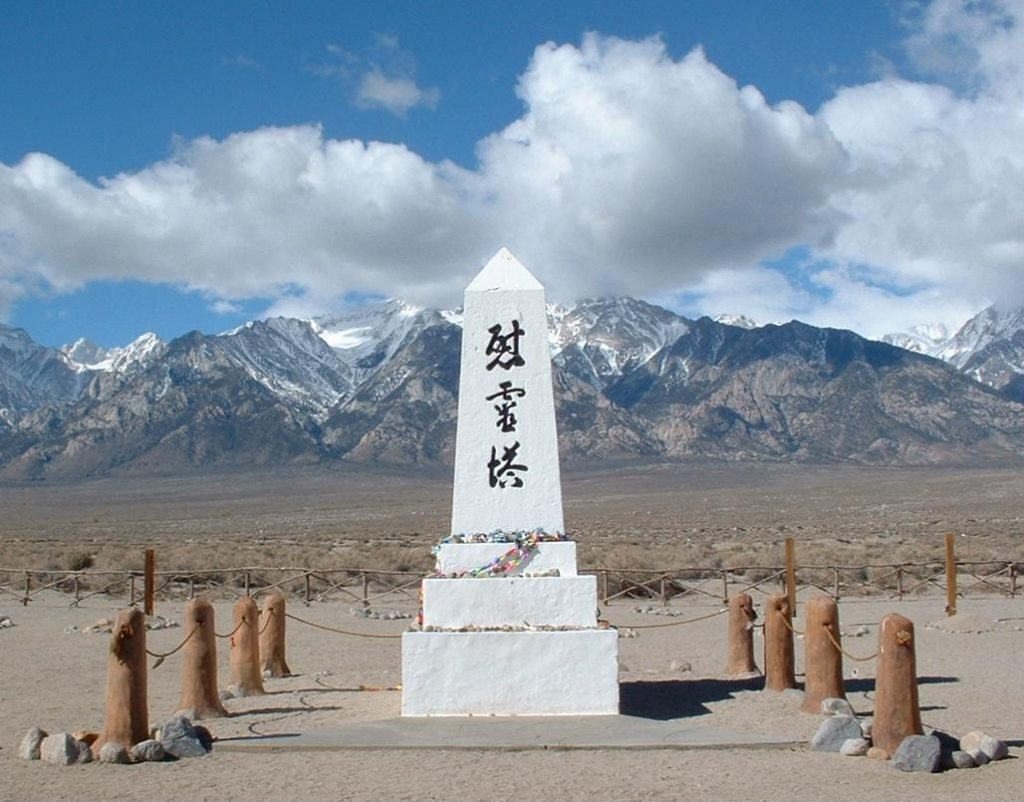
	</div>


	</div>
<div class="chapter standard " id="chapter-humanities-councils" title="Humanities Councils">
	<div class="chapter-title-wrap">
		<p class="chapter-number">11</p>
		<h1 class="chapter-title">Humanities Councils</h1>
			</div>
	<div class="ugc chapter-ugc">
					<p class="short-title"></p>
	<p class="chapter-author">Mary Rizzo</p>
				 <div class="wp-caption aligncenter" id="attachment_3692" aria-describedby="caption-attachment-3692" style="width: 600px"><img class="wp-image-3692" src="http://inclusivehistorian.pressbooks.sunycreate.cloud/wp-content/uploads/sites/11/2020/12/Kirin_Smith_at_the_West_Baltimore_Farmers_Market_Greater_Rosemont_Walking_Tour_5140227471-scaled.jpg" alt="" width="600" height="402" title="" /><div class="wp-caption-text" id="caption-attachment-3692">This walking tour of the Greater Rosemont neighborhood in Baltimore was funded by the Maryland Humanities Council in 2010. The tour was led by Dr. Ed Orser, professor emeritus at UMBC, and included as speakers members of the Evergreen Protective Association, including Kirin Smith, featured here. Photo credit: <a href="https://commons.wikimedia.org/wiki/File:Kirin_Smith_at_the_West_Baltimore_Farmer%27s_Market,_Greater_Rosemont_Walking_Tour_(5140227471).jpg#/media/File:Kirin_Smith_at_the_West_Baltimore_Farmer%27s_Market,_Greater_Rosemont_Walking_Tour_(5140227471).jpg" data-url="https://commons.wikimedia.org/wiki/File:Kirin_Smith_at_the_West_Baltimore_Farmer%27s_Market,_Greater_Rosemont_Walking_Tour_(5140227471).jpg#/media/File:Kirin_Smith_at_the_West_Baltimore_Farmer%27s_Market,_Greater_Rosemont_Walking_Tour_(5140227471).jpg">Baltimore Heritage, Wikimedia Commons</a>.</div></div> <p>A <a href="https://www.neh.gov/about/state-humanities-councils" data-url="https://www.neh.gov/about/state-humanities-councils">network</a> of fifty-six nonprofit organizations located in every state and U.S. territory, humanities councils have been a significant supporter of public history since their creation in 1971. An offshoot of the <a href="https://www.neh.gov/" data-url="https://www.neh.gov/">National Endowment for the Humanities</a> (NEH), their founding purpose was to democratize humanistic knowledge and methods by bridging the gap between scholars and the public.</p> <p>Humanities councils encourage humanities activities everywhere—through museums, libraries, archives, historical societies, cultural organizations, and colleges and universities in rural communities, urban neighborhoods, and suburban towns. Their grant programs, which are locally-focused, are more accessible to many public historians than NEH grants, which are geared towards national projects. Public historians also work with councils as project scholars, grant reviewers, and board members.</p> <h2><strong>Humanities Relevance</strong></h2> <p>Since their creation, humanities councils have struggled with how to make their programs relevant to contemporary issues and appeal to a wide variety of audiences. This essay explores humanities councils’ current efforts to foster diversity and inclusion. It also analyzes how the definition of diversity and inclusion changed over time for the councils, showing how they responded to societal concerns at three critical junctures by creating particular kinds of programs. It concludes with thoughts about the future of diversity and inclusion for humanities councils.</p> <p>In the early twenty-first century, declining funding and support for the humanities led to a wave of articles and reports on the crisis in the humanities. Councils responded by forcefully asserting the role of the humanities in helping people deal with issues of contemporary relevance. As the nation debates immigration policy and Black Lives Matter, for example, councils are offering programs to help contextualize these complex issues. In 2016, <a href="https://www.oregonhumanities.org/" data-url="https://www.oregonhumanities.org/">Oregon Humanities</a> offered a program called “Why Aren’t There More Black People in Oregon?: A Hidden History,” that examined how Oregon became one of the whitest states in the nation. <a href="http://www.alabamahumanities.org/" data-url="http://www.alabamahumanities.org/">Alabama Humanities Foundation</a> gave workshops to law enforcement officers on the history of the Scottsboro Boys, a 1931 case in which nine African American teenagers were wrongfully convicted of rape by all-white juries. This historical context is used to answer the question of “how we got where we are today in terms of persistent social, economic, cultural, and racial issues often dividing communities and presenting challenges in terms of police/community relations.”<a href="#_edn1" data-url="https://inclusivehistorian.pressbooks.sunycreate.cloud/chapter/humanities-councils/#_edn1">[i]</a> In 2016, the NEH created an initiative called “Humanities and the Legacy of Race and Ethnicity in the United States,” which supported a range of programming. Some councils created their own grant programs with the funding, supporting projects developed by local organizations. The <a href="https://azhumanities.org/" data-url="https://azhumanities.org/">Arizona Humanities Council</a> offered a series of programs utilizing many public humanities methodologies, including writing workshops, film screenings, a history immersion tour, and panel discussions. <a href="http://www.ohiohumanities.org/" data-url="http://www.ohiohumanities.org/">Ohio Humanities</a> offered speakers on topics including African American history, immigration history, and nativism to spur discussions about U.S. society today.</p> <h2><strong>Key Questions</strong></h2> <p>While the names of these programs are new, the questions they raise are old ones. What makes the humanities meaningful to the general public? What do we mean by the general public anyway? For decades, humanities councils grappled with issues of diversity and inclusion as they struggled to come up with answers to these questions. From 1971 to the early 1980s, diversity was defined as reaching non-academic audiences with humanities content delivered by credentialed scholars. One way this objective was accomplished was by connecting humanities scholars with public policymakers, with the hope that the scholars would shape policies being created. These policies would, in turn, affect everyday Americans. In the 1980s, multiculturalism defined diversity. Council programs delved into the pluralism of communities, celebrating heritage and culture. In response to the move to multiculturalism, conservative politicians waged the culture wars in the 1990s against the <a href="https://www.arts.gov/" data-url="https://www.arts.gov/">National Endowment for the Arts</a> (NEA), as well as the NEH and humanities councils. In the 1990s and 2000s, seeing the hardening of partisan political lines between conservatives and liberals nationwide, councils moved towards civic dialogue and community conversation as a noncontroversial way to find common ground. Today, councils talk about diversity and inclusion in a variety of ways. They want to attract audiences that are diverse in terms of race, class, gender, sexuality, and age. Councils are experimenting with new kinds of programming created by nontraditional humanities organizations that takes place in community spaces and that involve people as participants, not passive audiences. The keywords today are action and collaboration—humanists are working <em>with </em>communities to address what’s happening around us. Councils are also looking at their own executive leadership, staffs, and boards and asking why there are comparatively few people of color, women, and LGBTQ people in these important positions.</p> <h2><strong>Historical Background of the National Endowment for the Humanities</strong></h2> <p>To understand the role of the humanities councils in public history, it is necessary to give a brief overview of the creation of the NEH in 1965. The Cold War between the United States and the Soviet Union convinced the federal government to pump money into science, engineering, and technology. National reputation hinged on whether the Soviets or the Americans would land a man on the moon, for example. Humanities scholars and professional associations looked on enviously as their colleagues in science and technology benefitted from this funding. The National Commission on the Humanities, made up of the American Council of Learned Societies, the Council of Graduate Schools in America, and the United Chapters of Phi Beta Kappa—all scholarly organizations—released a “Report of the Commission on the Humanities” in 1964 that argued that the humanities were as important to national identity and international prestige as science and technology.<a href="#_edn2" data-url="https://inclusivehistorian.pressbooks.sunycreate.cloud/chapter/humanities-councils/#_edn2">[ii]</a> It described a future without the humanities: technology without ethics, humans turned into automatons. The Cold War was being fought for nothing if the United States did not nurture its humanists, which it defined as scholars, artists, and teachers in disciplines including history, literature, philosophy, the arts, and others that were qualitative rather than quantitative. Their suggestion was to create a federal agency modeled on the National Science Foundation that would spend federal money on supporting the work of these scholars, artists, and teachers while also replenishing their ranks through graduate fellowships. The wider public would learn from these people, but the agency itself would not be in the business of reaching the public directly. In 1965, President Lyndon B. Johnson signed the National Arts and Humanities Act into law, creating two federal agencies, the NEH and NEA.<a href="#_edn3" data-url="https://inclusivehistorian.pressbooks.sunycreate.cloud/chapter/humanities-councils/#_edn3">[iii]</a> In this legislation, the public humanities were envisioned as the foundation of democracy: “Democracy demands wisdom and vision in its citizens,” which could not be gained through science alone. Instead, individuals needed to “recognize and appreciate the aesthetic dimensions of our lives, the diversity of excellence that comprises our cultural heritage, and artistic and scholarly expression.”<a href="#_edn4" data-url="https://inclusivehistorian.pressbooks.sunycreate.cloud/chapter/humanities-councils/#_edn4">[iv]</a> The achievements of the past must be remembered to provide citizens with a common history and sense of pride. But, as public historians know, the devil is in the details. What do we mean by “our cultural heritage”? In articulating these goals, the legislation, which borrowed language from the ACLS report, created the public humanities that we know today.</p> <p>Through the efforts of the National Commission on the Humanities and its first Chairman, Barnaby C. Keeney, the President of Brown University, the NEH was deeply tied to higher education and the needs of university-based academics. Its central activity was grant making, conducted by panels of academically-credentialed scholars, for research fellowships, publications, education, and public programs. The first funded NEH grant was to the American Society of Papyrologists to conduct a six-week training workshop for scholars who studied ancient writings on papyrus. Such a project suggests who the NEH saw as its main audience: academic scholars. The agency was not, however, entirely divorced from contemporary concerns. Other early grants supported public television programs on African American arts, Alaskan material culture, and the urban crisis. Interestingly, a substantial number of public program grants in the first five years of the NEH funded internship programs at museums.</p> <h2><strong>Creating Humanities Councils</strong></h2> <p>After just a few years of NEH grantmaking, Rhode Island Senator Claiborne Pell, who had helped write the legislation creating the agency (as well as the college loan program that bears his name), was dissatisfied with its impact. Rather than reaching local communities at the grassroots level, funding was supporting universities and scholarly research. If the humanities were really essential to democracy, then there needed to be a method of reaching non-academics with the insights of humanities scholars. The state humanities councils, which could work with local communities, were the solution. If the 1960s were a moment of expansion of federal power that made the NEH possible, Nixon’s New Federalism, which shifted power from the federal government to state governments, ironically created the conditions for the councils. Based on the state arts council model, the humanities councils (originally called committees on the humanities) were statewide outposts of the NEH that would offer grants and programs to smaller organizations who would be able to reach people everywhere. In 1971, the Federal/State Partnership was created as the liaison between the NEH and the network of state councils.</p> <p>The mission of the humanities councils was to democratize knowledge. They wanted to connect humanities scholars with local communities in order to give people access to the research being done in universities. Over the next several decades certain trends in the public humanities emerged from these partnerships, each of which had implications for issues of diversity and inclusion. In the 1970s, when the NEH created the state councils, it mandated that they bring scholars into conversation with citizens about topics of public policy. Councils responded in two ways. First, councils created programs that gave citizens more information that would help them address the complex issues facing the nation, such as a 1977 symposium on “The Free Flow of Information: Government, Media and the Individual,” which brought 300 people, including journalists and scholars, together in Texas. In New Jersey, the council coordinated a series of talks on “The Juvenile Justice System: Who is Responsible?” Secondly, councils and the NEH paired historians, ethicists, philosophers, and literature scholars with policymakers to see if the result was better policy. In 1979, for example, the US Conference of Mayors received funding from the NEH to develop a humanities program for mayors, publishing two reports on its findings. The policy mandate felt limiting to some scholars, who didn’t see connections between their research and policy issues.</p> <h2><strong>Multiculturalism and the Culture Wars</strong></h2> <p>By the 1980s, the NEH and Congress had loosened the rules on what the councils could fund at the same moment that multiculturalism was bubbling up in universities. Diversity at this moment was defined through pluralism: the nation was made up of various groups with their own histories and cultural practices. Rather than melting together into something new, these groups coexisted like vegetables in a salad bowl, an oft-used metaphor. Moving away from an assimilationist model in which the humanities were defined as a canonical set of texts written by white men opened up avenues for different communities to engage and claim public space. In 1981, for example, the <a href="https://www.ilhumanities.org/" data-url="https://www.ilhumanities.org/">Illinois Humanities Council</a> funded “Bridging the Gap.” The project videotaped a Baltic theater production and showed it to Eastern European immigrant organizations to discuss their heritage and values.<a data-url="" id="_ftnref5"></a><a href="#_edn5" data-url="https://inclusivehistorian.pressbooks.sunycreate.cloud/chapter/humanities-councils/#_edn5">[v]</a>&nbsp;But multiculturalism as practiced in many public heritage programs flattened racial, ethnic, and religious difference into cultural symbols. The cultural heritage festival was emblematic of the problems with this model. Did eating a new food or watching a folk dance teach festival-goers about another race, ethnicity, or religion, or did it simply turn them into pleasurable experiences disconnected from real questions about history and power? While the acknowledgement of common humanity was valuable, the focus on heritage, folk culture, and aesthetic display seemed to argue that all groups had equal access to resources, which was simply untrue.</p> <p>As inoffensive as the discourse of multiculturalism seems now, conservative government officials responded to what they perceived as an attack on American or Western values. NEH Chairman William Bennett (1981-1985) argued that multiculturalism had overtaken the canon of Western civilization. Without the shared values that the humanities, which Bennett and others defined through texts like the Bible and the plays of William Shakespeare, provided, what would hold our society together? Known as the “culture wars,” these debates escalated in the mid-1990s with the controversy over the Smithsonian’s exhibit on the <a href="https://airandspace.si.edu/collection-objects/boeing-b-29-superfortress-enola-gay" data-url="https://airandspace.si.edu/collection-objects/boeing-b-29-superfortress-enola-gay">Enola Gay</a>, the plane that dropped an atomic bomb in Japan during World War II. Museum labels included the Japanese point of view, suggesting that the American narrative of the “good war” was one-sided. Politicians and commentators condemned the use of tax dollars being used to support these kinds of projects. Congress, led by Republicans, resoundingly said no, and cut funding to the NEA, as well as the NEH and state councils. Federal funding for the NEH plummeted in the mid-1990s and has never entirely recovered, though the NEH has maintained a steady level of support for the councils.<a href="#_edn6" data-url="https://inclusivehistorian.pressbooks.sunycreate.cloud/chapter/humanities-councils/#_edn6">[vi]</a> Councils, however, have had to find other sources of funding through their state governments, foundations, and individual donors to deal with growing costs.</p> <h2><strong>Civic Dialogue</strong></h2> <p>The hardening of partisan lines during the culture wars suggested that there was little common ground for civic discussion. Congress made it clear it would use its power of appropriation to limit even slightly controversial perspectives. Councils responded by adopting civic dialogue as a major programming initiative in the late 1990s and 2000s. These community-based conversations convened people for discussion by trained facilitators. While earlier council programs like lectures or film programs encouraged mostly passive audiences, dialogue necessitated participation. Council practice paralleled discussions happening in museum circles around the dialogic or participatory museum which sought to shift authority from humanities scholars towards the audience allowing for more inclusive programs that valued the knowledge of community members as well as those with academic credentials.<a href="#_edn7" data-url="https://inclusivehistorian.pressbooks.sunycreate.cloud/chapter/humanities-councils/#_edn7">[vii]</a> Community conversations centered on common issues and often utilized a shared text as a starting point. They happened in public library branches, churches, and hospitals, expanding where the public humanities took place. One long-running dialogue program is “<a href="http://masshumanities.org/programs/literature-medicine/" data-url="http://masshumanities.org/programs/literature-medicine/">Literature and Medicine: Humanities at the Heart of Healthcare</a>,” which uses literature as the basis for conversations between healthcare professionals to help them manage burnout and develop better cultural sensitivity when interacting with patients from backgrounds different from theirs. Created by the <a href="https://mainehumanities.org/" data-url="https://mainehumanities.org/">Maine Humanities Council</a>, it is offered by a number of councils across the country. Both Oregon Humanities and <a href="https://humanitiesny.org/" data-url="https://humanitiesny.org/">Humanities New York</a> not only offer conversation-based programs, but train facilitators in how to lead these discussions.<a href="#_edn8" data-url="https://inclusivehistorian.pressbooks.sunycreate.cloud/chapter/humanities-councils/#_edn8">[viii]</a> Showing how councils are bringing humanities programs into nontraditional spaces designed to appeal to different audiences, Think and Drink programs are held at bars. <a href="https://www.humanities.org/" data-url="https://www.humanities.org/">Humanities Washington</a>’s Think &amp; Drink offers hosted conversations on topics like feminism and protest since 1968.<a href="#_edn9" data-url="https://inclusivehistorian.pressbooks.sunycreate.cloud/chapter/humanities-councils/#_edn9">[ix]</a></p> <h2><strong>Broadening Audiences</strong></h2> <p>This chronology does not mean that one type of program was superseded by another. Instead, councils use all of the techniques discussed in this essay to this day. But just like decades ago, they are still trying to broaden the audience. One new audience that humanities councils and the NEH have identified are veterans. Recognizing that thousands of American military personnel were returning to civilian life after being involved in the conflicts in Iraq and Afghanistan, the NEH and councils have made a concerted effort to reach this group and help their transition back to home life. Literature, history, facilitated conversation, and creative writing are some of the ways that councils have served this community.</p> <p>Since their inception, councils have used media, especially radio, television, and documentary film, to spread the humanities to broad audiences. While the reach of such programs can be huge, it is impossible to know how much impact they have on viewers or who, exactly, is viewing them. For California Humanities the goal is creating more diverse media content. Grants from the California Documentary Project support media projects that tell lesser-known stories about diverse communities and are relevant to contemporary issues.<a href="#_edn10" data-url="https://inclusivehistorian.pressbooks.sunycreate.cloud/chapter/humanities-councils/#_edn10">[x]</a> Digital humanities are a new focus for councils. For some, digital humanities extends their media programs in new directions. In the War Ink project, which California Humanities funded, veterans told stories through their tattoos, which was accompanied by an online interpretive exhibit. For other councils, online state encyclopedias or digital exhibitions increase accessibility of humanities resources. Councils also use social media, especially Facebook and Twitter, to communicate with their constituencies. But councils are not at the forefront of the digital humanities, perhaps because other funders, like the NEH, have more resources to support large-scale digital humanities projects. Certainly digital efforts will grow but councils, like museums, also see themselves as offering something increasingly rare in our networked world: real-life interaction.</p> <h2><strong>Re-defining the Humanities Scholar</strong></h2> <p>Today, diversity and inclusion is more than simply who attends programs. Humanities councils, like museums, libraries and archives, and other public history institutions, need to examine why their staff and boards of directors are often dominated by white middle-class educated professionals. One positive change is in the definition of “humanities scholar.” A humanities scholar is required to be part of every grant-funded project. Historically, humanities scholars had PhDs in humanities disciplines and university affiliations. Many councils have changed this requirement to include people like tradition bearers or community scholars who have deep knowledge, but no academic qualifications. This shift is critical because it signals to community members that their knowledge is valued and helps to counter the elitism that was present at the creation of the NEH and has dogged the public humanities since.</p> <h2><strong>Conclusion</strong></h2> <p>As this essay has argued, councils are part of a larger public humanities infrastructure. Like museums, libraries, and universities, they must critique themselves as part of debates around diversity and inclusion. Do they support neutral spaces for public dialogue or can they lift up the perspectives of economically and socially marginalized communities? Is the elitism that marked the development of the public humanities surmountable or do we need to create a new term to describe this work? What does it mean to serve all the residents of a state who have very different interests, needs, and political perspectives? Should councils take stands on public questions? These are the questions that state humanities councils must answer in the twenty-first century to become truly inclusive organizations.</p> <h2>Notes</h2> <p><a href="#_ednref1" data-url="https://inclusivehistorian.pressbooks.sunycreate.cloud/chapter/humanities-councils/#_ednref1">[i]</a> The Scottsboro Case and the Legacy of Law and Justice in Alabama, Alabama Humanities Foundation, <a href="http://www.alabamahumanities.org/programs/humanitiesandlaw/" data-url="http://www.alabamahumanities.org/programs/humanitiesandlaw/">http://www.alabamahumanities.org/programs/humanitiesandlaw/</a>.</p> <p><a href="#_ednref2" data-url="https://inclusivehistorian.pressbooks.sunycreate.cloud/chapter/humanities-councils/#_ednref2">[ii]</a> “Report of the Commission on the Humanities,” American Council of Learned Societies, <a href="http://www.acls.org/about/historical_documents/" data-url="http://www.acls.org/about/historical_documents/">http://www.acls.org/about/historical_documents/</a>.</p> <p><a href="#_ednref3" data-url="https://inclusivehistorian.pressbooks.sunycreate.cloud/chapter/humanities-councils/#_ednref3">[iii]</a> “National Foundation on the Arts and Humanities Act of 1965,” National Endowment for the Humanities, <a href="https://www.neh.gov/about/history/national-foundation-arts-and-humanities-act-1965-pl-89-209" data-url="https://www.neh.gov/about/history/national-foundation-arts-and-humanities-act-1965-pl-89-209">https://www.neh.gov/about/history/national-foundation-arts-and-humanities-act-1965-pl-89-209</a>.</p> <p><a href="#_ednref4" data-url="https://inclusivehistorian.pressbooks.sunycreate.cloud/chapter/humanities-councils/#_ednref4">[iv]</a> Ibid.</p> <p><a href="#_ednref5" data-url="https://inclusivehistorian.pressbooks.sunycreate.cloud/chapter/humanities-councils/#_ednref5">[v]</a> “Straumanis backs cuts,” <em>Southern Illinoisian</em>, May 10, 1981.</p> <p><a href="#_ednref6" data-url="https://inclusivehistorian.pressbooks.sunycreate.cloud/chapter/humanities-councils/#_ednref6">[vi]</a> “National Endowment for the Humanities (NEH) Funding Levels,” <em>Humanities Indicators</em>, <a href="https://www.humanitiesindicators.org/content/indicatordoc.aspx?i=75" data-url="https://www.humanitiesindicators.org/content/indicatordoc.aspx?i=75">https://www.humanitiesindicators.org/content/indicatordoc.aspx?i=75</a>.</p> <p><a href="#_ednref7" data-url="https://inclusivehistorian.pressbooks.sunycreate.cloud/chapter/humanities-councils/#_ednref7">[vii]</a> Linda Shopes, “The Museum of Chinese in America: Continuity and Change,” <em>Cross Ties</em>, <a href="https://march.rutgers.edu/the-museum-of-chinese-in-america-continuity-and-change/" data-url="https://march.rutgers.edu/the-museum-of-chinese-in-america-continuity-and-change/">https://march.rutgers.edu/the-museum-of-chinese-in-america-continuity-and-change/</a>.</p> <p><a href="#_ednref8" data-url="https://inclusivehistorian.pressbooks.sunycreate.cloud/chapter/humanities-councils/#_ednref8">[viii]</a> “What is the Conversation Project?” Oregon Humanities, <a href="https://oregonhumanities.org/programs/conversation-project/" data-url="https://oregonhumanities.org/programs/conversation-project/">https://oregonhumanities.org/programs/conversation-project/</a>. “Community Conversations,” Humanities New York, <a href="http://humanitiesny.org/our-work/programs/community-conversations/" data-url="http://humanitiesny.org/our-work/programs/community-conversations/">http://humanitiesny.org/our-work/programs/community-conversations/</a>.</p> <p><a href="#_ednref9" data-url="https://inclusivehistorian.pressbooks.sunycreate.cloud/chapter/humanities-councils/#_ednref9">[ix]</a> Think &amp; Drink, Humanities Washington, <a href="https://www.humanities.org/program/think-and-drink/" data-url="https://www.humanities.org/program/think-and-drink/">https://www.humanities.org/program/think-and-drink/</a>.</p> <p><a href="#_ednref10" data-url="https://inclusivehistorian.pressbooks.sunycreate.cloud/chapter/humanities-councils/#_ednref10">[x]</a> “California Documentary Project,” California Humanities, <a href="http://calhum.org/programs-initiatives/programs/california-documentary-project/" data-url="http://calhum.org/programs-initiatives/programs/california-documentary-project/">http://calhum.org/programs-initiatives/programs/california-documentary-project/</a>.</p> <h2>Suggested Readings</h2> <p>Greenfield, Briann. “Making the Humanities Public: The Example of Connecticut’s Humanities Council.” <em>The Public Historian </em>35, no. 1 (2013): 51-66.</p> <p>Harpham, Geoffrey Galt. <em>The Humanities and the Dream of America</em>. Chicago: University of Chicago Press, 2011.</p> <p><em>The Heart of the Matter: The Humanities and Social Sciences For a Vibrant, Competitive and Secure Nation. </em>Cambridge, MA: American Academy of Arts &amp; Sciences, 2013. <a href="https://www.amacad.org/content/publications/publication.aspx?d=21724" data-url="https://www.amacad.org/content/publications/publication.aspx?d=21724">https://www.amacad.org/content/publications/publication.aspx?d=21724</a>.</p> <p>Lynn, Elizabeth. <em>An Ongoing Experiment: State Councils, the Humanities and the American Public. </em>Kettering Foundation, 2013. <a href="https://www.kettering.org/catalog/product/ongoing-experiment-state-councils-humanities-and-american-public" data-url="https://www.kettering.org/catalog/product/ongoing-experiment-state-councils-humanities-and-american-public">https://www.kettering.org/catalog/product/ongoing-experiment-state-councils-humanities-and-american-public</a>.</p> <p>Rizzo, Mary. “Finding the Roots of Civic Engagement in the Public Humanities,” <em>History@Work</em>, National Council on Public History, July 21, 2014. <a href="http://ncph.org/history-at-work/finding-the-roots-of-civic-engagement/" data-url="http://ncph.org/history-at-work/finding-the-roots-of-civic-engagement/">http://ncph.org/history-at-work/finding-the-roots-of-civic-engagement/</a>.</p> <p>Zainaldin, Jamil. “Public Works: NEH, Congress, and the State Humanities Councils.” <em>The Public Historian </em>35, no. 1 (2013): 28-50.</p> <h2>Author</h2> <p>~ <em>Mary Rizzo</em> is an Assistant Professor in History and Associate Director of Public and Digital Humanities Initiatives for the Graduate Program in American Studies at Rutgers University-Newark. She worked for several years at the New Jersey Council for the Humanities. Currently, she is completing a book on how Baltimore has been represented in popular culture from the 1950s to the early twenty-first century. She tweets as @rizzo_pubhist and can be reached at <a href="mailto:mrizzonj@gmail.com" data-url="mailto:mrizzonj@gmail.com">mrizzonj@gmail.com</a>.</p> 
	</div>


	</div>
<div class="chapter standard " id="chapter-holocaust-history" title="Holocaust History">
	<div class="chapter-title-wrap">
		<p class="chapter-number">12</p>
		<h1 class="chapter-title">Holocaust History</h1>
			</div>
	<div class="ugc chapter-ugc">
					<p class="short-title"></p>
	<p class="chapter-author">Adina Langer</p>
				 <div class="wp-caption aligncenter" id="attachment_4000" aria-describedby="caption-attachment-4000" style="width: 471px"><img class="wp-image-4000" src="http://inclusivehistorian.pressbooks.sunycreate.cloud/wp-content/uploads/sites/11/2020/12/Hall_of_witness-scaled.jpg" alt="This image shows the &amp;quot;Hall of Witness,&amp;quot; in the interior of the United States Holocaust Memorial Museum in Washington, DC" width="471" height="600" title="" /><div class="wp-caption-text" id="caption-attachment-4000">Hall of Witness at the United States Holocaust Memorial Museum, Washington, DC, 2009. Photo credit: dbking, <a href="https://commons.wikimedia.org/wiki/File:Hall_of_witness.jpg" data-url="https://commons.wikimedia.org/wiki/File:Hall_of_witness.jpg">Wikimedia Commons</a>.</div></div> <p>Since the end of World War II, a worldwide network of sites dedicated to defining, preserving, and interpreting the history of the Holocaust has emerged and evolved. In the public history of the Holocaust, different institutions define the unfolding events in various ways, but for the purposes of this essay, the <a href="https://encyclopedia.ushmm.org/content/en/article/introduction-to-the-holocaust" data-url="https://encyclopedia.ushmm.org/content/en/article/introduction-to-the-holocaust">definition</a> from the <a href="https://www.ushmm.org/" data-url="https://www.ushmm.org/">United States Holocaust Memorial Museum</a> (USHMM) serves well:</p> <blockquote><p>The Holocaust was the systematic, bureaucratic, state-sponsored persecution and murder of six million Jews by the Nazi regime and its allies and collaborators. <em>Holocaust</em> is a word of Greek origin meaning “sacrifice by fire.” The Nazis, who came to power in Germany in January 1933, believed that Germans were “racially superior” and that the Jews, deemed “inferior,” were an alien threat to the so-called German racial community.</p> <p>During the era of the Holocaust, German authorities also targeted other groups because of their perceived racial and biological inferiority: Roma (Gypsies), people with disabilities, some of the Slavic peoples (Poles, Russians, and others) Soviet prisoners of war, and blacks. Other groups were persecuted on political, ideological, and behavioral grounds, among them Communists, Socialists, Jehovah’s Witnesses, and homosexuals.<a href="#_edn1" data-url="https://inclusivehistorian.pressbooks.sunycreate.cloud/chapter/holocaust-history/#_edn1">[i]</a></p></blockquote> <p>“Race” was central to the Nazi worldview, inextricably linked to the idea of the “nation.” In Nazi racial theory, Germany was an “Aryan” nation, whose people were descended from ancient Indo-Europeans who settled throughout the European continent as well as in Iran and India. Thus, conflating “Aryan” with “German” meant that “non-Aryan” peoples could not be German, no matter how they thought of themselves prior to 1933; and German-speaking “Aryans” living within the post-World War I borders of other nations were German, and thus the territory they occupied must be part of Germany. The internal consistency of this worldview drove the actions of the <em>Third Reich</em> that led to both the Holocaust and World War II.</p> <p>Efforts to preserve and present the history of the Holocaust launched the ethos of “Never Again.”<a href="#_edn2" data-url="https://inclusivehistorian.pressbooks.sunycreate.cloud/chapter/holocaust-history/#_edn2">[ii]</a> Confronted by the reality of the Holocaust, historians and activists hoped that visitors would be inspired not only to prevent genocide, but to combat antisemitism wherever it rebounded in the world.</p> <h2><strong>An Overview of Holocaust Public History</strong></h2> <p>In 1978, driven by a sense of moral and ethical responsibility born from an evolving understanding of the United States’ lack of official response to the warning signs of the Holocaust and its atrocities as they began to unfold, members of Jimmy Carter’s <a href="https://encyclopedia.ushmm.org/content/en/article/history-of-the-united-states-holocaust-memorial-museum" data-url="https://encyclopedia.ushmm.org/content/en/article/history-of-the-united-states-holocaust-memorial-museum"><em>President’s Commission on the Holocaust</em></a> began the process that would lead to the creation of the United States Holocaust Memorial Museum. This American effort was one among many, and it occurred about thirty years after the first international efforts to preserve Holocaust history.</p> <p>The landscape of Holocaust public history includes “<a href="https://www.sitesofconscience.org/en/home/" data-url="https://www.sitesofconscience.org/en/home/">sites of conscience</a>,” national museums, educational initiatives, exhibits, and archives. The following is a sampling of the variety of these initiatives.</p> <p><strong>Place-based sites of remembrance</strong> were among the first to be preserved and often fall under state administration. These sites include places such as the <a href="http://auschwitz.org/en/" data-url="http://auschwitz.org/en/">Auschwitz-Birkenau Memorial Museum</a> in Poland (founded in 1947) and <a href="https://www.kz-gedenkstaette-dachau.de/index-e.html" data-url="https://www.kz-gedenkstaette-dachau.de/index-e.html">Dachau</a> in Germany (preserved as a memorial in the 1960s). They also include more recent initiatives like the <a href="https://www.nytimes.com/2012/06/20/travel/jewish-life-in-shanghais-ghetto.html" data-url="https://www.nytimes.com/2012/06/20/travel/jewish-life-in-shanghais-ghetto.html">Shanghai Jewish Refugees Memorial</a>, created in China in 1993. <strong>Architecture and artifact-intensive sites</strong> include <a href="https://www.yadvashem.org/" data-url="https://www.yadvashem.org/">Yad Vashem</a> in Israel (founded in 1953, with a modern museum exhibit added in 2005), the <a href="https://www.ushmm.org/" data-url="https://www.ushmm.org/">USHMM</a> (opened in Washington, D.C. in 1993), and the <a href="http://www.memorialdelashoah.org/en/english-version.html" data-url="http://www.memorialdelashoah.org/en/english-version.html">Memorial de la Shoah</a> in France (2005). <strong>Regional museums</strong> of significant size and scope exist in many states and provinces and include such places as the <a href="https://hmh.org/" data-url="https://hmh.org/">Holocaust Museum of Houston</a> (1996) and the <a href="https://mjhnyc.org/" data-url="https://mjhnyc.org/">Museum of Jewish Heritage in New York City</a> (1997). Many were founded by survivors. Some, including the <a href="http://www.museumoftolerance.com/" data-url="http://www.museumoftolerance.com/">Museum of Tolerance</a> in Los Angeles (1993) and the <a href="https://humanrights.ca/" data-url="https://humanrights.ca/">Canadian Museum for Human Rights</a> (2014), take a more broad-based approach to their mission.</p> <p><strong>Holocaust education</strong> initiatives (some of which include museums) exist at many colleges and universities around the world. These include places like the <a href="https://www.chhange.org/" data-url="https://www.chhange.org/">Center for Holocaust, Human Rights, and Genocide Education</a> (CHHANGE) at Brookdale Community College in New Jersey (1979), the <a href="https://sfi.usc.edu/" data-url="https://sfi.usc.edu/">Shoah Foundation</a> (1994) at the University of Southern California, and the <a href="https://historymuseum.kennesaw.edu/" data-url="https://historymuseum.kennesaw.edu/">Museum of History and Holocaust Education</a> (MHHE) at Kennesaw State University in Georgia (2003).</p> <p><strong>Traveling exhibits, </strong>such as <a href="https://holocaust.georgia.gov/anne-frank-world-1929-1945" data-url="https://holocaust.georgia.gov/anne-frank-world-1929-1945">Anne Frank in the World</a> or <a href="https://historymuseum.kennesaw.edu/exhibitions/traveling/ravensbruck.php" data-url="https://historymuseum.kennesaw.edu/exhibitions/traveling/ravensbruck.php">Remembering Ravensbrück: Women and the Holocaust</a>, allow for portable explorations of sub-topics or introductions to the larger history which can be installed at multiple libraries, museums, and schools. Others with more specific themes, along with artifacts and mixed media, include <a href="https://www.vedemunderground.com/" data-url="https://www.vedemunderground.com/">Vedem Underground</a> about a zine published by boys imprisoned at Theresienstadt/Terezen and <a href="https://artandremembrance.org/" data-url="https://artandremembrance.org/">Art and Remembrance</a> based on the textile work of Holocaust survivor Esther Krinitz. Finally, there are blockbuster multi-national partnerships such as the 2016 exhibit <a href="http://auschwitz.org/en/museum/news/auschwitz-not-long-ago-not-far-away-exhibition-will-open-in-may-at-the-museum-of-jewish-heritage-in-new-york,1345.html" data-url="http://auschwitz.org/en/museum/news/auschwitz-not-long-ago-not-far-away-exhibition-will-open-in-may-at-the-museum-of-jewish-heritage-in-new-york,1345.html">Auschwitz: Not Long Ago, Not Far Away</a>, which premiered at the Arte Canal Exhibition Centre in Madrid, Spain.</p> <p><strong>Temporary exhibits</strong> and initiatives at Holocaust museums and education centers allow for deeper exploration of important sub-topics and themes within Holocaust history. With its mission to evoke a sense of responsibility in its visitors, the USHMM has had a number of successful, well-executed temporary exhibits including, most recently, <a href="https://exhibitions.ushmm.org/americans-and-the-holocaust/main" data-url="https://exhibitions.ushmm.org/americans-and-the-holocaust/main">Americans and the Holocaust</a> and <a href="http://somewereneighbors.ushmm.org/" data-url="http://somewereneighbors.ushmm.org/">Some Were Neighbors</a>. Built with contemporary technology, temporary exhibits can make use of the staying power of digital media to live beyond their physical tenure. Educational initiatives also benefit from Web-based technology. These include Yad Vashem’s <a href="https://echoesandreflections.org/" data-url="https://echoesandreflections.org/">Echoes and Reflections</a>, the <a href="https://memoirs.azrielifoundation.org/" data-url="https://memoirs.azrielifoundation.org/">Holocaust Survivor Memoirs Program</a> of the Azrieli Foundation in Toronto, Canada, and <a href="https://www.facinghistory.org/back-to-school/?gclid=CjwKCAjwtO7qBRBQEiwAl5WC23VF7qJDfgtRbQb8RvwRN6INI700jKwTB5TRe6RgIAJRBSpjkaFE1BoC4S4QAvD_BwE" data-url="https://www.facinghistory.org/back-to-school/?gclid=CjwKCAjwtO7qBRBQEiwAl5WC23VF7qJDfgtRbQb8RvwRN6INI700jKwTB5TRe6RgIAJRBSpjkaFE1BoC4S4QAvD_BwE">Facing History and Ourselves</a>, originally launched in 1976.</p> <h2><strong>Strategies for Interpreting the Holocaust</strong></h2> <p>With over seventy years of evolving public history to consider, what should today’s “inclusive historian” count as best practices for interpreting the Holocaust?</p> <h3><strong><em>Accuracy and Evidence</em></strong></h3> <p>The magnitude and specificity of the Holocaust tests the limits of human comprehension and credence. It has invited denial and diminishment since people were first aware of atrocities happening in Germany after the National Socialist (Nazi) party came to power in 1933. Efforts to define the Holocaust occurred first in the context of the <a href="https://www.un.org/en/genocideprevention/genocide-convention.shtml" data-url="https://www.un.org/en/genocideprevention/genocide-convention.shtml">Convention on the Prevention and Punishment of the Crime of Genocide</a> adopted by the United Nations General Assembly in 1948. Notably, the adoption of this convention occurred two years after the conclusion of the <a href="https://encyclopedia.ushmm.org/content/en/article/the-nuremberg-trials" data-url="https://encyclopedia.ushmm.org/content/en/article/the-nuremberg-trials">Nuremberg War Crimes</a> trials for which mountains of evidence and witness testimony against top Nazi officials were compiled. The need to gather evidence and create a criminal narrative during judicial proceedings has led both to the preservation of evidence and to the parsing of precise definitions of crimes committed. Bureaucratic precision can sometimes obscure emotional truths, lead people to doubt witness testimony, or attempt to compare suffering. Thus, definitions of the Holocaust that foreground the Jews as the Nazis’ primary target for genocide, but also mention and contextualize “other” targets, are of paramount importance.</p> <h3><strong><em>Comprehensive Coverage</em></strong></h3> <p>The “other groups” targeted by the Nazi regime must be included in any comprehensive coverage of the Holocaust period. Discussing the unique characteristics and specific humanity of these approximately five million individuals honors their memory. It does not detract from the story of the Jews as the Nazis’ primary targets for genocide. However, it does help contemporary people to grasp the totality and complexity of the Nazi party’s murderous ideology.</p> <h3><strong><em>Importance of Individuality</em></strong></h3> <p>An event of such magnitude and darkness as the Holocaust (or Shoah—the Hebrew word for annihilation) invites understanding through <a href="https://encyclopedia.ushmm.org/content/en/article/documenting-numbers-of-victims-of-the-holocaust-and-nazi-persecution" data-url="https://encyclopedia.ushmm.org/content/en/article/documenting-numbers-of-victims-of-the-holocaust-and-nazi-persecution">statistics</a>. Six million Jews were killed, two-thirds of the Jews of Europe and forty percent of the Jews in the world. More than 200,000 people, about one-quarter of the European population of Roma and Sinti, were killed in what the survivors recall as the “Porajmos” (Roma for great devouring). An estimated 1.8 million non-Jewish Polish civilians were killed during the “Zaglada” (Polish for destruction).<a href="#_edn3" data-url="https://inclusivehistorian.pressbooks.sunycreate.cloud/chapter/holocaust-history/#_edn3">[iii]</a> On their own, such numbers provoke an intake of breath, a shaking of the head, but they do not do justice to the people who suffered and died or to the cultures that were erased from the great story map of the world. When people encounter and retain historical understanding, they do so through relating to the unique journeys of individuals both like and unlike themselves.</p> <h3><strong><em>Juxtaposition</em></strong></h3> <p>The ways in which these individuals’ stories are both like and unlike those of the public historian’s contemporary audience depends on the make-up of that audience. The years 1933-1945 are significant to the entire world. They encompass the Great Depression and World War II. Thus, the reality of the Holocaust is sometimes best understood through juxtaposition of other historical moments and events that may be familiar to visitors. In 1935, African American track star Jesse Owens was training for the 1936 Berlin Olympics while the German government was passing the Nuremberg race laws, based in part on the Jim Crow and anti-miscegenation laws of the American South.<a href="#_edn4" data-url="https://inclusivehistorian.pressbooks.sunycreate.cloud/chapter/holocaust-history/#_edn4">[iv]</a> In the winter of 1942, American paratroopers were learning to jump in Georgia, preparing for deployment overseas, Japanese American civilians were being herded into concentration camps across the arid American West, and the architects of the “Final Solution” were planning for the destruction of the world’s Jews from the comfort of a classical villa in the Wannsee suburb of Berlin.</p> <h3><strong><em>Relatability</em></strong></h3> <p>Similar to the importance of juxtaposition for people to find resonance in this history, relatability is especially important to people who have no direct connection to the story. For these audiences, it is important to emphasize that just because the Holocaust happened in a particular time and place does not mean it was only experienced by “foreigners.” It is also important to counter stereotypes that people might hold about European Jews. The Jews of Europe were by no means monolithic. They were rural, urban, rich, poor, multi-lingual, gay, straight, Zionist, assimilationist, political, and apolitical. Underscoring the diversity of the targets of Nazi ideology is also an important way to increase relatability. The Nazi regime cast a wide net. They imprisoned Jehovah’s Witnesses who would not bow to the power of the state. They targeted gay men for incarceration and “annihilation through work.” They pitted German political dissidents against Poles, Slavs, and Russians in their complex of prisons and concentration camps. They targeted Afro-Germans (the so-called “Rhineland Bastards” of World War I) for forced sterilization, murdered people with disabilities, and rendered “asocials” like Roma and Sinti invisible before “liquidating” their family camps.<a href="#_edn5" data-url="https://inclusivehistorian.pressbooks.sunycreate.cloud/chapter/holocaust-history/#_edn5">[v]</a> Each group targeted by the Nazis remembers the horror of the Holocaust years in their own unique way. All of their stories are human stories.</p> <p>So, too, are the stories of the witnesses, the bystanders, and the perpetrators. Those who encountered the Holocaust in its immediate aftermath are as diverse as those who encounter it today. They include the African American soldiers who <a href="http://georgiajourneys.kennesaw.edu/items/show/341" data-url="http://georgiajourneys.kennesaw.edu/items/show/341">liberated</a> Buchenwald and the women on the home front reading newspapers and listening to <a href="http://georgiajourneys.kennesaw.edu/items/show/159" data-url="http://georgiajourneys.kennesaw.edu/items/show/159">radio</a> broadcasts. They include the children who learned about the events through hearsay, and then through published diaries and memoirs, and, if they were lucky enough, through the <a href="http://georgiajourneys.kennesaw.edu/items/show/287" data-url="http://georgiajourneys.kennesaw.edu/items/show/287">testimony</a> of survivors. They include the soldiers of the USSR whose testimony and experiences were buried in the snow of the <a href="https://www.latimes.com/archives/la-xpm-1996-12-15-mn-9442-story.html" data-url="https://www.latimes.com/archives/la-xpm-1996-12-15-mn-9442-story.html">Cold War</a> for fifty years after they liberated Auschwitz-Birkenau. And, they include people whose minds had been poisoned by years of antisemitic rhetoric and imagery; <a href="https://www.npr.org/templates/story/story.php?storyId=113171156" data-url="https://www.npr.org/templates/story/story.php?storyId=113171156">people</a> whose nationalistic goals were better served by the fantasy of Jewish conspiracy theories than by the reality of the Holocaust.</p> <h3><strong><em>Relevance</em></strong></h3> <p>In the rhetorical universe of “Never Again,” it can be challenging to balance historical accuracy, reflection, and memorialization with inspiration of civic and moral responsibility, especially in a <a href="https://ncph.org/history-at-work/a-response-to-the-election/" data-url="https://ncph.org/history-at-work/a-response-to-the-election/">time</a> when acting on behalf of human rights and against racism, antisemitism, sex and gender discrimination, ableism, and xenophobia seems increasingly urgent.<a href="#_edn6" data-url="https://inclusivehistorian.pressbooks.sunycreate.cloud/chapter/holocaust-history/#_edn6">[vi]</a> Studying the Holocaust has helped us to codify the warning signs and conditions that can make genocide possible. It helps us recognize failures of the state and failures of individuals. It has helped us to understand the importance and the limitations of human choices. Under the “right” set of conditions, it is possible to shrink the universe of choices available to people over time until it seems there are no choices left at all. And, even when there are some choices left, they may be what theorist Lawrence Langer termed “choiceless choices.”<a href="#_edn7" data-url="https://inclusivehistorian.pressbooks.sunycreate.cloud/chapter/holocaust-history/#_edn7">[vii]</a> Studying the Holocaust points out the limits of ethics under abnormal conditions. Placed in terrible situations, some people make decisions that seem to benefit them at the expense of others, but they may also feel that maintaining their power might allow them to intervene on behalf of a loved one, or simply to survive. The dilemma of “choiceless choices” leads some Holocaust educators to ask visitors, “What would you have done, had you been there?” Instead, however, we should consider the moral imperative of Holocaust education differently, asking people to consider their actions today. Everyone has a responsibility to use what power they have for good.</p> <div class="wp-caption aligncenter" id="attachment_4004" aria-describedby="caption-attachment-4004" style="width: 601px"><img class="wp-image-4004" src="http://inclusivehistorian.pressbooks.sunycreate.cloud/wp-content/uploads/sites/11/2020/12/Kigali_Memorial_Centre-Rwanda-scaled.jpg" alt="This photo shows the exterior of the Kigali Memorial Centre in Rwanda" width="601" height="451" title="" /><div class="wp-caption-text" id="caption-attachment-4004">Just as the U.S. Holocaust Memorial Museum was opening its doors, Rwanda was on the verge of genocide. The Kigali Genocide Memorial was opened in 2004. Photo credit: United States Department of the Treasury, <a href="https://commons.wikimedia.org/wiki/File:Deputy_Secretary_Wolin%27s_visit_to_the_Kigali_Memorial_Centre.jpg" data-url="https://commons.wikimedia.org/wiki/File:Deputy_Secretary_Wolin%27s_visit_to_the_Kigali_Memorial_Centre.jpg">Wikimedia Commons</a>.</div></div> <h2><strong>Potential Pitfalls</strong></h2> <p>The “<a href="https://echoesandreflections.org/pedagogical-principles/" data-url="https://echoesandreflections.org/pedagogical-principles/">Echoes and Reflections</a>” paradigm of Holocaust pedagogy cautions educators to avoid traumatizing their students by guiding them “safely in and safely out” of study. Of course, triggers are going to be different for different students, depending on their unique personal histories and sense of their heritage. Some strategies will work better for some than for others. It is also important to note here that <a href="https://slate.com/human-interest/2019/05/history-classroom-role-playing-games-slavery-holocaust.html" data-url="https://slate.com/human-interest/2019/05/history-classroom-role-playing-games-slavery-holocaust.html">simulation</a> exercises and other forms of Holocaust reenactment, although they can foster empathy, are highly problematic and should only be attempted with the utmost care, if at all, by highly trained Holocaust educators.</p> <p>There are problems as well with Holocaust heuristics. It is easy to portray the Holocaust as the ultimate in large-scale human cruelty. Characterizing the Holocaust as “the ultimate,” however, can lead people to try to compare suffering, in some cases diminishing or dismissing the suffering of some in order to gain attention for the suffering of themselves or their group, or others for whom they feel sympathy. History is not a zero-sum game, but the events of the past do compete for attention from teachers and students, governments and activists. Such a powerful story as the Holocaust lends itself to being politicized. Of course, historians need to be able to reference the present in discussions of the past in order to advance understanding, but this must be done with an eye toward precision and accuracy.<a href="#_edn8" data-url="https://inclusivehistorian.pressbooks.sunycreate.cloud/chapter/holocaust-history/#_edn8">[viii]</a> It is similarly problematic to see Holocaust history only as a means to transmit a moral message. The story can be told extrinsically to support a particular agenda (such as genocide prevention, anti-bullying, claiming that everyone bears some responsibility for evil or, equally and oppositely, absolving people of responsibility within an oppressive system). Although learning from the past is important, problems occur when people perceive the agenda as <a href="https://www.theatlantic.com/ideas/archive/2019/06/auschwitz-not-long-ago-not-far-away/591082/" data-url="https://www.theatlantic.com/ideas/archive/2019/06/auschwitz-not-long-ago-not-far-away/591082/">supplanting</a> the intrinsic importance of the story.</p> <p>Problematic Holocaust pedagogy can be particularly burdensome for survivors and their families, because they can feel personally implicated or used for a purpose that might not be their priority. Thus, it is important for public historians to respect the rights of survivors and their descendants to speak or not to speak, to educate or to disengage. Historians must also treat testimony with respect even when using it to illustrate specific themes that may resonate with particular individuals or audiences. This responsibility grows ever greater as the generation of survivors and witnesses reach the end of their natural lives.</p> <div class="wp-caption aligncenter" id="attachment_4007" aria-describedby="caption-attachment-4007" style="width: 600px"><img class="wp-image-4007" src="http://inclusivehistorian.pressbooks.sunycreate.cloud/wp-content/uploads/sites/11/2020/12/Herbert_Kohn_Nov_2013.jpg" alt="This is a photo of Holocaust survivor Herbert Kohn" width="600" height="338" title="" /><div class="wp-caption-text" id="caption-attachment-4007">Herbert Kohn spoke regularly to children at the Museum of History and Holocaust Education about his German childhood during the rise of the Nazi regime. He recorded the testimony seen in still image here in 2013. Since 2018, his poor health has prevented him from leaving his home. As of the writing of this piece, he is 93 years old. Photo credit: Georgia Journeys, MHHE, Kennesaw State University.</div></div> <h2><strong>Responsibility</strong></h2> <p>What, then, is the ultimate responsibility of public historians of the Holocaust? Tell the story simply enough that your target audience can understand the narrative, but don’t oversimplify or eliminate complexity. It is always possible to go deeper. Talk about the limits of choice in an increasingly oppressive situation, but talk about resistance and resilience too. Tell stories of victims, perpetrators, survivors, liberators, bystanders, and the people who played more than one of these roles at different moments in their historical journeys. Know the value and the limits of <a href="http://theconversation.com/does-empathy-have-limits-72637" data-url="http://theconversation.com/does-empathy-have-limits-72637">empathy</a>. Place the story in context. Describe antisemitism, eugenics, segregation, and anti-miscegenation laws. Chronicle xenophobia and restrictive immigration policy. Discuss leading and following, militarism and conformity. Contemplate censorship and the spectacle of cultural unity, media and propaganda, scapegoating and dehumanization. Set the scene of the aftermath of World War I and the onset of World War II. Include discussions of communism and nationalism, isolationism and appeasement, and soldiers and strategy. Finally, talk about witnessing, gathering evidence, and preserving testimony. Narrate human resilience and compassion. Consider power and responsibility, memory and (re)membrance. Acknowledge your own unique subjectivity, and endeavor to understand that of your audience.</p> <p>Public history is rooted in traditions of storytelling—gathering and sharing, telling and retelling. There are always new listeners. Every day, we ourselves, are new listeners. Our work is never done.</p> <h2><strong>Notes</strong></h2> <p><a href="#_ednref1" data-url="https://inclusivehistorian.pressbooks.sunycreate.cloud/chapter/holocaust-history/#_ednref1">[i]</a> “Introduction to the Holocaust,” <em>Holocaust Encyclopedia</em>, United States Holocaust Memorial Museum, <a href="https://encyclopedia.ushmm.org/content/en/article/introduction-to-the-holocaust" data-url="https://encyclopedia.ushmm.org/content/en/article/introduction-to-the-holocaust">https://encyclopedia.ushmm.org/content/en/article/introduction-to-the-holocaust</a><u>.</u></p> <p><a href="#_ednref2" data-url="https://inclusivehistorian.pressbooks.sunycreate.cloud/chapter/holocaust-history/#_ednref2">[ii]</a> Emily Burack, “‘Never Again’: From a Holocaust Phrase to a Universal Phrase,” <em>The Jerusalem Post</em>, March 10, 2018, <a href="https://www.jpost.com/Diaspora/Never-Again-From-a-Holocaust-phrase-to-a-universal-phrase-544666" data-url="https://www.jpost.com/Diaspora/Never-Again-From-a-Holocaust-phrase-to-a-universal-phrase-544666">https://www.jpost.com/Diaspora/Never-Again-From-a-Holocaust-phrase-to-a-universal-phrase-544666</a>. See also, <a href="https://www.neveragain.com/" data-url="https://www.neveragain.com/">NeverAgain.com</a> and the #neveragain hashtag.</p> <p><a href="#_ednref3" data-url="https://inclusivehistorian.pressbooks.sunycreate.cloud/chapter/holocaust-history/#_ednref3">[iii]</a> Luis Ferreiro and Miriam Greenbaum, <em>Auschwitz: Not Long Ago. Not Far Away.</em>, ed. Robert Jan van Pelt (New York ; London: Abbeville Press, 2019).</p> <p><a href="#_ednref4" data-url="https://inclusivehistorian.pressbooks.sunycreate.cloud/chapter/holocaust-history/#_ednref4">[iv]</a> James Q. Whitman, <em>Hitler’s American Model: The United States and the Making of Nazi Race Law</em> (Princeton, NJ: Princeton University Press, 2017).</p> <p><a href="#_ednref5" data-url="https://inclusivehistorian.pressbooks.sunycreate.cloud/chapter/holocaust-history/#_ednref5">[v]</a> During World War I, soldiers from parts of Africa under French colonial rule fought on behalf of France. After the war, a number of them occupied German territory along the Rhine river, the “Rhineland.” Although many German women married soldiers from the occupying forces, some had children out of wedlock, opening the rhetorical door for the “Rhineland Bastards” moniker that would first be used as a derogatory term to refer to Afro-Germans in German newspapers in 1919. For more details, see Iris Wigger, <em>The “Black Horror on the Rhine”: Intersections of Race, Nation, Gender, and Class in 1920s Germany</em> (Palgrave Macmillan UK, 2017).</p> <p><a href="#_ednref6" data-url="https://inclusivehistorian.pressbooks.sunycreate.cloud/chapter/holocaust-history/#_ednref6">[vi]</a> The rise of right-wing regimes in Europe with a predilection for Holocaust revisionism has also given Holocaust educators a sense of increased urgency. For example, see “Hungary’s New Holocaust Museum Isn’t Open Yet, But It’s Already Causing Concern,” NPR.org, accessed August 20, 2019, <a href="https://www.npr.org/2019/02/08/690647054/hungarys-new-holocaust-museum-isn-t-open-yet-but-it-s-already-causing-worry" data-url="https://www.npr.org/2019/02/08/690647054/hungarys-new-holocaust-museum-isn-t-open-yet-but-it-s-already-causing-worry">https://www.npr.org/2019/02/08/690647054/hungarys-new-holocaust-museum-isn-t-open-yet-but-it-s-already-causing-worry</a>.</p> <p><a href="#_ednref7" data-url="https://inclusivehistorian.pressbooks.sunycreate.cloud/chapter/holocaust-history/#_ednref7">[vii]</a> Lawrence L. Langer, “The Dilemma of Choice in the Death Camps,” <em>Centerpoint: A Journal of Interdisciplinary Studies</em> 4 (Fall 1980): 53-59.</p> <p><a href="#_ednref8" data-url="https://inclusivehistorian.pressbooks.sunycreate.cloud/chapter/holocaust-history/#_ednref8">[viii]</a> For a discussion of recent scholarly debates over the use of Holocaust analogies in political speech, see Liam Knox, “Scholars Push Back on Holocaust Museum’s Rejection of Historical Analogy,” <em>The Chronicle of Higher Education</em>, July 3, 2019, <a href="https://www.chronicle.com/article/Scholars-Push-Back-on/246615" data-url="https://www.chronicle.com/article/Scholars-Push-Back-on/246615">https://www.chronicle.com/article/Scholars-Push-Back-on/246615</a>.</p> <h2><strong>Suggested Readings </strong></h2> <p>Berenbaum, Michael. <em>The World Must Know: The History of the Holocaust as Told in the United States Holocaust Memorial Museum</em>. Revised edition. Baltimore, MD: Johns Hopkins University Press, 2006.</p> <p>Bergen, Doris L. <em>War and Genocide: A Concise History of the Holocaust</em>. Third edition. Lanham ; Boulder ; New York ; London: Rowman &amp; Littlefield Publishers, 2016.</p> <p>Ferreiro, Luis, and Miriam Greenbaum. <em>Auschwitz: Not Long Ago. Not Far Away.</em> Edited by Robert Jan van Pelt. New York ; London: Abbeville Press, 2019.</p> <p>Hersh, June Feiss. <em>Recipes Remembered</em>. Museum of Jewish Heritage, 2013.</p> <p>Linenthal, Edward. <em>Preserving Memory: The Struggle to Create America’s Holocaust Museum</em>. 1st edition. New York: Columbia University Press, 2001.</p> <p>Lipstadt, Deborah E. <em>Denying the Holocaust: The Growing Assault on Truth and Memory</em>. Reprint edition. New York, N.Y: Plume, 1994.</p> <p>Spiegelman, Art. <em>The Complete Maus</em>. New York: Pantheon, 1996.</p> <p>Wiesel, Elie. <em>The Night Trilogy: Night, Dawn, Day</em>. First PB Edition, First Printing edition. New York: Hill and Wang, 2008.</p> <h2><strong>Author</strong></h2> <p>~ <em>Adina Langer</em> has served as the curator of the Museum of History and Holocaust Education at Kennesaw State University in Kennesaw, Georgia, since 2015. A 2009 graduate of the MA program in Archives and Public History at New York University, she has focused her career on interpreting traumatic historical events for diverse audiences while emphasizing the dignity and individuality of the people who experienced them. You can follower her on Twitter @Artiflection and find her on the web at <a href="http://www.artiflection.com" data-url="http://www.artiflection.com">www.artiflection.com</a>.</p> 
	</div>


	</div>
<div class="chapter standard " id="chapter-leadership-principles" title="Leadership Principles">
	<div class="chapter-title-wrap">
		<p class="chapter-number">13</p>
		<h1 class="chapter-title">Leadership Principles</h1>
			</div>
	<div class="ugc chapter-ugc">
					<p class="short-title"></p>
	<p class="chapter-author">Brian Alexander</p>
				 <div class="wp-caption aligncenter" id="attachment_4027" aria-describedby="caption-attachment-4027" style="width: 601px"><img class="wp-image-4027" src="http://inclusivehistorian.pressbooks.sunycreate.cloud/wp-content/uploads/sites/11/2020/12/Women-in-Finance-Symposium.jpg" alt="" width="601" height="471" title="" /><div class="wp-caption-text" id="caption-attachment-4027">Advisory Board member for the President’s Economic Recovery Laura Tyson, Director in the Strategic Client Group of Morgan Stanley Carla A. Harris, and Citi Personal Wealth Management CEO Deborah McWhinney at the Women in Finance Symposium at Treasury on March 29, 2010. Photo credit: <a href="https://www.flickr.com/photos/47923257@N08/4485072440" data-url="https://www.flickr.com/photos/47923257@N08/4485072440">US Department of the Treasury</a>.</div></div> <p><a style="background-color: #ffffff; font-size: 1rem;" href="#_ednref1" data-url="https://inclusivehistorian.pressbooks.sunycreate.cloud/chapter/leadership-principles/#_ednref1"></a></p> <p>“We need leadership!” is a cry heard from within the ranks of many organizations, but what does that mean, exactly? Often it is a longing for a clearer sense of direction or an explanation of an organization’s decision-making process. It may be the frustration caused by a lack of communication or employee inclusion in matters that affect them. It may even be a manifestation of outright contempt because of diminishing levels of trust and respect. Pleas for leadership are often as fundamental as the desire for a clear articulation of the core values of the organization—what it most values, as well as how it envisions its role and fulfills its mission. It may be about answering key questions: What kind of organization are we? What exactly are we doing? How, why, and for whom are we doing it?</p> <p><a style="background-color: #ffffff; font-size: 1rem;" href="#_ednref1" data-url="https://inclusivehistorian.pressbooks.sunycreate.cloud/chapter/leadership-principles/#_ednref1"></a></p> <p>It is the leader’s responsibility to guide these discussions, but first the nature and meaning of leadership must be fully understood. Like articulating what makes for good music and art, defining the nature of good leadership is challenging. It is largely a reflection of individual perspective and circumstances—what works for one leader may not work for another and what works in one situation may not work in another. There is no magic formula for effective leadership; it is far more art than science. The world is growing increasingly complex, and technology is changing the way we communicate and conduct business. The business environment (both for-profit and not-for-profit) is more competitive, and audiences are more sophisticated and demand more services. At the same time, political winds have shifted and financial resources are shrinking. The efficient use of time, money, people, and other resources is imperative. In her book <em>Leading Museums Today</em>, Martha Morris enumerates key leadership challenges that today’s museum leaders face, including issues related to environmental sustainability, security, repatriation, physical expansion (often with disastrous financial repercussions), and low wages. Lack of employee inclusion in decision-making is a serious concern, as is the need for new skills and flexibility in the workplace and meaningful recognition of diversity.<a href="#_edn1" data-url="https://inclusivehistorian.pressbooks.sunycreate.cloud/chapter/leadership-principles/#_edn1">[i]</a></p> <p><a style="background-color: #ffffff; font-size: 1rem;" href="#_ednref1" data-url="https://inclusivehistorian.pressbooks.sunycreate.cloud/chapter/leadership-principles/#_ednref1"></a></p> <h2><strong>What, Then, Is Leadership?</strong></h2> <p><a style="background-color: #ffffff; font-size: 1rem;" href="#_ednref1" data-url="https://inclusivehistorian.pressbooks.sunycreate.cloud/chapter/leadership-principles/#_ednref1"></a></p> <p>There are countless definitions of leadership, but they are often incomplete. While most definitions include similar elements—such as setting direction, aligning resources, and communicating with, motivating, and inspiring people—they often confuse leadership with management and do not recognize the true essence of leadership. Author and entrepreneur Kevin Kruse offers an excellent and concise definition, writing that leadership “is a process of social influence which maximizes the efforts of others toward the achievement of a goal.”<a href="#_edn2" data-url="https://inclusivehistorian.pressbooks.sunycreate.cloud/chapter/leadership-principles/#_edn2">[ii]</a> It is <em>social</em> because it is largely about relationships with people and less about technical expertise or power. It is about <em>influence</em> because its primary goals are to align resources and communicate with and inspire people.<a href="#_edn3" data-url="https://inclusivehistorian.pressbooks.sunycreate.cloud/chapter/leadership-principles/#_edn3">[iii]</a> It is about recognizing and <em>maximizing the efforts of others</em> because it acknowledges that people are our key resources. And, it is about <em>achievement of a goal </em>because there must be a clear and common mission with intended outcomes. Kruse’s definition might be enhanced by noting that effective leadership is not bestowed but instead <em>earned</em> and must be exercised in a way that motivates people to <em>want </em>to move in desirable directions.</p> <p><a style="background-color: #ffffff; font-size: 1rem;" href="#_ednref1" data-url="https://inclusivehistorian.pressbooks.sunycreate.cloud/chapter/leadership-principles/#_ednref1"></a></p> <h2><strong>Inclusion and Diversity</strong></h2> <p><a style="background-color: #ffffff; font-size: 1rem;" href="#_ednref1" data-url="https://inclusivehistorian.pressbooks.sunycreate.cloud/chapter/leadership-principles/#_ednref1"></a></p> <p>In 1965, only 5% of Americans were foreign born; by 2016, that number jumped to nearly 14% of the country’s population. Growing racial and ethnic diversity is changing the face of the United States. The Pew Research Center projects that by 2055 the U.S. will not have a single racial or ethnic majority.<a href="#_edn4" data-url="https://inclusivehistorian.pressbooks.sunycreate.cloud/chapter/leadership-principles/#_edn4">[iv]</a> Yet, in a 2017 study of nonprofit boards, <em>Boardsource</em> noted that 90% of nonprofit CEOs and board chairs and 84% of all board members were white. Only 16% of board members were people of color. Two-thirds of CEOs expressed dissatisfaction with their organization’s level of leadership diversity.<a href="#_edn5" data-url="https://inclusivehistorian.pressbooks.sunycreate.cloud/chapter/leadership-principles/#_edn5">[v]</a> According to a recent report by the American Alliance of Museums, 46% of museum boards are all white. While non-white people are 23% of the U.S. population, only 9% visit museums<a href="#_edn6" data-url="https://inclusivehistorian.pressbooks.sunycreate.cloud/chapter/leadership-principles/#_edn6">[vi]</a> and 84% of jobs related to museum mission and leadership are held by white staff members.<a href="#_edn7" data-url="https://inclusivehistorian.pressbooks.sunycreate.cloud/chapter/leadership-principles/#_edn7">[vii]</a> Furthermore, women continue to face significant gender discrimination, as Anne W. Ackerson and Joan Baldwin document in their recent survey of “<a href="https://leadershipmatters1213.wordpress.com/women-museums/" data-url="https://leadershipmatters1213.wordpress.com/women-museums/">Gender Equity in the Museum Workplace</a>.” The survey, which also uncovered bias against LGBTQ individuals, recorded serious workplace discrimination in a range of forms, including salary inequity and verbal and sexual harassment. Clearly, we have work to do.</p> <p><a style="background-color: #ffffff; font-size: 1rem;" href="#_ednref1" data-url="https://inclusivehistorian.pressbooks.sunycreate.cloud/chapter/leadership-principles/#_ednref1"></a></p> <p>Leaders in our field must aggressively seek the diversity that reflects changing demographics lest we render ourselves irrelevant. This begins with individual and organizational commitment and leadership with a focus on both diversity and inclusion. Authors Patricia Bradshaw and Christopher Fredette note that organizations that promote diversity and inclusion have greater success when they employ both <em>functional practices</em> (policies, employment practices, recruitment, and training) and <em>social practices</em> (meaningful participation, relational connections, respect for different values, and trust). Functional practices alone do not create an inclusive organization because they often lead to patronizing attitudes and tokenism. Social practices are essential if organizations expect to be genuinely inclusive.<a href="#_edn8" data-url="https://inclusivehistorian.pressbooks.sunycreate.cloud/chapter/leadership-principles/#_edn8">[viii]</a></p> <p><a style="background-color: #ffffff; font-size: 1rem;" href="#_ednref1" data-url="https://inclusivehistorian.pressbooks.sunycreate.cloud/chapter/leadership-principles/#_ednref1"></a></p> <p>It is critical that we embrace a rich diversity of race, ethnicity, nationality, sex, gender identity, sexual orientation, age, religion, socioeconomic status, and physical, intellectual, and developmental abilities in all we do. It broadens our audiences and encourages participation. It helps us develop more meaningful and relevant programs. It improves and more fully informs our collecting activity. It ensures our continued relevance and helps us make more meaningful contributions to the public we serve. It expands our fundraising efforts and makes us more sustainable. And, it makes our work and organizations better. Cultivating diversity and inclusion is the right approach and a smart philosophy to embrace, especially when it is guided by the phrase, “Nothing about us without us.”<a href="#_edn9" data-url="https://inclusivehistorian.pressbooks.sunycreate.cloud/chapter/leadership-principles/#_edn9">[ix]</a></p> <p><a style="background-color: #ffffff; font-size: 1rem;" href="#_ednref1" data-url="https://inclusivehistorian.pressbooks.sunycreate.cloud/chapter/leadership-principles/#_ednref1"></a></p> <h2><strong>Being Authentic and People-Centered</strong></h2> <p><a style="background-color: #ffffff; font-size: 1rem;" href="#_ednref1" data-url="https://inclusivehistorian.pressbooks.sunycreate.cloud/chapter/leadership-principles/#_ednref1"></a></p> <p>In order to create an environment that is truly diverse and inclusive we must genuinely live it in everything we do.</p> <p><a style="background-color: #ffffff; font-size: 1rem;" href="#_ednref1" data-url="https://inclusivehistorian.pressbooks.sunycreate.cloud/chapter/leadership-principles/#_ednref1"></a></p> <p>Good leaders in our field embrace the notion that we are, above all else, for and about people. Our organizations are managed by people, programs are presented by people, exhibits are developed by people—and they are <em>for</em> people. It is people, with their rich and diverse backgrounds, perspectives, and skills that help us foster a meaningful understanding of our world. Moreover, our work is not just for, and presented by, <em>some</em> people; it must be for, and presented by, <em>all</em> people.</p> <p><a style="background-color: #ffffff; font-size: 1rem;" href="#_ednref1" data-url="https://inclusivehistorian.pressbooks.sunycreate.cloud/chapter/leadership-principles/#_ednref1"></a></p> <p>Ultimately, diversity and inclusiveness are about relationships with people—welcoming people, being empathetic and listening to people, working with people—being decent to people, really. It is the leader’s role to set this tone and make it the very ethos of the organization. Being people-centered does not mean over-the-top hand-holding moments. It does not mean acquiescing to every need or demand. But, it does mean involving people in decision-making, listening to them, respecting their needs and perspectives, treating them with respect, and developing a keen sense of empathy. The essence of leadership is about creating relationships among people.</p> <p><a style="background-color: #ffffff; font-size: 1rem;" href="#_ednref1" data-url="https://inclusivehistorian.pressbooks.sunycreate.cloud/chapter/leadership-principles/#_ednref1"></a></p> <p>Effective leaders solicit involvement and listen to diverse groups outside the organization and develop leaders within the organization—nurturing their growth and maximizing their involvement. They insist on a diversity of perspectives and encourage dissent and they are not threatened when they hear criticisms. Effective leaders are willing to trust staff and delegate both responsibility and authority. They recognize that effective authority is shared authority.</p> <p><a style="background-color: #ffffff; font-size: 1rem;" href="#_ednref1" data-url="https://inclusivehistorian.pressbooks.sunycreate.cloud/chapter/leadership-principles/#_ednref1"></a></p> <p>Leaders lead by example and are sensitive to the needs of employees while balancing those with the needs of the organization and the public it ultimately serves. They communicate transparently and often. Leaders trust in order to be trusted and give respect in order to receive it. Authentic leaders build a repertoire of leadership skills as a result of their lifetime of experiences. Through experience, they learn how best to respond in certain circumstances. How a leader handles a major illness or an untimely death in the family, for example, provides a foundation of empathy and influences how that leader processes and manages difficult situations. It is these experiences that inform an inclusive leader.</p> <p><a style="background-color: #ffffff; font-size: 1rem;" href="#_ednref1" data-url="https://inclusivehistorian.pressbooks.sunycreate.cloud/chapter/leadership-principles/#_ednref1"></a></p> <p>Inclusiveness is essential to high performing organizations. Why not maximize all the people and resources we have available to us? Just as our institutional goal is to be inclusive to all people (our audiences), great leaders are inclusive <em>within</em> their organizations, encouraging participation at all levels, listening to concerns and ideas, delegating broadly, and embracing failures as an important part of innovation.</p> <p><a style="background-color: #ffffff; font-size: 1rem;" href="#_ednref1" data-url="https://inclusivehistorian.pressbooks.sunycreate.cloud/chapter/leadership-principles/#_ednref1"></a></p> <p>In a productive workplace, people participate in decision-making and feel valued for their contributions. They know how and why their efforts matter, leading to greater job satisfaction and productivity. They are motivated and strive to do their jobs at extraordinary levels with renewed enthusiasm. With proper support, encouragement, and recognition, people are capable of achieving amazing things—for themselves and the public they serve. This shared-authority democratic approach, rather than the top-down autocratic approach, allows for maximum participation and morale. But, one must also recognize that the responsible leader is still decisive and willing to make unpopular or difficult decisions when there is no clear agreement among stakeholders or there is a need to act quickly and decisively.</p> <p><a style="background-color: #ffffff; font-size: 1rem;" href="#_ednref1" data-url="https://inclusivehistorian.pressbooks.sunycreate.cloud/chapter/leadership-principles/#_ednref1"></a></p> <p>Great leaders are comfortable with the notion that being open-minded offers an opportunity for much learning. There is nothing to be gained from over-control. Leaders also foster a culture of calculated risk-taking and accept certain levels of failure as part of growth and experimentation. The best leaders are not afraid to expose their vulnerability and show that they, too, are human, imperfect, and make mistakes. Moreover, good leaders are viewed as thoughtful, calm, and deliberate—not petty and impulsive. True leaders are perceived as fair and honest and develop trusting and respectful relationships. They are the very embodiment of the values they espouse. They keep their eyes on a vision of what can be and do not let day-to-day distractions shake their convictions. Leaders have the courage to try new things, seek new audiences, and expand the reach of their organizations.</p> <p><a style="background-color: #ffffff; font-size: 1rem;" href="#_ednref1" data-url="https://inclusivehistorian.pressbooks.sunycreate.cloud/chapter/leadership-principles/#_ednref1"></a></p> <p>Inclusive leaders recognize the importance of being good to people. When they are, people are more committed, invested, happier, and productive, and they feel part of something that truly matters. These are the people who come to work not because they <em>have</em> <em>to</em>, but because they <em>want to</em>.</p> <p><a style="background-color: #ffffff; font-size: 1rem;" href="#_ednref1" data-url="https://inclusivehistorian.pressbooks.sunycreate.cloud/chapter/leadership-principles/#_ednref1"></a></p> <p>There is no recipe for how to become an authentic leader because, by definition, one cannot pretend to be authentic. But, why do we need to be authentic anyway? The simple answer is that, good relationships must be grounded in honesty, trust, and respect. Leaders know that for people to follow, people must believe in and trust the leader. They know the leader as a person and discern true levels of genuineness and honesty. Nothing is more hollow than a leader who stands for nothing in particular, is not trustworthy, betrays confidences, takes credit for the accomplishments of others, and quickly assigns blame to others for organizational failures. People know a con man. Leaders do what they say; they walk the walk. Good leaders know that it is actions that inspire beliefs—beliefs alone do not inspire sustained actions. Good leaders stand for something and act on it.</p> <p><a style="background-color: #ffffff; font-size: 1rem;" href="#_ednref1" data-url="https://inclusivehistorian.pressbooks.sunycreate.cloud/chapter/leadership-principles/#_ednref1"></a></p> <h2><strong>Becoming a Good Leader</strong></h2> <p><a style="background-color: #ffffff; font-size: 1rem;" href="#_ednref1" data-url="https://inclusivehistorian.pressbooks.sunycreate.cloud/chapter/leadership-principles/#_ednref1"></a></p> <p>There are thousands of works on leadership and lists almost as long of the personal characteristics necessary to become a good leader: honesty, integrity, vision, passion, enthusiasm, sense of humor, collegiality, trustworthiness, to name just a few. While they may all have some merit, the qualities of a good leader may be best summarized by author Daniel Goleman in his seminal work on emotional intelligence.<a href="#_edn10" data-url="https://inclusivehistorian.pressbooks.sunycreate.cloud/chapter/leadership-principles/#_edn10">[x]</a> Goleman’s view is that as one moves up the leadership ladder it is not IQ and technical knowledge that become increasingly essential (although still important), but rather a well-developed sense of emotional intelligence. There is much evidence to suggest a strong link between organizational success and leaders’ emotional intelligence, especially in senior leadership roles.</p> <p><a style="background-color: #ffffff; font-size: 1rem;" href="#_ednref1" data-url="https://inclusivehistorian.pressbooks.sunycreate.cloud/chapter/leadership-principles/#_ednref1"></a></p> <p>Goleman defines emotional intelligence as understanding and managing our emotions and those of others. He identifies five major components to becoming a great leader through self-management of emotions and building relationships with others.</p> <p><a style="background-color: #ffffff; font-size: 1rem;" href="#_ednref1" data-url="https://inclusivehistorian.pressbooks.sunycreate.cloud/chapter/leadership-principles/#_ednref1"></a></p> <p>The first is <em>Self-Awareness, </em>which means that good leaders have a keen understanding of their strengths, weaknesses, emotions, and needs. They are honest with themselves and others and know how their feelings affect them and others. Self-aware leaders know their strongly held values and principles and live by them. They know where they are going and why. They understand their strengths and have confidence in them. They also understand their weaknesses and do not set themselves up for failure. They are risk takers, but not reckless. They know their limits and those of the organization. They assess themselves honestly and do the same for their organizations.</p> <p><a style="background-color: #ffffff; font-size: 1rem;" href="#_ednref1" data-url="https://inclusivehistorian.pressbooks.sunycreate.cloud/chapter/leadership-principles/#_ednref1"></a></p> <p><em>Self-Regulation </em>is the ability to manage and control emotions, and to think before acting. A self-regulated leader does not pound on the table or throw pencils. The leader is in control (not out of control), reasonable, and chooses their words and actions carefully. The leader is respected because of fairness and well-considered statements and actions. The leader’s approach is calm, not frenzied, and tends to encourage the same behavior from subordinates. Judgment is suspended and impulses are controlled. Reflection, thoughtfulness, and comfort with change are hallmarks. Although sometimes misconstrued as lacking passion, the self-regulated leader knows that high emotion and impulsiveness are often counterproductive.</p> <p><a style="background-color: #ffffff; font-size: 1rem;" href="#_ednref1" data-url="https://inclusivehistorian.pressbooks.sunycreate.cloud/chapter/leadership-principles/#_ednref1"></a></p> <p><em>Motivation </em>is another key component of a great leader. Leaders are driven and strive to exceed their own and others’ expectations. They are motivated by a desire to achieve. Passion for the work is real and they take great pride in their achievements and those of the organization. They are always raising the performance bar and optimistic about the organization achieving more. They see opportunities, not problems. They are deeply committed to the organization and want it to be the best of its kind. Their attitude and enthusiasm are contagious.</p> <p><a style="background-color: #ffffff; font-size: 1rem;" href="#_ednref1" data-url="https://inclusivehistorian.pressbooks.sunycreate.cloud/chapter/leadership-principles/#_ednref1"></a></p> <p><em>Empathy </em>may seem akin to mushiness and non-businesslike behavior, but what it really means is treating people through an understanding of their emotional needs and reactions. This is especially important in a fast-paced environment in which changes happen frequently. It is important to understand and appreciate everyone’s viewpoint to gauge the full implication of decisions and their impact. Related to this is the importance of coaching and mentoring, understanding the needs and aspirations of employees, and responding to them. This often leads to a happier workforce and more retention. Understanding employees as people and practicing cross-cultural sensitivity are hallmarks.</p> <p><a style="background-color: #ffffff; font-size: 1rem;" href="#_ednref1" data-url="https://inclusivehistorian.pressbooks.sunycreate.cloud/chapter/leadership-principles/#_ednref1"></a></p> <p><em>Social Skill </em>is the last component of emotional intelligence. Leaders with this skill set are very good at working with people and establishing rapport and relationships. They are experts at managing teams and have keen abilities of persuasion. They recognize that leaders cannot achieve things alone, and if the leader cannot communicate and build relationships and teams, little will be accomplished. They are skilled at finding common ground and excel at articulating and leading change.</p> <p><a style="background-color: #ffffff; font-size: 1rem;" href="#_ednref1" data-url="https://inclusivehistorian.pressbooks.sunycreate.cloud/chapter/leadership-principles/#_ednref1"></a></p> <p>Ultimately, leadership is about getting work done through people and understanding that individual and organizational success are inseparable. Recognizing and cultivating this important truth is perhaps the most important leadership lesson of all.</p> <h2>Notes</h2> <p><a style="background-color: #ffffff; font-size: 1rem;" href="#_ednref1" data-url="https://inclusivehistorian.pressbooks.sunycreate.cloud/chapter/leadership-principles/#_ednref1"></a></p> <p><a href="#_ednref1" data-url="https://inclusivehistorian.pressbooks.sunycreate.cloud/chapter/leadership-principles/#_ednref1">[i]</a> Martha Morris, <em>Leading Museums Today</em> (Lanham, MD: Rowman &amp; Littlefield, 2018), 2-7.</p> <p><a style="background-color: #ffffff; font-size: 1rem;" href="#_ednref1" data-url="https://inclusivehistorian.pressbooks.sunycreate.cloud/chapter/leadership-principles/#_ednref1"></a></p> <p><a href="#_ednref2" data-url="https://inclusivehistorian.pressbooks.sunycreate.cloud/chapter/leadership-principles/#_ednref2">[ii]</a> Kevin Kruse, “What is Leadership?” <em>Forbes</em>, <a href="http://www.forbes.com" data-url="http://www.forbes.com">www.forbes.com</a>, April 9, 2013.</p> <p><a style="background-color: #ffffff; font-size: 1rem;" href="#_ednref1" data-url="https://inclusivehistorian.pressbooks.sunycreate.cloud/chapter/leadership-principles/#_ednref1"></a></p> <p><a href="#_ednref3" data-url="https://inclusivehistorian.pressbooks.sunycreate.cloud/chapter/leadership-principles/#_ednref3">[iii]</a> John P. Kotter, <em>John P. Kotter on What Leaders Really Do </em>(Cambridge, MA: Harvard Business Review Books, 1999), 51-62.</p> <p><a style="background-color: #ffffff; font-size: 1rem;" href="#_ednref1" data-url="https://inclusivehistorian.pressbooks.sunycreate.cloud/chapter/leadership-principles/#_ednref1"></a></p> <p><a style="background-color: #ffffff; font-size: 1rem;" href="#_ednref1" data-url="https://inclusivehistorian.pressbooks.sunycreate.cloud/chapter/leadership-principles/#_ednref1"></a></p> <p><a href="#_ednref4" data-url="https://inclusivehistorian.pressbooks.sunycreate.cloud/chapter/leadership-principles/#_ednref4">[iv]</a> D’vera Cohn and Andrea Caumont, “10 demographic trends shaping the U.S. and the world</p> <p><a style="background-color: #ffffff; font-size: 1rem;" href="#_ednref1" data-url="https://inclusivehistorian.pressbooks.sunycreate.cloud/chapter/leadership-principles/#_ednref1"></a></p> <p>in 2016,” Pew Research Center, March 31, 2016, <a href="https://www.pewresearch.org/fact-tank/2016/03/31/10-demographic-trends-that-are-shaping-the-u-s-and-the-world/" data-url="https://www.pewresearch.org/fact-tank/2016/03/31/10-demographic-trends-that-are-shaping-the-u-s-and-the-world/">https://www.pewresearch.org/fact-tank/2016/03/31/10-demographic-trends-that-are-shaping-the-u-s-and-the-world/</a>.</p> <p><a style="background-color: #ffffff; font-size: 1rem;" href="#_ednref1" data-url="https://inclusivehistorian.pressbooks.sunycreate.cloud/chapter/leadership-principles/#_ednref1"></a></p> <p><a href="#_ednref5" data-url="https://inclusivehistorian.pressbooks.sunycreate.cloud/chapter/leadership-principles/#_ednref5">[v]</a> <em>Leading with Intent: 2017 National Index of Nonprofit Board Practices</em> (Boardsource, 2017), 10-11.</p> <p><a style="background-color: #ffffff; font-size: 1rem;" href="#_ednref1" data-url="https://inclusivehistorian.pressbooks.sunycreate.cloud/chapter/leadership-principles/#_ednref1"></a></p> <p><a href="#_ednref6" data-url="https://inclusivehistorian.pressbooks.sunycreate.cloud/chapter/leadership-principles/#_ednref6">[vi]</a> “Facing Change: Insights from the American Alliance of Museums’ Diversity, Equity, Accessibility and Inclusion Group,” American Alliance of Museums, p. 9, <a href="https://www.aam-us.org/programs/diversity-equity-accessibility-and-inclusion/facing-change/" data-url="https://www.aam-us.org/programs/diversity-equity-accessibility-and-inclusion/facing-change/">https://www.aam-us.org/programs/diversity-equity-accessibility-and-inclusion/facing-change/</a>.</p> <p><a style="background-color: #ffffff; font-size: 1rem;" href="#_ednref1" data-url="https://inclusivehistorian.pressbooks.sunycreate.cloud/chapter/leadership-principles/#_ednref1"></a></p> <p><a style="background-color: #ffffff; font-size: 1rem;" href="#_ednref1" data-url="https://inclusivehistorian.pressbooks.sunycreate.cloud/chapter/leadership-principles/#_ednref1"></a></p> <p><a href="#_ednref7" data-url="https://inclusivehistorian.pressbooks.sunycreate.cloud/chapter/leadership-principles/#_ednref7">[vii]</a> Brian Boucher, “Mellon Foundation Study Reveals Uncomfortable Lack of Diversity in American Museums,” <em>Artnet</em>, August 4, 2015.</p> <p><a style="background-color: #ffffff; font-size: 1rem;" href="#_ednref1" data-url="https://inclusivehistorian.pressbooks.sunycreate.cloud/chapter/leadership-principles/#_ednref1"></a></p> <p><a style="background-color: #ffffff; font-size: 1rem;" href="#_ednref1" data-url="https://inclusivehistorian.pressbooks.sunycreate.cloud/chapter/leadership-principles/#_ednref1"></a></p> <p><a href="#_ednref8" data-url="https://inclusivehistorian.pressbooks.sunycreate.cloud/chapter/leadership-principles/#_ednref8">[viii]</a> Patricia Bradshaw and Christopher Fredette, “The Inclusive Nonprofit Boardroom: Leveraging the Transformative Potential of Diversity,” <em>Nonprofit Quarterly</em>, December 29, 2012, <a href="https://nonprofitquarterly.org/the-inclusive-nonprofit-boardroomleveraging-the-transformative-potential-of-diversity/" data-url="https://nonprofitquarterly.org/the-inclusive-nonprofit-boardroomleveraging-the-transformative-potential-of-diversity/">https://nonprofitquarterly.org/the-inclusive-nonprofit-boardroomleveraging-the-transformative-potential-of-diversity/</a>.</p> <p><a style="background-color: #ffffff; font-size: 1rem;" href="#_ednref1" data-url="https://inclusivehistorian.pressbooks.sunycreate.cloud/chapter/leadership-principles/#_ednref1"></a></p> <p><a style="background-color: #ffffff; font-size: 1rem;" href="#_ednref1" data-url="https://inclusivehistorian.pressbooks.sunycreate.cloud/chapter/leadership-principles/#_ednref1"></a></p> <p><a href="#_ednref9" data-url="https://inclusivehistorian.pressbooks.sunycreate.cloud/chapter/leadership-principles/#_ednref9">[ix]</a> The phrase “nothing about us, without us” is closely associated with the disability rights movement.</p> <p><a style="background-color: #ffffff; font-size: 1rem;" href="#_ednref1" data-url="https://inclusivehistorian.pressbooks.sunycreate.cloud/chapter/leadership-principles/#_ednref1"></a></p> <p><a style="background-color: #ffffff; font-size: 1rem;" href="#_ednref1" data-url="https://inclusivehistorian.pressbooks.sunycreate.cloud/chapter/leadership-principles/#_ednref1"></a></p> <p><a href="#_ednref10" data-url="https://inclusivehistorian.pressbooks.sunycreate.cloud/chapter/leadership-principles/#_ednref10">[x]</a> Daniel Goleman, “What Makes a Leader?” <em>Harvard Business Review Best of HBR</em> <em>1998</em>, 1-11.</p> <h2>Suggested Readings</h2> <p><a style="background-color: #ffffff; font-size: 1rem;" href="#_ednref1" data-url="https://inclusivehistorian.pressbooks.sunycreate.cloud/chapter/leadership-principles/#_ednref1"></a></p> <p>Ackerson, Anne W., and Joan H. Baldwin, <em>Leadership Matters: Leading Museums in an Age of Discord</em>. Revised edition. Lanham, MD: Rowman and Littlefield/AASLH, 2019. See also, the companion <a href="https://leadershipmatters1213.wordpress.com/" data-url="https://leadershipmatters1213.wordpress.com/">website</a>.</p> <p><a style="background-color: #ffffff; font-size: 1rem;" href="#_ednref1" data-url="https://inclusivehistorian.pressbooks.sunycreate.cloud/chapter/leadership-principles/#_ednref1"></a></p> <p>Baldwin, Joan H., and Anne W. Ackerson, <em>Women in the Museum: Lessons from the Workplace</em>. New York and London: Routledge, 2017.</p> <p><a style="background-color: #ffffff; font-size: 1rem;" href="#_ednref1" data-url="https://inclusivehistorian.pressbooks.sunycreate.cloud/chapter/leadership-principles/#_ednref1"></a></p> <p>DePree, Max. <em>Leadership is an Art</em>. Dell Publishing, 1989.</p> <p><a style="background-color: #ffffff; font-size: 1rem;" href="#_ednref1" data-url="https://inclusivehistorian.pressbooks.sunycreate.cloud/chapter/leadership-principles/#_ednref1"></a></p> <p>Drucker, Peter. <em>Managing the Nonprofit Organization: Principles &amp; Practices</em>. New York: Harper Collins, 2005.</p> <p><a style="background-color: #ffffff; font-size: 1rem;" href="#_ednref1" data-url="https://inclusivehistorian.pressbooks.sunycreate.cloud/chapter/leadership-principles/#_ednref1"></a></p> <p>Harvard Business Review. <em>On Leadership</em>. Harvard Business School Publishing Corporation, 2011.</p> <p><a style="background-color: #ffffff; font-size: 1rem;" href="#_ednref1" data-url="https://inclusivehistorian.pressbooks.sunycreate.cloud/chapter/leadership-principles/#_ednref1"></a></p> <p>Kotter, John P. <em>John P. Kotter on What Leaders Really Do</em>. Cambridge, MA: Harvard Business Review Books, 1999.</p> <p><a style="background-color: #ffffff; font-size: 1rem;" href="#_ednref1" data-url="https://inclusivehistorian.pressbooks.sunycreate.cloud/chapter/leadership-principles/#_ednref1"></a></p> <p>Maxwell, John C. <em>Developing the Leader Within You</em>. Thomas Nelson Inc, 1993.</p> <p><a style="background-color: #ffffff; font-size: 1rem;" href="#_ednref1" data-url="https://inclusivehistorian.pressbooks.sunycreate.cloud/chapter/leadership-principles/#_ednref1"></a></p> <p>Morris, Martha. <em>Leading Museums Today</em>. Lanham, MD: Rowman &amp; Littlefield, 2018.</p> <p><a style="background-color: #ffffff; font-size: 1rem;" href="#_ednref1" data-url="https://inclusivehistorian.pressbooks.sunycreate.cloud/chapter/leadership-principles/#_ednref1"></a></p> <p>Peters, Thomas J., and Robert H. Waterman, Jr. <em>In Search of Excellence</em>. New York: Harper &amp; Row, 1982.</p> <p><a style="background-color: #ffffff; font-size: 1rem;" href="#_ednref1" data-url="https://inclusivehistorian.pressbooks.sunycreate.cloud/chapter/leadership-principles/#_ednref1"></a></p> <p>Roberts, Wess. <em>Leadership Secrets of Attila the Hun</em>. New York: Warner Books, 1987.</p> <p><a style="background-color: #ffffff; font-size: 1rem;" href="#_ednref1" data-url="https://inclusivehistorian.pressbooks.sunycreate.cloud/chapter/leadership-principles/#_ednref1"></a></p> <h2>Author</h2> <p><em>~ Brian Alexander</em> is Visiting Professor of Museum Administration and Director of the Institute for Cultural Entrepreneurship at the Cooperstown Graduate Program, SUNY Oneonta, in New York. Prior to coming to Cooperstown, Alexander worked for 38 years in the museum field. Among other positions, he served as President &amp; CEO of the National World War I Museum, President &amp; CEO of the Historic Annapolis Foundation, Executive-Vice President &amp; Director of the Shelburne Museum, and Director of the State Museum of North Dakota. He has also been a trustee of the American Association for State &amp; Local History. He can be reached at <a href="mailto:brian.alexander@oneonta.edu" data-url="mailto:brian.alexander@oneonta.edu">brian.alexander@oneonta.edu</a>.</p> <p><a style="background-color: #ffffff; font-size: 1rem;" href="#_ednref1" data-url="https://inclusivehistorian.pressbooks.sunycreate.cloud/chapter/leadership-principles/#_ednref1"></a></p> <p><a style="background-color: #ffffff; font-size: 1rem;" href="#_ednref1" data-url="https://inclusivehistorian.pressbooks.sunycreate.cloud/chapter/leadership-principles/#_ednref1"></a></p> 
	</div>


	</div>
<div class="chapter standard " id="chapter-lost-cause-myth" title="Lost Cause Myth">
	<div class="chapter-title-wrap">
		<p class="chapter-number">14</p>
		<h1 class="chapter-title">Lost Cause Myth</h1>
			</div>
	<div class="ugc chapter-ugc">
					<p class="short-title"></p>
	<p class="chapter-author">Christopher A. Graham</p>
				 <div class="wp-caption aligncenter" id="attachment_4066" aria-describedby="caption-attachment-4066" style="width: 600px"><img class="wp-image-4066" src="http://inclusivehistorian.pressbooks.sunycreate.cloud/wp-content/uploads/sites/11/2020/12/Jefferson-Davis-Memorial-Richmond.jpg" alt="Photo of Jefferson Davis memorial in Richmond, Virginia with &amp;quot;racist&amp;quot; written in spray paint" width="600" height="400" title="" /><div class="wp-caption-text" id="caption-attachment-4066">Jefferson Davis Memorial, Richmond, VA, 2017. Photo courtesy of David Streever.</div></div> <p><span style="font-weight: 400;">The Lost Cause was a historical ideology and a social movement created by ex-Confederates that characterized the Confederate experience and defined its value for new generations. By the twentieth century, the Lost Cause became enshrined as part of the national story of slavery and the American Civil War era, and it evolved through that century’s most important revolutions. It was never just about the Civil War, but about slavery, Reconstruction, southern race relations, the place of the South in national life, and Americans’ self-identity. Today, the Lost Cause’s historical and cultural claims have been rejected by historians and museum professionals as a narrow distortion of history at best and a lie at worst, but many of its cultural tropes and political assumptions occasionally thrive, not only in the American South, but across the country.</span></p> <h2><b>Historical Claims</b></h2> <p><span style="font-weight: 400;">The Lost Cause began to emerge from “Ladies Memorial Associations” and men’s veterans groups in the late 1860s, and initially concerned itself with vindicating the Confederacy against ridicule and accusations of treason that ex-Confederates considered dishonorable. The term itself originated with Virginian Edward Pollard’s 1866 book, </span><i><span style="font-weight: 400;">The Lost Cause.</span></i> <span style="font-weight: 400;">It matured in the late nineteenth century through historical writing, fiction, speeches, museums and shrines, reunions, monument building, funerals, magazines, and fundraising initiatives. The United Daughters of the Confederacy (founded in 1894) eventually became the chief propagators of the Lost Cause, but Confederate veterans, authors, academic historians, politicians, public historians, business leaders, and cultural producers all contributed to its life.</span></p> <p><span style="font-weight: 400;">As a social and cultural movement, the Lost Cause was not monolithic. Some enlisted it to support Populist agrarianism in the 1890s, while others used it to promote the industrialization of the “New South.” Further, while it maintained a hostility to Unionist versions of Civil War history, it accommodated fraternal cooperation with United States veterans and support of patriotic adherence to the contemporary United States. In short, the Lost Cause could simultaneously revere an allegedly idyllic plantation life, condemn Abraham Lincoln, and rally southerners in contemporary American patriotism.</span></p> <p><span style="font-weight: 400;">The Lost Cause maintained several basic historical claims that are now roundly disputed:</span></p> <ul><li style="font-weight: 400;"><span style="font-weight: 400;">That cultural and constitutional differences—not a singular interest in preserving slavery—forced the slaveholding states to secede. While denying the centrality of slavery to secession, Lost Cause authors consistently described slavery as a benevolent institution in which white and black southerners engaged in a reciprocal relationship that secured a domestic peace that abolitionists threatened.</span></li> <li style="font-weight: 400;"><span style="font-weight: 400;">That Confederate armies—composed uniformly of gallant men and brilliant leaders—succumbed not because of poor leadership, sub-par military performance, or battlefield losses, but to overwhelming United States resources. In fact, a veritable religious cult developed around the Confederate pantheon of President Jefferson Davis and Generals Thomas “Stonewall” Jackson and Robert E. Lee.</span></li> <li style="font-weight: 400;"><span style="font-weight: 400;">It regarded Confederate women as sanctified by wartime sacrifice and identified, in them, perfect examples of gender conformity.</span></li> <li style="font-weight: 400;"><span style="font-weight: 400;">Though ex-Confederates accepted the end of slavery, the Lost Cause maintained that because slavery had been beneficial to black and white people alike, emancipation had been a grave mistake. Further, it maintained that Reconstruction had been driven by a vindictive desire to impose a dangerous racial equality on a prostrate white South, and that the “redemption” of the South by Klan violence and electoral fraud had been a heroic moment in southern history.</span></li> </ul> <p><span style="font-weight: 400;">By the early twentieth century, the Lost Cause had attained a status as the “official history” in the former Confederate states, as its promoters created a memorial and intellectual landscape that dominated public life. Veterans, the UDC, and countless municipalities erected monuments at a pace only outdone by the simultaneous erection of Union monuments in northern states. The UDC policed public school textbooks to ensure a history of the Confederacy that was “just,” censoring lessons that might be too admiring of Abraham Lincoln and too disparaging of Jefferson Davis, or which suggested that white southerners had been cruel slave masters determined to preserve slavery. Politicians and business leaders paid fealty to Confederate memory through designation of holidays and support for monuments, while civic boosters promoted tourism that venerated elite white historic sites, such as plantations and churches, and notable locations of wartime events like battlefields or the death sites of Stonewall Jackson, General J.E.B. Stuart, and Sam Davis. (Many of these sites still form the backbone of the modern tourism industry in several states.) Aside from the UDC, significant sources of the Lost Cause included the Southern Historical Society (1869), Confederate Memorial Hall (1891) in New Orleans, </span><a href="https://onlinebooks.library.upenn.edu/webbin/serial?id=confedvet" data-url="https://onlinebooks.library.upenn.edu/webbin/serial?id=confedvet"><i><span style="font-weight: 400;">Confederate Veteran magazine</span></i></a> <span style="font-weight: 400;">(1893), and the Confederate Museum (1896) in Richmond, Virginia.</span></p> <div class="wp-caption aligncenter" id="attachment_4068" aria-describedby="caption-attachment-4068" style="width: 378px"><img class="wp-image-4068" src="http://inclusivehistorian.pressbooks.sunycreate.cloud/wp-content/uploads/sites/11/2020/12/Dooley-scaled-1.jpg" alt="Illustration of a white family with an older African American man" width="378" height="600" title="" /><div class="wp-caption-text" id="caption-attachment-4068">Illustration from Sallie May Dooley, Dem Good Ole Times, first published in 1906.</div></div> <h2><b>Cultural Aspirations</b></h2> <p><span style="font-weight: 400;">The Lost Cause was not just about the past. Among the white ruling class in the former Confederate States, it set expectations for the present and the future. It supported the white southern worldview that revered the past, deferred to elite rule, enforced conservative social values, exalted rural life, and marginalized black people.</span></p> <p><span style="font-weight: 400;">In the late nineteenth and early twentieth centuries, the Lost Cause offered guidance for people who were anxious about unchecked capitalism, mass immigration, and urban life. It defined slave plantations as pastoral idylls uncorrupted by the hurried pursuit of wealth. It looked to the courage of Confederate soldiers to steel the nerves of desk-bound corporate bureaucrats. In the wartime sacrifice of mothers and wives, the Lost Cause identified an admirable gender fulfillment against the growing suffrage movement.</span></p> <p><span style="font-weight: 400;">Most importantly, the Lost Cause perpetuated the narrative of racial difference that had begun in slavery, describing competent white people well-practiced in self-control and incompetent African Americans simultaneously unserious and dangerous, preferring loyal deference to actual participation in public and political life. The Lost Cause reliance on a history of white competency fit well with—and supported—the late-nineteenth-century white supremacist theorists who looked to a larger history of Anglo-Saxon self-governance combined with an evolutionary framework to determine that black people lacked the temperament and training necessary for democracy. In politics, these racist assumptions justified the entrenchment of Jim Crow segregation in turn-of-the-century southern state constitutions.</span></p> <p><span style="font-weight: 400;">The Lost Cause celebrated and promoted black men and women who acted the parts of loyal and submissive servants. When white people leaned on that historical imagination of paternalism, some Lost Cause adherents—like Richmond, Virginia’s Mary-Cooke Munford and Rev. W. Russell Bowie—made anti-Klan and anti-lynching statements and joined in relatively liberal interracial cooperation initiatives. But, in its veneration of the Reconstruction-era Klan and rhetorical reliance on the fiction of black sexual rapacity, the Lost Cause made space for racial violence and lynching. For example, the favorite novelist of the Lost Cause—Thomas Nelson Page, who wove </span><a href="https://docsouth.unc.edu/southlit/pageolevir/page.html" data-url="https://docsouth.unc.edu/southlit/pageolevir/page.html"><span style="font-weight: 400;">romantic tales</span></a> <span style="font-weight: 400;">of gallant young Confederates and loyal slaves—accepted lynching as a necessary evil to stem the alleged tide of black assaults on white women. In a self-fulfilling prophecy, when polemicist Thomas Dixon’s novel, </span><i><span style="font-weight: 400;">The Clansman </span></i><span style="font-weight: 400;">(1905), was turned into an early Hollywood blockbuster, </span><i><span style="font-weight: 400;">The Birth of a Nation</span></i> <span style="font-weight: 400;">(1915), the movie sparked the creation of the “Second Klan” in the year of its release.</span></p> <p><span style="font-weight: 400;">The Lost Cause became part of the national historical narrative of southern and Civil War history. It also attained academic sanction by historians such as Ulrich Bonnell Phillips, who called plantations a “school” for “civilization” for enslaved people, and William A. Dunning, who described Reconstruction as a period of carpetbagger corruption. These interpretations were never uncontested, particularly in popular settings. In the 1870s and 1880s, United States Army veterans and northern politicians regularly denounced the veneration of rebel leaders. Black journalists like Richmond’s John Mitchell, Jr., similarly condemned it, claiming in 1890 that white southern memorialization of the Confederacy “serves to retard [the South’s] progress in the country and forges heavier chains with which to be bound.” In the early twentieth century, W.E.B. Du Bois regularly critiqued the white southern fetish for Jefferson Davis and Robert E. Lee as indicative of larger social pathologies. Many more African Americans contended with the conservative social ethos that the Lost Cause undergirded. For instance, in 1904, </span><a href="https://archive.org/details/jstor-25150991/page/n1/mode/2up" data-url="https://archive.org/details/jstor-25150991/page/n1/mode/2up"><span style="font-weight: 400;">Mary Church Terrell</span></a> <span style="font-weight: 400;">directly challenged Thomas Nelson Page’s theories of race, rape, and lynching. Later, scholars like Du Bois, Rayford Logan, and Carter G. Woodson wrote searching histories of black life before and after slavery that exposed the falsity of the Lost Cause view of race. Yet, the power of white supremacist cultural regimes ensured that these voices remained submerged.</span></p> <div class="wp-caption aligncenter" id="attachment_4064" aria-describedby="caption-attachment-4064" style="width: 603px"><img class="wp-image-4064" src="http://inclusivehistorian.pressbooks.sunycreate.cloud/wp-content/uploads/sites/11/2020/12/Girl-and-cannon-scaled-1.jpg" alt="Young girl in uniform standing next to a cannon" width="603" height="392" title="" /><div class="wp-caption-text" id="caption-attachment-4064">Girl and cannon, 1951. Image courtesy of the American Civil War Museum.</div></div> <h2><b>Romance and Tropes</b></h2> <p><span style="font-weight: 400;">The Lost Cause gave rise to cultural tropes that shaped dominant public understandings of the Civil War and southern history—namely, the idea of plantations (and the American South at large) as sites of hospitality featuring white women “belles” as hostesses and black men and women as servants. These characterizations blended into mass culture as characters like Aunt Jemima sold pancake flour and beer companies compared their convivial brand promise to antebellum plantation barbecues. The 1939 film </span><i><span style="font-weight: 400;">Gone With the Wind</span></i> <span style="font-weight: 400;">codified this imagery and made possibly the largest impact on public understanding of the Civil War in the twentieth century, creating a historical aesthetic replicated by hundreds of plantation tourist sites.</span></p> <p><span style="font-weight: 400;">Similarly, the popular conception of the actual war came to be dominated by an almost exclusive focus on the Confederate and United States armies, their leaders, strategies, and tactics. The Lost Cause ideal of plantations and battlefield courage coexisted with a larger national paradigm about the Civil War that began during the Spanish American War and was nurtured in the Great Depression and World War II. It celebrated the national union that produced modern American power. The outcome was a focus on military tactics at public history sites that obscured the larger causes of the Civil War and muted any recognition that the Confederacy had fundamental differences from the United States in its outlook on race and cultural politics. The Lost Cause fixation on Lee and Jackson flourished in this environment. This military history, combined with conventional political histories that equivocated on slavery, dominated the Civil War Centennial celebrations between 1961 and 1965, and it thrived in mass produced toys like Marx playsets and in television series like </span><i><span style="font-weight: 400;">The Gray Ghost</span></i> <span style="font-weight: 400;">(1957-1958) and </span><i><span style="font-weight: 400;">The Rebel</span></i> <span style="font-weight: 400;">(1959-1961).</span></p> <p><span style="font-weight: 400;">In the mass culture of the twentieth century that celebrated national stories, some threads of Lost Cause history—like the alleged Reconstruction-era oppression of white people by corrupt carpetbaggers—became universal in the dominant American story, regardless of region. These tropes settled firmly into the interpretation of post-World War II museums and historic sites. The Civil War became a story of a military contest among white men against a backdrop of southern belles and silly, but loyal, slaves. Even as segregation laws began to erode in the 1960s, this common interpretation at public history sites made for an exclusionary setting.</span></p> <h2><b>Evolution among Revolutions</b></h2> <p><span style="font-weight: 400;">After World War II, the Lost Cause continued to evolve in American life, even in the face of challenges to its dominance. In the academic world, historians such as Kenneth Stampp, John Hope Franklin, and John Blassingame undermined its basic historical assumptions. This generation wrote compellingly about the horrors of slavery and the resistance of black men and women to their oppressors. They portrayed enslaved people as human beings and agents in their own lives. At the same time, opponents of the emergent Civil Rights Movement harnessed Lost Cause racial tropes and Confederate iconography in an aggressively political fashion. Whereas the elite female protectors of Confederate history in the early twentieth century had done so through genteel ceremonies, ice-cream socials, fundraising, wreath-laying, and essay-writing contests, the new generation—growing ever-more blue collar and male—relied on that same history to fuel violent confrontations, the brandishing of Confederate flags at civil rights protestors, and the embrace of a militant Confederate cultural identity.</span></p> <p><span style="font-weight: 400;">By the 1980s, mainstream museums and historic sites had begun to reflect the interests of social historians, and took African American history and interpretation seriously; while Civil War battlefields, both at National Park Service sites and state and local sites, continued to cater to the interests of military history aficionados. At the same time, Ken Burns’ </span><i><span style="font-weight: 400;">The Civil War </span></i><span style="font-weight: 400;">(1990), though flawed in some ways, was a landmark in introducing the general public to contemporary interpretations of Civil War history that elevated social history and centered slavery and African Americans in the story.</span></p> <p><span style="font-weight: 400;">The June 2015 murders of black worshippers in Charleston, South Carolina by a young white man who had expressed racial sentiments that would not have been unfamiliar to Thomas Nelson Page forced the most widespread reckoning with Confederate iconography in American public life to date. South Carolina removed the Army of Northern Virginia Battle Flag that had flown on its statehouse and grounds since 1961. New Orleans, Baltimore, and a few smaller cities and towns took down statues and monuments to Confederate leaders and soldiers. However, most monuments that were erected in the heyday of the Lost Cause remain in place.</span></p> <h2><b>Today</b></h2> <p><span style="font-weight: 400;">Outside of partisan heritage organizations like the Sons of Confederate Veterans, and a few private and state funded historic sites, the Lost Cause in its fullest expression has no credibility. Some institutions born of the Lost Cause have adapted and evolved to reflect this ideology. For instance, Richmond’s Confederate Museum became the Museum of the Confederacy in 1976, with the intention of rooting its interpretation in modern scholarship and the new social history. It merged with another Richmond institution in 2014 to become the American Civil War Museum. In 2001, the National Park Service responded to audience needs, pressure from Congress, and the calls of academic historians to move its battlefield interpretation beyond just military tactics and topics to include consideration of the larger issues at stake in the war in its </span><a href="http://npshistory.com/series/symposia/rally_high_ground/index.htm" data-url="http://npshistory.com/series/symposia/rally_high_ground/index.htm"><span style="font-weight: 400;">Rally on the High Ground initiative</span></a><span style="font-weight: 400;">. Other institutions—most notably private plantation historic sites—continue to appeal to the alleged romance of southern agricultural life and avoid fully explaining slavery.</span></p> <p><span style="font-weight: 400;">Yet outside of historic sites, museums, and academic history, popular conversations on social media and other informal arenas reveal that plenty of Americans continue to discount the cruelty of slavery, deny the role of the institution in secession, revere Robert E. Lee, and disregard the promise and tragedy of Reconstruction. A new, and false, historical claim that black men served in an integrated Confederate army is both an updated version of the loyal slave trope and a completely modern attempt to make the Confederate States acceptable to the world of diversity and inclusion. Lost Cause tropes rarely appear in credible historical publications or museums, but they continue to surface in popular expressions of white racial identity politics where resentment over African American history and a sense of beleaguered whiteness continues to permeate discussions.</span></p> <div class="wp-caption aligncenter" id="attachment_4070" aria-describedby="caption-attachment-4070" style="width: 600px"><img class="wp-image-4070" src="http://inclusivehistorian.pressbooks.sunycreate.cloud/wp-content/uploads/sites/11/2020/12/Historic-Stagville.jpg" alt="Image of a museum interpreter speaking with visitors" width="600" height="400" title="" /><div class="wp-caption-text" id="caption-attachment-4070">Historic Stagville, Durham, NC. Photo courtesy of Kenan Hairston/Discover Durham.</div></div> <h2><b>Toward an Inclusive Civil War History at Museums and Historic Cites</b></h2> <p><span style="font-weight: 400;">The Lost Cause did near-irrevocable damage to the long term inclusivity of museum and historic site audiences. In its original iteration, it directly supported white supremacy and racial exclusion. It fostered many racist assumptions and a very narrow narrative story of romantic plantations and courageous military actions. Therefore, museums and historic sites that approach southern and Civil War history need to be particularly careful not only to avoid perpetuating Lost Cause tropes, but also to develop interpretive and methodological approaches that actively refute its assumptions.</span></p> <p><span style="font-weight: 400;">While a proven solution to the alienation of non-white audiences from Civil War era historic sites has yet to be discovered, some reconsiderations of interpretive and methodological approaches may be useful. For instance, do not use the word “yankee” when referring to United States soldiers, avoid calling northerners in the Reconstruction South “carpetbaggers,” and do not refer to the perpetrators of violence in Reconstruction as “Redeemers.”</span></p> <p><span style="font-weight: 400;">Museum scholar Gretchen Jennings describes “</span><a href="https://museumcommons.com/2013/06/the-empathetic-museum-institutional.html" data-url="https://museumcommons.com/2013/06/the-empathetic-museum-institutional.html"><span style="font-weight: 400;">institutional body language</span></a><span style="font-weight: 400;">” as “messages that come through loud and clear even when the mission statement, website, and marketing materials say something different.” Intentionally inclusive voices in marketing and social media can be belied by interpretive programming that centers picturesque columned plantation houses, or that prevaricates about the Confederate cause and handles the experience of Confederate and Union soldiers as being without difference. This institutional body language includes the physical appearance of a museum or site. Many Civil War battlefields and sites continue to fly reproduction Confederate banners on flagpoles adjacent to national and state flags in front of visitor centers, and to sell Confederate themed memorabilia with no interpretive context in gift shops. This practice gives the impression that contemporary hateful practices are tolerated and possibly endorsed by the institution, or at least that the historical experience inside will be distorted in the name of “balance.” This practice should end.</span></p> <p><span style="font-weight: 400;">Interpretive approaches should shift. For instance, the history of the Reconstruction era remains the most misunderstood aspect of the Civil War era (because it was written by Lost Cause authors). It should be relentlessly interpreted as part of any Civil War museum or site. The creation of the </span><a href="https://www.nps.gov/reer/index.htm" data-url="https://www.nps.gov/reer/index.htm"><span style="font-weight: 400;">Reconstruction Era National Historical Park</span></a> <span style="font-weight: 400;">in Beaufort, South Carolina, will raise the postbellum period’s profile nationally and yield useful interpretive practices for other sites to adopt.</span></p> <p><span style="font-weight: 400;">The Confederate experience should continue to be discussed. After all, the Confederacy was not an exceptional element in American history, but rather, it represents particularly American impulses regarding politics, culture, and race. Interpretation should intentionally avoid romanticizing the very real pain, trauma, and loss that southern people endured, but also fully cover moments of dissent, coercion, and disaffection in the South during the antebellum period, the Confederate years, and Reconstruction.</span></p> <p><span style="font-weight: 400;">Similarly, interpretation at plantation historic sites should not romanticize the landscape, but clarify for visitors the core economic reason for plantations. It should also foreground (or at least equalize) the lives of enslaved people that lived on them. Stagville State Historic Site in North Carolina has done so for a generation, and others, like McLeod Plantation Historic Site in South Carolina, and the Owens-Thomas House &amp; Slave Quarters in Savannah, Georgia have recently set new interpretive bars for centering the African American experience in Old South settings.</span></p> <p><span style="font-weight: 400;">The usual academic grounding of good contemporary interpretation of slavery may often leave unacknowledged visitors’ need to process historical trauma in a safe and reflective way. Sites like Whitney Plantation in Louisiana and the National Memorial for Peace and Justice in Alabama effectively incorporate artistic expressions of suffering and moments for memorialization that are usually lacking at museums and sites.</span></p> <p><span style="font-weight: 400;">Finally, support front line staff with appropriate training. Many visitors may have a negative emotional reaction when encountering historical interpretation that conflicts with personally held beliefs. Useful is Julia Rose’s </span><a href="https://www.academia.edu/23055537/Interpreting_Diffiuclt_Knowledge" data-url="https://www.academia.edu/23055537/Interpreting_Diffiuclt_Knowledge"><span style="font-weight: 400;">“loss-in-learning” methods</span></a> <span style="font-weight: 400;">wherein interpreters assist visitors through their process of grieving the loss of old knowledge and help them learn to accept new information.</span></p> <p><span style="font-weight: 400;">Historians and museum professionals have rejected the Lost Cause for a generation, if not more, but much work remains. Any attempt to expand the meaning of southern history and the American Civil War era that continues to center slavery in the story and humanize the enslaved goes a long way toward eroding the Lost Cause.</span></p> <h2><b>Suggested Readings</b></h2> <p><span style="font-weight: 400;">Brown, Thomas J. </span><i><span style="font-weight: 400;">Civil War Canon: Sites of Confederate Memory in South Carolina. </span></i><span style="font-weight: 400;">Chapel Hill: The University of North Carolina Press, 2015.</span></p> <p><span style="font-weight: 400;">Cox, Karen L. </span><i><span style="font-weight: 400;">Dixie’s Daughters: The United Daughters of the Confederacy and the Preservation of Confederate Culture.&nbsp; </span></i><span style="font-weight: 400;">Gainesville, FL.: University Press of Florida; with a new preface edition, 2019.</span></p> <p><span style="font-weight: 400;">Foster, Gaines. </span><i><span style="font-weight: 400;">Ghosts of the Confederacy: Defeat, the Lost Cause and the Emergence of the New South, 1865-1913. </span></i><span style="font-weight: 400;">New York: Oxford University Press, 1988.</span></p> <p><span style="font-weight: 400;">Foster, Gaines. “Today’s battle over the Confederate flag has nothing to do with the Civil War.” </span><i><span style="font-weight: 400;">Zocalo Public Square, </span></i><span style="font-weight: 400;">October 23, 2018. </span><a href="https://www.zocalopublicsquare.org/2018/10/23/todays-battle-confederate-flag-nothing-civil-war/ideas/essay/" data-url="https://www.zocalopublicsquare.org/2018/10/23/todays-battle-confederate-flag-nothing-civil-war/ideas/essay/"><span style="font-weight: 400;">https://www.zocalopublicsquare.org/2018/10/23/todays-battle-confederate-flag-nothing-civil-war/ideas/essay/</span></a></p> <p><span style="font-weight: 400;">Hillyer, Reiko. “Relics of Reconciliation: The Confederate Museum and Civil War Memory in the New South.” </span><i><span style="font-weight: 400;">The Public Historian</span></i> <span style="font-weight: 400;">33, no. 4 (November 2011): 35-62.</span></p> <p><span style="font-weight: 400;">Kytle, Ethan J., and Blain Roberts. </span><i><span style="font-weight: 400;">Denmark Vesey’s Garden: Slavery and Memory in the Cradle of the Confederacy. </span></i><span style="font-weight: 400;">New York: The New Press, reprint edition, 2019.</span></p> <p><span style="font-weight: 400;">Levin, Kevin M. </span><i><span style="font-weight: 400;">Searching for Black Confederates: The Civil War’s Most Persistent Myth. </span></i><span style="font-weight: 400;">Chapel Hill: The University of North Carolina Press, 2019.</span></p> <p><span style="font-weight: 400;">Palmer, Brian, and Seth Freed Wessler. “The Costs of the Confederacy.” </span><i><span style="font-weight: 400;">Smithsonian Magazine</span></i> <span style="font-weight: 400;">(December 2018). </span><a href="https://www.smithsonianmag.com/history/costs-confederacy-special-report-180970731/" data-url="https://www.smithsonianmag.com/history/costs-confederacy-special-report-180970731/"><span style="font-weight: 400;">https://www.smithsonianmag.com/history/costs-confederacy-special-report-180970731/</span></a></p> <p><span style="font-weight: 400;">“Reconsideration of Memorials and Monuments” issue.</span><i><span style="font-weight: 400;">AASLH History News</span></i><span style="font-weight: 400;">, Vol. 71, No. 4 (Autumn 2016).</span></p> <p><span style="font-weight: 400;">Rose, Julia. </span><i><span style="font-weight: 400;">Interpreting Difficult History at Museums and Historic Sites. </span></i><span style="font-weight: 400;">Lanham, MD: Rowman &amp; Littlefield, 2016.</span></p> <h2><b>Author</b></h2> <p><span style="font-weight: 400;">~ </span><i><span style="font-weight: 400;">Christopher A. Graham</span></i> <span style="font-weight: 400;">is the Curator of Exhibitions at the American Civil War Museum in Richmond, Virginia.</span></p> 
	</div>


	</div>
<div class="chapter standard " id="chapter-material-culture" title="Material Culture">
	<div class="chapter-title-wrap">
		<p class="chapter-number">15</p>
		<h1 class="chapter-title">Material Culture</h1>
			</div>
	<div class="ugc chapter-ugc">
					<p class="short-title"></p>
	<p class="chapter-author">Rebecca Shrum</p>
				 <div class="wp-caption aligncenter" id="attachment_3720" aria-describedby="caption-attachment-3720" style="width: 598px"><img class="wp-image-3720" src="https://inclusivehistorian.com/wp-content/uploads/2019/06/Gatti_Reutemann_Cap_Clay_y_Frazier_-_El_Gráfico_2831_3.jpg#fixme" alt="" width="598" height="326" title="" /><div class="wp-caption-text" id="caption-attachment-3720">Muhammad Ali and Joe Frazier, January 8, 1974. Image credit: El Gráfico, Argentina, <a href="https://commons.wikimedia.org/wiki/File:Gatti,_Reutemann,_Cap,_Clay_y_Frazier_-_El_Gr%C3%A1fico_2831_3.jpg" data-url="https://commons.wikimedia.org/wiki/File:Gatti,_Reutemann,_Cap,_Clay_y_Frazier_-_El_Gr%C3%A1fico_2831_3.jpg">Wikimedia Commons</a>.</div></div> <p>Visitors to the Smithsonian’s National Museum of American History in Washington, D.C., come face to face with a vast array of iconic objects from America’s past, including a pair of Muhammad Ali’s boxing gloves, the light bulb Thomas Edison used when he first publicly displayed his invention in 1879, and the inaugural gown worn by First Lady Michelle Obama in 2013.<a href="#_edn1" data-url="https://inclusivehistorian.pressbooks.sunycreate.cloud/chapter/material-culture/#_edn1">[i]</a> These things—boxing gloves, a light bulb, and a gown—belong to the category known as material culture, what the folklorist Henry Glassie described as the “tangible yield of human conduct” and the historian Leora Auslander called “the class of all human-made objects.”<a href="#_edn2" data-url="https://inclusivehistorian.pressbooks.sunycreate.cloud/chapter/material-culture/#_edn2">[ii]</a></p> <p>People throughout history have had a complex relationship with the objects they create, use, live with, sell, discard, and treasure. Although human beings by definition create material culture, they cannot control how objects are used or the meanings that come to be associated with them. For historians, objects have many stories to tell: there is the story of an object’s invention and creation; stories about an object’s useful life (who acquired it and for what purposes it was put to use); and stories of what we might think of as its “afterlife,” when an object is taken out of circulation to become a part of an institutional collection where it becomes available for historians to study. Collecting a wide range of objects and uncovering as many of these stories as possible can help create a more inclusive understanding of the past.</p> <h2><strong>Historians’ Use of Material Culture</strong></h2> <p>Historians have not always invested significantly in studying material culture. Earlier generations of historians concentrated largely on politics, war, and economics, predominantly relying on written primary sources, mostly created by elites (and often elite men) who had the time and resources to create a documentary record. Collectors and curators at museums and historic sites were often similarly focused on collecting and displaying what had been owned by the elite.<a href="#_edn3" data-url="https://inclusivehistorian.pressbooks.sunycreate.cloud/chapter/material-culture/#_edn3">[iii]</a> These curators devoted themselves to questions of provenance and connoisseurship, which focused on the artists and craftspeople who had made the objects and on the museum’s acquisition of the finest examples of specific types of decorative arts, often furniture and ceramics, to build these elite-focused collections. The social historians who rose to prominence in the field beginning in the second half of the twentieth century built on the work of a relatively small group of pioneering scholars and curators who had long been interested in telling the stories of non-elites. Beginning in the 1960s, widespread attention became focused on the past lives of ordinary men, women, and children.<a href="#_edn4" data-url="https://inclusivehistorian.pressbooks.sunycreate.cloud/chapter/material-culture/#_edn4">[iv]</a> Because they did not usually leave as rich a written record as the wealthy did, their lives had to be explored by other means. The material world contained many objects that could help to reconstruct and tell their life stories. Material culture began to play a much more significant role in the work of this later generation of scholars who sought to better understand the lives of non-elite men and women.</p> <p>Historians who study the material world undertake creative and interdisciplinary work as they engage with historical archaeologists, anthropologists, curators, museum collections, and written sources (including probate records, store accounts, and catalogs) that help us better understand material culture. Collections of everyday items can serve as valuable repositories of information about the lives of the ordinary men, women, and children who inhabited the past and help modern-day museumgoers connect to their stories.</p> <h2><strong>Witnessing Objects</strong></h2> <p>Many historians and public history institutions today rely heavily on material culture to tell compelling stories and engage visitors. One common kind of object collected by museums is the witnessing object. These objects were present at a pivotal moment in the past and serve as tangible links to that history. Being in the presence of one of these witnessing objects enables modern-day people to feel connected to a specific moment or event in the timeline of history. In April 2012, for example, when President Barack Obama visited the Henry Ford Museum, in Dearborn, Michigan, he took the opportunity to sit on the bus where Rosa Parks refused to give up her seat, the event that sparked the Montgomery Bus Boycott of 1955-1956. Seated on the bus, peering out one of its windows, President Obama physically occupied the space and could imagine seeing through the eyes of leaders and participants in the U.S. civil rights movement.</p> <div class="wp-caption aligncenter" id="attachment_3721" aria-describedby="caption-attachment-3721" style="width: 468px"><img class="size-full wp-image-3721" src="http://inclusivehistorian.pressbooks.sunycreate.cloud/wp-content/uploads/sites/11/2020/12/Obama-on-Montgomery-Bus.jpg" alt="" width="468" height="312" title="" /><div class="wp-caption-text" id="caption-attachment-3721">Material culture as “witness.” President Barack Obama on the bus Rosa Parks rode that sparked the Montgomery Bus Boycott, on exhibit in With Liberty and Justice for All, at the Henry Ford Museum, Dearborn, Michigan. Photo credit: Official White House Photo by Pete Souza, April 18, 2012.</div></div> <p>The ability of material culture to connect visitors to the lives of those who left little evidence in the written record has led museums to seek out new kinds of witnessing objects. In advance of the opening of the Smithsonian’s National Museum of African American History and Culture, Lonnie Bunch, the museum’s director, sought out material evidence, for example, from the Middle Passage—the horrific journey across the Atlantic that brought more than 12.5 million captive Africans to North and South America. What the <a href="https://nmaahc.si.edu/explore/initiatives/slave-wrecks-project" data-url="https://nmaahc.si.edu/explore/initiatives/slave-wrecks-project">Slave Wrecks Project</a> ultimately found was the wreck of&nbsp;<em>São José Paquete de Africa,</em>&nbsp;a ship headed to Brazil, which sank in December 1794 off the coast of Cape Town, South Africa. The more than 200 men, women, and children who perished in this single tragedy were forgotten until the ship’s discovery in 2010. Despite the thousands of slave ship voyages, this wreckage was the first ever recovered from a ship that sank while carrying captive Africans to the Americas. The ship is a material remnant frozen in time at a moment when it was a tool of the slave trade. Iron ballast, which weighed down the ship for its voyage because human cargo was lighter than the material goods ships like these often carried, was part of what was found at the wreck of the&nbsp;<em>São José</em>. At the Smithsonian, these ballasts stand as witnesses to the horrors of enslavement. As Lonnie Bunch explains, the exhibition of the material remains of the&nbsp;<em>São José</em>&nbsp;are displayed in a reverential “memorial space.”<a href="#_edn5" data-url="https://inclusivehistorian.pressbooks.sunycreate.cloud/chapter/material-culture/#_edn5">[v]</a></p> <h2><strong>Multiple Contexts</strong></h2> <p>But to stop there—to let objects only speak for themselves as witnesses to important moments in the past—greatly limits the interpretive potential of material culture. Even objects associated with famous events and people often began life as unremarkable material things. Material culture objects are embedded in multiple contexts—their production, their use, and their “afterlife” as objects of display—from which we can learn a great deal more than their association with past events and people. Furthermore, many scholars who study material culture argue that material culture does more than reflect historical processes; it can also shape them. Of the objects we have already considered, we can also ask: Who made them? What kind of employment practices did these laborers work under? What can we learn about wider social dynamics from these objects? What did these objects mean to the people who owned and used them? In what ways did these objects shape individual and collective identity? What could we learn, for example, about who made Muhammad Ali’s boxing gloves? How did Thomas Edison’s invention change how people lived and worked? What does it say about our gendered understandings of the U.S. presidency that we collect and display the inaugural gowns of the First Ladies? Current-day museumgoers can be challenged to think about how material culture reflected and shaped human identity in the past and at the same time be given opportunities to make connections to their own relationships with the material world.</p> <h2><strong>How to Analyze Material Culture</strong></h2> <p>To understand material culture, people must study the object itself, as well as interrogate a wide variety of other sources. These additional sources—documents, oral histories, other material goods—allow us to develop a more complete picture of the many meanings of material culture.<a href="#_edn6" data-url="https://inclusivehistorian.pressbooks.sunycreate.cloud/chapter/material-culture/#_edn6">[vi]</a> Without these other avenues of information and understanding, the complex past meanings of the material world would remain largely obscured. Scholars have developed guidelines to assist researchers interested in doing this kind of multi-level analysis of objects. Material culture scholar Karen Harvey has developed a beginner’s approach to fully interrogate an object, which includes three steps. The first step is to develop a physical description of the object. If at all possible, get into the same room as one of the objects and, if it is small enough (and accessible), hold it in your hands. Then describe the object by considering “what the object is made of, how it was made and (of course) when; production methods and manufacture, materials, size, weight, design, style, decoration and date.” The second step is to “place the object in historical context, primarily by referring to other evidence. Here we can explore who owned this (or similar) object, when, and what they were used for.” In this step, the focus is on how the object was used and by whom during a particular time period. In the final step, an even broader view is taken to begin exploring what the object meant in that time period. Placing the object into this “socio-cultural context” enables a deeper understanding of the significance of the object in people’s lives.<a href="#_edn7" data-url="https://inclusivehistorian.pressbooks.sunycreate.cloud/chapter/material-culture/#_edn7">[vii]</a> To add a fourth step, you could also consider the history of the object once it moved into a museum collection, considering when it was displayed and why.</p> <div class="wp-caption aligncenter" id="attachment_3722" aria-describedby="caption-attachment-3722" style="width: 426px"><img class="size-full wp-image-3722" src="http://inclusivehistorian.pressbooks.sunycreate.cloud/wp-content/uploads/sites/11/2020/12/Dairy-caps.jpg" alt="" width="426" height="309" title="" /><div class="wp-caption-text" id="caption-attachment-3722">Early Twentieth-Century Polk’s Dairy Milk Caps from Indianapolis, Indiana. Photo credit: Courtesy of Paul Mullins.</div></div> <p>One such object whose meanings were uncovered only through the interrogation of a wide variety of sources are the foil milk caps from Polk’s Dairy in Indianapolis, Indiana. Historical archaeologist Paul Mullins has studied the city’s historically African American neighborhoods, where a frequently recovered item is a foil milk cap, an item used to close glass milk bottles in the early decades of the twentieth century. At first, researchers set them aside because they appeared to reveal little more than the fact that the occupants drank milk. But as Mullins recounts, an elder of Indianapolis’ African American community later told them how the city’s Riverside Amusement Park, open only to whites, allowed African American admissions one day each year. Foil milk caps were the required admission token, and African Americans in the city called it “Milk Cap Day.” The example of the Indianapolis foil milk caps shows how objects of the material world reflect the larger historical processes in which they are embedded—in this case racism and segregation in the mid-twentieth-century United States—and how even these ephemeral pieces of material culture took on new layers of meaning and could provide more inclusive interpretive possibilities.<a href="#_edn8" data-url="https://inclusivehistorian.pressbooks.sunycreate.cloud/chapter/material-culture/#_edn8">[viii]</a></p> <h2>Notes</h2> <p><a href="#_ednref1" data-url="https://inclusivehistorian.pressbooks.sunycreate.cloud/chapter/material-culture/#_ednref1">[i]</a> This entry is adapted, with permission from Rowman &amp; Littlefield Publishers, from Cherstin M. Lyon, Elizabeth M. Nix, and Rebecca K. Shrum,&nbsp;<em>Introduction to Public History: Interpreting the Past, Engaging Audiences</em>&nbsp;(Lanham, MD: Rowman &amp; Littlefield Publishers/AASLH, 2017), 98-101, 109.</p> <p><a href="#_ednref2" data-url="https://inclusivehistorian.pressbooks.sunycreate.cloud/chapter/material-culture/#_ednref2">[ii]</a> Henry Glassie,&nbsp;<em>Material Culture</em>&nbsp;(Bloomington: Indiana University Press, 1999), 41; Leora Auslander, “Beyond Words,”&nbsp;<em>American Historical Review</em>&nbsp;110, no. 4 (2005): 1015.</p> <p><a href="#_ednref3" data-url="https://inclusivehistorian.pressbooks.sunycreate.cloud/chapter/material-culture/#_ednref3">[iii]</a> Gary Kulik traces the development of history museum exhibitions in “Designing the Past: History-Museum Exhibitions from Peale to the Present,” Warren Leon and Roy Rosenzweig, eds.,&nbsp;<em>History Museums in the United States: A Critical Assessment&nbsp;</em>(Urbana: University of Illinois Press, 1989), 2-37.</p> <p><a href="#_ednref4" data-url="https://inclusivehistorian.pressbooks.sunycreate.cloud/chapter/material-culture/#_ednref4">[iv]</a> See Ellen Fitzpatrick,&nbsp;<em>History’s Memory: Writing America’s Past, 1880-1980</em>&nbsp;(Cambridge: Harvard University Press, 2002) and Briann G. Greenfield,&nbsp;<em>Out of the Attic: Inventing Antiques in Twentieth-Century New England</em>&nbsp;(Amherst: University of Massachusetts Press, 2009), 167-204.</p> <p><a href="#_ednref5" data-url="https://inclusivehistorian.pressbooks.sunycreate.cloud/chapter/material-culture/#_ednref5">[v]</a> Roger Catlin, “Smithsonian to Receive Artifacts from Sunken 18th-Century Slave Ship,” <em>Smithsonian</em>, May 31, 2015,&nbsp;<a href="https://href.li/?https://www.smithsonianmag.com/smithsonian-institution/sunken-18th-century-slave-ship-found-south-africa-180955458/" data-url="https://href.li/?https://www.smithsonianmag.com/smithsonian-institution/sunken-18th-century-slave-ship-found-south-africa-180955458/">https://www.smithsonianmag.com/smithsonian-institution/sunken-18th-century-slave-ship-found-south-africa-180955458/</a>.</p> <p><a href="#_ednref6" data-url="https://inclusivehistorian.pressbooks.sunycreate.cloud/chapter/material-culture/#_ednref6">[vi]</a> As an example of this kind of material culture scholarship, see Rebecca K. Shrum, “Selling Mr. Coffee: Design, Gender, and the Branding of a Kitchen Appliance,”&nbsp;<em>Winterthur Portfolio</em>&nbsp;46, no. 4 (Winter 2012): 271-298. <a href="https://href.li/?https://doi.org/10.1086/669669" data-url="https://href.li/?https://doi.org/10.1086/669669">https://doi.org/10.1086/669669</a></p> <p><a href="#_ednref7" data-url="https://inclusivehistorian.pressbooks.sunycreate.cloud/chapter/material-culture/#_ednref7">[vii]</a> Karen Harvey,&nbsp;<em>History and Material Culture: A Student’s Guide to Approaching Alternative Sources</em>&nbsp;(New York: Routledge, 2009), 1-23. One of the earliest sets of guidelines, and one that has been very influential, is Jules David Prown, “Mind in Matter: An Introduction to Material Culture Theory and Method,”&nbsp;<em>Winterthur Portfolio</em>&nbsp;17, no. 1 (Spring 1982): 1-19.</p> <p><a href="#_ednref8" data-url="https://inclusivehistorian.pressbooks.sunycreate.cloud/chapter/material-culture/#_ednref8">[viii]</a> Paul R. Mullins, “Racializing the Commonplace Landscape: An Archaeology of Urban Renewal Along the Color line,” <em>World Archaeology</em> 28, no. 1 (2006): 60-71.</p> <h2>Suggested Readings</h2> <p>Harvey,&nbsp;Karen. <em>History and Material Culture: A Student’s Guide to Approaching Alternative Sources</em>. New York: Routledge Press, 2009.</p> <p>Katz-Hyman, Martha B., and Kym S. Rice, eds.&nbsp;<em>World of a Slave: Encyclopedia of the Material Life of Slaves in the United States</em>. 2 vols. Santa Barbara, CA: ABC-CLIO/Greenwood, 2011.</p> <p>Lubar, Steven.&nbsp;<em>Inside the Lost Museum: Curating Past and Present</em>. Cambridge: Harvard University Press, 2017.</p> <p>“<a href="https://youtu.be/mPSeQF3OF1Q" data-url="https://youtu.be/mPSeQF3OF1Q">Twenty Questions to Ask an Object</a>.” From the 2014 Annual Meeting of the American Studies Association, Material Culture Caucus.</p> <p><a href="https://www.winterthur.org/education/academic-programs/winterthur-portfolio/" data-url="https://www.winterthur.org/education/academic-programs/winterthur-portfolio/"><em>Winterthur Portfolio</em></a>. The leading American journal of material culture studies.</p> <h2>Author</h2> <p>~&nbsp;<em>Rebecca Shrum</em>&nbsp;is&nbsp;Associate Professor of History, Associate Director of the Public History program, and Adjunct Affiliated Faculty, Museum Studies at IUPUI.</p> <p>&nbsp;</p> 
	</div>


	</div>
<div class="chapter standard " id="chapter-memorials-and-monuments" title="Memorials and Monuments">
	<div class="chapter-title-wrap">
		<p class="chapter-number">16</p>
		<h1 class="chapter-title">Memorials and Monuments</h1>
			</div>
	<div class="ugc chapter-ugc">
					<p class="short-title"></p>
	<p class="chapter-author">Seth C. Bruggeman</p>
				 <div class="wp-caption aligncenter" id="attachment_3817" aria-describedby="caption-attachment-3817" style="width: 450px"><img class="wp-image-3817" src="http://inclusivehistorian.pressbooks.sunycreate.cloud/wp-content/uploads/sites/11/2020/12/Octavius_V._Catto_memorial-768x1024-1.jpg" alt="" width="450" height="600" title="" /><div class="wp-caption-text" id="caption-attachment-3817">View of “A Quest for Parity: The Octavius V. Catto Memorial” Statue. Photo credit: Mark Jason Dominus, <a href="https://commons.wikimedia.org/wiki/File:Octavius_V._Catto_memorial_14.jpg" data-url="https://commons.wikimedia.org/wiki/File:Octavius_V._Catto_memorial_14.jpg">Wikimedia Commons</a>.</div></div> <p>Memorials and monuments punctuate our lives. Many of us are taught to revere them early on—in town squares, at museums, throughout our national parks, and everywhere in between. We may repeat the ritual with our own children, who may someday bury us beneath smaller though no less meaningful monuments. All the while, we live our lives before the silent gaze of granite soldiers, towering obelisks, historic buildings, roadside crucifixes, memorial bridges, and no end of scattered mementos. Some of them were left by ancestors for reasons that may be obscured by time. Some appear as if overnight, often born of grief for a loved one lost to violence or disregard. People have given their lives in the service of monuments; others have killed to protect them. Love, hate, fear, faith, determination, and deception all inhere in our nation’s commemorative landscape. But what do we really know about these silent sentinels?</p> <p>We know quite well from our vantage point in the early twenty-first century that memorials, monuments, and other expressions of our nation’s complex public memory are not, in fact, as silent as we might suppose. They have, rather, since the beginning of our national saga, witnessed and prompted impassioned dissent, vocal nationalism, and sometimes lethal violence. We know too from decades of scholarship that memorials and monuments trade in all matter of perceptual trickery. One person’s hero was another’s worst enemy. One town’s achievement meant another’s demise. One empire’s victory signaled the death of families and kingdoms and ecosystems elsewhere. Choices made about which of these memories to enshrine, and which ones to erase, are the messages that memorials and monuments convey today. In this sense, then, memorials are never silent, and they certainly do not reflect consensus. They are rather arguments about the past presented as if there were no argument.</p> <p>We need monuments, even despite their tendency to misrepresent. At their best, monuments can bind us together and fortify our communities in the face of tragedy or uncertainty. They can also remind us that to be great is worthy of aspiration. The meaning of greatness, however, is never fixed. Indeed, how we define it—how, that is, we choose to remember—has become a matter of pointed concern, especially as Americans seek to expand opportunity among those whose forebears were so long erased from public memory. Is it possible to change a monument’s meaning once it has been built? Is there such a thing as a public memorial that respects the infinite diversity of the American public? These and other questions underlie what headlines and pundits characterize as our nation’s “monument wars,” longstanding contests of memory wherein the very meaning of citizenship is up for grabs.</p> <h2><strong>Defining Terms</strong><strong>: Memory, Commemoration, Monuments, and Memorials</strong></h2> <p>Making sense of our monument wars and their history is complicated by the variety of words that are used, often interchangeably, to describe them. Words such as “monument,” “memorial,” and “commemoration” all share in their deep history a root in another complicated word: “memory.” Memory, of course, is as old as humankind, and perhaps older. Historians study memory, as do neuroscientists, physiologists, physicists, sociologists, philosophers, and others besides. The remarkable scope of memory studies and the field’s growth in recent decades, signals how deeply memory runs through all facets of modern life. Historians cannot make sense of memory alone. We have, however, made important contributions to the conversation, especially concerning memory’s capacity to shape ideas about nation and citizenship.</p> <p>In the United States, for instance, leading memory scholars—including Michael Kammen, David Blight, James Young, and Erika Doss—have advanced a set of propositions, drawn from an array of social and cultural theory, that explain how memory promotes a common sense of American identity over time and across lines of difference. They include the possibility that, in addition to each person’s individual memory, there exists a collective memory too—a stew of facts and images and stories—that shapes and is itself shaped by our personal recollections. There is also the notion that memory can reside in objects and places, and that attending to these is one way that nations sustain our loyalties. Historians are concerned, too, with traumatic memories, such as those associated with war and genocide, and have recently begun to explore the monument’s capacity to aggregate and deploy deep wells of emotion. Running through all of this is an awareness that, if we listen closely, monuments can speak volumes about the intent of their makers. They usually tell us more, in fact, about the people who made them than whatever it is that they commemorate.</p> <p>The monuments and memorials we are concerned with, then, are expressions of public memory. They are born of individuals whose personal memories get bound up by some common interest within some common corner of some community’s collective memory. The process whereby this confluence of individual memories is vetted and repackaged for public consumption is what we refer to as commemoration. Commemoration itself can be an event, such as is the case with some parades, festivals, and even the preservation of old buildings. What we witness in those instances is a process whereby individuals are instructed—both by watching and by participating—in the performance of fealty to a shared set of ideas about the past: the war was noble, our ancestors were great, remembering is patriotic. These are powerful lessons, so much so that commemoration tends to obscure the possibility of believing otherwise.</p> <p>The terms that we use to describe the products of commemoration, words such as “monument” and “memorial,” may vary in purpose. “Monument,” for instance, usually refers to a commemorative structure or edifice, whereas “memorial” applies to almost anything—including buildings, books, roads, stadiums—that recalls the dead or the experience of profound loss. The Lincoln Memorial, in Washington, D.C., is also a monument, because the structure itself functions as a well of national regard for Lincoln’s sacrifice and vision. Across town, however, only sports fans likely consider the Robert F. Kennedy Memorial Stadium a monument. Its tribute to Kennedy’s memory is in name alone. The rules are neither hard nor fast. The National Park Service, for instance, applies the designation “monument” to any unit—whether or not it foregrounds commemoration—that is established by executive order. More significant than these shades of meanings is the ubiquity of words such as “monument” and “memorial” in our daily lives.&nbsp; Language reveals the extent to which memory surrounds us everywhere and always.</p> <div class="wp-caption aligncenter" id="attachment_3821" aria-describedby="caption-attachment-3821" style="width: 600px"><img class="wp-image-3821" src="http://inclusivehistorian.pressbooks.sunycreate.cloud/wp-content/uploads/sites/11/2020/12/Manzanar_shrine-1024x802-1.jpg" alt="" width="600" height="470" title="" /><div class="wp-caption-text" id="caption-attachment-3821">Cemetery Monument, Manzanar National Historic Site. Photo credit: Daniel Mayer, <a href="https://commons.wikimedia.org/wiki/File:Manzanar_shrine.jpg" data-url="https://commons.wikimedia.org/wiki/File:Manzanar_shrine.jpg">Wikimedia Commons</a>.</div></div> <h2><strong>A Brief History of Commemoration in the United States</strong></h2> <p>There is nothing that obligates Americans to remember in the ways that they do. Indeed, the nation’s founders railed against the excesses of memory. In their eyes, the corrosive influence of ancient traditions—such as those that sustained Britain’s monarchy and its landed aristocracy—was precisely what prompted the American Revolution. So how then did commemoration end up being so prevalent in the United States?</p> <p>Two common explanations deploy two different histories: one deep, the other more recent. In the first case, the American preoccupation with commemoration, and especially the mingling of objects and memory, reaches all the way back to medieval Europe. The early Christian church, as the story goes, sought by the ninth century to entice converts by deploying an array of sacred objects, the so-called cult of saints’ relics. The appeal of these relics—bits of hair, bone, and other vestiges of bygone saints—resided in their power to connect worshipers to the divine, literally, through touch or by mere proximity. Elaborate rituals of belief grew up around these objects and the reliquaries that contained them. Increasingly their power mingled, in early modern Europe, with secular objects of curiosity gathered by explorers and exhibited alongside relics in cathedrals, princely chambers, and curiosity cabinets. Mastery of worlds, human and divine, might be had by whomever could amass the largest collection. Even mystics and clerics got in on the game, imagining elaborate memory theaters from within which one might see, and thus learn to recall, knowledge of all times and places. The ways of knowing associated with these practices, as has been shown by Stephen Greenblatt and cleverly illustrated by Lawrence Weschler, penetrated western culture so deeply that they travelled along with Europeans into North America. Modern-day museums thus recall the ancient impulse to venerate remarkable objects, as do memorials and monuments where visitors might commune with the past by bringing themselves near to all manner of markers and cenotaphs.</p> <p>In the other case, made by historians such as Alfred Young and Laurel Thatcher Ulrich, American commemorative preoccupations are associated with a sense of historical discontinuity that seems to have originated by the 1770s, during the “Age of Revolution,” and which reached a fevered pitch by at least 1900. This story explains why, though the founding generation distrusted monuments, the deaths of its most prominent leaders—first George Washington and, later, Thomas Jefferson—prompted an early wave of commemorative activity by the 1820s. The Civil War, of course, exacerbated this sense of historical rupture and set into motion a commemorative spree that has not yet abated. By the end of the nineteenth century, Americans erected obelisks, collected old things—clothes, quilts, furniture, tools, and more—opened museums, founded historical societies, preserved old homes, and staged fetes and festivals all in hopes of staving off their nagging concern that something had been lost amid the ravages of modernity. Their efforts, especially during the years spanning the World Wars, were so expansive that much of the commemorative infrastructure they built remains today.</p> <p>Since World War II, Americans have experimented with new commemorative forms. During the postwar years, named municipal buildings and commemorative highways replaced a previous generation’s fondness for granite soldiers and obelisks. Monuments to shared loss have also become increasingly common. Inspired by Maya Lin’s widely influential 1982 Vietnam Veterans’ Memorial, modern monuments often feature abstract forms and reflective surfaces in place of the figurative literalism preferred a century ago. Impermanent or impromptu memorials have also become a staple of modern commemorative practice. Mounds of stuffed animals, ghost-white bicycles, roadside shrines with hard-hats and t-shirts, car windows airbrushed with sentimental tributes, tattoos, and scores of commemorative websites all reveal our own era’s concern to mourn publicly. It is a shift, as Erika Doss argues, that signals a new period in our commemorative history, one wherein national belonging is reckoned emotionally in acts of public feeling.</p> <div class="wp-caption aligncenter" id="attachment_3822" aria-describedby="caption-attachment-3822" style="width: 401px"><img class="wp-image-3822" src="http://inclusivehistorian.pressbooks.sunycreate.cloud/wp-content/uploads/sites/11/2020/12/Flowers_oklahoma_memorial.jpg" alt="" width="401" height="601" title="" /><div class="wp-caption-text" id="caption-attachment-3822">Oklahoma City National Memorial on the 10th anniversary of the bombing of the Alfred P. Murrah Federal Building in Oklahoma City, Oklahoma. Photo credit: Executive Office of the President of the United States, <a href="https://commons.wikimedia.org/wiki/File:Flowers_oklahoma_memorial.jpg" data-url="https://commons.wikimedia.org/wiki/File:Flowers_oklahoma_memorial.jpg">Wikimedia Commons</a>.</div></div> <h2><strong>The Contours of Memory</strong></h2> <p>Commemorative trends notwithstanding, memorials and monuments are endlessly diverse insomuch as acts of public memory always reflect the particularities of time and place. An uneasy grid of concrete slabs recalls the Holocaust at the <em>Memorial to the Murdered Jews of Europe</em> in Berlin, Germany. The “Door of No Return”—part of the Maison des Esclaves on Senegal’s Gorée Island—commemorates the terrors of the Atlantic slave trade. And a commemorative complex in Vietnam’s Quảng Ngãi Province testifies to the rape and slaughter of civilians by U.S. Army soldiers in a place Americans remember as My Lai. These monuments demonstrate that commemoration need not always seek resolution. Indeed, commemorating sites of shame offers an important corrective to triumphant portrayals of the past that inevitably obscure historical complexity. Monuments like these, that are indelibly bound up with American history abroad, also remind us that memory is not confined to national borders. The circulation for centuries of people, capital, and ideas has ensured that all of our memories are entwined within deep networks of global remembrance.</p> <p>Some monuments and memorials seek to redress lapses in what is presented as “official” public memory. The Sand Creek Massacre National Historic Site in Colorado, for instance, now insists—after more than a century of white Coloradans deliberately mischaracterizing the massacre as a battle—that the Arapaho and Cheyenne be reinscribed onto our national memory of westward expansion, which for generations has either omitted Native Americans or dismissed them as mere obstacles to progress. Such is the function of so-called counter monuments. Counter monuments, as James Young suggests, demand a reappraisal of collective memory by demonstrating awareness of their own contrivance. They do so, in some cases, by insisting on the inclusion of people—and, sometimes, entire segments of American society—that have been persistently absented from public memory. In 2017, Philadelphians honored Octavius V. Catto with a statue, the first ever in Philadelphia to commemorate an individual of African descent. Elsewhere, counter monuments do their work by modifying extant monuments or presenting them in a different light. Artist Krzysztof Wodiczko complicated our understanding of the Bunker Hill Monument in Charlestown, Massachusetts, for instance, with a temporary 1998 installation that projected onto its sides towering videos of mothers torn by the loss of children to neighborhood street violence.</p> <p>Removing or relocating monuments and memorials can also reveal the deep intensity of contested memory. Beginning in 2015, in response to a mass shooting at the Mother Emanuel AME Church in Charleston, South Carolina, cities across the United States—including New Orleans, Baltimore, and Los Angeles—opted to remove monuments valorizing the Confederacy and white supremacy from courthouses and parks. Scores of these monuments had been erected throughout the twentieth century to legitimize white supremacy and otherwise shift Americans’ commemorative gaze away from the degradations of slavery. The removal campaign turned violent in August 2017 when white supremacists and their supporters rallied in Charlottesville, Virginia, ostensibly in defense of a monument portraying Confederate General Robert E. Lee. Clashes with counter-protesters resulted in one death and multiple injuries, and appeared to many Americans as a metaphor for the heated debates about race and citizenship that consumed the nation during the presidential election of 2016.</p> <h2><strong>Tomorrow’s Monuments and Memorials</strong></h2> <p>Removal debates remind us that commemoration is always political. Even the most benign monuments are products of choices made about how to remember, what to remember, and how to pay for it all. Faced with this certainty, then, how might we create monuments today that speak beyond our immediate concerns, and to audiences who may not remember in the same ways that we do? History shows us that a good first step is to engage as many constituencies as possible in the commemorative process. Commemoration grows from conversation, and as such should include as many voices as possible. Archiving the conversations that produce monuments is another important step. By preserving a record of our deliberations over public memory, we leave for future generations an indication of what is at stake in our commemorative aspirations. Above all, we must remember that monuments and memorials are neither silent nor innocent. The harder we think about their meanings today, the more likely they are to speak with clarity tomorrow.</p> <h2>Suggested Readings</h2> <p>Allison, David B., ed. <em>Controversial Monuments and Memorials: A Guide for Community Leaders</em>. Lanham, MD: Rowman &amp; Littlefield/AASLH, 2018.</p> <p>Bruggeman, Seth C., ed. <em>Commemoration: The American Association for State and Local History Guide</em>. Lanham, MD: Rowman &amp; Littlefield, 2017.</p> <p>Doss, Erika. <em>Memorial Mania: Public Feeling in America</em>. Chicago: University of Chicago Press, 2010.</p> <p>Duppstadt, Andrew, Rob Boyette, and Sgt. Damian J.M. Smith. “Planning Commemorations.” <a href="https://learn.aaslh.org/products/technical-leaflet-241-planning-commemorations#tab-product_tab_overview" data-url="https://learn.aaslh.org/products/technical-leaflet-241-planning-commemorations#tab-product_tab_overview">Technical Leaflet 241</a>. American Association for State and Local History.</p> <p>Glassberg, David. “Public History and the Study of Memory.” <em>The Public Historian</em> 18, no. 2 (Spring 1996): 7-23.</p> <p>Savage, Kirk. <em>Standing Soldiers, Kneeling Slaves: Race, War, and Monument in Nineteenth-Century America</em>. Princeton: Princeton University Press, 1999.</p> <p><em>Reconsideration of Memorials and Monuments</em>. A special edition of <em>History News</em> 71, no. 4 (Autumn 2016).</p> <h2>Author</h2> <p>~ <em>Seth C. Bruggeman</em> is an associate professor of history at Temple University, where he directs the Center for Public History. His books include <em>Commemoration: The American Association for State and Local History Guide</em> (Rowman &amp; Littlefield, 2017), <em>Born in the USA:</em> <em>Birth and Commemoration in American Public Memory</em> (University of Massachusetts Press, 2012), and <em>Here, George Washington Was Born: Memory, Material Culture, and the Public History of a National Monument</em> (University of Georgia Press, 2008). You can follow him on Twitter @scbrug and explore his website at <a href="https://sites.temple.edu/sethbruggeman" data-url="https://sites.temple.edu/sethbruggeman">https://sites.temple.edu/sethbruggeman</a>.</p> 
	</div>


	</div>
<div class="chapter standard " id="chapter-outdoor-history-museums" title="Outdoor History Museums">
	<div class="chapter-title-wrap">
		<p class="chapter-number">17</p>
		<h1 class="chapter-title">Outdoor History Museums</h1>
			</div>
	<div class="ugc chapter-ugc">
					<p class="short-title"></p>
	<p class="chapter-author">Jessie Swigger</p>
				 <div class="wp-caption aligncenter" id="attachment_3761" aria-describedby="caption-attachment-3761" style="width: 401px"><img class="wp-image-3761" src="http://inclusivehistorian.pressbooks.sunycreate.cloud/wp-content/uploads/sites/11/2020/12/Living-History-Farms1-683x1024-1.jpg" alt="" width="401" height="602" title="" /><div class="wp-caption-text" id="caption-attachment-3761">Living History Farms Spring 2009. Photo credit: billnwmsu, <a href="https://search.creativecommons.org/photos/ddc95d38-f576-4baf-ac59-23a8cddcfe75" data-url="https://search.creativecommons.org/photos/ddc95d38-f576-4baf-ac59-23a8cddcfe75">Creative Commons</a>.</div></div> <p>Outdoor history museums are immersive historical environments created by collections of buildings that might be preservations, restorations, or replicas. Thinking about the term broadly, outdoor history museums can refer to living history farms, agricultural museums, pioneer museums, or even “open-air museums.” It is what happens in these environments, however, that makes them a powerful lens through which to explore issues of inclusion, equity, diversity, and service.</p> <p>As they developed in the late nineteenth and early twentieth centuries, outdoor history museums were expressions of two sometimes competing impulses. On the one hand, they challenged established museum collections practices by displaying the material culture of ordinary people. On the other, many founders used them to promote a nostalgic version of the past that ignored painful and difficult histories. Starting in the 1970s, outdoor history museum administrators and frontline employees transformed these sites by adding more historically accurate interpretations. Often, historical accuracy meant interpreting painful and traumatic pasts. At the same time, the use of living history, or performing the past, became increasingly popular at outdoor history museums. In some cases, outdoor history museums developed programs that used living history to engage audiences in some of our nation’s most fraught histories. While some of these efforts were lauded, others were met with criticism and concern from both audiences and interpreters. Administrators, frontline employees, and audiences began conversations that continue today about how to interpret diverse and inclusive pasts in an ethical way that serves both the public and employees.</p> <h2><strong>Origins and Early History</strong></h2> <p>A brief discussion of the history of outdoor history museums highlights how the dual and sometimes conflicting goals of educating and entertaining audiences have shaped the outdoor history museum experience. The origins of the outdoor history museum idea can be traced to the mid-nineteenth century. Echoes of the form can be found in historic house museums and the New England kitchen exhibits at <a href="https://philadelphiaencyclopedia.org/archive/civil-war-sanitary-fairs/" data-url="https://philadelphiaencyclopedia.org/archive/civil-war-sanitary-fairs/">Sanitary Fairs</a>. Another form of the outdoor history museum approach can be seen at the 1867 World’s Fair in Paris where participating nations were invited to display their architecture and folk culture. Swedish folklorist Artur Hazelius was in attendance and went on to open what is widely recognized as the first outdoor history museum,&nbsp;<a href="http://www.skansen.se/en/" data-url="http://www.skansen.se/en/">Skansen</a>, in 1891. Hazelius hoped to democratize museum collections by displaying the material culture of the wealthy alongside that of ordinary people. He was also driven by a desire to provide a cultural grounding for Swedes as they experienced the transformations of the industrial revolution, which was reflected in his motto: “Know Thyself.” The Skansen model proved quite popular in Sweden, the Netherlands, and Germany, where numerous outdoor history museums were established during the late nineteenth and early twentieth centuries.<a href="#_edn1" data-url="https://inclusivehistorian.pressbooks.sunycreate.cloud/chapter/outdoor-history-museums/#_edn1">[i]</a></p> <h2><strong>The Growth of Outdoor History Museums in the United States</strong></h2> <p>In the United States, the earliest outdoor living history museums were founded by wealthy industrialists. These men sought to solidify their interpretation of the past using the built environment. In 1929, Henry Ford opened&nbsp;<a href="https://www.thehenryford.org/visit/greenfield-village/" data-url="https://www.thehenryford.org/visit/greenfield-village/">Greenfield Village</a>&nbsp;in Dearborn, Michigan, just a short drive from downtown Detroit and adjacent to the Rouge, at the time the largest factory in the world. The Village included over 90 buildings (some preserved, some replicas) all of which predated the automobile. The centerpiece was a re-creation of Thomas Edison’s Menlo Park Laboratory. Ford wanted to celebrate middle-class farmers and inventors whom he believed were left out of written histories. He moved buildings, such as the home and bicycle shop of the Wright Brothers, as well as his own birthplace to the Village. Ford also moved several buildings representing African American history, including two brick slave cabins. Greenfield Village was ahead of its time because it venerated vernacular architecture, but histories of conflict, especially the conflicts between labor and capital, were absent. This kind of forgetting was endemic in the earliest iterations of outdoor history museums.</p> <p>In the same period, Episcopal priest W.A.R. Goodwin had approached Ford about the possibility of restoring Williamsburg, Virginia to its colonial glory to boost the town’s economy through heritage tourism, but he passed on this invitation and instead focused on Greenfield Village. Goodwin found an interested patron in John D. Rockefeller, Jr. After purchasing Williamsburg from its residents, Rockefeller hired professional architecture firm Perry, Shaw, and Hepburn to preserve, restore, and recreate the town as it was in the eighteenth century. Rockefeller believed that Americans were losing sight of their cultural and political origins and saw the site as a way to shore up democratic patriotism. Unlike Greenfield Village, <a href="https://colonialwilliamsburg.com/" data-url="https://colonialwilliamsburg.com/">Colonial Williamsburg</a> recreated a real place and a specific moment in time. When it opened to the public in 1934, the site’s approach to preservation became a model for best practices in preservation work. The&nbsp;Colonial Williamsburg&nbsp;project came at a cost, however, especially to many of Williamsburg’s working-class and black residents who were forced to relocate or leave the town altogether. Despite the fact that in the eighteenth century much of Williamsburg’s population was enslaved, that history was ignored in the interpretation. In fact, the Colonial Williamsburg workforce was segregated and the site essentially denied service to African American tourists by refusing to provide separate accommodations at hotels and restaurants.<a href="#_edn2" data-url="https://inclusivehistorian.pressbooks.sunycreate.cloud/chapter/outdoor-history-museums/#_edn2">[ii]</a></p> <p>By the end of the 1950s, several outdoor history museums had opened in the United States including <a href="https://www.farmersmuseum.org/" data-url="https://www.farmersmuseum.org/">The&nbsp;Farmers’ Museum</a>&nbsp;in Cooperstown, New York (1944),&nbsp;<a href="https://www.osv.org/" data-url="https://www.osv.org/">Old Sturbridge Village</a>&nbsp;in Massachusetts (1947),&nbsp;<a href="http://www.oldsalem.org/" data-url="http://www.oldsalem.org/">Old Salem</a>, in North Carolina (1950),&nbsp;<a href="https://www.historic-deerfield.org/" data-url="https://www.historic-deerfield.org/">Historic Deerfield</a>&nbsp;in Massachusetts (1952), and&nbsp;<a href="https://www.plimoth.org/" data-url="https://www.plimoth.org/">Plimoth Plantation</a>&nbsp;(1957). Although they continued to be limited in the histories they communicated, many began to experiment with living history interpretation. The model was first used at&nbsp;<a href="http://www.pioneervillagesalem.com/" data-url="http://www.pioneervillagesalem.com/">Pioneer Village</a>&nbsp;in Salem, Massachusetts (1930) when interpreters wore Puritan clothing and demonstrated seventeenth-century crafts. This third-person living history approach was also adopted at Old Sturbridge Village. At Plimoth Plantation, interpreters took it a step further, performing in first-person as famous figures like William Bradford, John and Priscilla Alden, and Miles Standish.</p> <h2><strong>Changing Interpretive Models</strong></h2> <p>The establishment of the&nbsp;<a href="https://alhfam.org/" data-url="https://alhfam.org/">Association for Living History, Farm and Agricultural Museums</a> (ALHFAM) in 1970 indicated the popularization and professionalization of interpretation at outdoor history museums. Through annual conferences, bulletins, skills workshops, and other publications, ALFHAM has provided countless resources for professionals who seek to “bring history to life.” According to the organization’s website, “at the heart of ALHFAM’s mission is the responsibility to share practical knowledge and skills among those who make history relevant to contemporary lives.” Consequently, the organization provides invaluable and extensive resources for both their members and the general public who aim to better understand living history and living history farms.<a href="#_edn3" data-url="https://inclusivehistorian.pressbooks.sunycreate.cloud/chapter/outdoor-history-museums/#_edn3">[iii]</a></p> <p>The 1970s brought the tensions between entertainment and education at outdoor history museums to the fore. The employment of more academically trained historians at outdoor history museums led to challenges and changes to some of the interpretive practices at established sites like Colonial Williamsburg and Greenfield Village. For example, during the 1970s, Dr. Cary Carson led a team of scholars to develop a new interpretive program for Colonial Williamsburg that addressed criticisms that the site offered a sanitized version of the nation’s history. And in 1979, six African Americans were hired to interpret the history of enslavement. Under the leadership of Dr. Harold K. Skramstad, Greenfield Village also overhauled its interpretive plan. Historical research changed the interpretation of several buildings, a new African American Family History and Culture program was established, and a new living history farm opened. The expanded and more historically accurate interpretations of the past created more opportunities for education, but also raised new questions about how to ensure audiences departed with the intended message.<a href="#_edn4" data-url="https://inclusivehistorian.pressbooks.sunycreate.cloud/chapter/outdoor-history-museums/#_edn4">[iv]</a></p> <p>The decision to recreate a slave auction at Colonial Williamsburg brought these questions into sharp relief. In 1994, Christy Coleman, director of Colonial Williamsburg’s African American interpretation program, organized a performance titled&nbsp;<a href="https://www.baltimoresun.com/news/bs-xpm-1994-10-11-1994284095-story.html" data-url="https://www.baltimoresun.com/news/bs-xpm-1994-10-11-1994284095-story.html">Publick Times</a>. Local African American political and religious groups opposed the event before it even began, arguing that performance trivialized a traumatic and painful history. Members from the Virginia branch of the National Association for the Advancement of Colored People (NAACP) and the Southern Christian Leadership Conference (SCLC) arrived on the day of the performance to protest. After witnessing the auction, NAACP political action director Jack Gravely changed his mind, explaining that the event had made the pain of enslavement real. But SCLC member Reverend Curtis Harris said that it was “a show, not an authentic history.”<a href="#_edn5" data-url="https://inclusivehistorian.pressbooks.sunycreate.cloud/chapter/outdoor-history-museums/#_edn5">[v]</a></p> <p><a href="https://www.connerprairie.org/" data-url="https://www.connerprairie.org/">Conner Prairie</a> in Fishers, Indiana has also been lauded and criticized for its experimental living history program, “Follow the North Star.” Conner Prairie interprets pioneer life through an 1886 farm and since the 1990s has also focused on the history of indigenous peoples. In 1999, staff member Michelle Evans worked with black leaders in Indianapolis to develop a ninety-minute program called “Follow the North Star” for visitors twelve years of age and older.&nbsp;Visitors played the role of fugitive slaves on the Underground Railroad and interpreters were either “sympathetic allies” or “racist antagonists.” Four years later, the program won an Excellence in Programming Award from the American Alliance of Museums and in 2012 it received an Award of Merit from the American Association for State and Local History (AASLH). But the program also drew criticism. Some white audiences reportedly giggled during the program and there were accusations that the program could be a traumatic experience for children of color. In response to criticisms, Conner Prairie CEO Norman Burns announced that it would “update” the program to “reflect the learning and needs of today and tomorrow’s audiences” in 2019. Burns explained that the new program would be reorganized in partnership with the International Coalition of Sites of Conscience. <a href="#_edn6" data-url="https://inclusivehistorian.pressbooks.sunycreate.cloud/chapter/outdoor-history-museums/#_edn6">[vi]</a></p> <p>Many have noted that these experiments with living history can have complicated effects not only on audiences but also on interpreters. African Americans who interpret enslavement at Colonial Williamsburg often describe their feelings about their work as complex. As James Oliver Horton explained, the “prestige attached” to being an interpreter at Colonial Williamsburg is accompanied by the “somber realization that their workday centers on ‘playing slaves’ for a public audience that is often unsympathetic.” Thus, black and white interpreters frequently discuss the range of feelings that arise. Amy M. Tyson examined the cost of this kind of “emotional labor” in her study of Historic Fort Snelling in St. Paul, Minnesota. In 2008, the Fort began to expand its focus on military history to include histories of enslavement and American colonialism. Tyson explains that some interpreters were reluctant to share these histories because they sought to create a positive, meaningful connection with visitors. When interpreters did share the traumatic and painful histories of the Fort, the emotional cost was high. Further, she asserts, “between demonstrating tasks like blacksmithing or laundry, drawing meaningful connections across time, and monitoring their own and the visitors’ emotional states, interpreters engaged in presenting painful histories might find themselves working . . . on an ever-accelerating assembly line of emotional production.” These increasing demands on frontline employees are rarely, if ever, met with adequate compensation.<a href="#_edn7" data-url="https://inclusivehistorian.pressbooks.sunycreate.cloud/chapter/outdoor-history-museums/#_edn7">[vii]</a></p> <h2><strong>Best Practices and the Visitor Experience</strong></h2> <p>Professionals working at outdoor history museums continue to work toward emphasizing the educational experience by honing living history techniques and developing best practices. In 2009, AASLH, the Institute for Learning Innovation, Conner Prairie Living History Museum, and Old Sturbridge Village engaged in an expansive study of visitors through a leadership grant from the Institute for Museum and Library Services titled&nbsp;“<a href="http://download.aaslh.org/AASLH-Website-Resources/The+Outdoor+Living+History+Museum.pdf" data-url="http://download.aaslh.org/AASLH-Website-Resources/The+Outdoor+Living+History+Museum.pdf">The Outdoor Living History Museum Interpretation Research Project</a>.”&nbsp;The goals of the study were to test the best practices used at each site and to understand how the visitor experience at outdoor living history museums changed over time. The study of visitors included not only on-site questionnaires and interviews with audiences and interpreters, but also follow-up telephone interviews with the same visitors at two weeks and three months after their visits. The findings included extensive discussions of the value of various living history methods, an assessment of the best practices used, and an analysis of visitors’ experiences.<a href="#_edn8" data-url="https://inclusivehistorian.pressbooks.sunycreate.cloud/chapter/outdoor-history-museums/#_edn8">[viii]</a></p> <p>The power of outdoor history museums to connect audiences with the past is undeniable. Due to their form, they offer abundant opportunities to experiment with learning through hands-on, immersive activities. Visitors are transported into the past through interactions with preserved or replicated buildings and by living history interpreters. But what are the consequences for audiences and interpreters immersed in painful pasts? Are these opportunities for consciousness raising or do they trivialize experiences of social injustice? What are the emotional costs for interpreters? How do outdoor history museums balance their natural affinity for entertainment with educational goals? Like many museums, numerous outdoor history museums have struggled financially since the 2000s. As pressures mount for them to stay afloat, these questions will become more pressing.<a href="#_edn9" data-url="https://inclusivehistorian.pressbooks.sunycreate.cloud/chapter/outdoor-history-museums/#_edn9">[ix]</a></p> <h2>Notes</h2> <p><a href="#_ednref1" data-url="https://inclusivehistorian.pressbooks.sunycreate.cloud/chapter/outdoor-history-museums/#_ednref1">[i]</a> Rodris Roth, “The New England, or ‘Old Tyme,’ Kitchen Exhibit at Nineteenth-Century Fairs,” in <em>The Colonial Revival in America</em>, ed. Alan Axelrod<em>&nbsp;</em>(New York: Norton, 1985), 159-183; Sten Rentzhog,&nbsp;<em>Open Air Museums: The History and Future of a Visionary Idea</em>&nbsp;(Kristianstad, Sweden: Carlssons, 2007), 4-32.</p> <p><a href="#_ednref2" data-url="https://inclusivehistorian.pressbooks.sunycreate.cloud/chapter/outdoor-history-museums/#_ednref2">[ii]</a> Anders Greenspan,&nbsp;<em>Creating Colonial Williamsburg</em>&nbsp;(Washington, D.C.: Smithsonian Institution Press, 2002), 16-76.</p> <p><a href="#_ednref3" data-url="https://inclusivehistorian.pressbooks.sunycreate.cloud/chapter/outdoor-history-museums/#_ednref3">[iii]</a> Greenspan,&nbsp;142-43; “Our History,”&nbsp;<em>The Association for Living History, Farm and Agricultural Museums</em> (2014),&nbsp;<a href="https://www.alhfam.org/Our-History#history" data-url="https://www.alhfam.org/Our-History#history">https://www.alhfam.org/Our-History#history</a>; “ALHFAM Resources,”&nbsp;<em>The Association for Living History, Farm and Agricultural Museums</em> (2014),&nbsp;<a href="https://www.alhfam.org/Resources-main" data-url="https://www.alhfam.org/Resources-main">https://www.alhfam.org/Resources-main</a>.</p> <p><a href="#_ednref4" data-url="https://inclusivehistorian.pressbooks.sunycreate.cloud/chapter/outdoor-history-museums/#_ednref4">[iv]</a> Greenspan,&nbsp;148-177; Cary Carson, “Teaching History at Colonial Williamsburg” (Williamsburg: Colonial Williamsburg Foundation, 1985); “Greenfield Village Didn’t Always Get It Right,”&nbsp;<em>UPI Archives</em>, June 2, 1991,&nbsp;<a href="https://www.upi.com/Archives/1991/06/02/Greenfield-Village-didnt-always-get-it-right/1950675835200/" data-url="https://www.upi.com/Archives/1991/06/02/Greenfield-Village-didnt-always-get-it-right/1950675835200/">https://www.upi.com/Archives/1991/06/02/Greenfield-Village-didnt-always-get-it-right/1950675835200/</a>; “Firestone Farm—Dedication—Item 30,” The Henry Ford,&nbsp;<a href="https://www.thehenryford.org/collections-and-research/digital-collections/artifact/406616/" data-url="https://www.thehenryford.org/collections-and-research/digital-collections/artifact/406616/">https://www.thehenryford.org/collections-and-research/digital-collections/artifact/406616/</a>; “America’s Stories Come to Life,” The Henry Ford,&nbsp;<a href="https://www.thehenryford.org/history-and-mission/americas-stories-come-to-life/" data-url="https://www.thehenryford.org/history-and-mission/americas-stories-come-to-life/">https://www.thehenryford.org/history-and-mission/americas-stories-come-to-life/</a>.</p> <p><a href="#_ednref5" data-url="https://inclusivehistorian.pressbooks.sunycreate.cloud/chapter/outdoor-history-museums/#_ednref5">[v]</a> James Oliver Horton, “Slavery in American History: An Uncomfortable National Dialogue” in&nbsp;<em>Slavery and Public History: The Tough Stuff of American Memory</em>, eds. James Oliver Horton and Lois E. Horton (Chapel Hill: University of North Carolina Press, 2009), 50; Greenspan, 163-164; “‘Slave Auction’ Divides Crowd in Williamsburg,”&nbsp;<em>The Baltimore Sun</em>, October 11, 1994,&nbsp;<a href="https://www.baltimoresun.com/news/bs-xpm-1994-10-11-1994284095-story.html" data-url="https://www.baltimoresun.com/news/bs-xpm-1994-10-11-1994284095-story.html">https://www.baltimoresun.com/news/bs-xpm-1994-10-11-1994284095-story.html</a>.</p> <p><a href="#_ednref6" data-url="https://inclusivehistorian.pressbooks.sunycreate.cloud/chapter/outdoor-history-museums/#_ednref6">[vi]</a> Cherstin M. Lyon, Elizabeth M. Nix, and Rebecca K. Shrum,&nbsp;<em>Introduction to Public History: Interpreting the Past, Engaging Audiences&nbsp;</em>(Lanham, MD: Rowman and Littlefield/AASLH, 2017), 141-46; “Good Morning: Conner Prairie to Change Its Follow the North Star Program,” <em>The Herald Bulletin</em>,&nbsp;April 22, 2019 <a href="https://www.heraldbulletin.com/news/local_news/briefs/good-morning-conner-prairie-to-change-its-follow-the-north/article_48ecefc8-47f2-50ea-b840-74f2e416fb1a.html" data-url="https://www.heraldbulletin.com/news/local_news/briefs/good-morning-conner-prairie-to-change-its-follow-the-north/article_48ecefc8-47f2-50ea-b840-74f2e416fb1a.html">https://www.heraldbulletin.com/news/local_news/briefs/good-morning-conner-prairie-to-change-its-follow-the-north/article_48ecefc8-47f2-50ea-b840-74f2e416fb1a.html</a>; Scott Magelssen, “This is Drama. You Are Characters’: The Tourist as Fugitive Slave in Conner Prairie’s ‘Follow the North Star,”&nbsp;<em>Theatre Topics&nbsp;</em>16, no. 1 (March 2006): 19-34; Olivia Lewis, “Conner Prairie Slavery Re-Enactment Draws Criticism,”&nbsp;<em>Indianapolis Star</em>, August 7, 2016,&nbsp;<a href="https://www.indystar.com/story/news/2016/08/06/conner-prairie-slavery-re-enactment-draws-criticism/82987036/" data-url="https://www.indystar.com/story/news/2016/08/06/conner-prairie-slavery-re-enactment-draws-criticism/82987036/">https://www.indystar.com/story/news/2016/08/06/conner-prairie-slavery-re-enactment-draws-criticism/82987036/</a>.</p> <p><a href="#_ednref7" data-url="https://inclusivehistorian.pressbooks.sunycreate.cloud/chapter/outdoor-history-museums/#_ednref7">[vii]</a> Horton, 52; Amy M. Tyson,&nbsp;<em>The Wages of History: Emotional Labor on Public History’s Front Lines </em>(Amherst: University of Massachusetts Press, 2013), 145-171.</p> <p><a href="#_ednref8" data-url="https://inclusivehistorian.pressbooks.sunycreate.cloud/chapter/outdoor-history-museums/#_ednref8">[viii]</a> “The Outdoor Living History Museum Interpretation Research Project,” <em>American Association for State and Local History</em>, March 2009,&nbsp;<a href="http://download.aaslh.org/AASLH-Website-Resources/The+Outdoor+Living+History+Museum.pdf" data-url="http://download.aaslh.org/AASLH-Website-Resources/The+Outdoor+Living+History+Museum.pdf">http://download.aaslh.org/AASLH-Website-Resources/The+Outdoor+Living+History+Museum.pdf</a>.</p> <p><a href="#_ednref9" data-url="https://inclusivehistorian.pressbooks.sunycreate.cloud/chapter/outdoor-history-museums/#_ednref9">[ix]</a> Mitchell B. Reiss, “An Open Letter to the Colonial Williamsburg Community,”&nbsp;<em>Making History: Inspiration for the Modern Revolutionary</em>, June 29, 2017,&nbsp;<a href="https://www.scribd.com/document/352531032/Open-Letter-to-Colonial-Williamsburg-Community" data-url="https://www.scribd.com/document/352531032/Open-Letter-to-Colonial-Williamsburg-Community">https://www.scribd.com/document/352531032/Open-Letter-to-Colonial-Williamsburg-Community</a>.</p> <h2>Suggested Readings</h2> <p>Allison, David B.&nbsp;<em>Living History: Effective Costumed Interpretation and Enactment at Museums and Historic Sites</em>. Lanham, MD: Rowman and Littlefield/AASLH, 2016.</p> <p>Greenspan, Anders.&nbsp;<em>Creating Colonial Williamsburg</em>. Washington D.C.: Smithsonian Institution Press, 2002.</p> <p>Magelssen, Scott.&nbsp;<em>Living History Museums: Undoing History Through Performance</em>. Lanham, MD: Scarecrow Press, 2007.</p> <p>Peers, Laura.&nbsp;<em>Playing Ourselves: Interpreting Native Histories at Historic Reconstructions. </em>Lanham, MD: Altamira Press, 2007.</p> <p>Rentzhog, Sten.&nbsp;<em>Open Air Museums: The History and Future of a Visionary Idea</em>. Kristianstad, Sweden: Carlssons, 2007.</p> <p>Swigger, Jessie.&nbsp;<em>History is Bunk: Assembling the Past at Henry Ford’s Greenfield Village. </em>Amherst: University of Massachusetts Press, 2014.</p> <p>Tyson, Amy M.&nbsp;<em>The Wages of History: Emotional Labor on Public History’s Front Lines</em>. Amherst: University of Massachusetts Press, 2013.</p> <h2>Author</h2> <p>~ <em>Jessie Swigger</em>&nbsp;is an Associate Professor in the History Department at Western Carolina University where she also serves as Director of the Public History Program. Her book,&nbsp;<em>“History is Bunk”: Assembling the Past at Henry Ford’s Greenfield Village</em>&nbsp;was published by the University of Massachusetts Press in 2014. She is currently writing a history of the first four children’s museums in the United States.</p> 
	</div>


	</div>
<div class="chapter standard " id="chapter-plantations" title="Plantations">
	<div class="chapter-title-wrap">
		<p class="chapter-number">18</p>
		<h1 class="chapter-title">Plantations</h1>
			</div>
	<div class="ugc chapter-ugc">
					<p class="short-title"></p>
	<p class="chapter-author">Ashley Rogers</p>
				 <div class="wp-caption aligncenter" id="attachment_3660" aria-describedby="caption-attachment-3660" style="width: 602px"><img class="wp-image-3660" src="http://inclusivehistorian.pressbooks.sunycreate.cloud/wp-content/uploads/sites/11/2020/12/WhitneyPlantation-ElsaHahne-DG3_0404-1-scaled.jpg" alt="" width="602" height="401" title="" /><div class="wp-caption-text" id="caption-attachment-3660">An original slave cabin on the Whitney Plantation with statues by Woodrow Nash on the porch. Photo credit: Elsa Hahne.</div></div> <p>Visiting a plantation museum today can be a jarring experience. Since the mid-twentieth century, the once-ubiquitous economic engines of the pre-Civil War South have been recast as elegant mansions. Visitors are meant to feel comfortable and safe, strolling grounds surrounded by lush landscaping and feeling nostalgic for a romantic, simpler time. In some ways, visitors see what they want to see, and they are influenced by popular films and novels that prop up the “moonlight and magnolias” trope. But historians are not off the hook. Public historians, academic historians, and museum professionals alike have been complicit in rewriting plantation history to put white slaveowners front and center.</p> <p>Though museum interpretation is rapidly changing, it is still possible to tour a plantation house in this country without hearing anything substantive about the enslaved people who built it. This is problematic for many reasons, but consider the numbers to start: the majority of people who lived on plantations in the nineteenth&nbsp;century were African and African-descended enslaved people. Enslaved people cleared the land, milled the wood, fired the bricks, built the houses, and tended land and livestock on plantations. Plantations were predominantly black spaces built and maintained by black people against their will. Yet in every former slave state, visitors can find plantation tours that elevate the stories of owners over enslaved people.</p> <h2><strong>Historical Background</strong></h2> <p>Museum practitioners began to minimize the history of slavery on plantations by the time the first plantation home opened for tours in the United States. Mount Vernon, the first house museum in the United States, is also the first plantation museum. Its history as a historic site bleeds into its history as a plantation, since the slave-owning women of the Mount Vernon Ladies Association bought the property in 1858 from a descendant of George Washington who was still enslaving people at the time.<a href="#_edn1" data-url="https://inclusivehistorian.pressbooks.sunycreate.cloud/chapter/plantations/#_edn1">[i]</a> In words that would presage the interpretation of hundreds of sites that followed in its footsteps, the founder of the Mount Vernon Ladies Association instructed the early members of the organization to “see to it that you keep it the home of Washington” and “let no irreverent hand change it; no vandal hands desecrate it with the fingers of progress.”<a href="#_edn2" data-url="https://inclusivehistorian.pressbooks.sunycreate.cloud/chapter/plantations/#_edn2">[ii]</a> Lauding the history of owners while minimizing or erasing the history of the enslaved became standard practice for most plantation museums until the late twentieth century.</p> <p>From the time the women of the Mount Vernon Ladies’ Association opened Mount Vernon for tours in the 1850s until today, plantation museums have reflected the political culture of the country. The resurgence in what is known as “moonlight and magnolias” interpretation in the 1960s had more to do with white Americans’ discomfort with changing racial dynamics than it did historical interest. In the 1960s and 1970s, as a reaction to the civil rights movement and coinciding with a peak in interest about history around the bicentennial of the American Revolution, plantation tours became popular throughout the South. In 1976, Louisiana’s Oak Alley Plantation was advertised as a “bicentennial landmark,” whose “trees are a living link with the era of the American Revolution.”<a href="#_edn3" data-url="https://inclusivehistorian.pressbooks.sunycreate.cloud/chapter/plantations/#_edn3">[iii]</a> Many plantations became frozen in time in the years immediately preceding the Civil War, with guides dressed in hoop skirts inviting guests to learn about the lavish lives of antebellum plantation owners.</p> <p>Throughout the twentieth century, this imagined history of plantations became big business, particularly in places such as South Carolina and Louisiana with a large number of extant plantations, many of which had been in operation with resident African-American sharecroppers and wage workers into the late twentieth century. Today, tourism is the fourth largest industry in Louisiana, with plantation tourism holding a major claim over heritage tourism dollars. Louisiana’s historic sites are top of mind for visitors, ranking higher than nightlife in visitor activities.<a href="#_edn4" data-url="https://inclusivehistorian.pressbooks.sunycreate.cloud/chapter/plantations/#_edn4">[iv]</a></p> <p>In the 1980s and 1990s, plantations gradually began weaving narratives of slavery into their interpretation. Even as plantation tours grappled with slavery, they often did so in the form of special events, segregated interpretive spaces, and optional tours. Discussing slavery at length only during an optional slavery tour and not on the tour of the plantation home allows visitors to think of the institution as ancillary to the true narrative—that of the plantation owners. Early slavery interpretation often failed to present enslaved people as multi-dimensional individuals. Instead, they became nameless figures who faded into the background or appeared only when they had direct interaction with the white interpretive subjects.</p> <div class="wp-caption aligncenter" id="attachment_3662" aria-describedby="caption-attachment-3662" style="width: 601px"><img class="wp-image-3662" src="http://inclusivehistorian.pressbooks.sunycreate.cloud/wp-content/uploads/sites/11/2020/12/WhitneyPlantation-ElsaHahne-DG3_0285-scaled.jpg" alt="" width="601" height="400" title="" /><div class="wp-caption-text" id="caption-attachment-3662">Whitney Plantation owner’s house, constructed in 1790. Photo credit: Elsa Hahne.</div></div> <h2><strong>Changing Interpretation</strong></h2> <p>Today, many sites are changing their interpretation in important ways to highlight the history of enslavement. James Madison’s Montpelier opened a groundbreaking exhibit, <a href="https://www.montpelier.org/visit/mere-distinction" data-url="https://www.montpelier.org/visit/mere-distinction"><em>The Mere Distinction of Colour</em></a><em>, </em>in 2017; George Washington’s Mount Vernon created a comprehensive slavery <a href="https://www.smithsonianmag.com/history/groundbreaking-exhibit-mount-vernon-slaves-speak-and-history-listens-180960747/" data-url="https://www.smithsonianmag.com/history/groundbreaking-exhibit-mount-vernon-slaves-speak-and-history-listens-180960747/">exhibit</a> in 2016; and in 2018 Thomas Jefferson’s Monticello opened an <a href="https://www.npr.org/2018/06/16/620311433/jeffersons-monticello-makes-room-for-sally-hemings" data-url="https://www.npr.org/2018/06/16/620311433/jeffersons-monticello-makes-room-for-sally-hemings">exhibit</a> dedicated to the story of Sally Hemings, with curatorial help from a Hemings descendant. In addition to the interpretive expansion seen in Virginia sites, there are new museums opening dedicated to counter-narratives. In 2014, the <a href="https://www.nytimes.com/2015/03/01/magazine/building-the-first-slave-museum-in-america.html" data-url="https://www.nytimes.com/2015/03/01/magazine/building-the-first-slave-museum-in-america.html">Whitney Plantation</a> opened in Louisiana as a memorial site with an exclusive focus on slavery. Charleston County Parks’ <a href="https://www.nytimes.com/2015/04/24/arts/design/mcleod-plantation-museum-tells-the-story-of-the-south.html" data-url="https://www.nytimes.com/2015/04/24/arts/design/mcleod-plantation-museum-tells-the-story-of-the-south.html">McLeod Plantation</a> opened in 2015, interpreting the whole history of African-American labor at the site, from the time of slavery until the last resident workers left in 1990.</p> <p>Despite the numerous plantation sites that are doing valuable work to bring this important history to the fore, there is still much more that public historians can do to be inclusive in their interpretation. It is important for public historians to remember that plantations are sites of trauma. Too often, we ignore the immense pain of these places in favor of a generalized interpretation that may acknowledge that life was hard, but not that it was traumatic. Spaces of brutal terror, plantations continue to bring immense pain to people whose ancestors lived and worked on them. In the case of plantations like Whitney and McLeod, there are still numerous living people who remember life on these plantations. Across the plantation South, African-American workers—many of them descended from enslaved people who worked the same land—did not leave plantations in large numbers until the Second Great Migration in the 1950s and 1960s. In South Louisiana, resident cane workers remained on plantations as late as the 1980s. Inclusive interpretation at plantation sites takes the depth and breadth of this pain seriously, acknowledging that the history has a long footprint that extends to our present day.</p> <h2><strong>Language</strong></h2> <p>Before reworking interpretation, it is important to remember that the language we use in our interpretation is key. By referring to enslaved people as “slaves,” we are affirming their status as objects rather than multi-dimensional human beings. Using the term “enslaved” as an adjective emphasizes their humanity first, indicating that their enslavement is just a condition and not their entire identity. Under no circumstances should interpreters use euphemisms like “servants” when referring to enslaved people. This sanitizes the history of slavery and minimizes the fact that enslaved people were held against their will. Similarly, public historians should openly acknowledge and discuss methods of punishment and coercion that were in place at the site. This truth-telling is critical to communicating a complete narrative.</p> <h2><strong>Sources</strong></h2> <p>Plantations that are just beginning to interpret the whole history of their site may be intimidated or afraid that they don’t have enough information to give the history of slavery justice. The interpretation of slavery is often more difficult than the interpretation of free people because of a lack of sources. Yet there are creative ways that plantation sites can use sources to uncover the history of their enslaved workers.</p> <p>Because enslaved people were property, most plantations have records of the people who were held in bondage there even if those records are incomplete. Inventories and sale documents can be invaluable in learning about the ages, skill sets, and even ethnic origins of enslaved people. Researchers can usually find these documents in local courthouses. Courthouses also have records of lawsuits involving enslaved people. Enslaved people often stood trial for resisting their captivity through violence and conspiracy. These lawsuits allow us to understand their methods of resistance. Historical newspapers are also important sources of information, as they published runaway notices in nearly every edition. Plantation owners advertised by name when someone they owned ran away, and these advertisements usually include personal details about the enslaved person. Historians have launched a crowd-sourced project to digitize and transcribe runaway notices called <a href="http://www.freedomonthemove.org" data-url="http://www.freedomonthemove.org"><em>Freedom on the Move</em></a><em>. </em>This is just one of many digital resources researchers can put to use. Additionally, though they must be understood in their context, the Works Progress Administration <a href="https://www.loc.gov/collections/slave-narratives-from-the-federal-writers-project-1936-to-1938/about-this-collection/" data-url="https://www.loc.gov/collections/slave-narratives-from-the-federal-writers-project-1936-to-1938/about-this-collection/">slave narratives</a>, which are available for free through the Library of Congress, can also be incredibly useful sources that can help us interpret the daily lives of enslaved people.</p> <h2><strong>Connecting with Descendants</strong></h2> <p>Perhaps the most valuable relationships that plantation sites can build in order to understand the lives of their enslaved populations is with descendants of enslaved people. Descendants should be involved in interpretation in every step from planning to execution. Their perspectives are essential to equitable and inclusive interpretation. In 2018, descendants, historians, and museum professionals from around the country gathered at James Madison’s Montpelier to craft <a href="https://montpelier-documents.s3.amazonaws.com/Interpreting%20Slavery%2010-30-18.pdf" data-url="https://montpelier-documents.s3.amazonaws.com/Interpreting%20Slavery%2010-30-18.pdf">best practices</a> for working with descendant communities in the interpretation of slavery. Many sites have been engaged with this work for some time, from presidential sites to lesser-known plantations like Somerset in North Carolina. There are numerous road maps for sites that want to engage in meaningful co-creation with descendant communities.</p> <p>Above all, museum professionals who work at plantation sites must be mindful of the immense weight of the history of slavery and treat it with respect and care. We must be humble in acknowledging that our field has done damage to descendant communities and to the wider public by not honestly interpreting the history of slavery. Despite our history, there is much room for reparative practice and we should find encouragement and inspiration in the numerous sites that are doing good work. With violent events igniting Americans over issues of race and history in places such as Charleston and Charlottesville, this is a critical time for historic sites to bravely tell the truth.</p> <h2>Notes</h2> <p><a href="#_ednref1" data-url="https://inclusivehistorian.pressbooks.sunycreate.cloud/chapter/plantations/#_ednref1">[i]</a> “The Early History of the Mount Vernon Ladies’ Association,” <em>Mount Vernon</em>,&nbsp;<a href="https://www.mountvernon.org/preservation/mount-vernon-ladies-association/early-history-of-the-mount-vernon-ladies-association/" data-url="https://www.mountvernon.org/preservation/mount-vernon-ladies-association/early-history-of-the-mount-vernon-ladies-association/">https://www.mountvernon.org/preservation/mount-vernon-ladies-association/early-history-of-the-mount-vernon-ladies-association/</a>.</p> <p><a href="#_ednref2" data-url="https://inclusivehistorian.pressbooks.sunycreate.cloud/chapter/plantations/#_ednref2">[ii]</a> Jessica Foy Donnelly, <em>Interpreting Historic House Museums </em>(Lanham: AltaMira Press, 2002), 22.</p> <p><a href="#_ednref3" data-url="https://inclusivehistorian.pressbooks.sunycreate.cloud/chapter/plantations/#_ednref3">[iii]</a> <em>The Assumption Pioneer, </em>July 1, 1976, 4.</p> <p><a href="#_ednref4" data-url="https://inclusivehistorian.pressbooks.sunycreate.cloud/chapter/plantations/#_ednref4">[iv]</a> D.K. Shifflet &amp; Associates, Ltd., “Year-End 2017 Visitor Profile: An Inside Look at the Louisiana Travel Market,” State of Louisiana Cultural Resources &amp; Tourism Department study, 2018.</p> <h2>Suggested Readings</h2> <p>van Balgooy, Max, ed. <em>Interpreting African-American History and Culture at Museums and Historic Sites</em>. Lanham: Rowman &amp; Littlefield Press/AASLH, 2014.</p> <p>Berlin, Ira. <em>Generations of Captivity: A History of African-American Slaves</em>. Cambridge: Belknap Press, 2004.</p> <p>Gallas, Kristin, and James DeWolf Perry, eds. <em>Interpreting Slavery at Museums and Historic Sites</em>. Lanham: Rowman &amp; Littlefield Press/AASLH, 2014.</p> <p>Horton, James Oliver, and Lois E. Horton, eds. <em>Slavery and Public History: The Tough Stuff of American Memory</em>. Chapel Hill: University of North Carolina Press, 2008.</p> <p>National Summit on Teaching Slavery. “Engaging Descendant Communities in the Interpretation of Slavery at Museums and Historic Sites.” <em>History News</em>, 74, no. 1 (Winter 2019): 14-21.</p> <p>National Summit on Teaching Slavery. “Engaging Descendant Communities in the Interpretation of Slavery: A Rubric of Best Practices.” <a href="https://learn.aaslh.org/products/technical-leaflet-285-engaging-descendant-communities-in-the-interpretation-of-slavery-a-rubric-of-best-practices" data-url="https://learn.aaslh.org/products/technical-leaflet-285-engaging-descendant-communities-in-the-interpretation-of-slavery-a-rubric-of-best-practices">Technical Leaflet 285</a>. American Association for State and Local History.</p> <p>Rose, Julia. <em>Interpreting Difficult History</em>. Lanham: Rowman &amp; Littlefield Press/AASLH, 2016.</p> <h2>Author</h2> <p>~ <em>Ashley Rogers</em> is the Executive Director at the Whitney Plantation in Wallace, Louisiana. She is a frequent speaker on the topic of slavery interpretation and she has served as an advisor on museum projects with the Atlanta History Center, Rhode Island’s Center for Reconciliation, and Stenton. She is a co-author of the <a href="https://www.museumaction.org/resources" data-url="https://www.museumaction.org/resources">MASS Action toolkit</a> and James Madison’s Montpelier’s rubric for descendant community engagement. She can be reached at arogers@whitneyplantation.com.</p> 
	</div>


	</div>
<div class="chapter standard " id="chapter-public-folklore" title="Public Folklore">
	<div class="chapter-title-wrap">
		<p class="chapter-number">19</p>
		<h1 class="chapter-title">Public Folklore</h1>
			</div>
	<div class="ugc chapter-ugc">
					<p class="short-title"></p>
	<p class="chapter-author">Robert Baron</p>
				 <div class="wp-caption aligncenter" id="attachment_3700" aria-describedby="caption-attachment-3700" style="width: 601px"><img class="wp-image-3700" src="http://inclusivehistorian.pressbooks.sunycreate.cloud/wp-content/uploads/sites/11/2020/12/0200v.jpg" alt="" width="601" height="413" title="" /><div class="wp-caption-text" id="caption-attachment-3700">Dorothy Sara Lee interviewing emcee Clifford Wolfe, Sr. at the 1983 Omaha Powwow in Macy, Nebraska. American Folklife Center, Library of Congress, Omaha Powwow Project collection. Photo credit: Carl Fleischhauer.</div></div> <p>Public folklorists&nbsp;collaborate with communities to enable them to sustain their traditions on their own terms.&nbsp;They engage in activities&nbsp;designed to both safeguard traditions locally and present them to new audiences.&nbsp;Like public historians, public folklorists facilitate self-representation by communities of their own history and culture, engage in collaborative documentation projects, and produce interpretive programming. For history museums and other historical organizations, embracing public folklore opens up remarkable opportunities to combine documentation of living traditions with presentations by traditional practitioners and collection of the material culture of groups underrepresented in the historical record.</p> <p>All folklorists today take an expansive approach to the social base of folklore. It is practiced by groups that share a common identity such as ethnicity, occupation, region, and gender. They acquire folklore informally, typically through oral tradition and by example. Practitioners of folklore create innovations within the conventions of their traditions. Folklorists learn their academic discipline of folklore studies in masters and doctoral programs in a number of North American universities.&nbsp;During the late twentieth century, folklore studies shifted focus from concentration upon recorded texts to a view of folklore as contextually shaped and emergent. Public folklore embodies this more dynamic approach through programming that represents the customary contexts of performance and emphasizes folklore as living tradition.</p> <h2><strong>Dialogism and Shared Authority</strong></h2> <p>Public folklore is dialogical in character. Like public history that champions “shared authority,” public folklore embodies ideas that have been closely associated with the Russian philosopher <a href="https://en.wikipedia.org/wiki/Mikhail_Bakhtin" data-url="https://en.wikipedia.org/wiki/Mikhail_Bakhtin">Mikhail Bakhtin</a>. He contended that meaning is constructed through a multiplicity of voices. Dialogism is an open, ongoing practice, in sharp contrast to the fixed meanings of monologism.<a href="#_edn1" data-url="https://inclusivehistorian.pressbooks.sunycreate.cloud/chapter/public-folklore/#_edn1">[i]</a> Public folklorists engage in “cultural conversations,” which Nick Spitzer defines as the negotiation of mutual representations between folklorists and the communities represented “in the media, on the festival stage or in the text.”<a href="#_edn2" data-url="https://inclusivehistorian.pressbooks.sunycreate.cloud/chapter/public-folklore/#_edn2">[ii]</a></p> <p>In public folklore as in oral history, narratives provide distinctive perspectives about historical experiences and events.&nbsp;They contest, corroborate, or provide alternative evidence about history.&nbsp;The Surviving Katrina and Rita in Houston project, for example, countered media representations of survivors of the 2005 hurricanes as victims and criminals.&nbsp;Hurricane survivors relocated to Houston were trained by folklorists to collect each other’s narratives in a field school.&nbsp;The project was presented to the public through an exhibition and <a href="http://www.houstonculture.org/houston/SKRHphotos.html" data-url="http://www.houstonculture.org/houston/SKRHphotos.html">website</a> featuring compelling narratives.&nbsp;While folklorists Pat Jasper and Carl Lindahl framed the overall organizational and programmatic structure of the project and provided technical direction for the use of equipment, they took a hands-off approach to interpretation of the experience of the survivors, who were told that they were the experts.&nbsp;Lindahl emphasizes the importance of yielding interpretive authority to community members: “sovereignty over one’s story is a guiding precept.” Folklorists like Lindahl accept the narrative truth of legends that might not have a factual basis for historians but are believed to be true by the narrators.&nbsp;Lindahl contends that Katrina and Rita disaster narratives serve as an “essential vernacular tool for expressing how the tellers feel about the prevailing social order and for helping their communities seek explanations that square with their convictions.”<a href="#_edn3" data-url="https://inclusivehistorian.pressbooks.sunycreate.cloud/chapter/public-folklore/#_edn3">[iii]</a></p> <p>Like Surviving Katrina and Rita in Houston, the Place Matters project of <a href="http://citylore.org/" data-url="http://citylore.org/">City Lore</a> provides alternatives to dominant representations of&nbsp;history. On its <a href="https://www.placematters.net" data-url="https://www.placematters.net">website</a>, Place Matters documents, advocates for, and presents places in New York City of local vernacular significance, especially those at risk of destruction. Community members nominate places rich in personal and local collective memory for inclusion. They include a beloved luncheonette, Chinese general store, storefront mosque, and neon sign company.&nbsp;City Lore documents some of the sites and curates the Place Matters website. It instructs community members about documentation practices, advocacy, and protection through an <a href="https://www.placematters.net/node/13" data-url="https://www.placematters.net/node/13">online toolkit</a>.</p> <p>Public folklore projects vary in the extent of curation and interpretive direction by the folklorist.&nbsp;Place Matters includes both user-generated content and curation by City Lore, in contrast to Surviving Katrina and Rita in Houston, which put interpretation and program content in the hands of community members. However, both projects were conceived by folklorists, who provided overall framing for project activities.</p> <p>Public folklorists carry out programs designed to train community members to document and present folklore. The Kentucky Arts Council’s <a href="http://artscouncil.ky.gov/KAC/Vibrant/CommScholars.htm" data-url="http://artscouncil.ky.gov/KAC/Vibrant/CommScholars.htm">Community Scholars Program</a>, for example,&nbsp;operates a field school that teaches participants the use of documentary equipment, fieldwork ethics, project design, grant writing, and archival methods. Its training has resulted in <a href="http://artscouncil.ky.gov/KAC/Vibrant/CommScholars_projects.htm" data-url="http://artscouncil.ky.gov/KAC/Vibrant/CommScholars_projects.htm">programs</a> that include Funeral Traditions of the South, a regional traveling exhibition, and the Mountain Mushroom Festival, featuring traditions associated with morel mushrooms.</p> <div class="wp-caption aligncenter" id="attachment_3702" aria-describedby="caption-attachment-3702" style="width: 601px"><img class="wp-image-3702" src="http://inclusivehistorian.pressbooks.sunycreate.cloud/wp-content/uploads/sites/11/2020/12/afc1982009_le_035_13-scaled.jpg" alt="" width="601" height="409" title="" /><div class="wp-caption-text" id="caption-attachment-3702">Geraldine Johnson interviews Ruth Newman while she cooks in her aunt’s home in Galax, Virginia. American Folklife Center, Library of Congress, Blue Ridge Parkway Folklife Project Collection. Photo credit: Lynn Scott Eiler.</div></div> <h2><strong>Field Research</strong></h2> <p>As living tradition, folklore is both rooted in the past and re-created each time it is practiced and performed. It maintains collective memories, local knowledge, and traditional aesthetics but often encounters sustainability challenges in the contemporary world. Field research serves as a foundation for programming that includes&nbsp;exhibitions, websites, folklore and education programs, demonstrations of material culture, presentations of narrative,&nbsp;apprenticeships, and festivals incorporating multiple types of presentations.</p> <p>Folklore field research creates enduring historical records of cultural practices in context. Field researchers observe and participate in the traditions they document in addition to conducting interviews.&nbsp;As they document, folklorists build rapport with community members, paving the way for sharing traditions beyond customary contexts of family, friends, and neighbors. Audio recordings, still photographs, and video footage produced in field research are selectively used in exhibitions, online publications, websites, audio productions, and videos.&nbsp;The American Folklife Center’s (AFC) <a href="https://www.loc.gov/folklife/fieldwork/index.html" data-url="https://www.loc.gov/folklife/fieldwork/index.html"><em>Folklife and Fieldwork: An Introduction to Cultural Documentation </em></a>is a guide for community based folklore fieldwork that can also be used for related areas of cultural documentation. The AFC also provides links for <a href="https://www.loc.gov/folklife/edresources/ed-trainingdocuments.html" data-url="https://www.loc.gov/folklife/edresources/ed-trainingdocuments.html">additional resources</a> on fieldwork practices, ethics, and intellectual property.</p> <h2><strong>Archives</strong></h2> <p>Folklore archives make folklore documentation publicly available, both online and through their physical archival facility. They are valuable historical resources, containing substantial information about practitioners of traditions and the contexts of cultural practices accompanying audio and video recordings, photographs, and transcribed texts. Folklore archives include materials collected decades ago along with recently collected field research. They contain metadata about the context and circumstances of collection and information about the background of the traditional practitioner as well as images and recordings of performances. Release forms completed at the time of research indicate any restrictions for use of materials deposited in archives. The <a href="http://www.folklorecollections.org" data-url="http://www.folklorecollections.org">Folklore Collections Database</a> of the American Folklore Society provides searchable information about folklore archives throughout the United States.</p> <h2><strong>Exhibitions and Public Programs</strong></h2> <p>The <a href="http://www.historymiami.org/folklifecenter/" data-url="http://www.historymiami.org/folklifecenter/">South Florida Folklife Center</a> of HistoryMiami, a history museum, engages in documentation of material culture as well as oral traditions. It carries out ongoing documentation of traditions practiced locally that have included Afro-Cuban <em>orisha</em> religious practices, <em>prosforo </em>bread used in Greek Orthodox services, and cigar rolling. Its <a href="http://www.historymiami.org/exhibition/folklife-gallery/" data-url="http://www.historymiami.org/exhibition/folklife-gallery/">folklife gallery</a> exhibits objects collected in its ongoing research. HistoryMiami’s <a href="http://www.historymiami.org/folklifecenter/artist-in-residence/" data-url="http://www.historymiami.org/folklifecenter/artist-in-residence/">Artist-in-Residence series</a> features artists documented by its folklife center. The Flipside Kings, a B-Boy dance crew founded in 1994, have been among HistoryMiami’s artists in residence.</p> <p>Viewing its entire event as a cultural conversation, the <a href="https://festival.si.edu" data-url="https://festival.si.edu">Smithsonian Folklife Festival</a>&nbsp;consists of modes of presentation designed for dialogical engagement among traditional practitioners, audience members, and the “presenter,” a folklorist or knowledgeable community member who frames and facilitates interactions. Workshop participants present their tradition and speak about the place of it in their community, the characteristics of the cultural practices they are presenting, and the sustainability of their traditions, among other topics. Audience members join in the discussion and share their own experiences and cultural knowledge. Narrative stages involve the sharing of stories among participants and the exchange of points of view about issues like environmental threats and language revitalization. Crafts demonstrations and performances of music and dance are presented in close proximity to audience members, facilitating dialogue. They are participatory in character, with audience members trying their hand at crafts and responding to music with dance steps demonstrated by performers.</p> <p>The Smithsonian Folklife Festival generates much critical discussion, both from outside scholars and by folklorists working on the festival. <em>Reflections on the Folklife Festival: An Ethnography of Participant Experience </em>critically considers the concerns of participants at the 1987 Festival and “Michigan on the Mall” contains responses by folklorists involved in the festival that year.&nbsp;<em>Curatorial Conversations: Cultural Representation and the Smithsonian Folklife Festival</em> includes essays by festival curators that illustrate the dialogical negotiation occurring throughout the development of the festival. Olivia Cadaval, one of the editors of the volume, discusses how she deferred to participants as part of the “reordering of curatorial authority” and “reimagining [of] power relationships.” She describes participants appropriating interpretive frameworks and taking over spaces for impromptu performances.<a href="#_edn4" data-url="https://inclusivehistorian.pressbooks.sunycreate.cloud/chapter/public-folklore/#_edn4">[iv]</a> Other critical discussions of the festival published previously noted unsuccessful presentations due to presentational frames inhibiting interaction and ineffective mediation by Smithsonian presenters. Presenting live human beings in such a self-styled “living museum” is challenging. When successful, it provides dynamic and frank intercultural dialogue. But it can also negatively objectify participants in the eyes of audience members and fail to facilitate intercultural communication.</p> <p>Through folklore and education programs, children document traditions of their own families and communities, including children’s folklore. Their exploration of local heritage elevates the status of aspects of history and culture overlooked in curricula. Folklore and education programs relate to many different subjects, even including math through relating quilts to geometry. Louisiana Voices is a comprehensive folklore curriculum that touches multiple subjects. Its <a href="http://www.louisianavoices.org/Unit5/edu_unit5.html" data-url="http://www.louisianavoices.org/Unit5/edu_unit5.html">Oral Traditions: Swapping Stories</a> unit has particular resonance for public historians. It includes both legends and other narratives recorded generations ago as well as stories that children can discover in their own community. <a href="http://www.locallearningnetwork.org" data-url="http://www.locallearningnetwork.org">Local Learning: The National Network for Folk Arts in Education</a> provides folklore and education resources of particular value to educators.</p> <p>Apprenticeships strengthen chains of transmission for traditions no longer widely practiced. Many statewide folk arts programs provide support for the pairing of a master folk artist with another member of their own community with appropriate skills as an apprentice. Apprenticeships are carried out in a series of lessons through time-tested ways centered on side-by-side learning to make a craft or perform music or dance through example and oral tradition. The apprentice may be provided with opportunities to perform publicly with the master artist. On its website, the folk arts program of the Massachusetts Cultural Council includes highly detailed information about the <a href="http://www.massculturalcouncil.org/programs/apprenticeships.asp" data-url="http://www.massculturalcouncil.org/programs/apprenticeships.asp">apprenticeships</a> it has supported and its master folk artists.</p> <h3><strong>Support at the State, Federal, and International Levels</strong></h3> <p>State folk arts programs are pillars of a national infrastructure of programs devoted to ongoing documentation, presentation, and services to individual artists. Over 40 of these programs are supported by the Folk and Traditional Arts Program of the National Endowment for the Arts (NEA). They are mainly situated in state arts councils. Others are in state humanities councils or universities, and a few state programs are operated by non-profit folklore organizations. The programs in <a href="https://arts.ms.gov/programs/mississippi-folklife/" data-url="https://arts.ms.gov/programs/mississippi-folklife/">Mississippi</a>, <a href="http://www.arts.ny.gov/programs/folk-arts" data-url="http://www.arts.ny.gov/programs/folk-arts">New York</a>, <a href="https://artsandculture.google.com/partner/virginia-foundation-for-the-humanities" data-url="https://artsandculture.google.com/partner/virginia-foundation-for-the-humanities">Virginia</a>, <a href="http://www.actaonline.org" data-url="http://www.actaonline.org">California</a>, and <a href="http://mofolkarts.missouri.edu/community-scholars-program/" data-url="http://mofolkarts.missouri.edu/community-scholars-program/">Missouri</a> represent the institutional and programmatic variety of state programs. The state programs work closely with local non-profit organizations involved with folklore, providing support through funding and carrying out collaborative programming in multiple venues. In addition to the <a href="https://www.arts.gov/artistic-fields/folk-traditional-arts" data-url="https://www.arts.gov/artistic-fields/folk-traditional-arts">NEA’s program</a>, national folklore programs and organizations include the <a href="https://www.loc.gov/folklife/" data-url="https://www.loc.gov/folklife/">American Folklife Center</a> of the Library of Congress, the Smithsonian <a href="https://folklife.si.edu" data-url="https://folklife.si.edu">Center for Folklife and Cultural Heritage</a>, and the <a href="http://ncta-usa.org" data-url="http://ncta-usa.org">National Council for the Traditional Arts</a> (NCTA). The <a href="http://www.afsnet.org" data-url="http://www.afsnet.org">American Folklore Society</a> (AFS), founded in 1888, serves public folklore as well as academic folklore, with an abundance of information about the field of folklore and other resources on its website.</p> <p>Globally, an upsurge in folklore inventorying, recognition of significant traditions, and sustainability initiatives have resulted from UNESCO’s 2003 <a href="https://ich.unesco.org/en/convention" data-url="https://ich.unesco.org/en/convention">Convention for the Safeguarding of the Intangible Cultural Heritage</a>. The convention has been signed by over 175 nations, but not by the United States. Activities set in motion by the convention and resources provided by UNESCO eschew the terms “folklore,” “folklife,” and “folk arts,” which have negative resonances for some countries associated with their experience of extremist, nationalist, and totalitarian regimes that utilized folklore to further their political agendas. The principal Intangible Cultural Heritage (ICH) activities undertaken in association with UNESCO include the inventorying of traditions, at times undertaken through substantive field research, and two global <a href="https://ich.unesco.org/en/lists" data-url="https://ich.unesco.org/en/lists">lists</a>: the Representative List of the Intangible Cultural Heritage of Humanity and the List of Intangible Cultural Heritage in Urgent Need of Safeguarding. ICH safeguarding measures are now being developed and disseminated, utilizing approaches like those that American public folklore has employed for the past four decades.</p> <h2><strong>Conclusion – Public Folklore, Public History, and New Horizons for Heritage Collaborations</strong></h2> <p>In many nations the heritage field now encompasses multiple disciplines working together within academic and government programs. In contrast, heritage disciplines in the United States are compartmentalized, limiting the advancement of shared interests and the development of more comprehensive approaches to heritage preservation and sustainability. Public folklorists and public historians can point the way to fruitful collaboration among heritage disciplines. They share common goals of enabling community cultural self-determination. Both have developed a variety of methods for collaborative documentation and programming. Public historians and public folklorists engage in critical reflection about their practice and relationships to the communities they serve. While there have been all too few joint projects or dialogue about their approaches, greater mutual engagement could be readily accomplished and bring rich rewards. Public folklorists are adept at producing presentations of material culture and performance traditions that provide compelling expressions of community heritage for public history programming. The performance of legends, narratives of historical experience, and traditional folk songs about historical events can add vivid dimensions in the voices of community members expressing their historical legacies. For their part, public folklore programs can benefit from deeper historical perspectives provided by public historians. And, both fields can benefit from the exchange of ideas about methods for presenting history and culture, sharing authority with communities, and equipping communities to represent their histories and cultures on their own terms.</p> <h2>Notes</h2> <p><a href="#_ednref1" data-url="https://inclusivehistorian.pressbooks.sunycreate.cloud/chapter/public-folklore/#_ednref1">[i]</a> See Mikhail M. Bakhtin, <em>The Dialogical Imagination</em> (Austin: University of Texas Press, 1981); and, Mikhail M. Bakhtin, <em>Problems of Dostoyevsky’s Poetics</em> (Minneapolis: University of Minnesota Press, 1984).</p> <p><a href="#_ednref2" data-url="https://inclusivehistorian.pressbooks.sunycreate.cloud/chapter/public-folklore/#_ednref2">[ii]</a> Nick Spitzer,&nbsp;“Cultural Conversations: Metaphors and Methods in Public Folklore,” in <em>Public Folklore</em>, eds. Robert Baron and Nick Spitzer (Jackson: University Press of Mississippi Press,&nbsp;2007), 77-103, quotation on 99. Originally published by Smithsonian Institution Press, 1992.</p> <p><a href="#_ednref3" data-url="https://inclusivehistorian.pressbooks.sunycreate.cloud/chapter/public-folklore/#_ednref3">[iii]</a> Carl Lindahl,&nbsp;“Legends of Hurricane Katrina: The Right to be Wrong, Survivor-to-Survivor Storytelling, and Healing,” <em>Journal of American Folklore</em> 125, No. 496 (Spring 2012): 139-176, quotations on 153, 143.</p> <p><a href="#_ednref4" data-url="https://inclusivehistorian.pressbooks.sunycreate.cloud/chapter/public-folklore/#_ednref4">[iv]</a> Olivia Cadaval, “Imagining a Collaborative Curatorial Relationship: A Reordering of Authority over Representation,” in <em>Curatorial Conversations: Cultural Representation and the Smithsonian Folklife Festival</em>, eds. Olivia Cadaval, Sojin Kim, and Diana Baird N’Diaye&nbsp;(Jackson: University Press of Mississippi, 2016), 155-175, quotation on 174.<a href="#_ednref1" data-url="https://inclusivehistorian.pressbooks.sunycreate.cloud/chapter/public-folklore/#_ednref1"></a></p> <h2>Suggested Readings</h2> <p>Baron, Robert. “Public Folklore Dialogism and Critical Heritage Studies.” <em>International Journal of Heritage Studies</em> 22 (2016): 588-606.</p> <p>______.&nbsp; “Sins of Objectification? – Agency, Mediation and Community Cultural Self-Determination in Public Folklore and Cultural Tourism Programming.” <em>Journal of American Folklore</em> 123 (2010): 63-91.</p> <p>Baron, Robert, and Nick Spitzer, eds.&nbsp;<em>Public Folklore</em>. Jackson: University Press of Mississippi Press, 2007. Originally published by Smithsonian Institution Press, 1992.</p> <p>Bauman, Richard, Patricia Sawin, and Inta Gale Carpenter. <em>Reflections on the Folklife Festival: An Ethnography of Participant Experience</em>. Special Publications of the Folklore Institute no. 2. Blooming­ton: Indiana University Folklore Institute, 1992.</p> <p>Cadaval, Olivia, Sojin Kim and Diana Baird N’Diaye, eds.&nbsp;<em>Curatorial Conversations: Cultural Representation and the Smithsonian Folklife Festival</em>. Jackson: University Press of Mississippi, 2016.</p> <p>Cantwell, Robert S. <em>Ethnomimesis: Folklife and the Representation of Culture</em>.&nbsp;Chapel Hill: The University of North Carolina Press, 1993. <em>&nbsp;</em></p> <p>Cooley, Timothy J., editor. <em>Cultural Sustainabilities: Music, Media, Language, Advocacy.</em> Champaign: University of Illinois Press, 2019.</p> <p>Dewhurst,&nbsp;Kurt, Patricia Hall and Charlie Seemann, eds. <em>Folklife and Museums: Twenty-First Century Perspectives</em>. Lanham, MD: Rowman &amp; Littlefield/AASLH, 2017&nbsp; <em>&nbsp;</em></p> <p>Feintuch,&nbsp;Burt, editor.&nbsp;<em>The Conservation of Culture</em>: <em>Folklorists and the Public Sector</em>. Lexington: University Press of Kentucky, 1988.</p> <p>Graves, James Bau. <em>Cultural Democracy: The Arts, Community and the Public Purpose.</em> Champaign: University of Illinois Press, 2005.</p> <p>Hufford, Mary, ed.&nbsp;<em>Conserving Culture: A New Discourse on Heritage</em>. Champaign: University of Illinois Press, 1994.</p> <p>Sommers, Laurie Kay, ed.&nbsp; “Michigan on the Mall.” Special issue, <em>Folklore in Use</em> 2 (2): 1994.</p> <p>Titon, Jeff Todd. “Sustainability, Resilience and Adaptive Management.”&nbsp;In <em>The Oxford Handbook of Applied Ethnomusicology</em>, Svanibor Petton and Jeff Todd Titon, eds., 157-198. New York: Oxford University Press, 2015.</p> <p>Toelken,&nbsp;Barre.&nbsp;<em>The Dynamics of Folklore</em>. Logan: Utah State University Press, 1996.</p> <h2>Author</h2> <p>~ <em>Robert Baron</em> directs the Folk Arts Program of the New York State Council on the Arts and teaches in the Master of Arts Program in Cultural Sustainability at Goucher College. He has been a Fulbright Senior Specialist in Finland, the Philippines and Slovenia, a Smithsonian Museum Practice Fellow, and Non-Resident Fellow of the W.E.B. Du Bois Institute for African-American Research at Harvard University. Baron is a Fellow of the American Folklore Society and received its Benjamin A. Botkin award for significant lifetime achievement in public folklore. His research interests include public folklore, cultural policy, heritage studies, creolization and museum studies. His publications include <em>Public Folklore</em>, edited with Nick Spitzer; <em>Creolization as Cultural Creativity</em>, edited with Ana Cara; and articles in <em>Curator</em>, <em>International Journal of Heritage Studies, Journal of American Folklore</em>, <em>Western Folklore</em> and the <em>Journal of Folklore Research</em>. Baron holds a Ph.D. in Folklore and Folklife from the University of Pennsylvania.</p> 
	</div>


	</div>
<div class="chapter standard " id="chapter-reconstruction" title="Reconstruction">
	<div class="chapter-title-wrap">
		<p class="chapter-number">20</p>
		<h1 class="chapter-title">Reconstruction</h1>
			</div>
	<div class="ugc chapter-ugc">
					<p class="short-title"></p>
	<p class="chapter-author">Jill Ogline Titus</p>
				 <div class="wp-caption aligncenter" id="attachment_3951" aria-describedby="caption-attachment-3951" style="width: 452px"><img class="wp-image-3951" src="http://inclusivehistorian.pressbooks.sunycreate.cloud/wp-content/uploads/sites/11/2020/12/Robert-Smalls-772x1024-1.jpg" alt="" width="452" height="600" title="" /><div class="wp-caption-text" id="caption-attachment-3951">“Robert Smalls, S.C. M.C. Born in Beaufort, SC, April 1839,” c. 1870-1880. Brady-Handy Photograph Collection, <a href="https://hdl.loc.gov/loc.pnp/cwpbh.03683" data-url="https://hdl.loc.gov/loc.pnp/cwpbh.03683">Library of Congress</a>.</div></div> <p>The Reconstruction period following the American Civil War marked the transition from slavery to freedom and citizenship for nearly four million enslaved African Americans. Traditionally defined as running from 1865 to 1877, but perhaps more accurately understood as encompassing events taking place between 1861 and the 1890s, Reconstruction was a period of dramatic social, economic, and constitutional change for Americans north and south. While some of its transformations proved lasting, others were rolled back on a tide of violence within twenty years of Lee’s surrender at Appomattox.</p> <p>During the Reconstruction era, voters ratified three new constitutional amendments, including one that redefined citizenship in the United States, and Congress passed the first federal civil rights laws in American history. Black men and women sought to define freedom through reordering their daily lives; asserting their rights as free laborers; pursuing access to land; establishing community institutions such as schools and independent black churches; and reestablishing family bonds that had been torn apart under slavery. Black men began to organize politically, and after 1870, to exercise the right to vote, even in the face of intense and frequently violent opposition from southern whites.</p> <p>Free public school systems emerged across the South during Reconstruction, and constitutional conventions rewrote southern state constitutions. Economic modernization and debt relief became key economic issues across the formerly Confederate South, and the first black colleges in the region opened their doors. In the American West, Reconstruction propelled the expansion of the reservation system and the end of federal willingness to treat tribes as sovereign nations, as well as gave rise to heated conflicts between a federal government that sought to “subdue” native populations and Native Americans who had no desire to enfold themselves into the expanding American republic. Economic panic struck the nation in 1873, the women’s rights movement fractured over the issue of black male suffrage, and a series of fraudulent and violent elections unfolded across the South. In the 1870s and 1880s, the Supreme Court issued a series of decisions that rendered the Reconstruction amendments nearly unenforceable; and mass-scale violence and political terrorism paved the way for the restoration of white supremacy in the South.</p> <h2><strong>Changing Interpretations</strong></h2> <p>Reconstruction is one of the most important—yet least well-understood—periods in American history. For generations, scholars influenced by the Lost Cause portrayed Reconstruction as the lowest point in American history, a period characterized by political corruption and retaliatory action against former Confederates, which “mercifully” came to a close with the withdrawal of the U.S. Army and the restoration of “legitimate” (i.e., white) government in southern states in 1877. Generations of Americans grew up with this deeply racialized interpretation of the era, which implicitly (and at times, explicitly) justified white supremacy; expunged the complex history of community-building, labor negotiation, and political action by freedpeople; and vilified black southerners and their white allies as corrupt, incompetent, and dangerous.</p> <p>As historian Eric Foner argues, “historical writing on Reconstruction has always spoken directly to current concerns,” and in the wake of the mid-twentieth-century freedom struggle that toppled the system of racial control established in the wake of the Civil War, scholarship on Reconstruction has dramatically transformed.<a href="#_edn1" data-url="https://inclusivehistorian.pressbooks.sunycreate.cloud/chapter/reconstruction/#_edn1">[i]</a> Most scholars now understand the period as one characterized by an expansion of democracy and civil rights, a noble, albeit unsuccessful, attempt to transform the United States into an interracial democracy. In current scholarship, Reconstruction’s most tragic feature is understood to be the fact that it ultimately failed to solidify and sustain the economic, political, and social transformations that it promised. But scholars actively stress its successes in the face of tremendous opposition: particularly the schools, churches, mutual aid societies, clubs, and other community institutions built by freedpeople, and the concessions they forced white landowners to make in the struggle to determine the role of the black laborer in the postwar South.</p> <div class="wp-caption aligncenter" id="attachment_3953" aria-describedby="caption-attachment-3953" style="width: 497px"><img class="wp-image-3953" src="http://inclusivehistorian.pressbooks.sunycreate.cloud/wp-content/uploads/sites/11/2020/12/Waud-1867-Black-Voters.jpg" alt="" width="497" height="599" title="" /><div class="wp-caption-text" id="caption-attachment-3953">Alfred R. Waud. “The First Vote.” Harper’s Weekly, November 16, 1867. Copyprint. Prints and Photographs Division. Reproduction Number: LC-USZ62-19234 (5-21), <a href="https://commons.wikimedia.org/wiki/File:Waud-1867-Black-Voters.jpg" data-url="https://commons.wikimedia.org/wiki/File:Waud-1867-Black-Voters.jpg">Wikimedia Commons</a>.</div></div> <h2><strong>Public Understanding of Reconstruction</strong></h2> <p>Yet scholars’ understanding of the era as characterized by an expansion of democracy only reaches so far. As Foner has contended, “For no other period in American history does so wide a gap exist between current scholarship and popular historical understanding.”<a href="#_edn2" data-url="https://inclusivehistorian.pressbooks.sunycreate.cloud/chapter/reconstruction/#_edn2">[ii]</a> The era often gets short shrift in many K-12 history curriculums, and sometimes in college classrooms as well, due to its complexity and its timing, and—with notable exceptions—Reconstruction continues to be broadly underrepresented and under-interpreted on the nation’s public history landscape. The consequences of this marginalization are real, and troubling. When the Civil War era is artificially divorced from its aftermath, the long legacies and unresolved questions of the war years can be easily subsumed in a wave of romantic nostalgia. Disassociating the Reconstruction period from the war makes it possible to cast the fierce debates over Confederate memory that have convulsed communities in recent years as a simple matter of “preserving history” versus “erasing history,” rather than as struggles to understand how constructed narratives of Confederate and postwar history have been used to legitimize the restoration of white rule.</p> <p>Americans’ poor collective understanding of the triumphs and failures of the Reconstruction era also affects our ability—as a society—to have thoughtful, honest, and historically-informed conversations about many issues that are hotly contested in today’s world. The definition and boundaries of citizenship; the relationship between political and economic freedom; the appropriate federal response to episodes of terrorism; concerns about election fraud and voter suppression; and the relationship between the federal government and individual Americans may be contemporary questions, but the way we experience them in the present has been shaped in part by the legacies—plural, not singular—of Reconstruction.</p> <h2><strong>Contemporary Examples of Public Interpretation of Reconstruction</strong></h2> <p>Though Reconstruction is still under-interpreted on the public history landscape, great strides have been made in recent years. Although some of the National Park Service’s Civil War battlefield parks, presidential sites, and homes of eminent black leaders such as Frederick Douglass, Booker T. Washington, and Maggie Walker have been introducing visitors to certain aspects of the period for years, the NPS did not have a site primarily devoted to Reconstruction until 2017. <a href="https://www.nps.gov/reer/index.htm" data-url="https://www.nps.gov/reer/index.htm">Reconstruction Era National Monument</a>, an assortment of sites located in and around Beaufort, South Carolina, is the culmination of a fifteen-year effort to highlight and protect buildings and landscapes associated with the transition from slavery to freedom. Beaufort, which came into Union hands early during the war, was the site of a wartime community where freed people farmed confiscated lands, attended schools, governed themselves, and supported the Union war effort in numerous ways. Their efforts convinced many observers that free labor would transform the South and built support for black education, voting rights, and land reform among progressive white northerners. Beaufort was also the home of Robert Smalls, a formerly enslaved sailor who commandeered a Confederate vessel and sailed it to Union lines in 1862, freeing himself, his family, and 14 others. In the aftermath of the war, Smalls purchased his former owner’s house, and represented his home area in the state legislature, state senate, and U.S. House of Representatives, where he championed free public education and public support of the elderly.<a href="#_edn3" data-url="https://inclusivehistorian.pressbooks.sunycreate.cloud/chapter/reconstruction/#_edn3">[iii]</a></p> <p>The monument was designated by President Barack Obama, using the president’s executive powers under the Antiquities Act, leaving the door open to congressional designation of other sites of significance. The NPS’s 2017 <a href="https://www.nps.gov/orgs/1207/07-28-2017-reconstruction-theme-study.htm" data-url="https://www.nps.gov/orgs/1207/07-28-2017-reconstruction-theme-study.htm">National Historic Landmarks theme study on Reconstruction</a>, spearheaded by historians Greg Downs and Kate Masur, has identified a wide range of additional sites that hold great significance for public understanding of the Reconstruction era. Some of these properties already bear landmark status, and some would require further study prior to potential designation. Put simply, Reconstruction’s complexity, significance, and long legacy will be best served by preservation and interpretation across a broad network of sites—both inside and outside of the NPS—rather than restriction to a handful of specifically designated properties.</p> <p>One site where important preservation and interpretation work is already going on is New Philadelphia, Illinois, the first town in the United States to be founded, planned, and registered by an African American, Free Frank McWhorter.&nbsp; Though founded in the 1830s, the population and prosperity of the town peaked during Reconstruction, when it functioned as a multiracial community in which African Americans owned land and property, sent their children to school, and exercised political rights. Beginning in the late 1990s, descendants, local residents, archaeologists, and historians have come together to mark, excavate, preserve, and interpret the site. Like many sites associated with Reconstruction, no extant buildings survive, and those committed to providing visitors to New Philadelphia an educational experience have thus pursued Augmented Reality (AR) technology as a means to interpret the site. <a href="http://newphiladelphiail.org/explore-new-philadelphia/new-philadelphia-augmented-virutal-reality-tour/" data-url="http://newphiladelphiail.org/explore-new-philadelphia/new-philadelphia-augmented-virutal-reality-tour/">New Philadelphia’s AR walking tour</a> embeds the stories of the people who lived, loved, and struggled there into the physical space, anchoring this past on the contemporary landscape. In so doing, AR allows “historically significant landmarks that have traditionally fallen outside of the notion of authorised heritage discourse—but which are no less important—to be brought into the fold of public consciousness through a new means of experiencing the past.”<a href="#_edn4" data-url="https://inclusivehistorian.pressbooks.sunycreate.cloud/chapter/reconstruction/#_edn4">[iv]</a></p> <p>In cases where surviving buildings do exist, they are being used to give voice to a wide range of historical experiences and perspectives. The centerpiece of the Smithsonian National Museum of African American History and Culture’s Reconstruction exhibit is a home built in the 1870s by Richard Jones, founder of a Maryland freedmen’s settlement. The museum presents the home as “<a href="https://www.smithsonianmag.com/smithsonian-institution/for-nearly-150-years-one-house-told-novel-story-african-american-epxperience-180960355/" data-url="https://www.smithsonianmag.com/smithsonian-institution/for-nearly-150-years-one-house-told-novel-story-african-american-epxperience-180960355/">a tangible symbol of Reconstruction</a>,” a testimony to African American creativity and engineering skills, and a window into both the physical hardships of freedmen’s lives and their aspirations for the future. Conversely, in Columbia, South Carolina, the <a href="https://www.historiccolumbia.org/woodrow-wilson-family-home" data-url="https://www.historiccolumbia.org/woodrow-wilson-family-home">boyhood home of Woodrow Wilson</a> has been transformed into a museum dedicated to exploring how Reconstruction played out in the city, and across the state more broadly, which in 1868 became the first to elect a black-majority legislature. The museum confronts topics head-on that receive little coverage elsewhere, such as the transition from enslaved to paid domestic servants, the temporary desegregation of the University of South Carolina, the formation of black churches in the city, and the rise of political and racial terrorism across the state. Though the connections between the larger narrative and the Wilson family’s own politics are not always clear, the irony of the home of a man who played a significant role in the campaign to discredit Reconstruction being reinvented as a place for visitors to grapple with the era and its legacies is remarkable.<a href="#_edn5" data-url="https://inclusivehistorian.pressbooks.sunycreate.cloud/chapter/reconstruction/#_edn5">[v]</a></p> <p>On the digital front, the <a href="http://ldhi.library.cofc.edu/exhibits/show/after_slavery" data-url="http://ldhi.library.cofc.edu/exhibits/show/after_slavery"><em>After Slavery</em> Project</a> houses an array of primary source materials, interpretive essays, and interactive timelines and maps on Reconstruction in the Carolinas, most of them centering on labor. The Smithsonian National Museum of African American History and Culture has launched a <a href="https://nmaahc.si.edu/explore/initiatives/freedmens-bureau-records" data-url="https://nmaahc.si.edu/explore/initiatives/freedmens-bureau-records">crowdsourcing effort to transcribe nearly two million files from the Freedmen’s Bureau records</a>, an initiative that not only makes essential Reconstruction-related materials newly available online, but invites digital volunteers to read, transcribe, and otherwise actively engage with the records. These are only two of an assortment of digital resources now available to assist those interested in better understanding, contextualizing, and reanimating the narratives of this still widely-misunderstood era.</p> <h2><strong>Conclusion</strong></h2> <p>Given the deep-seated misconceptions that have long characterized Reconstruction in the public mind and the continuing underrepresentation of the period in much of the public history realm, it is crucial that public historians make a concerted effort to address the post-Civil War years through as many avenues as possible. Improving public understanding of the Reconstruction period can not only provide vital historical context for many contemporary debates, it can also shed important light on the workings (and failings) of democracy in a highly fractured society. Finally, educating the public about Reconstruction can provide an excellent case study for discussing how and why interpretations of the past change over time.</p> <h2>Notes</h2> <p><a href="#_ednref1" data-url="https://inclusivehistorian.pressbooks.sunycreate.cloud/chapter/reconstruction/#_ednref1">[i]</a> Eric Foner, “Epilogue,” in <em>The Reconstruction Era: Official National Park Service Handbook</em>, eds. Robert K. Sutton and John A. Latschar (Eastern National, 2016), 179.</p> <p><a href="#_ednref2" data-url="https://inclusivehistorian.pressbooks.sunycreate.cloud/chapter/reconstruction/#_ednref2">[ii]</a> Ibid.</p> <p><a href="#_ednref3" data-url="https://inclusivehistorian.pressbooks.sunycreate.cloud/chapter/reconstruction/#_ednref3">[iii]</a> National Park Service, “The Era of Reconstruction, 1861-1900: A National Historic Landmarks Theme Study” (National Park Service, 2017), 103, 111; Cate Lineberry, “The Thrilling Tale of How Robert Smalls Seized a Confederate Ship and Sailed it to Freedom,” June 13, 2017, Smithsonian.com, accessed May 19, 2018, <a href="https://www.smithsonianmag.com/history/thrilling-tale-how-robert-smalls-heroically-sailed-stolen-confederate-ship-freedom-180963689/" data-url="https://www.smithsonianmag.com/history/thrilling-tale-how-robert-smalls-heroically-sailed-stolen-confederate-ship-freedom-180963689/">https://www.smithsonianmag.com/history/thrilling-tale-how-robert-smalls-heroically-sailed-stolen-confederate-ship-freedom-180963689/</a>.</p> <p><a href="#_ednref4" data-url="https://inclusivehistorian.pressbooks.sunycreate.cloud/chapter/reconstruction/#_ednref4">[iv]</a> Paul Shackel, <em>New Philadelphia: An Archaeology of Race in the Heartland </em>(Berkeley: University of California Press, 2010), 38; Jonathan Amakawa and Jonathan Westin, “New Philadelphia: Using Augmented Reality to Interpret Slavery and Reconstruction Era Historical Sites,” <em>International Journal of Heritage Studies</em> 24, no. 3 (November 2017): 317, 321, 327, https://doi.org/ 10.1080/13527258.2017.1378909.</p> <p><a href="#_ednref5" data-url="https://inclusivehistorian.pressbooks.sunycreate.cloud/chapter/reconstruction/#_ednref5">[v]</a> Kriston Capps, “Rebuilding a Former Slave’s House in the Smithsonian,” <em>The Atlantic</em>, September 2016, <a href="https://www.theatlantic.com/magazine/archive/2016/09/this-old-house/492767/" data-url="https://www.theatlantic.com/magazine/archive/2016/09/this-old-house/492767/">https://www.theatlantic.com/magazine/archive/2016/09/this-old-house/492767/</a>; Lauren Safranek, Review of Woodrow Wilson Family Home, <em>The Public Historian</em> 37, No. 2 (May 2015): 121-123.</p> <h2>Suggested Readings</h2> <p>Capps, Kriston. “Rebuilding a Former Slave’s House in the Smithsonian.” <em>The Atlantic</em>, September 2016. <a href="https://www.theatlantic.com/magazine/archive/2016/09/this-old-house/492767/" data-url="https://www.theatlantic.com/magazine/archive/2016/09/this-old-house/492767/">https://www.theatlantic.com/magazine/archive/2016/09/this-old-house/492767/</a>.</p> <p>Dudden, Faye E. <em>Fighting Chance: The Struggle over Woman Suffrage and Black Suffrage in Reconstruction America. </em>New York: Oxford University Press, 2014.</p> <p>Egerton, Douglas R. <em>The Wars of Reconstruction: The Brief, Violent History of America’s Most Progressive Era. </em>New York: Bloomsbury, 2015.</p> <p>Foner, Eric. <em>A Short History of Reconstruction. </em>Updated Edition. New York: Harper, 2015.</p> <p>National Park Service. “The Era of Reconstruction, 1861-1900: A National Historic Landmarks Theme Study.” National Park Service (2017). <a href="https://www.nps.gov/nhl/learn/themes/Reconstruction.pdf" data-url="https://www.nps.gov/nhl/learn/themes/Reconstruction.pdf">https://www.nps.gov/nhl/learn/themes/Reconstruction.pdf</a>.</p> <p>“Reconstruction in Public History and Memory at the Sesquicentennial: A Roundtable Discussion.” <em>Journal of the Civil War Era</em> 7, No. 1 (March 2017): 96-122. <a href="https://journalofthecivilwarera.org/forum-the-future-of-reconstruction-studies/reconstruction-in-public-history-and-memory-sesquicentennial-roundtable/" data-url="https://journalofthecivilwarera.org/forum-the-future-of-reconstruction-studies/reconstruction-in-public-history-and-memory-sesquicentennial-roundtable/">https://journalofthecivilwarera.org/forum-the-future-of-reconstruction-studies/reconstruction-in-public-history-and-memory-sesquicentennial-roundtable/</a></p> <p>Safranek, Lauren. Review of Woodrow Wilson Family Home. <em>The Public Historian</em> 37, No. 2 (May 2015): 121-123.</p> <p>Sutton, Robert K., and John A. Latschar, eds. <em>The Reconstruction Era: Official National Park Service Handbook</em>. Eastern National, 2016.</p> <h2>Author</h2> <p>~ <em>Jill Ogline Titus</em> is Associate Director of the Civil War Institute at Gettysburg College and a former seasonal historian for the National Park Service. She is the author of <em><u>Brown</u>’s Battleground: Students, Segregationists, and the Struggle for Justice in Prince Edward County</em>, <em>Virginia</em> (University of North Carolina Press, 2011) and is currently at work on a study of the convergence of civil rights, Cold War politics, and historical memory during the 100<sup>th</sup> anniversary of the Battle of Gettysburg. She can be reached at jtitus@gettysburg.edu.</p> 
	</div>


	</div>
<div class="chapter standard " id="chapter-sexuality" title="Sexuality">
	<div class="chapter-title-wrap">
		<p class="chapter-number">21</p>
		<h1 class="chapter-title">Sexuality</h1>
			</div>
	<div class="ugc chapter-ugc">
					<p class="short-title"></p>
	<p class="chapter-author">GVGK Tang</p>
				 <div class="wp-caption aligncenter" id="attachment_3918" aria-describedby="caption-attachment-3918" style="width: 600px"><img class="wp-image-3918" src="http://inclusivehistorian.pressbooks.sunycreate.cloud/wp-content/uploads/sites/11/2020/12/default_.jpg" alt="" width="600" height="429" title="" /><div class="wp-caption-text" id="caption-attachment-3918">Poster created by the Health Education Authority for the National Aids Helpline promoting safer sex practices, c. 1990. Photo credit: <a href="https://wellcomecollection.org/works/rkckxdsd" data-url="https://wellcomecollection.org/works/rkckxdsd">Wellcome Collection</a>.</div></div> <p>The history of sexuality is a history of bodies—how they fit together and achieve pleasure—and of minds—how desire and pleasure are experienced and rationalized given social and cultural norms and political ideologies. Public-facing histories (like twentieth-century LGBTQIA+<a href="#_edn1" data-url="https://inclusivehistorian.pressbooks.sunycreate.cloud/chapter/sexuality/#_edn1">[i]</a> activisms) lend themselves well to the excavation of primary source materials—newsletters, picket signs, photographs, etc.—and their respectable interpretation (de-sexualized narratives of identity and equal rights). However, the inclusive historian must remain cognizant of who produced and preserved what evidence, when, where, and why—and how it has been and will be understood by new generations and audiences. This information shapes and comprises extant narratives of sexuality.</p> <p>Much of human sexuality has played out behind the bedroom door of history, private and concealed. The evidentiary basis for such history is scant. As an inclusive historian, it is your job to expand how these histories can be told using the resources available to you. How can we commit to being more inclusive, equitable, and service-oriented historians given the gaps and silences of the archive? We must always consider who or what is missing from our narratives, and why. Even given a wealth of materials and perspectives, how can we showcase the breadth and depth of sexual experience throughout human history given respectability politics, institutional censorship, and cultural expectations? Studying the history of sexuality brings with it questions of (in)decency and taboo, sex and gender norms, anachronism and bias—all of which create a maze of roadblocks the inclusive historian must continually navigate. This article will equip you with the tools necessary for understanding these challenges, the complexity of the history of sexuality, and examples of best practices for interpreting it.</p> <h2><strong>Defining Sexuality</strong></h2> <p>For the purpose of this article, sexuality can be taken to encompass the following:</p> <ul><li>Sexual orientation—an internal experience, our desires or lack thereof, and who we are or are not attracted to.</li> <li>Sexual behavior—an external and usually private experience, the acts we do or do not engage in, and with whom we do or do not share them.</li> <li>Sexual identity—an external and usually public experience, how we conceive of our sexual experience and what we call ourselves.</li> </ul> <p>These concepts are crucial for an inclusive historian to understand when interpreting sexual experiences of the past. As will be discussed in a later section, the frameworks and language we employ to encapsulate sexuality often present social, cultural, and political biases.</p> <h2><strong>Historicizing Sexuality</strong></h2> <p>Historical actors’ desires, actions, and identities will not always coincide with our expectations. In fact, they rarely do. Take, for example, <a href="http://outhistory.org/exhibits/show/the-age-of-sodomitical-sin/1650s/michael-wigglesworth-februaru-" data-url="http://outhistory.org/exhibits/show/the-age-of-sodomitical-sin/1650s/michael-wigglesworth-februaru-">Michael Wigglesworth</a>, a seventeenth century Puritan minister known for his best-selling poem <em>The Day of Doom</em>. An ardent Christian, father, and husband three times over, Wigglesworth struggled with his sexuality, as revealed through diary entries. An inclusive historian would not automatically declare him “gay” or “prudish” upon learning of his attraction to his male students and his shame about nocturnal emissions. Instead, the inclusive historian would differentiate his inner thoughts and desires (evinced in his diary) from his actions (marriage and children) and identity (or lack thereof).</p> <p>An inclusive historian is wary of <a href="https://www.historians.org/publications-and-directories/perspectives-on-history/may-2002/against-presentism" data-url="https://www.historians.org/publications-and-directories/perspectives-on-history/may-2002/against-presentism">presentist</a> assumptions about the sexuality of historical actors. Modern identifiers like “gay” or “homosexual” reinforce anachronistic ideas about how sexuality was experienced in the past. These words come with their own social, cultural, and political connotations. In the history of sexuality, language serves a very important purpose— contextualizing a specific time and place, and how a particular desire, act, or identity was named (if it was named at all). Wigglesworth serves as a nexus between Puritan sexual mores, their internalization, and individuated experiences of desire. In order to responsibly interpret his history, one must ask how he experienced his sexuality as well as how it might have been read by others. Did Wigglesworth identify himself as part of a nameless underclass of “sodomites” persecuted by society or as a sinner comparable to a drunkard or a murderer? Is the “incongruity” between Wigglesworth’s desires and behavior something to be read as a lack of self-acceptance (by today’s standards) or a spiritual struggle (by Wigglesworth’s own perspective)? The inclusive historian must balance the agency of historical actors (like Wigglesworth) to conceive of their experiences on their own terms, with a critique of the social, cultural, and political constrictions placed on them that shaped their self-conceptions.</p> <p>American scholar David Halperin once argued that sexuality “is a cultural production: it represents the appropriation of the human body and of its physiological capacities by an ideological discourse.”<a href="#_edn2" data-url="https://inclusivehistorian.pressbooks.sunycreate.cloud/chapter/sexuality/#_edn2"><sup>[ii]</sup></a> In other words, sexuality is a social construct and it is our job, as historians, to trace its genealogy—how experiences and conceptions of sex<a href="#_edn3" data-url="https://inclusivehistorian.pressbooks.sunycreate.cloud/chapter/sexuality/#_edn3"><sup>[iii]</sup></a> have changed over time. As French philosopher Michel Foucault argued in <em>The History of Sexuality</em>, sexuality has been framed by power dynamics that constitute “normal” and “abnormal” sexual experience.<a href="#_edn4" data-url="https://inclusivehistorian.pressbooks.sunycreate.cloud/chapter/sexuality/#_edn4">[iv]</a> When we say that present-day American society is cisheterocentric,<a href="#_edn5" data-url="https://inclusivehistorian.pressbooks.sunycreate.cloud/chapter/sexuality/#_edn5"><sup>[v]</sup></a> we mean that it continually reinforces those norms about how sexed bodies and sexuality are experienced and described. But was this always the case?</p> <h2><strong>The Importance of Language</strong> <strong>and Cultural Context</strong></h2> <p><a href="https://www.oxfordreference.com/view/10.1093/oi/authority.20110803100358573" data-url="https://www.oxfordreference.com/view/10.1093/oi/authority.20110803100358573">Queer theory</a> serves as a useful framework for the inclusive historian because it encourages us to examine the sexual norms of a given context. “Queerness” (or what a given society deems sexually deviant) is a fluid concept and subject to change. Essentialists argue that sexual experience is innate to historical actors—that people are born with immutable desires. This position often connects to <a href="https://slate.com/human-interest/2019/03/born-this-way-queer-identity-fluidity.html" data-url="https://slate.com/human-interest/2019/03/born-this-way-queer-identity-fluidity.html">“born this way” and “gay gene” rhetoric</a>, seeking scientific evidence to validate the experiences of queer people. While an important agenda, especially in campaigns against gay conversion therapy, essentialism is also tied to a long tradition of sexological activism and the medicalization of queer experiences. It also tends to conflate orientation and identity—such that “gayness” itself is timeless and universal, rather than homoerotic desire. Conversely, social constructionists find that sexual experiences are shaped by social, cultural, and political contexts—especially behavior and identity. Even if certain sexual desires are inborn, they, too, can be shaped by a person’s environment.</p> <p>“Gender and sexuality inclusion” is typically considered a catch-all for (or, alternative to) the lengthy acronym of LGBTQIA+. But it has the potential to be much more than that. As inclusive historians, we recognize LGBTQIA+ identity is a specific set of identities, subsumed within a political movement that emerged from a particular time and place. Such terminology, its predominately Euro-American, present-day connotations, threatens to limit the scope of our scholarship. In reading backwards western queer experiences, historians have haphazardly applied modern identities to the sexual past and sought to derive a progressive political narrative. The inclusive historian must contend with this combination of presentism and Euro-Americanism. The misapplication of terminology such as <em>gay</em>, <em>homosexual</em>, or <em>queer</em> to sexual desires and behaviors of the past allows historians to describe non-normative experiences in terms relatable to present-day Euro-American audiences.</p> <p>However, in order to best interpret and delineate queer histories, we must emphasize relevant temporal and geographic contexts—so as to avoid imposition of modern meanings and allow narratives of non-normative eroticism to emerge on their own, with their own language and self-conception. For example, Omise’eke Natasha Tinsley, Professor of African and African Diaspora Studies at the University of Texas at Austin, argues—“the many vocabularies possible under the umbrella ‘women who love women’ work to dismantle the closet by decentering it, by positioning this trope in a spectrum of constructions of sexuality in which mati, zanmi, bull dagger, or lesbian all carry their own cultural and historical weight.”<a href="#_edn6" data-url="https://inclusivehistorian.pressbooks.sunycreate.cloud/chapter/sexuality/#_edn6">[vi]</a> Likewise, consider nineteenth-century German lawyer <a href="https://medium.com/@gvgktang/150-years-ago-this-queer-activist-invented-sexual-identity-to-stage-a-public-protest-3f396dde21fd" data-url="https://medium.com/@gvgktang/150-years-ago-this-queer-activist-invented-sexual-identity-to-stage-a-public-protest-3f396dde21fd">Karl Heinrich Ulrichs</a>, who originated the identifier <em>Urning</em> (also known in English as <em>Uranian</em>) as a way of describing his inner desires. An attraction to men, Ulrichs believed, was an inherently feminine attribute. Consequently, he considered himself and others like him to be part of a third sex—with female sex drives (or psyches) and male bodies. In a conflation of what would now be considered <a href="http://www.isna.org/faq/what_is_intersex" data-url="http://www.isna.org/faq/what_is_intersex">intersexuality</a>, transgender identity, and homosexuality, Ulrichs’ self-conception demonstrates the historical construction of sexed bodies and desires. Sex, gender, and sexuality have not always existed as separate concepts and, indeed, still do not in some cultures. The inclusive historian takes these facts into account when studying unfamiliar contexts.</p> <div class="wp-caption aligncenter" id="attachment_3922" aria-describedby="caption-attachment-3922" style="width: 601px"><img class="wp-image-3922" src="http://inclusivehistorian.pressbooks.sunycreate.cloud/wp-content/uploads/sites/11/2020/12/12922141013_677bd2345c_o-1024x640-1.jpg" alt="" width="601" height="375" title="" /><div class="wp-caption-text" id="caption-attachment-3922">Statues from the Saas Bahu mandir / Sahastrabahu Vaishnavite temple depicting scenes from the Kama Sutra, c. 11th century AD. Photo credit: Kandukuru Nagarjun, <a href="https://www.flickr.com/photos/nagarjun/12922141013/in/photostream/" data-url="https://www.flickr.com/photos/nagarjun/12922141013/in/photostream/">Flickr</a>.</div></div> <p>Similarly, the expansion of queer American histories into nonwestern contexts necessitates a broadened vocabulary to describe sexual experiences. The globalization of queer narratives presents the conundrum of a neocolonial occupation of nonwestern epistemologies. For example, localized identities may be reclaimed from precolonial times and/or originated in the present-day to dispute the claimed universality of Anglo sexuality. Their persistence is irreducible to the American constructs of <em>gay</em>, <em>homosexual</em>, or <em>queer</em>. Localized identities directly oppose Euro-Americentrism in queer history because, as in all transnational and cross-lingual surveys of sexuality, translation is an act of approximation and cultural connotation is never fully captured. Therefore, sexual histories in nonwestern contexts are entities unto themselves and should not be treated otherwise. For example, <a href="http://notchesblog.com/2018/05/29/tongzhi-queer-identity-politics-in-hong-kong-before-and-after-the-handover/" data-url="http://notchesblog.com/2018/05/29/tongzhi-queer-identity-politics-in-hong-kong-before-and-after-the-handover/"><em>tongzhi</em></a> is the contemporary Chinese word for a member of what westerners might call the LGBTQIA+ community, but was specifically adopted to counter Anglo identifiers. In other words, even if <em>tongzhi</em> is a modern identity, it may be anachronistically (mis)applied to Chinese history more readily than <em>queer</em>, which is not only anachronistic, but Euro-American in origin. The inclusive historian aids in the decolonization of history through selective language choice.</p> <p>Modern distinctions of eroticism and romance between women is another example of how language informs the history of sexuality. Queer historians tend to resist ascribing “queerness” to female relationships, and are hyper-vigilant about presentist interpretations of affection. In lieu of same-sex sexual encounters, queer women are often said to have “romantic friendships” due to the absence of an explicitly articulated physical component to their bonds. Most queer women’s narratives rely upon private experiences articulated in the form of correspondence and journal entries, rather than more public records of the court and early activist treatises because female same-sex activity was rarely criminalized. Thus, historical work that glosses over the lives of queer women rests both in the seeming limitations of available primary source materials and in the phallocentric interpretations of extant evidence—in other words, claiming what constitutes intimacy (i.e., penetrative).</p> <div class="wp-caption aligncenter" id="attachment_3920" aria-describedby="caption-attachment-3920" style="width: 600px"><img class="wp-image-3920" src="http://inclusivehistorian.pressbooks.sunycreate.cloud/wp-content/uploads/sites/11/2020/12/Lady_Strachan_and_Lady_Warwick_making_love_in_a_park-1024x729-1.jpg" alt="" width="600" height="428" title="" /><div class="wp-caption-text" id="caption-attachment-3920">Political cartoon of Lady Strachan and Lady Warwick making love in a park while their husbands look on with disapproval, c. 1820. Photo credit: <a href="https://wellcomecollection.org/works/f6mm5sxb" data-url="https://wellcomecollection.org/works/f6mm5sxb">Wellcome Collection</a>.</div></div> <p>We must also bear in mind that queerness, while particularly relevant to a discussion of inclusive language, is only one facet of many in the study of the history of sexuality. Indeed, normative sexual desires, acts, and identities (and the language used to describe them) are much easier to excavate because they were openly reinforced rather than marginalized or erased from history. For example, Tom Reichert, Professor of Information and Communications at the University of South Carolina, considers how capitalism has reproduced cultural ideas about bodies, pleasure, and self-conception in <em>The Erotic History of Advertisin</em>g. Or we may consider the liminality of normative taboos and subcultures—wherein “acceptable” heterosexual desires and behaviors manifest in “unacceptable” contexts such as pornography or sex work. In turn, such experiences are re-eclipsed in the archive.</p> <p>Ultimately, inclusive historians reorient themselves in an attempt to understand a different sexual experience or perspective, rather than fit those narratives into modern frameworks that are palatable to general audiences. The inclusive historian is successful in educating their audience about unfamiliar or even uncomfortable sexual experiences that challenge their preconceived notions on how sexuality may be experienced, acted upon, or identified.</p> <h2><strong>Collection &amp; Preservation: Considering Your Audience, Crafting the Narrative</strong></h2> <p>The inclusive historian prioritizes provenance. The history of sexuality is often erased from lack of preservation of materials or, when materials are available, from a lack of context. As a collector for an archive, museum, or other repository, one must bear in mind how important source information is for interpretation.</p> <p>For instance, many of the pornographic films at the <a href="https://www.kinseyinstitute.org/" data-url="https://www.kinseyinstitute.org/">Kinsey Institute Library and Archives</a>—one of the largest repositories of sexual history in the United States—were acquired from anonymous donors. Beyond the occasional date of production, no information is offered regarding where the films were produced, by or for whom, or even how they were acquired and viewed. Understandably, taboo and stigma may have prevented the donors from revealing this information or even their identities. However, we are, once again, left with many gaps and silences in our narratives. What are the contingencies? The inclusive historian must identify creative methods of (re)interpretation and future preservation. Ultimately, absence is as telling as presence. What histories of sexuality get censored, based on the norms of their narrators, audiences, or the materials themselves?</p> <p>For example, Sara Hodson, the Curator of Literary Manuscripts at The Huntington Library, processed the personal documents and correspondence of a gay man, containing the intimate details and confessions of their authors. In accordance with the <a href="https://www2.archivists.org/statements/saa-core-values-statement-and-code-of-ethics" data-url="https://www2.archivists.org/statements/saa-core-values-statement-and-code-of-ethics">Society of American Archivists’ Code of Ethics</a> (“respect the privacy of people in collections<em>, especially those who had no say in the disposition of the papers</em>”), Hodson considered the possibility of outing anyone were the letters made publicly accessible.<a href="#_edn7" data-url="https://inclusivehistorian.pressbooks.sunycreate.cloud/chapter/sexuality/#_edn7"><sup>[vii]</sup></a> Similarly, we must prioritize the consent of those whose names and images appear in pornographic materials, lest they be unwillingly identified as sex workers. And what if all involved parties are unidentifiable or deceased? Is attempting to locate and contact them (or their next of kin) for permissions already a violation of their privacy?<a href="#_edn8" data-url="https://inclusivehistorian.pressbooks.sunycreate.cloud/chapter/sexuality/#_edn8"><sup>[viii]</sup></a> Hodson’s “decision-by-avoidance”<a href="#_edn9" data-url="https://inclusivehistorian.pressbooks.sunycreate.cloud/chapter/sexuality/#_edn9"><sup>[ix]</sup></a>—allowing enough time to pass to ensure that public access has, in all likelihood, become a nonissue—while practical, does not allow us to tackle the larger philosophical conundrums of our work.</p> <p>How are ideas about sexuality in a given historical context evinced in these materials? Conversely, how are these sexual materials evinced in particular historical contexts? In other words, sexuality both shapes and is shaped by history and society. Consider again pornographic materials—while certainly not unique to queer collections, they tend to be more prevalent, thus jarring a placid archivist or curator into recognizing the intractability of attempting to be both inclusive of sexual minorities and keeping their repository “respectable.” Indeed, once pornography intersects with identity and community, it is difficult to accurately position the “objectivity” of the processor. How do we reexamine the role of historians in crafting erotic histories, making them “suitable” for public consumption, especially when said histories are a part of a larger narrative of liberation and representation (e.g., the increasing visibility of queer material culture)?</p> <p>How is the history of sexuality sanitized for public consumption at the cost of inclusivity? For example, the Western Australian Museum came under fire in 2018 for acquiring and exhibiting <a href="https://www.vice.com/en_au/article/kzv593/the-wa-museums-new-glory-hole-has-the-local-community-divided" data-url="https://www.vice.com/en_au/article/kzv593/the-wa-museums-new-glory-hole-has-the-local-community-divided">a glory hole</a>. The glory hole is part of a wooden toilet door from a demolished train station—a popular hookup spot prior to the 1990 decriminalization of sex between men. This piece of material culture was part of a historic site, where a queer counterpublic was formed. As described in the introduction of this article, sexual behavior is an external and <em>usually</em> private experience, but not always. When sexual behavior is public, it could be identified as hookups, sex work, or masturbation. Such taboo history is not often discussed in museum, archives, or other public history contexts. “Public” sex takes many forms, is not easily defined, and has various social, cultural, political, and legal implications. Critics were primarily concerned with audiences—children who might see the glory hole on display. Despite the lack of anything explicit in the object itself, its implications are enough to shock.</p> <p>The inclusive historian seeks to interrogate stigma. However, social, cultural, political, and economic considerations may constrain this process. Do you work at a small local archive or historic site, a national institution, private or nonprofit organization? Are you a Catholic schoolteacher with students under eighteen years of age or a tenured professor at a prestigious, liberal university? The inclusive historian’s dependence on private funders, corporate sponsors, and/or public opinion ultimately informs their work. Capitalism censors and drives the narrative, as does racism, sexism, classism, and ableism (past and present). The history of sexuality shapes and is continually shaped by the power dynamics of our society. As historians, we may, unfortunately, end up as cogs in the machine, churning out the narratives most palatable to those in power.</p> <h2><strong>Crafting Grassroots Narratives</strong></h2> <p>When attempting to craft grassroots narratives apart from institutionalized history-making, the inclusive historian prioritizes the direct involvement of the historical “subjects” themselves (if alive) or, if not them, then members of their community. Consider the differences and similarities between your audience and your “subjects.” Whose experiences are being studied and explained—and for whom? An inclusive historian does not speak <em>for</em> their “subjects” or <em>give voice</em> to their experiences.</p> <p>The inclusive historian is wary of discordant curation, as well as collection—for example, white scholars “specializing” in Black HIV/AIDS history being chosen to consult on an exhibition over actual Black HIV/AIDS activists whose materials and oral histories were included in said exhibition. The inclusive historian understands that equitable practice permeates all facets of historical production—collection, interpretation, and consumption. Whose materials are preserved, who fits them into a narrative, and who gets to learn about the history? Consider the (in)consistencies in demographics between these three groups. In this example, tapping into public power-knowledge—elder community leaders’ memories and legacies, as well as younger constituents’ reflections and connections to this past—would have guaranteed the practitioners involved in the project did not fall into the trap of claiming working-class, queer, and trans histories of color and history-makers of color “don’t exist” but are, rather, excluded from and within elite structures.</p> <p>The inclusive historian must move beyond the notion that only “professionals” or “practitioners” can bestow historical authenticity. Even with “community-based” work, bear in mind that problems can arise. Oral history projects often appropriate people’s testimonies without compensation or involvement (such that practitioners take without giving back and are, in turn, celebrated for their “scholarship”). Similarly, “advisory groups” may invite token minorities to “sign off” on a predetermined narrative late in the planning process. But the inclusive historian values, supports, and prioritizes <a href="https://www.academia.edu/8161219/Queer_Xicana_Ind%C3%ADgena_Cultural_Production_Remembering_through_Oral_and_Visual_Storytelling" data-url="https://www.academia.edu/8161219/Queer_Xicana_Ind%C3%ADgena_Cultural_Production_Remembering_through_Oral_and_Visual_Storytelling">the knowledge and cultural production of people outside of the so-called public history field.</a> What does the community get out of a history-making project? What does the community want from a history-making project? What rich and valuable experiences and insights can the community exchange equitably through a history-making project?</p> <h2><strong>Conclusion</strong></h2> <p>Interpreting the history of sexuality encompasses myriad subjects—movements and activisms; kinship and family-making; interracial relationships and mixedness; sexed people; stigmas against particular sex acts and desires; pornography and erotica; BDSM; sexology and medical institutions; eugenics, enslavement, abuse, and assault; reproductive health, STDs, and HIV/AIDS; sex work and the advent of cybersex. Once again, as an inclusive historian, it is your job to expand how these histories can be told using the resources available to you. Documentary evidence for sexuality includes how-to books, skin mags, and medical literature. The material culture of sexuality includes sex toys, film, and contraceptives. At a historic site, where does sexuality hold relevance? Was sexuality truly confined to the bedroom? Bear in mind that sexuality can be experienced anywhere, anytime. And how do we move beyond treating the history of sexuality as something “dead,” to be mediated through materials separate from their original contexts? How do we involve the living in their interpretation—the first-person narratives of historical actors themselves? Finally, with the advent of the Digital Age, we may consider how our sexualities are mediated through technology and encourage our audiences to reflect on how their sexual experiences are similar to, or different from, sexual experiences of the past. As an inclusive historian, you must continually challenge yourself (and your institution) to expand what comes to mind when you think of the history of sexuality and, in turn, what sorts of materials and stories should be included in your narrative production.</p> <h2>Notes</h2> <p><a href="#_ednref1" data-url="https://inclusivehistorian.pressbooks.sunycreate.cloud/chapter/sexuality/#_ednref1">[i]</a> LGBTQIA+ is an acronym for lesbian, gay, bisexual, transgender, queer, intersex, asexual, and additional identities.</p> <p><a href="#_ednref2" data-url="https://inclusivehistorian.pressbooks.sunycreate.cloud/chapter/sexuality/#_ednref2">[ii]</a> David M. Halperin, “Is There a History of Sexuality?,” <em>History and Theory</em> 28 (1989): 257.</p> <p><a href="#_ednref3" data-url="https://inclusivehistorian.pressbooks.sunycreate.cloud/chapter/sexuality/#_ednref3">[iii]</a> In another entry on “Gender,” a co-author will elucidate the differences between sex (as in a combination of biological and anatomical characteristics unique to an individual body) and gender (a fluid combination of roles, identities, and expressions). One thing to note on how interrelated these concepts are with sexuality is that they are all social constructs. We might often hear that gender is a social construct—born of societal expectations for sexed bodies. But what we do not often discuss is how sex is also a social construct—created by modern, western medical establishments to fit bodies into categories. The dichotomous categories of male and female are each a specific combination of myriad elements—such as hormones, chromosomes, and primary/secondary sex characteristics. Each of these elements has myriad manifestations—different balances of estrogen and testosterone, other chromosomes besides XX and XY, internal and external genitalia in different forms and sizes, etc.—and they occur in different combinations. In other words, sexed bodies are infinite and diverse. In turn, an inclusive, historical approach to sexuality would examine not just how different genders (roles, identities, and expressions) have interacted sexually over time but how different sexes (different bodies and the categories placed on them) have been desired and identified, fit together, and achieved pleasure over time.</p> <p><a href="#_ednref4" data-url="https://inclusivehistorian.pressbooks.sunycreate.cloud/chapter/sexuality/#_ednref4">[iv]</a> Michel Foucault, <em>The History of Sexuality, Vol. 1: An Introduction</em> (New York: Random House, 1978).</p> <p><a href="#_ednref5" data-url="https://inclusivehistorian.pressbooks.sunycreate.cloud/chapter/sexuality/#_ednref5">[v]</a> Cisheterocentric comes from ciscentric and heterocentric. Ciscentric comes from cisgender—cisgender people identify with the sex they were assigned at birth (as opposed to transgender people, who do not identify with the sex they were assigned at birth). Heterocentric comes from heterosexual—heterosexual people are attracted to people of another sex.</p> <p><a href="#_ednref6" data-url="https://inclusivehistorian.pressbooks.sunycreate.cloud/chapter/sexuality/#_ednref6">[vi]</a> Tinsley, Omise’eke Natasha. <em>Thiefing Sugar: Eroticism between Women in Caribbean Literature</em>. Durham: Duke University Press, 2010.</p> <p><a href="#_ednref7" data-url="https://inclusivehistorian.pressbooks.sunycreate.cloud/chapter/sexuality/#_ednref7">[vii]</a> Sara S. Hodson, “In Secret Kept, in Silence Sealed: Privacy in the Papers of Authors and Celebrities,” <em>The American Archivist</em> 67 (2004): 200–201.</p> <p><a href="#_ednref8" data-url="https://inclusivehistorian.pressbooks.sunycreate.cloud/chapter/sexuality/#_ednref8">[viii]</a> For an example of privacy rights violation posed by the advent of new technologies, please refer to Luke O’Neil, “How Facial Recognition Software Is Changing the Porn Industry,” <em>Esquire</em>, September 27, 2016, http://www.esquire.com/lifestyle/sex/news/a48942/porn-facial-recognition.</p> <p><a href="#_ednref9" data-url="https://inclusivehistorian.pressbooks.sunycreate.cloud/chapter/sexuality/#_ednref9">[ix]</a> Hodson, “In Secret Kept, in Silence Sealed,” 200–201.</p> <h2>Suggested Readings</h2> <p>Ferentinos, Susan.” Lifting our skirts: Sharing the sexual past with visitors.” <em>History@Work</em>. 1 July 2014. https://ncph.org/history-at-work/lifting-our-skirts/.</p> <p>Hansen, Karen V. “‘No Kisses Is Like Youres’: An Erotic Friendship Between Two African-American Women During the Mid-Nineteenth Century.” <em>Gender and History</em> 7 (1995): 153-182.</p> <p>Hartman, Saidiya. “Venus in Two Acts.” <em>Small Axe</em> 12, no. 2 (2008): 1-14.</p> <p>Liu, Petrus. “Why Does Queer Theory Need China?.” <em>positions</em> 18 (2010): 291-320.</p> <p>NOTCHES: a peer-reviewed, collaborative, and international history of sexuality blog. At: <a href="http://NotchesBlog.com/" data-url="http://NotchesBlog.com/">http://NotchesBlog.com/</a></p> <p>Povinelli, Elizabeth A. and George Chauncey. “Thinking Sexuality Transnationally: An Introduction.” <em>GLQ</em> 5 (1999): 439-449.</p> <p>Tang, GVGK. “Sex in the Archives: The Politics of Processing and Preserving Pornography in the Digital Age.” <em>The American Archivist</em> 80, no. 2 (2017): 439-452.</p> <p>Tinsley, Omise’eke Natasha. “Black Atlantic, Queer Atlantic: Queer Imaginings of the Middle Passage.” <em>GLQ</em> 14 (2008): 191-215.</p> <h2>Author</h2> <p>~ <em>GVGK Tang</em> is a public historian and community organizer with a background in transnational queer politics. Tang serves on the Long-Range Planning Committee and Diversity &amp; Inclusion Task Force for NCPH. To get in touch, visit @gvgktang on Twitter and gvgktang.com.</p> 
	</div>


	</div>
<div class="chapter standard " id="chapter-u-s-bicentennial-1976" title="U.S. Bicentennial, 1976">
	<div class="chapter-title-wrap">
		<p class="chapter-number">22</p>
		<h1 class="chapter-title">U.S. Bicentennial, 1976</h1>
			</div>
	<div class="ugc chapter-ugc">
					<p class="short-title"></p>
	<p class="chapter-author">M.J. Rymsza-Pawlowska</p>
				 <div class="wp-caption aligncenter" id="attachment_3784" aria-describedby="caption-attachment-3784" style="width: 600px"><img class="wp-image-3784" src="http://inclusivehistorian.pressbooks.sunycreate.cloud/wp-content/uploads/sites/11/2020/12/Fig-3.-Armenian_dancers_in_downtown_Manhattan_1976-1024x693-1.jpg" alt="" width="600" height="406" title="" /><div class="wp-caption-text" id="caption-attachment-3784">Armenian American dancers (Nayiri Dance Group) in New York City, July 1976. Photo credit: Nick DeWolf,&nbsp;<a href="https://commons.wikimedia.org/wiki/File:Armenian_dancers_in_downtown_Manhattan,_1976.jpg" data-url="https://commons.wikimedia.org/wiki/File:Armenian_dancers_in_downtown_Manhattan,_1976.jpg">Wikimedia Commons</a>.</div></div> <p>Throughout the “Bicentennial Era” (1971-1976), Americans commemorated the two-hundredth anniversary of the Declaration of Independence and American Revolution in different ways. In Ogden, Utah, the city restored its historic Union Station and opened a <a href="http://theunionstation.org/utah-state-railroad-museum/" data-url="http://theunionstation.org/utah-state-railroad-museum/">railroad museum</a> inside. In Washington, D.C., two brothers formed the Afro-American Bicentennial Corporation and, with grant money from the National Park Service, researched and designated <a href="https://www.washingtonpost.com/archive/lifestyle/1989/02/20/preserving-americas-black-historic-landmarks/68a2c680-7abd-42a4-85c7-68d87f9a03f9/?utm_term=.010e0731df10" data-url="https://www.washingtonpost.com/archive/lifestyle/1989/02/20/preserving-americas-black-historic-landmarks/68a2c680-7abd-42a4-85c7-68d87f9a03f9/?utm_term=.010e0731df10">black history landmarks</a>. Bowling Green State University moved a historic one-room <a href="https://digitalgallery.bgsu.edu/exhibits/show/campus-tour/item/14016" data-url="https://digitalgallery.bgsu.edu/exhibits/show/campus-tour/item/14016">schoolhouse</a> onto campus. In Boston, members of the National Organization for Women marched in the parade commemorating the Boston Tea Party, connecting their own struggle for rights with that of the colonists. Boosters in Biloxi, Mississippi created a Seafood Heritage Trail. At the end of the period, the <a href="https://www.archives.gov/research/guide-fed-records/groups/452.html" data-url="https://www.archives.gov/research/guide-fed-records/groups/452.html">American Revolutionary Bicentennial Administration</a> reported that over 90% of Americans participated in at least one Bicentennial-related activity.</p> <p>The Bicentennial—as it was celebrated—was ultimately very inclusive: that is, many different groups and individuals found purpose in the commemoration and were able to observe it in ways that were impactful to them. But it certainly did not start this way. Originally, planners conceived of it as a top-down and centralized tribute to American achievement. Thinking critically about the Bicentennial is useful not only because of its place in the origin stories of many public history institutions and initiatives, but also because commemoration is often a key reason for, and part of, local history efforts of all kinds. Moreover, because of its unique juxtaposition of federal and local efforts, the Bicentennial continues to hold important lessons for contemporary planners of national commemorative events. For these reasons, it’s useful to track the way that the Bicentennial was envisioned, planned, and ultimately celebrated, both nationally and in local communities.</p> <h3><strong>Contexts: “The New Nostalgia”</strong></h3> <p>The Bicentennial occurred during an era in which Americans were much more interested in history than they had been in the forward-looking 1950s and ’60s. Many commentators remarked upon “the new nostalgia” that seemed to be permeating American culture—from fashion trends for platform shoes (originally seen as a 1930s throwback) to films such as <em>American Graffiti</em> and television shows like <em>Little House on the Prairie</em>, <em>Happy Days</em>, and <em>The Waltons. </em>While this cultural turn exceeded the Bicentennial, it helped stoke excitement about history. And, in many cases, as with CBS’s nightly <a href="https://www.youtube.com/watch?v=UUoto1lsX50" data-url="https://www.youtube.com/watch?v=UUoto1lsX50"><em>Bicentennial Minutes</em></a> and the landmark miniseries <em>Roots</em> (called by its author, Alex Haley, a “<a href="https://archive.nytimes.com/www.nytimes.com/books/98/03/29/specials/baldwin-roots.html?module=inline" data-url="https://archive.nytimes.com/www.nytimes.com/books/98/03/29/specials/baldwin-roots.html?module=inline">Bicentennial present to America</a>”), which inspired so many, public and popular history efforts were inextricably connected, further evidence of how wide-reaching the Bicentennial was.</p> <h2><strong>Planning for The Bicentennial</strong></h2> <p>From the beginning, government leaders saw the upcoming Bicentennial celebration as a means to encourage patriotic feeling and behavior in Americans. By the mid-1960s, the consensus that had characterized the United States in the period following World War II was rapidly fracturing. Both federal and corporate interests saw the Bicentennial as an opportunity to unite Americans in their support for the larger political project celebrated by the commemoration.</p> <p>Planning for the commemoration began in 1966, a full ten years before the actual event. President Lyndon B. Johnson created a bipartisan American Revolution Bicentennial Commission (ARBC) made up of a mix of elected officials, business leaders, and public figures. Under Johnson, the ARBC planned a World’s Fair, like the 1876 Centennial that had been held in <a href="https://philadelphiaencyclopedia.org/archive/bicentennial-1976/" data-url="https://philadelphiaencyclopedia.org/archive/bicentennial-1976/">Philadelphia</a>. In the beginning, the ARBC conceived of the Bicentennial as forward-looking, an extension of Johnson’s Great Society programs; it was an opportunity to take stock and to bring new resources to as many Americans as possible. After the 1968 election of Richard Nixon, the ARBC changed tenor. Nixon made new appointments of political cronies and longtime supporters, and, rather than seize the opportunity to extend socio-economic benefits more broadly, the Nixonian Bicentennial was to be a celebration of American supremacy.</p> <h2><strong>Critiques of Celebration</strong></h2> <p>Throughout the 1970s, Americans questioned the meaning of the Bicentennial and Nixon’s plans for it. These critiques came from a variety of sources, including elected officials, commentators in the media, and activists. Despite the different origins, the concerns voiced by these individuals and groups were similar: Nixon was politicizing the Bicentennial planning by linking it too closely to his presidency and the 1972 campaign; the ARBC was corrupt and unwieldy; the Bicentennial effort was not representative; and—most significantly—an expensive, celebratory international exposition was out-of-step with the troubled contemporary moment.</p> <p>Other challenges were even more pointed and reflected a critique of not only the shape of the celebration but also its cause. A group called the Bicentennial Without Colonies sought to use the commemoration to point to the disjunction between the ideals and realities of the Revolution, specifically the ongoing <a href="https://www.historyisaweapon.com/defcon1/pirithomasbicent.html" data-url="https://www.historyisaweapon.com/defcon1/pirithomasbicent.html">inequality, disenfranchisement, and imperialism evidenced by U.S. actions in Puerto Rico</a>. Local and national organizers for the Black Panther Party and American Indian Movement were involved in this latter effort and in interviews, speeches, and publications, also drew attention to the federal Bicentennial’s erasure of both the histories of inequality and the contributions of people of color to the nation, while celebrating the histories and accomplishments of African Americans and Native Americans.</p> <p>But suspicion of the ARBC and lack of enthusiasm for the World’s Fair model did not dampen excitement for the upcoming commemoration itself. All over the country Americans were finding their own ways to make the Bicentennial meaningful. A group called the <a href="https://www.thecrimson.com/article/1975/4/28/the-peoples-bicentennial-commission-pif-you/" data-url="https://www.thecrimson.com/article/1975/4/28/the-peoples-bicentennial-commission-pif-you/">People’s Bicentennial Commission</a> emerged as the most sustained critics of the ARBC and Nixon, accusing the President of “stealing” the Bicentennial and seeking to use the commemoration for his own political purposes. Instead of following the “official” celebration, the PBC advised, Americans should find their own ways to celebrate, whether that meant researching local history, planning community events, or using the American Revolution as inspiration for contemporary social movements.</p> <h2><strong>Grassroots History</strong></h2> <p>Various groups, communities, and institutions found their own ways to commemorate the Bicentennial, many of which were historical in scope. AASLH’s <a href="https://archive.org/details/abovegroundarche00cott/page/n3" data-url="https://archive.org/details/abovegroundarche00cott/page/n3">Above Ground Archaeology</a> taught people how to do local history. Historians Leticia Woods Brown and Ruth Edmonds Hill inaugurated the <a href="https://guides.library.harvard.edu/schlesinger_bwohp" data-url="https://guides.library.harvard.edu/schlesinger_bwohp">Black Women Oral History Project</a> at the Radcliffe Institute for Advanced Study. Above all, the Bicentennial stoked new excitement in all kinds of histories: family histories, house histories, and community histories. The majority of grassroots Bicentennial projects were hyper-local; they spoke to the experiences and needs of their own immediate communities.</p> <p>Although the majority of Bicentennial efforts were local in nature, there were a few projects—usually partnerships between federal, state, and commercial interests—that were national in scope. These included <a href="http://www.opsail.org/past-events-1976.php" data-url="http://www.opsail.org/past-events-1976.php">OpSail,</a> a parade of sixteen tall ships that sailed into New York Harbor, the <a href="https://www.washingtonpost.com/lifestyle/style/bicentennial-wagon-train-signatures-are-lost-pieces-of-american-past/2011/06/30/AGo7zxwH_story.html" data-url="https://www.washingtonpost.com/lifestyle/style/bicentennial-wagon-train-signatures-are-lost-pieces-of-american-past/2011/06/30/AGo7zxwH_story.html">Bicentennial Wagon Train</a>, a “history in reverse” yearlong journey by Conestoga wagons from western states to Valley Forge, Pennsylvania, and the <a href="http://www.freedomtrain.org/american-freedom-train-home.htm" data-url="http://www.freedomtrain.org/american-freedom-train-home.htm">Bicentennial Freedom Train</a>, which displayed artifacts from the National Archives and elsewhere. Notably, even these national projects reflected the local character of the Bicentennial as they planned journeys across communities in the United States.</p> <p>Likewise, many national institutions used the Bicentennial as an opportunity to plan special exhibits, events, and programs. At the Smithsonian, this included the <a href="https://festival.si.edu/" data-url="https://festival.si.edu/">Festival of American Folklife</a> and the new <a href="https://airandspace.si.edu/" data-url="https://airandspace.si.edu/">National Air and Space Museum</a>. The Metropolitan Museum of Art worked with Charles and Ray Eames to plan <a href="http://www.eamesoffice.com/the-work/the-world-of-franklin-jefferson/" data-url="http://www.eamesoffice.com/the-work/the-world-of-franklin-jefferson/">“The World of Franklin and Jefferson,”</a> an exhibit that traveled to Paris, Warsaw, and beyond.</p> <p>The Bicentennial Era also saw the creation of many new institutions including the <a href="https://www.aampmuseum.org/" data-url="https://www.aampmuseum.org/">African American Museum in Philadelphia</a> and the <a href="http://www.theindiancenter.org/Pages/default.aspx" data-url="http://www.theindiancenter.org/Pages/default.aspx">Mid-America All-Indian Center in Kansas</a>. Projects like these, which emerged from activist efforts at inclusive histories, were an important part of challenging and changing narrow and non-representative local and regional histories. From the beginning, Bicentennial efforts in states and communities exceeded those on the federal level.</p> <h2><strong>Changing Course</strong></h2> <p>By 1972, the critiques aimed at the ARBC and the Bicentennial effort had grown too loud to be ignored, and the Commission fell under investigation from the House Judiciary Committee and the General Accounting Office. ARBC also accepted that a large, centralized World’s Fair-type commemoration was unrealistic and changed gears. By early 1973, ARBC had settled on a project called “Bicentennial Communities” that would allow the national organization to support, publicize, and record more local Bicentennial programming and initiatives. The decision was a recognition of the community-based and grassroots efforts that were, by this point, characterizing commemorative planning across the nation. Bicentennial Communities would allow the federal body to preside over a decentralized commemoration that was different in shape and scope from any before it. At the end of the commemoration, more than twelve thousand Bicentennial Communities would be recognized by the federal body.</p> <p>At the end of the Bicentennial, ARBA had disbursed over $20 million in administrative funding and grants-in-aid to each state, territory, and commonwealth—funding raised partly from the sale of commemorative coins, and partly from government appropriations. State legislatures added about $25 million towards projects and initiatives. Finally, the Department of Commerce used Title X funding to create jobs for over a hundred Bicentennial projects, including a <a href="https://www.sec.state.vt.us/archives-records/state-archives/find-records/archival-records.aspx?creator=Vermont+Bicentennial+Commission." data-url="https://www.sec.state.vt.us/archives-records/state-archives/find-records/archival-records.aspx?creator=Vermont+Bicentennial+Commission.">transportation project in Vermont</a> and a water and sewer improvement project on the Wind River Reservation in Wyoming.</p> <h2><strong>Legacies of the Bicentennial</strong></h2> <p>It is the availability of these resources that is ARBA’s—and perhaps the Bicentennial’s—greatest legacy. It is no coincidence, for example, that so many public history institutions and initiatives were founded in the mid-1970s; this is a result of both the excitement and the opportunities afforded by the commemoration. Projects inaugurated or expanded during the Bicentennial Era include the restoration of the historic utopian community site <a href="https://visitnewharmony.com/" data-url="https://visitnewharmony.com/">New Harmony, Indiana</a> and the creation of <a href="https://www.state.nj.us/dep/parksandforests/parks/liberty.html" data-url="https://www.state.nj.us/dep/parksandforests/parks/liberty.html">Liberty State Park in New Jersey</a> and <a href="https://www.historicfortwaynecoalition.com/" data-url="https://www.historicfortwaynecoalition.com/">Historic Fort Wayne in Detroit</a>, among many others. For these projects, the commemoration was the impetus for more sustained efforts that extended in impact far beyond the scope of the Bicentennial Era.</p> <p>By the end of 1976, official planners were congratulating themselves on a pluralistic, diverse celebration; however, the Bicentennial was inclusive because people made it so. Americans—informed and inspired by the black freedom struggle, women’s liberation, and other social movements—made the commemoration matter to their own communities and their own experiences. Ultimately, the way the Bicentennial was envisioned, planned, coordinated, and remembered by official agents was a response to this. In order to be successful, commemorative events and efforts must always be responsive to the needs of their audiences and constituents.</p> <h2><strong>Lessons for Anniversary Commemorations</strong></h2> <p>Several key points about the Bicentennial may be useful for those thinking about how to become involved in commemorations, such as the <a href="http://www.usa250.org/" data-url="http://www.usa250.org/">upcoming 250<sup>th</sup> anniversary</a> (semiquincentennial) of the American Revolution:</p> <p><strong>The commemoration became an opportunity to question the relationship between the past and the present</strong>. Anniversaries are often an opportunity to take stock, and in the case of the Bicentennial, activists and historians started important conversations about not only the legacies of the American Revolution (most notably, who exactly benefitted from “independence”), but how the story was told—who was included and who was not. These conversations, in turn, informed many Bicentennial efforts.</p> <p><strong>Resources were used to develop and start initiatives, many of which are flourishing today</strong>. Federal and state funding helped kickstart projects, and public interest in history gave these projects their first audiences and supporters. <strong>Projects sought to involve as many people as possible in collecting, recording, researching, and interpreting history. </strong>Because so many projects were local in scope, they involved community members in oral history efforts and collection and archiving projects. <strong>Interactive, inclusive projects invited individuals to connect with the past and make their own meaning. </strong>Participating in grassroots local history efforts gave many people a chance to find and engage with histories that were relevant to them.</p> <p>The culmination of ten years of planning at all levels of government, the final form of the Bicentennial—a pluralistic, grassroots celebration—was a symptom of larger shifts in how Americans used history to build and affirm individual and group identities. But more importantly, it was the result of concerted efforts by individuals and groups across the nation to make it meaningful: to question both the historical narrative and its official observation, to create projects and programs that reflected their own communities, and to take advantage of resources the commemoration made available. Although each commemoration is different—a result of its own social, cultural, and political contexts—it is worth looking to the Bicentennial for perspective on how subsequent commemorations might be successfully designed to maximize inclusivity and social impact.</p> <h2>Suggested Readings</h2> <p>American Revolutionary Bicentennial Administration. <em>American Revolution Bicentennial: A Final Report to the People, </em>(Vols. 1-6). United States Government Printing Office, 1977.</p> <p>Burns, Andrea. <em>From Storefront to Monument: Tracing the Public History of the Black Museum Movement</em>. Amherst: University of Massachusetts Press, 2013.</p> <p>Capozzola, Christopher. “It Makes You Want to Believe in the Country: Celebrating the Bicentennial in an Age of Limits.” In <em>America in the Seventies</em>, edited by Beth Bailey and David Farber. Lawrence: University of Kansas Press, 2004.</p> <p>Cook, Robert J. <em>Troubled Commemoration: The American Civil War Centennial, 1961-1965</em>. Baton Rouge: Louisiana State University Press, 2007. See, especially, pages 29-49.</p> <p>Gordon, Tammy S. <em>The Spirit of 1976: Commerce, Community, and the Politics of Commemoration</em>. Amherst: University of Massachusetts Press, 2013.</p> <p>Jacobson, Matthew Frye. <em>Roots Too: White Ethnic Revival in Post Civil Rights America</em>. Cambridge: Harvard University Press, 2006</p> <p>Lepore, Jill. <em>The Whites of Their Eyes: The Tea Party’s Revolution and the Battle Over American History</em>. Princeton: Princeton University Press, 2010</p> <p>Rymsza-Pawlowska, M.J. <em>History Comes Alive: Public History and Popular Culture in the 1970s</em>. Chapel Hill: University of North Carolina Press, 2017.</p> <p>Walker, William S. “Finding National Unity Through Cultural Diversity: The Smithsonian and the Bicentennial,” 153-95. In <em>A Living Exhibition: The Smithsonian and the Transformation of the Universal Museum</em>. Amherst: University of Massachusetts Press, 2013.</p> <p>Zaretsky, Natasha. “The Spirit of ’76: The Bicentennial and Cold War Revivalism,” 143-82. In <em>No Direction Home: The American Family and the Fear of National Decline, 1968-1980</em>. Chapel Hill: University of North Carolina Press, 2007.</p> <h2>Author</h2> <p>~ <em>M.J. Rymsza-Pawlowska</em> is Assistant Professor of History and Co-Director of the Graduate Program in Public History at American University. She is the author of <em>History Comes Alive: Public History and Popular Culture in the 1970s</em> (2017), and is currently working on a new book about time capsules in the twentieth century. M.J. is also involved in a number of local history initiatives, including the D.C. Humanities Truck and the Washington History Conference. She can be reached at Rymsza at American dot edu.</p> 
	</div>


	</div>
<div class="chapter standard " id="chapter-u-s-founders" title="U.S. Founders">
	<div class="chapter-title-wrap">
		<p class="chapter-number">23</p>
		<h1 class="chapter-title">U.S. Founders</h1>
			</div>
	<div class="ugc chapter-ugc">
					<p class="short-title"></p>
	<p class="chapter-author">Marla R. Miller</p>
				 <div class="wp-caption aligncenter" style="width: 599px"><img class="" src="http://inclusivehistorian.pressbooks.sunycreate.cloud/wp-content/uploads/sites/11/2020/12/Mount-Vernon-mg_3882-1024x682-1.jpg" alt="" width="599" height="399" title="" /><div class="wp-caption-text">Each year, Mount Vernon collaborates with the local group Black Women United for Action to hold a commemoration ceremony at the burial site for Mount Vernon’s enslaved people. Photo credit: Mount Vernon Ladies’ Association.</div></div> <p>Who counts among the nation’s “Founders?” Some <a href="https://en.wikipedia.org/wiki/List_of_national_founders" data-url="https://en.wikipedia.org/wiki/List_of_national_founders">lists</a>&nbsp;of “<a href="https://founders.archives.gov/" data-url="https://founders.archives.gov/">Founding Fathers</a>” (a term coined by then-Senator Warren G. Harding in a speech to the 1916 Republican National Convention) restrict membership in that elite group to a defined set of affluent and influential white men: Benjamin Franklin, George Washington, John Adams, Thomas Jefferson, Alexander Hamilton, James Madison, and John Jay.<a href="#_edn1" data-url="https://inclusivehistorian.pressbooks.sunycreate.cloud/chapter/u-s-founders/#_edn1">[i]</a> Other, broader <a href="https://allthingsliberty.com/2015/12/how-do-you-define-founding-fathers/" data-url="https://allthingsliberty.com/2015/12/how-do-you-define-founding-fathers/">conceptualizations</a>&nbsp;encompass the 56 signers of the Declaration of Independence, as well as the 55 “Framers” who crafted the U.S. Constitution.<a href="#_edn2" data-url="https://inclusivehistorian.pressbooks.sunycreate.cloud/chapter/u-s-founders/#_edn2">[ii]</a> Still-larger definitions take in organizers like Massachusetts goldsmith and engraver Paul Revere, or soldiers like South Carolina’s John Laurens. For many, the term “Founder” has generally applied to the relatively small number of white men of authority and privilege who led the political, legal, and military effort to establish the United States of America as an independent nation.</p> <p>Yet, particularly over the past forty years, key accounts of the Revolution increasingly emphasized new critical perspectives on the Revolutionary era while uncovering stories of everyday men and women—white, black, and Native American—whose roles in the rebellion were critical to the independence movement. (See <em>Suggested Readings</em> below.) As the historiography of the Revolution advanced, these new methods and priorities have enlarged our understanding of the founding moment and the wide range of people who contributed to it. History scholarship now takes a broader view of who constitutes a “Founder” and asks more encompassing questions about how Americans drove and experienced the founding. Public historians committed to more inclusive interpretations of the Founders and their world are now well supported by more than four decades of research that situates them in broader contexts and suggests new directions for interpretive planning.</p> <p>Any nation’s founders become objects of patriotic veneration, and so it is unsurprising that this group of individuals became the subjects of numerous monuments, memorials, and historic sites. Among the first sites in the United States to become museums were Washington’s headquarters at Newburgh, Hasbrouck House, and his Virginia home at Mount Vernon. Such sites aimed to cultivate awe and reverence, emphasizing the U.S. Founders’ larger-than-life status as intellectual giants, political visionaries, and moral leaders. The motives and aspirations of the men and women who created these historic sites, as well as the continuing expectations and desires of visitors, have made efforts to complicate those interpretations in the wake of ongoing scholarship and cultural change challenging.</p> <h2><strong>Expanding the Meaning of “Founders”</strong></h2> <p>Historians continue to expand the meaning of “Founders.” Even the term has been amended from the original “Founding <em>Fathers”</em> so as not to actively exclude women. Interpretation at historic sites associated with this group has expanded to take into account new scholarship and respond to social and cultural criticisms, though the path to new interpretive strategies has not been smooth. An important and instructive example is that of the <a href="https://www.nps.gov/inde/planyourvisit/presidentshousesite.htm" data-url="https://www.nps.gov/inde/planyourvisit/presidentshousesite.htm">President’s House</a> and Liberty Bell Pavilion in Philadelphia, which became the scene of heated public debate at the turn of the twenty-first century when historians and Philadelphia residents learned that the exhibit to accompany the new installation of the Liberty Bell would not confront the histories of slavery that shared that ground. Public historians alongside activist Philadelphians pressured the National Park Service to reconsider their plans, forcing both Pavilion exhibitry and interpretation at the site of the President’s House to confront the tension between liberty and enslavement that shaped the nation’s founding.</p> <p>Efforts to acknowledge roles played by African Americans in the nation’s founding date back at least as early as William Cooper Nell’s 1855 study <em>The Colored Patriots of the American Revolution.</em> In the 1880s, pressure from Boston’s black community led to a monument honoring Crispus Attucks, the Revolution’s “first martyr,” and, in the early twentieth century, Carter G. Woodson’s work through the <a href="https://asalh.org/" data-url="https://asalh.org/">Association for the Study of African American Life and History</a> spurred expanded research on black people’s experiences in early America.<a href="#_edn3" data-url="https://inclusivehistorian.pressbooks.sunycreate.cloud/chapter/u-s-founders/#_edn3">[iii]</a>&nbsp;In the 1960s, research leading to the creation of Boston’s <a href="http://maah.org/trail.htm" data-url="http://maah.org/trail.htm">Black Heritage Trail</a> commenced, inviting visitors to consider sites beyond those linked by the Freedom Trail, including the home of African American revolutionary war veteran George Middleton. In 1970, among the early efforts of the <a href="http://anacostia.si.edu/" data-url="http://anacostia.si.edu/">Anacostia Neighborhood Museum</a> in Washington, D.C. was the exhibition “Black Patriots of the American Revolution,” and, later in the decade, attention to Black Founders surged in and around the Bicentennial of the American Revolution. The National Portrait Gallery’s exhibition and accompanying catalog <em>The Black Presence in the Era of the American Revolution, 1770-1800</em>, by Sidney Kaplan, aimed to “restore to the national memory an historic fact that has been long suppressed or forgotten—the living presence of black men and women during the thirty years that stretched from the martyrdom of Crispus Attucks…to the conspiracy of Gabriel Prosser in Virginia at the turn of the century.” More recently, a 2008 exhibition at Philadelphia’s The Library Company explored the lives of “<a href="http://www.librarycompany.org/blackfounders/" data-url="http://www.librarycompany.org/blackfounders/">Black Founders</a>,” including scientist and inventor Benjamin Banneker, African Methodist Episcopal Bishop Richard Allen, Prince Hall, James Forten, Sarah Mapps Douglass, and Daniel Coker. Moreover, the <a href="https://nmaahc.si.edu/" data-url="https://nmaahc.si.edu/">National Museum of African American History and Culture</a>, which opened in 2016, includes significant treatment of African Americans and the nation’s founding in the permanent exhibition.</p> <h2><strong>Slavery and the Founders</strong></h2> <p>In recent years, museum professionals have been particularly focused on the need to address the subject of slavery in historic site interpretation. Sites associated with U.S. Founders have responded to mounting pressure from critics to interpret connections to slavery. African Americans had long been aware of the many ways the Founders were complicit in the system of slavery, but many historians and historical institutions minimized the degree to which the independence movement was entwined with slavery. Longstanding cultural impulses to valorize the Founders persisted in both formal and informal interpretive practice. In recent years, sites like Thomas Jefferson’s Monticello, George Washington’s Mount Vernon, and James Madison’s Montpelier, have worked to foreground histories of enslavement in their interpretation. These sites have committed decades of research to form exhibitions and interpretive programming that wrestle with the Founders’ ownership of, and interactions with, enslaved people. At the same time, the sites continue to struggle with the challenges of interpreting this history. In 2012, the National Museum of African American History and Culture in partnership with the Thomas Jefferson Foundation mounted <a href="https://www.monticello.org/slavery-at-monticello" data-url="https://www.monticello.org/slavery-at-monticello"><em>Slavery at Jefferson’s Monticello: The Paradox of Liberty</em></a> at the National Museum of American History<em>. </em>Monticello’s efforts to explore the history of slavery are particularly noteworthy and fraught given the site’s long-standing unease with interpreting Jefferson’s relationship with Sally Hemings. In 2016, George Washington’s Mount Vernon opened <a href="https://www.mountvernon.org/plan-your-visit/calendar/exhibitions/lives-bound-together-slavery-at-george-washingtons-mount-vernon/" data-url="https://www.mountvernon.org/plan-your-visit/calendar/exhibitions/lives-bound-together-slavery-at-george-washingtons-mount-vernon/"><em>Lives Bound Together</em></a><em>, </em>the first major exhibition there to treat enslavement at the estate. James Madison’s Montpelier opened <a href="https://www.montpelier.org/resources/mere-distinction-of-colour" data-url="https://www.montpelier.org/resources/mere-distinction-of-colour"><em>The Mere Distinction of Colour</em></a>&nbsp;in 2017, which asks <a href="https://savingplaces.org/stories/the-mere-distinction-of-colour-tells-story-slavery-montpelier" data-url="https://savingplaces.org/stories/the-mere-distinction-of-colour-tells-story-slavery-montpelier">critical questions</a> not only about James Madison’s slaveholding legacy but about the impact of slavery on ongoing racial struggles today.<a href="#_edn4" data-url="https://inclusivehistorian.pressbooks.sunycreate.cloud/chapter/u-s-founders/#_edn4">[iv]</a></p> <p>The latter examples, in particular, engaged descendant and stakeholder communities in the development of interpretive materials—difficult but necessary work. For instance, at Montpelier, <a href="https://www.montpelier.org/resources/descendants-project" data-url="https://www.montpelier.org/resources/descendants-project">descendants and stakeholders</a> (defined broadly) participated in the <a href="https://www.montpelier.org/learn/a-more-complete-american-story" data-url="https://www.montpelier.org/learn/a-more-complete-american-story">research process</a> and helped make meaning from those findings; “The most important thing about being inclusive,” Vice President for Museum Programs Elizabeth Chew has said, “is that it allows us to engage African American voices in the process of interpreting their ancestral story and the story of our founding.” Sites like <a href="http://www.mountvernon.org/george-washington/slavery/timeline-of-interpretation-of-slavery-at-mount-vernon" data-url="http://www.mountvernon.org/george-washington/slavery/timeline-of-interpretation-of-slavery-at-mount-vernon">Mount Vernon</a>, <a href="https://www.monticello.org/site/plantation-and-slavery/milestones-research-and-interpretation-slavery-monticello" data-url="https://www.monticello.org/site/plantation-and-slavery/milestones-research-and-interpretation-slavery-monticello">Monticello</a>, and Montpelier also include in their online interpretative material not only content addressing the history of slavery, but timelines sharing the history of the site’s engagement with this subject matter—a useful practice that requires sites to examine and interpret their own institutional histories. In some cases, sites also share the raw research data underlying interpretation, making it possible for audiences to check facts, dig deeper, and put the work to new purposes; one good example is the <a href="http://www.mountvernon.org/george-washington/slavery/slavery-database/" data-url="http://www.mountvernon.org/george-washington/slavery/slavery-database/">database</a> made public in conjunction with <em>Lives Bound Together</em>.</p> <h3><strong>Making Connections to Current Issues</strong></h3> <p>Boston’s <a href="http://www.osmh.org/" data-url="http://www.osmh.org/">Old South Meeting House</a>—like Hartford’s <a href="https://www.harrietbeecherstowecenter.org/" data-url="https://www.harrietbeecherstowecenter.org/">Harriet Beecher Stowe Center</a>, President <a href="http://www.lincolncottage.org/" data-url="http://www.lincolncottage.org/">Lincoln’s Cottage</a>, and other forward-thinking sites—embraces a different strategy, drawing on the site’s history to frame a mission that engages present-day events. As Sarah Hudson has <a href="http://ncph.org/history-at-work/more-voices-in-bostons-public-history/" data-url="http://ncph.org/history-at-work/more-voices-in-bostons-public-history/">observed</a>,</p> <blockquote><p>Rather than defining itself solely as the “Birthplace of the Boston Tea Party,” the Old South Meeting House connects its history to “protest, revolution, and freedom of speech and extends that history well beyond the Revolutionary era. Its interpretive timeline draws attention to the voices and stories of women, African Americans, immigrants, and others. In a sense, the [site] offers a historical interpretation more rooted in an idea than in a specific period of time.<a href="#_edn5" data-url="https://inclusivehistorian.pressbooks.sunycreate.cloud/chapter/u-s-founders/#_edn5">[v]</a></p></blockquote> <p>Even museums focused on the distant past can learn from new approaches that engage current and potential audiences in the development of content; if prospective visitors cannot contribute information about the eighteenth-century past, they can certainly convey their questions and concerns about the revolutionary underpinnings of current events, which can help shape programming and interpretation.</p> <h2><strong>Inclusive Institutions</strong></h2> <p>Museums and other historical institutions can take steps to achieve the institutional body language that signals a welcoming and inclusive environment. In the case of the Founders, such steps often more accurately reflect the historical content being conveyed. For instance, in talking about family life, sites should not employ exclusive language, or make assumptions based on normative expectations. Professionals committed to more inclusive museum practice recommend that sites not use language that projects assumptions about family relationships; “<a href="https://incluseum.com/2014/07/07/including-the-21st-century-family/" data-url="https://incluseum.com/2014/07/07/including-the-21st-century-family/">family inclusive language</a>” recommends, for instance, swapping assumptions about “Mom” and “Dad” for “grownups” or “adults,” and it is likewise useful not to overemphasize the so-called “nuclear” family. When working in eighteenth-century contexts, such approaches may in fact be more historically appropriate, as blended, large, and complex families and households involving parents and stepparents, siblings, step-siblings, cousins, grandparents, unrelated caregivers, and others were not the exception, but rather the rule, in early America.</p> <p>Interpretive staff working to craft an inclusive experience should remain mindful not to create “affective inequality,” which occurs when docents paint richly evocative pictures of, and invite visitors to imagine, life for the typically white, affluent, and best documented figures associated with a site. This approach does not often give equivalent attention to the less privileged figures who lived and worked there.<a href="#_edn6" data-url="https://inclusivehistorian.pressbooks.sunycreate.cloud/chapter/u-s-founders/#_edn6">[vi]</a> Interpretive staff should recognize that visitors will not necessarily identify with the powerful families headed by the Founders or the guests who crossed their thresholds; and, visitors should be encouraged to consider the experiences of all of the people impacted by the site.</p> <h2><strong>Inclusive Interpretation</strong></h2> <p>Turning attention to the Founders themselves, any treatment of these leaders should also take into account their full range of lived experience. Thinking systematically about the neighborhoods in which they lived, and the laborers—paid, unpaid, and enslaved—who made their lives possible, are all ways to work toward a more inclusive understanding of their experiences. In many cases, it is helpful to look hard, in a step-by-step manner, at processes, and how any given task was accomplished. For instance, in looking at <a href="https://medium.com/americanexperiencepbs/the-presidents-new-clothes-fda9dd72f1e6" data-url="https://medium.com/americanexperiencepbs/the-presidents-new-clothes-fda9dd72f1e6">George Washington’s inauguration suit</a>, we can tell stories about the many hands involved in its creation, from the Connecticut men and women who spun and wove the wool to the New York tailors who stitched the garments together, to the enslaved men and women who laundered and maintained those garments. After the inaugural ceremony, Washington changed from his politically-necessary American-made suit into stylish London-made apparel for further festivities. How do politics influence fashion today? Who makes the clothes we wear, and does that matter?</p> <p>In addition to contemplating implications of race and class, as well as privilege and access to labor, inclusive approaches to the Founders also contemplate histories of sexuality, gender, and the body. Accounting for the full range of lived experience also means looking for narratives of ability and disability. Most people are neither “abled” nor “disabled,” but rather move in and out of those categories at different times of their lives and for different reasons—a fact as true in the era of the Founders as it is today. How did early American men and women, as well as members of their household, their circle of friends, and others, cope with the effects of injury, sickness, aging, and other physical conditions that compromise physical and cognitive ability?</p> <p>Part of the challenge of inclusion when it comes to the Founders is that there is often an abstract quality to the content matter, as audiences interested in this subject are often drawn, if sometimes in unstated ways, to the history of beliefs, ideas, and ideologies. It can be easy, in interpreting complex arguments, to oversimplify complicated debates, and to confine individuals to polar positions. But it is rarely the case that people’s ideas are so rigid. Instead, ask, how did their ideas evolve over time? How, when, and why did these leaders change their minds? Where were there inconsistencies? Also, it is important to expose blind spots. Where did their analyses fall short? As Mount Vernon Associate Curator Jessie Macleod notes, “efforts to explain away Washington’s slaveholding by declaring him ‘a man of his time’ elide the existence of his contemporaries who were passionate abolitionists (not to mention Washington’s own complex feelings toward slavery).”<a href="#_edn7" data-url="https://inclusivehistorian.pressbooks.sunycreate.cloud/chapter/u-s-founders/#_edn7">[vii]</a></p> <p>Inclusive interpretation also maintains a sense of contingency. No one knew, in the eighteenth century, that the so-called “patriots” wouldn’t hang for treason: they were not always heroes in their day. Sites should be careful not to suggest that independence was foreordained, as if the choices being made were part of some larger and certain design. Men and women at all levels of society were engaged in constant—and often frantic—calculation, trying to figure how to navigate these dangerous waters in ways that would minimize danger and maximize benefits. There was nothing “inevitable,” for instance, about how Native nations would fare as a result of the British empire’s conflict with its North American colonies; as visitors to sites like <a href="https://www.nps.gov/fost/" data-url="https://www.nps.gov/fost/">Fort Stanwix National Monument</a> learn, indigenous people were an active presence, and essential partners among both rebel and British leadership.</p> <p>Museums adopting more inclusive approaches should be prepared for backlash. The newest entry into the interpretation of the founding moment is the Museum of the American Revolution in Philadelphia, which opened in April 2017. In its review of the site’s exhibits, the <em>Wall Street Journal</em>—noting that “historical scholarship has become vastly more inclusive”—took the museum’s leadership to task for working to “de-sacralize the Revolution,” and prioritizing inclusion over the Revolution’s “symbolic and aspirational power.”<a href="#_edn8" data-url="https://inclusivehistorian.pressbooks.sunycreate.cloud/chapter/u-s-founders/#_edn8">[viii]</a> And so museum-goers are “reminded here not just of higher principles but of how they fell short for those who were enslaved—some 400,000 in 1776 growing to nearly four million by 1860—or for those who preceded the colonists, American Indians….This Revolution poses dilemmas, not doctrinal clarity.” Likewise, Thom Nickels, writing for the <em>Philadelphia Inquirer</em>, calls this “middle-school history told through a lens of identity politics.”<a href="#_edn9" data-url="https://inclusivehistorian.pressbooks.sunycreate.cloud/chapter/u-s-founders/#_edn9">[ix]</a> But, as the museum’s curator, Philip C. Mead, explained, “The goal of the museum is to give the Revolution back to the people. Since people always change, there’s no telling where this Revolution might go.”<a href="#_edn10" data-url="https://inclusivehistorian.pressbooks.sunycreate.cloud/chapter/u-s-founders/#_edn10">[x]</a></p> <h2>Notes</h2> <p><a href="#_ednref1" data-url="https://inclusivehistorian.pressbooks.sunycreate.cloud/chapter/u-s-founders/#_ednref1">[i]</a> On Harding, see Robert Tracy McKenzie’s post “The Founding Fathers and Warren G. Harding,” citing R. B. Bernstein, <em>The Founding Fathers Reconsidered</em> (Oxford University Press, 2009), on the blog <em>The Way of Improvement Leads Home</em> &lt;https://thewayofimprovement.com&gt;.</p> <p><a href="#_ednref2" data-url="https://inclusivehistorian.pressbooks.sunycreate.cloud/chapter/u-s-founders/#_ednref2">[ii]</a> Several historians offer redefinitions of the term in “How Do You Define ‘Founding Fathers’?” in the online <em>Journal of the American Revolution, </em>December 1, 2015, <em>&nbsp;</em><a href="https://allthingsliberty.com/2015/12/how-do-you-define-founding-fathers/" data-url="https://allthingsliberty.com/2015/12/how-do-you-define-founding-fathers/">https://allthingsliberty.com/2015/12/how-do-you-define-founding-fathers/</a>.</p> <p><a href="#_ednref3" data-url="https://inclusivehistorian.pressbooks.sunycreate.cloud/chapter/u-s-founders/#_ednref3">[iii]</a> See Mitch Kachun, <em>First Martyr of Liberty: Crispus Attucks in American Memory </em>(New York: Oxford University Press, 2017); and Pero Gaglo Dagbovie,&nbsp;<em>The Early Black History Movement, Carter G. Woodson, and Lorenzo Johnston Greene</em> <em>(Urbana: University of Illinois Press, 2007).</em></p> <p><a href="#_ednref4" data-url="https://inclusivehistorian.pressbooks.sunycreate.cloud/chapter/u-s-founders/#_ednref4">[iv]</a> Carson Bear, “‘The Mere Distinction of Colour’: Telling the Story of Slavery at Montpelier,” November 1, 2017, <a href="https://savingplaces.org/stories/the-mere-distinction-of-colour-tells-story-slavery-montpelier" data-url="https://savingplaces.org/stories/the-mere-distinction-of-colour-tells-story-slavery-montpelier">https://savingplaces.org/stories/the-mere-distinction-of-colour-tells-story-slavery-montpelier</a>.</p> <p><a href="#_ednref5" data-url="https://inclusivehistorian.pressbooks.sunycreate.cloud/chapter/u-s-founders/#_ednref5">[v]</a> Sarah Hudson, “More voices” in Boston’s public history,” <em>History@Work</em>, January 27, 2015, &nbsp;<a href="http://ncph.org/history-at-work/more-voices-in-bostons-public-history/" data-url="http://ncph.org/history-at-work/more-voices-in-bostons-public-history/">http://ncph.org/history-at-work/more-voices-in-bostons-public-history/</a>.</p> <p><a href="#_ednref6" data-url="https://inclusivehistorian.pressbooks.sunycreate.cloud/chapter/u-s-founders/#_ednref6">[vi]</a> See E. Arnold Modlin, Derek H. Alderman and Glenn w. Gentry, “Tour Guides as Creators of Empathy: The Role of Affective Inequality in Marginalizing the Enslaved at Plantation House Museums,” <em>Tourist Studies </em>11(1) 3–19. My thanks to Jessie MacLeod for alerting me to this scholarship.</p> <p><a href="#_ednref7" data-url="https://inclusivehistorian.pressbooks.sunycreate.cloud/chapter/u-s-founders/#_ednref7">[vii]</a> Jessie MacLeod to author, 4 January 2018.</p> <p><a href="#_ednref8" data-url="https://inclusivehistorian.pressbooks.sunycreate.cloud/chapter/u-s-founders/#_ednref8">[viii]</a> Edward Rothstein, “A Politically Correct Revolution,” WSG, April 12, 2017.</p> <p><a href="#_ednref9" data-url="https://inclusivehistorian.pressbooks.sunycreate.cloud/chapter/u-s-founders/#_ednref9">[ix]</a> Nickels, “What the Museum of the American Revolution Gets Wrong,” April19, 2017, <a href="http://www.phillymag.com/news/2017/04/19/revolution-museum-philadelphia/" data-url="http://www.phillymag.com/news/2017/04/19/revolution-museum-philadelphia/">http://www.phillymag.com/news/2017/04/19/revolution-museum-philadelphia/</a>.</p> <p><a href="#_ednref10" data-url="https://inclusivehistorian.pressbooks.sunycreate.cloud/chapter/u-s-founders/#_ednref10">[x]</a> Quoted in Ibid.</p> <h2>Suggested Readings</h2> <p>The first flowering of modern scholarship to offer broader conceptions of the founding era included books like Robert Gross’s <em>The Minutemen and Their World</em> (1976); Gary Nash’s <em>Red, White, and Black: The Peoples of Early America</em> (1974) and <em>The Urban Crucible: Social Change, Political Consciousness, and the Origins of the American Revolution</em> (1979); Mary Beth Norton’s <em>Liberty’s Daughters: The Revolutionary Experience of American Women, 1750-1800 </em>(1980); Linda Kerber’s <em>Women of the Republic </em>(1980); and Rhys Isaac’s <em>The Transformation of Virginia, 1740-1790 </em>(1982). These works were in time joined by others that likewise sought to widen the circle of founders and complicate popular understandings of the Revolutionary era: Woody Holton’s <em>Forced Founders </em>(1999)<em>, </em>Alfred Young’s <em>Shoemaker and the Tea Party </em>(1999), Saul Cornell’s <em>The Other Founders </em>(1999), and Carol Berkin’s <em>Revolutionary Mothers </em>(2005), to name just a few. Scholarship that placed founders within systems of enslavement and racial oppression includes Harry Weincek’s <em>Imperfect God: George Washington, his Slaves, and the Creation of America</em> (2003) and <a href="https://en.wikipedia.org/wiki/Annette_Gordon-Reed" data-url="https://en.wikipedia.org/wiki/Annette_Gordon-Reed">Annette Gordon-Reed</a>’s Pulitzer Prize-winning book&nbsp;<a href="https://en.wikipedia.org/wiki/The_Hemingses_of_Monticello:_An_American_Family" data-url="https://en.wikipedia.org/wiki/The_Hemingses_of_Monticello:_An_American_Family"><em>The Hemingses of Monticello: An American Family</em></a>&nbsp;(2008). Other work on African Americans and the nation’s founding includes LaGarrett J. King’s 2014 essay “<a href="https://democracy.missouri.edu/wp-content/uploads/2017/05/King-Black-Founders.pdf" data-url="https://democracy.missouri.edu/wp-content/uploads/2017/05/King-Black-Founders.pdf">More Than Slaves: Black Founders, Benjamin Banneker, and Critical Intellectual Agency</a>” and curator Philip Lapsansky’s “<a href="http://www.librarycompany.org/blackfounders" data-url="http://www.librarycompany.org/blackfounders">Black Founders: The Free Black Community in the Early Republic</a>.”</p> <p>Other historians have emphasized histories of sexuality (e.g., Thomas Foster, <em>Sex and the&nbsp;Founding&nbsp;Fathers: The American Quest for a Relatable Past</em>, 2014), explored the founders on matters of faith (e.g. Denis Spellberg, <em>Thomas Jefferson’s Qur’an: Islam and the Founders</em>, 2013), and the environment (e.g., Andrea Wulf, <em>Founding Gardeners: The Revolutionary Generation, Nature, and the Shaping of the American Nation, </em>2011). Scholarship that considers health and the body includes Jeanne Abrams, <em>Revolutionary Medicine: The Founding Fathers and Mothers in Sickness and in Health </em>(2013)<em>, </em>which illuminates intersections between personal experience, political philosophy, and thinking about the nation’s health care. Still other historians have worked to add complexity to how we understand the evolution of political thought, and political documents.&nbsp;For instance, a rich scholarly literature (e.g. Janet L. Polasky, <em>Revolutions without Borders: The Call to Liberty in the Atlantic World</em>, 2015) has emerged that situates the Founders within robust transatlantic conversations about liberty, equality, sovereignty, natural rights, and citizenship that stoked independence movements not only in Britain’s North American colonies, but also France, Haiti, and Ireland as well as Central and South America. Other scholars, like Michael Klarman,&nbsp;<em>The Framers’ Coup </em>(2016) have emphasized how our founding documents emerged from the authors acting not as a united body of elites, but as men with differing priorities and perspectives representing competing interests.</p> <p>Several websites are particularly useful to inclusive interpretations of the founding moment. <a href="https://founders.archives.gov/" data-url="https://founders.archives.gov/"><em>The Founders Online</em></a>&nbsp;makes available the papers of George Washington, Benjamin Franklin, Alexander Hamilton, John Adams, Thomas Jefferson, and James Madison, which public historians can mine for content related to their particular interpretive goals. Another web resource that makes available primary source material is the <a href="http://www.mountvernon.org/george-washington/slavery/slavery-database/" data-url="http://www.mountvernon.org/george-washington/slavery/slavery-database/">database</a> published in conjunction with the exhibition <em>Lives Bound Together</em>. <a href="https://earlyamericanists.com/" data-url="https://earlyamericanists.com/"><em>The Junto: A Group Blog on Early American History</em></a>&nbsp;publishes short writings about the political and cultural history of the founding era; the blog is “dedicated to providing content of general interest to other early Americanists and those interested in early American history, a well as a forum for discussion of relevant historical and academic topics.”</p> <p>Historians at work in settings that are related to the nation’s founding may also wish to consult histories of public history practice that describe how other professionals, past and present, have grappled with similar challenges. Though this list is by no means exhaustive, some especially useful points of entry include:</p> <p>Aden, Roger C. <em>Upon the Ruins of Liberty:</em> <em>Slavery, the President’s House at Independence National Historical Park, and Public Memory</em>. Philadelphia: Temple University Press, 2015.</p> <p>Burns, Andrea.&nbsp; <em>From Storefront to Monument: Tracing the Public History of the Black&nbsp;Museum</em>&nbsp;<em>Movement</em>. Amherst: University of Massachusetts Press, 2013.</p> <p>Bruggeman, Seth C. Review: “<em>The President’s House: Freedom and Slavery in the Making of a New Nation</em>,” Independence National Historical Park, Philadelphia, Pa. <em>Journal of American History</em>&nbsp;100, No. 1 (June 2013): 155–158.</p> <p>Horton, Lois E. “Avoiding History: Thomas Jefferson, Sally Hemings, and the Uncomfortable Public Conversation on Slavery,” in Horton and Horton, <em>Slavery and Public History: The Tough Stuff of American Memory.&nbsp;</em>Chapel Hill: The University of North Carolina Press, 2008, 135-150.</p> <p>Kachun, Mitch. <em>First Martyr of Liberty: Crispus Attucks in American Memory. </em>New York: Oxford University Press, 2017.</p> <p>Lawler, Jr., Edward. “The President’s House in Philadelphia: The Rediscovery of a Lost Landmark.” <em>The Pennsylvania Magazine of History and Biography</em>&nbsp;126, No. 1 (Jan., 2002): 5-95. <a href="http://www.ushistory.org/presidentshouse/history/pmhb/index.php" data-url="http://www.ushistory.org/presidentshouse/history/pmhb/index.php">http://www.ushistory.org/presidentshouse/history/pmhb/index.php</a></p> <p>Monteiro, Lyra D. “Race-Conscious Casting and the Erasure of the Black Past in Lin-Manuel Miranda’s Hamilton.” <em>The Public Historian</em> Vol. 38&nbsp;No. 1 (February 2016): 93.</p> <p>Ogline, Jill Titus.&nbsp;“‘<em>Creating Dissonance</em>&nbsp;for the Visitor’: The Heart of the Liberty Bell Controversy.” <em>The Public Historian</em> 26.3 (Summer 2004): 49-57.</p> <p>Rogers, Ashley. “Incorporating Descendent Community Voices: The Whitney Plantation.” In Robert P. Connolly and Elizabeth A. Bollwerk, eds., <em>Positioning Your Museum as a Critical Community Asset: A Practical Guid</em>e. Lanham, Maryland: Rowman &amp; Littlefield/AASLH, 2016.</p> <p>Schocket, Andrew M. <em>Fighting over the Founders: How We Remember the American Revolution</em>.&nbsp;New York: New York University Press, 2017.</p> <p>Tyson,&nbsp;Amy M. and Azie Mira Dungey. “‘Ask a Slave’ and Interpreting Race on Public History’s Front Line (Interview with Azie Mira Dungey).”&nbsp;<em>The Public Historian</em> 36,&nbsp;No. 1 (February 2014): 36-60.</p> <h2>Author</h2> <p>~ <em>Marla R. Miller</em> directs the Public History Program at the University of&nbsp;Massachusetts Amherst, where she teaches courses in Museum and Historic&nbsp;Site Interpretation, History Communication, and the Art and Craft of&nbsp;Biography.&nbsp;A historian of early American women, work, and material&nbsp;culture, she is the author of <em>The Needle’s Eye: Women and Work in the&nbsp;Age of Revolution</em> (UMass Press, 2006) and <em>Betsy Ross and the Making of&nbsp;America</em> (Holt, 2010). She also consults and collaborates with a wide&nbsp;range of museums and historic sites, and is a co-author of the 2012&nbsp;report <em>Imperiled Promise: The State of History in the National Park&nbsp;Service</em>, a multi-year study funded by the NPS Chief Historian’s office and hosted by the Organization of American Historians.&nbsp;She is currently&nbsp;serving as the president of the National Council on Public History.</p> 
	</div>


	</div>
<div class="chapter standard " id="chapter-u-s-presidents" title="U.S. Presidents">
	<div class="chapter-title-wrap">
		<p class="chapter-number">24</p>
		<h1 class="chapter-title">U.S. Presidents</h1>
			</div>
	<div class="ugc chapter-ugc">
					<p class="short-title"></p>
	<p class="chapter-author">Cynthia M. Koch</p>
				 <div class="wp-caption aligncenter" id="attachment_3801" aria-describedby="caption-attachment-3801" style="width: 600px"><img class="wp-image-3801" src="http://inclusivehistorian.pressbooks.sunycreate.cloud/wp-content/uploads/sites/11/2020/12/Barack_Obama_thinking_first_day_in_the_Oval_Office-1024x683-1.jpg" alt="" width="600" height="400" title="" /><div class="wp-caption-text" id="caption-attachment-3801">President Barack Obama in the Oval Office on his first day in office, January 21, 2009. Photo credit: Official White House Photo by Pete Souza, <a href="https://commons.wikimedia.org/wiki/File:Barack_Obama_thinking,_first_day_in_the_Oval_Office.jpg#/media/File:Barack_Obama_thinking,_first_day_in_the_Oval_Office.jpg" data-url="https://commons.wikimedia.org/wiki/File:Barack_Obama_thinking,_first_day_in_the_Oval_Office.jpg#/media/File:Barack_Obama_thinking,_first_day_in_the_Oval_Office.jpg">Wikimedia Commons</a>.</div></div> <blockquote><p>As long as I live, I will never forget that in no other country on earth is my story even possible. . . . But it is a story that has seared into my genetic makeup the idea that this nation is more than the sum of its parts—that out of many, we are truly one. ~<a href="http://www.washingtonpost.com/wp-dyn/content/article/2008/03/18/AR2008031801081.html" data-url="http://www.washingtonpost.com/wp-dyn/content/article/2008/03/18/AR2008031801081.html"><em>Barack Obama</em></a></p></blockquote> <p>Barack Obama here expresses one of the most enduring ideas about the United States: America as a land of opportunity, where anybody (well, so far any man) can aspire to be president. The National Park Service, National Archives, state and local governments, and private nonprofit organizations operate at least eighty-seven places commemorating forty-four past presidents. The list includes Mount Vernon, the homes of John and John Quincy Adams, Thomas Jefferson’s Monticello, James Madison’s Montpelier, and most recently the Bill Clinton Birthplace and the George W. Bush Childhood Home (also the home of George H. W. Bush between 1951 and 1955). There are also presidential libraries, tombs (Monroe, Grant, and McKinley), and monuments in Washington, D.C. (Washington, Jefferson, Lincoln, and both Franklin Roosevelt and Theodore Roosevelt).</p> <h2><strong>Memorializing Presidents</strong></h2> <p>Why do we memorialize presidents? One answer is that presidents themselves consciously worked to secure their legacies as patriotic and revered leaders. George Washington, for example, sat for twenty-four portraits during his lifetime, and modern presidents—beginning with Franklin Roosevelt—have had a hand in creating their presidential libraries.</p> <p>Many of us memorialize presidents because we have been taught—and we believe—that the presidents literally&nbsp;<em>personify</em>&nbsp;the nation. From the start, when the nation was a fragile union of thirteen contentious former colonies, writers, artists, and educators tried to bind the country together by portraying George Washington as the human face of the abstract principles on which the nation was founded. Never was this more evident than when&nbsp;<em>The Apotheosis of Washington&nbsp;</em>was painted in the oculus of the Capitol Dome in 1863. As the divided nation tore itself apart during the Civil War, the deified first president looked down from the heavens beneath a banner declaring&nbsp;<em>E Pluribus Unum</em>.</p> <div class="wp-caption aligncenter" id="attachment_3804" aria-describedby="caption-attachment-3804" style="width: 600px"><img class="wp-image-3804" src="http://inclusivehistorian.pressbooks.sunycreate.cloud/wp-content/uploads/sites/11/2020/12/Apotheosis_of_Washington_-_Close_up_of_George_Washington_6881712763-1024x677-1.jpg" alt="" width="600" height="397" title="" /><div class="wp-caption-text" id="caption-attachment-3804">Apotheosis of Washington, United States Capitol. Photo credit: <a href="https://commons.wikimedia.org/wiki/Category:The_Apotheosis_of_Washington#/media/File:Apotheosis_of_Washington_-_Close_up_of_George_Washington_(6881712763).jpg" data-url="https://commons.wikimedia.org/wiki/Category:The_Apotheosis_of_Washington#/media/File:Apotheosis_of_Washington_-_Close_up_of_George_Washington_(6881712763).jpg">Wikimedia Commons</a></div></div> <p>It is for good reason that Washington became known to succeeding generations as “the father of his country.” He was unanimously elected president in an age of hereditary kings whose subjects believed him to be the embodiment of the nation-state. Washington instilled in the office of the presidency republican values that rejected European traditions of inherited rule, but the belief that the president personifies the nation nevertheless crossed the ocean and lives on to this day.</p> <p>Indeed, the idea that the presidency is synonymous with the nation makes patriotic nationalism a central component of America’s traditional narrative. Even though there was no direct connection between FDR’s presidency and the terrorist attacks of September 11, 2001, for example, visitation spiked at his presidential library immediately afterward—likely because Americans were seeking a meaningful way to express and reinforce their patriotism.</p> <p>To many Americans and many historians, however, the history of the presidency is full of examples that contradict the traditional celebratory and patriotic narrative. Three Founders who became president, for example, held other human beings in bondage even as they declared that “all men are created equal.” Beginning with Jefferson, presidents tried to remove Native Americans from their lands—Andrew Jackson, in the name of national security, even pursued policies that were arguably genocidal. Abraham Lincoln chose saving the Union over freeing the slaves until half-way through the Civil War. And he, like James Monroe, advocated resettling freed slaves in Africa rather than allowing them to share the “blessings of liberty” in the country of their birth. Seventeen men would occupy the office of the presidency after women gathered at Seneca Falls, New York, in 1848 to promote their equality before gaining the right to vote with the passage of the Nineteenth Amendment in 1920. Woodrow Wilson, father of the League of Nations, was also responsible for the establishment of Jim Crow policies. Franklin Roosevelt, whose New Deal brought hope, dignity, and financial security to the nation’s most forgotten men and women, is also remembered for interning nearly 120,000 Japanese Americans during World War II. Ronald Reagan restored popular faith in the presidency but also seriously undermined the rights of the American worker.</p> <h2><strong>Relevance</strong></h2> <p>Many everyday Americans have—for a variety of reasons—grown alienated from American history and come to believe that the presidency is no longer relevant to their lives. Some, driven by anti-government rhetoric in the media, may have even come to regard the nation’s history as a betrayal of the patriotic values that they learned in school. Obama’s “out of many, we are truly one” sometimes rings hollow, and too many people have grown unwilling to memorialize the presidency or visit presidential historic sites.</p> <p>Lots of Americans, though, remain committed to the democratic values of the Founders and many (if not all) of the presidents. For their part, social historians have for years been exploring the experiences of immigrants, workers, racial and ethnic minorities, enslaved people, Native Americans, women, children, families, and people with disabilities or different gender identities to create a more inclusive historical narrative. And while often critical, the underlying point of this history is that by protest and/or working together Americans have generally succeeded in extending their freedoms and overcoming the forces that have divided them—whether by race, ethnicity, gender, or class. This is inclusive history and it carries a very powerful message that historians should embrace and aggressively pursue.</p> <h2><strong>Engaging Audiences</strong></h2> <p>Many people who visit presidential sites come to demonstrate their patriotism and often hold emotionally charged opinions about their presidents. Still, while presidential sites may occupy sacred ground, they are also educational institutions where historians can introduce the public to historical context and the many nuances of historical interpretation. Because history resonates differently with different audiences, however, historians at these sites first need to acknowledge and show respect for the diverse points of view they are likely to encounter at their museums and libraries. History professionals can learn from visitors who hail from different cultures and understand history differently than they do. At the same time that historians respectfully engage visitors in the give and take of democratic discourse, they also need to remember that they too have valuable expertise. Historical interpretation should be based on the best available evidence.</p> <p>Public audiences sometimes need help moving beyond myths and legends to understand why a given president made the decisions he did. Did he marginalize certain groups out of bigotry or prejudice? Or did he believe that he needed to make a hard decision because of other circumstances? Could he have chosen a different course? Did others in positions of power make different choices? What are different historians’ perspectives on the subject? A useful rubric for an inclusive history of the presidency might pose this question: How well did a given president employ the power of his office to advance equality, civil rights, liberty, and democracy?</p> <h2><strong>Addressing Controversy</strong></h2> <p>Every presidential site is different, just as every presidency offers different opportunities for exploring its own narrative. Consider, for example, the Franklin D. Roosevelt Library and Museum. Twenty years ago certain subjects were taboo in the museum’s permanent exhibition. Roosevelt’s response to the Holocaust was one of them, because museum leaders felt that discussion of the subject might tarnish the memory of Roosevelt’s presidency. Still, historical studies in the 1980s criticized Roosevelt for inaction or even charged him with complicity in the deaths of millions of Jews, and the museum recognized that it needed to include some representation of the Holocaust. But instead of an interpretation that placed the subject in context and presented alternative historical interpretations, the museum offered a single object: a de-consecrated manuscript scroll of the Torah that had been rescued from a Czechoslovakian synagogue in 1938. There was no interpretive label, just catalog information that the National Council of Young Israel had presented the Torah to Roosevelt on March 14, 1939, to “inspire thousands upon thousands of young people with deeper respect and reverence for the eternal values contained therein.” Displaying the Torah implied (but did not explicitly state) the message that the museum hoped to convey—that the Jews of his day admired Roosevelt and that, even though the Holocaust took place during his presidency, there was little Roosevelt could do beyond his central goal of winning the war and defeating Hitler as quickly as possible.</p> <p>This institutional response to responsible criticism was good as far as it went, but it failed to acknowledge any alternative interpretations. Worse, it did not mention the fact that the overwhelming majority of Czechoslovakian Jews died in Hitler’s extermination camps; neither did it engage its audience in a conversation about the causes and legacies of the Holocaust.</p> <p>The museum has since recognized the problem, and today has made a deeper story of the Holocaust an important part of its permanent exhibition. Two of ten interactive touch screen kiosks now feature digital flipbooks (titled “Confront the Issues”) that encourage visitors to explore for themselves Roosevelt’s response to the Holocaust:&nbsp;<a href="https://href.li/?http://www.fdrlibraryvirtualtour.org/page05-22.asp" data-url="https://href.li/?http://www.fdrlibraryvirtualtour.org/page05-22.asp"><em>FDR and the Prewar Refugee Crisis</em></a>&nbsp;and&nbsp;<a href="https://href.li/?http://www.fdrlibraryvirtualtour.org/page07-39.asp" data-url="https://href.li/?http://www.fdrlibraryvirtualtour.org/page07-39.asp"><em>FDR and the Holocaust 1942–1945</em></a>. Visitors get to examine facsimile documents and photographs and, under “Historical Perspectives,” read historians’ differing views on the subject. They consequently learn to appreciate and respect alternative—more&nbsp;<em>inclusive</em>—narratives, and they come away with their own, now more informed, interpretations.</p> <p>While the interpretation of this and other controversial issues questions the traditional celebratory narrative of the Roosevelt presidency, it has not led to any outpouring of protest at the museum. Nor has it damaged Roosevelt’s reputation. Quite the opposite. Visitors instead feel more respected and appreciative of thought-provoking museum displays and texts that encourage them to better understand Roosevelt and the democracy that he and Americans of his era championed.</p> <h2><strong>Civic Obligations and an Engaged Citizenry</strong></h2> <p>Americans in all eras have faced challenges to their democracy. Historians have a civic obligation to help people understand the complexities of the past so that they can make better decisions in the present. After all, the idea that an educated citizenry is essential to democracy is written into our national DNA. As Jefferson wrote to Madison from Paris in 1787, “Educate and inform the whole mass of the people. . . . They are the only sure reliance for the preservation of our liberty.” Washington agreed. He wrote in his&nbsp;<em>Farewell Address</em>, “In proportion as the structure of government gives force to public opinion, it is essential that public opinion should be enlightened.”</p> <p>The question we sometimes ask ourselves today is whether or not Barack Obama was a great president. Only time will tell. But the measure of Obama’s success—like that of every other president—lies not in his group identity, but in his dedication to the great principles on which the nation was founded and his mastery of the forces that shaped his presidency. Obama himself understood this.&nbsp;Remember his contention that “the idea that this nation is more than the sum of its parts—that out of many, we are truly one”? It suggests that Obama recognized that the success of his presidency was possible only because of the durability of the nation’s founding principles.</p> <p>Historians have important work to do. Franklin Roosevelt, a keen student of history, knew this when he wrote that a “Nation must believe in three things. It must believe in the past. It must believe in the future. It must, above all, believe in the capacity of its own people so to learn from the past that they can gain in judgment in creating their own future.” If Americans—all Americans—hope to learn from the past, they need to find better ways to learn it together. For historians, certainly, working with the public to develop a more inclusive history of the presidency is an essential way to strengthen the nation’s democracy and make it work for the diverse, multi-racial, and multi-ethnic society we are today.</p> <h2>Suggested Readings</h2> <p>Atkinson, Rick. “<a href="https://www.nytimes.com/2019/05/11/opinion/sunday/history-americas-founders.html" data-url="https://www.nytimes.com/2019/05/11/opinion/sunday/history-americas-founders.html">Why We Still Care About America’s Founders</a>.” <em>New York Times</em>, May 11, 2019.</p> <p>Koch, Cynthia. “<a href="http://fdrfoundation.org/publications/american-story/" data-url="http://fdrfoundation.org/publications/american-story/">The American Story: From Washington to Roosevelt, Reagan and Beyond</a>.” The Franklin Delano Roosevelt Foundation@Adams House, Harvard. November 10, 2015.</p> <p>Koch, Cynthia. <a href="https://fdrfoundation.org/the-end-of-history-fdr-trump-and-the-fake-past/" data-url="https://fdrfoundation.org/the-end-of-history-fdr-trump-and-the-fake-past/">“The End of History? FDR, Trump and the Fake Past</a>.” The Franklin Delano Roosevelt Foundation@Adams House, Harvard. May 15, 2019.</p> <p>Lepore, Jill. “<a href="https://www.foreignaffairs.com/articles/united-states/2019-02-05/new-americanism-nationalism-jill-lepore?utm_campaign=reg_conf_email&amp;utm_medium=newsletters&amp;utm_source=fa_registrationhttps://www.foreignaffairs.com/articles/united-states/2019-02-05/new-americanism-nationalism-jill-lepore?utm_campaign=reg_conf_email&amp;utm_medium=newsletters&amp;utm_source=fa_registration" data-url="https://www.foreignaffairs.com/articles/united-states/2019-02-05/new-americanism-nationalism-jill-lepore?utm_campaign=reg_conf_email&amp;utm_medium=newsletters&amp;utm_source=fa_registrationhttps://www.foreignaffairs.com/articles/united-states/2019-02-05/new-americanism-nationalism-jill-lepore?utm_campaign=reg_conf_email&amp;utm_medium=newsletters&amp;utm_source=fa_registration">A New Americanism</a>.” <em>Foreign Affairs.com. </em>February 5, 2019.</p> <p>Loewen, James W. <em>Teaching What Really Happened</em>. New York: Teachers College Press, 2010.</p> <p>Moss, Walter G. “<a href="https://historynewsnetwork.org/article/170123" data-url="https://historynewsnetwork.org/article/170123">Which Presidents—If Any—Did Right by Native Americans?</a>” History News Network. October 7, 2018.</p> <p>Zinn, Howard. <em>A People’s History of the United States</em>. 1980. Reprint. New York: Harper Perennial Modern Classics, 1999.</p> <h2>Author</h2> <p>~&nbsp;<em>Cynthia M. Koch</em> is Historian in Residence and Director of History Programming for the Franklin Delano Roosevelt Foundation at Adams House, Harvard University. She was Director of the Franklin D. Roosevelt Presidential Library and Museum in Hyde Park, New York (1999-2011) and subsequently Senior Adviser to the Office of Presidential Libraries, National Archives, Washington, D.C. From 2013-16 she was Public Historian in Residence at Bard College, Annandale-on-Hudson, NY where she taught courses in public history and Franklin and Eleanor Roosevelt. She was a member of the Board of Directors of the National Council for Public History (2010-2013) and Executive Committee (2011-2014). Previously Dr. Koch was Associate Director of the Penn National Commission on Society, Culture and Community, a national public policy research group at the University of Pennsylvania. She served as Executive Director (1993-1997) of the New Jersey Council for the Humanities, a state affiliate of the National Endowment for the Humanities, and was Director (1979-1993) of the National Historic Landmark Old Barracks Museum in Trenton, New Jersey. A native of Erie, Pennsylvania, she holds a Ph.D. and M.A. in American Civilization from the University of Pennsylvania and a B.A. in History from Pennsylvania State University.</p> 
	</div>


	</div>
<div class="chapter standard " id="chapter-urban-renewal" title="Urban Renewal">
	<div class="chapter-title-wrap">
		<p class="chapter-number">25</p>
		<h1 class="chapter-title">Urban Renewal</h1>
			</div>
	<div class="ugc chapter-ugc">
					<p class="short-title"></p>
	<p class="chapter-author">Ann Pfau; David Hochfelder; and Stacy Sewell</p>
				 <div class="wp-caption aligncenter" id="attachment_4014" aria-describedby="caption-attachment-4014" style="width: 600px"><img class="wp-image-4014" src="http://inclusivehistorian.pressbooks.sunycreate.cloud/wp-content/uploads/sites/11/2020/12/Fig-1-Joe-Epstein-demo-scaled.jpg" alt="Photo of a demolished store" width="600" height="442" title="" /><div class="wp-caption-text" id="caption-attachment-4014">Demolition of Joe Epstein’s store in Kingston, NY. Photo courtesy of Gene Dauner.</div></div> <p>Urban renewal is the process of seizing and demolishing large swaths of private and public property for the purpose of modernizing and improving aging infrastructure. Between 1949 and 1974, the U.S. government underwrote this process through a Department of Housing and Urban Development (HUD) grant and loan program. Although the money was federal, renewal plans originated with and were implemented at the local level.</p> <p>In cities nationwide, the consequences of urban renewal included the destruction of historic structures, the displacement of low-income families, and the removal (often closure) of small businesses.<a href="#_edn1" data-url="https://inclusivehistorian.pressbooks.sunycreate.cloud/chapter/urban-renewal/#_edn1">[i]</a> The local officials and business leaders who promoted renewal regarded the federal program as the best available method for addressing the problems attendant with suburbanization, a process fueled by HUD and G.I. Bill mortgages. For many black, Latinx, and low-income families, however, it was a tragedy and injustice, a loss of home and community. Urban renewal reshaped the geography and demographics of cities, and, in the process, exacerbated conflict and promoted resistance.</p> <h2><strong>Federal Policy and Local Politics</strong></h2> <p>Although some renewal projects, such as Stuyvesant Town in New York City, predated the Housing Act of 1949, this law, along with later iterations, effectively expanded the practice to cities across the nation. With the goal of improving the nation’s housing stock and reviving its cities, the federal urban renewal program provided grants and loans to municipalities, underwriting much of the cost of site acquisition and clearance. The program was attractive to city leaders both because it provided what appeared to be an answer to declining tax revenue and because the federal government defrayed two-thirds (three-quarters in smaller places) of the cost. The city’s share could be paid from state funds or through credits for capital projects, such as school construction or sewer-line improvements. Clearance completed, cities were responsible for transferring the parcels to private developers or public agencies for reconstruction.</p> <p>Initially, support for the federal urban renewal program united business interests and housing reformers, conservative Republicans and liberal Democrats. Ultimately, however, commercial development proved more attractive than low- and middle-income housing to most city leaders.<a href="#_edn2" data-url="https://inclusivehistorian.pressbooks.sunycreate.cloud/chapter/urban-renewal/#_edn2">[ii]</a> These same officials would use urban renewal funds to destroy much of their city’s stock of affordable housing.</p> <p>Over the course of the program’s life, federal officials approved over $13 billion in grants to more than 1,200 cities, ranging in population size from a few thousand to several million. Although there is no precise count of persons displaced or structures demolished, we do know that hundreds of thousands of families lost their homes to urban renewal. State and federal highway construction displaced hundreds of thousands more.<a href="#_edn3" data-url="https://inclusivehistorian.pressbooks.sunycreate.cloud/chapter/urban-renewal/#_edn3">[iii]</a></p> <p>By the late 1960s, the federal urban renewal program had become controversial, both for its destructiveness and for the slow pace of reconstruction. In 1968, for example, the National Commission on Urban Problems found that the application process alone took, on average, four and one-third years to complete. Even worse, of 37,200 acres cleared between 1949 and 1967, only 17,400 had been, or were in the process of being, redeveloped.<a href="#_edn4" data-url="https://inclusivehistorian.pressbooks.sunycreate.cloud/chapter/urban-renewal/#_edn4">[iv]</a> In 1974, in the midst of a recession, federal funding for renewal was reduced and folded into the Community Development Block Grant program.</p> <div class="wp-caption aligncenter" id="attachment_4016" aria-describedby="caption-attachment-4016" style="width: 600px"><img class="wp-image-4016" src="http://inclusivehistorian.pressbooks.sunycreate.cloud/wp-content/uploads/sites/11/2020/12/Fig-2-IMG_3820-NURA-128-Montgomery-scaled.jpg" alt="This is a photo of a file about a property that was subject to urban renewal" width="600" height="800" title="" /><div class="wp-caption-text" id="caption-attachment-4016">Appraisal file, Newburgh Urban Renewal Agency records, M. E. Grenander Department of Special Collections, University at Albany, SUNY.</div></div> <h2><strong>Memory and Archives</strong></h2> <p>Due, in part, to federal reporting requirements, the local story of urban renewal tends to be well documented in municipal and county archives. Of course, documents in government archives typically preserve the redeveloper’s perspective, giving little voice to the people who would lose their homes and businesses. Indeed, an over-reliance on archival records such as these has produced a scholarly literature too focused on the work and worldview of planners and politicians. Nevertheless, historians searching among the records of their local urban renewal agency will likely uncover the seeds of a social history of lost neighborhoods and missing places.</p> <p>For the purpose of inclusion, perhaps the most important of these official records are photographs, especially pre-demolition images of the redevelopment area. Although produced for appraisal purposes or in response to litigation over reimbursement payments, these photographs preserve lost architecture, commerce, and street life. (See, for example, <a href="http://www.fotofocusbiennial.org/venue/daap-galleries-meyers-gallery-university-of-cincinnati/?eid=268" data-url="http://www.fotofocusbiennial.org/venue/daap-galleries-meyers-gallery-university-of-cincinnati/?eid=268"><em>Finding Kenyon Barr: Exploring Photographs of Cincinnati’s Lost Lower West End</em></a>.) Some photographs may even reproduce the interiors of public buildings and private homes. These interior photographs are particularly valuable when relocation records are unavailable. In the case of Albany, New York’s Empire State Plaza, for example, images of rooming house interiors provide a rare window into the lives of the many roomers who once made their home in the redevelopment area. The members of this transient group are largely undocumented by other archival sources and have been forgotten by most of the area’s former residents.</p> <p>In our research on Albany (<a href="https://98acresinalbany.wordpress.com/" data-url="https://98acresinalbany.wordpress.com/"><em>98 Acres in Albany</em></a>), pre-demolition photographs have proved to be important outreach tools. Promoted on social media and in public presentations, these images have helped us both build an audience and, more importantly, identify potential informants among the residents and business owners who once populated redevelopment areas. Furthermore, these photographs provide something of value to share with our informants. Focused as they are on the details and condition of soon-to-be-demolished structures, they differ dramatically from family photographs and often have the effect of prompting memories, some happy, others painful.</p> <div class="wp-caption aligncenter" id="attachment_4018" aria-describedby="caption-attachment-4018" style="width: 473px"><img class="wp-image-4018" src="http://inclusivehistorian.pressbooks.sunycreate.cloud/wp-content/uploads/sites/11/2020/12/Fig-3-NYSA_15727-89_93_8581A_0011-scaled.jpg" alt="This is a photo of a person in a rooming house" width="473" height="595" title="" /><div class="wp-caption-text" id="caption-attachment-4018">Unidentified rooming house tenant, Albany, NY, Office of General Services South Mall photos, New York State Archives.</div></div> <p>In conversations with former residents, researchers should expect to uncover stories of emotional and economic hardship—an aged father who fell into depression after closing the family store, a divorced or widowed mother who struggled with alcohol after losing her rooming house. (Most rooming houses were woman-owned businesses.) Even those who did not suffer economic hardship are likely to have experienced a painful loss of place and community. Psychologist Marc Fried and psychiatrist Mindy Fullilove have analyzed the emotional impact of urban renewal. In 1963, Fried, who studied former residents of Boston’s predominantly white West End, described being forcibly dispersed as “highly disturbing and disruptive,” the emotional response as akin to grief. “It’s just like a plant,” one of his informants told him, “when you tear up the roots, it dies!” More recently, Fullilove diagnosed the trauma of displacement as “root shock.” Focusing on neighborhoods where southern migrants settled during the Great Migration, Fullilove blames urban renewal for the loss of “kindness” and cohesiveness that served as a “buffer” against personal sorrows and external prejudice. At the individual level, root shock is “a profound emotional upheaval” that “undermines trust, increases anxiety…, destabilizes relationships, destroys social, emotional, and financial resources, and increases the risk for every kind of stress-related disease, from depression to heart attack.”<a href="#_edn5" data-url="https://inclusivehistorian.pressbooks.sunycreate.cloud/chapter/urban-renewal/#_edn5">[v]</a></p> <p>One challenge of collecting such emotionally charged memories is to recognize how nostalgia and anger may color them. For example, the children of former business owners and homeowners typically underestimate the value of reimbursements paid for seized property. This error of fact, nevertheless, contains an important kernel of truth, both emotional and economic. With justice, these informants feel unfairly dispossessed. Furthermore, due to redlining, buildings demolished for renewal were typically undervalued compared to similar structures in other parts of the city.<a href="#_edn6" data-url="https://inclusivehistorian.pressbooks.sunycreate.cloud/chapter/urban-renewal/#_edn6">[vi]</a></p> <h3><strong>Citywide Disruption</strong></h3> <p>Other stressors were felt citywide. In Albany, for example, the destruction of 3,300 housing units and displacement of roughly 7,000 residents produced a crisis of low-income housing, especially in the city’s overcrowded black ghettoes. A related problem was the lack of affordable housing for the elderly poor, who had previously found shelter in the urban renewal area’s rooming houses and single-room-occupancy hotels. The noise, dirt, and disruptions of demolition and reconstruction reverberated across the city. Conditions were worse in the areas adjacent to the redevelopment area and along the route from the construction site to the dump.</p> <p>Urban renewal destroyed not just homes but also community institutions, including churches, schools, and ethnic and fraternal organizations. Some neighborhood bars served important social functions, by organizing bowling leagues, for example. Others quietly catered to LGBTQ patrons. In San Francisco, Damon Scott found that city leaders’ efforts to shut down such bars via urban renewal prompted the gay community to organize in the mid-1960s. Researchers in other cities are likely to find evidence of LGBTQ sociability—as well as of sex work and gambling—in taverns targeted for clearance.<a href="#_edn7" data-url="https://inclusivehistorian.pressbooks.sunycreate.cloud/chapter/urban-renewal/#_edn7">[vii]</a></p> <h2><strong>Resistance </strong></h2> <p>Urban renewal is not simply a story of trauma but also of community building, particularly during the 1960s and 1970s, an era of civil rights organizing and urban revolts. By this time, many city residents had experienced the losses and disruptions of earlier projects and were wary of redevelopers’ promises. Local officials, likewise, had grown weary of construction expenses and delays; they were increasingly willing to listen to protesters. In Boston, for example, community activists successfully halted construction on the Southwest Expressway, convincing local officials instead to invest in mass transit improvements. In New York City, Jane Jacobs and her Greenwich Village neighbors led the most famous of such protests, against Robert Moses’s proposed Lower Manhattan Expressway.</p> <p>Urban renewal’s threat to homes and neighborhoods sparked demands for social justice. In the West Town section of Chicago, for example, twenty-two Catholic parishes collaborated with Saul Alinsky’s Industrial Areas Foundation to form the Northwest Community Organization. The organization successfully resisted redevelopment by bringing community members together behind a “People’s Conservation Plan,” which emphasized rehabilitation, rather than demolition, and preservation of the area’s economic and demographic character. Community leaders initially used this plan as a rationale to block City redevelopment proposals and, later, to negotiate a “Program for Improvement” with business leaders who sought to revitalize Chicago’s core. Similar organizations were founded in cities across the nation, and although they might not have left papers behind, it is likely that the local press covered their stories and that former activists would be willing to be interviewed.</p> <p>As a whole, the opposition to urban renewal was motivated by a commitment to protect both low-income communities and architecturally significant structures. Although the social justice and preservation strands of opposition were not necessarily united in their priorities, groups representing each strand did form alliances toward shared goals. In Albany, for example, a woman’s civic club, two homeowner’s associations, and the NAACP banded together to stop construction of a new arterial highway in 1968. Their priorities were, respectively, protecting a downtown park, preventing demolition of historic homes, and preserving access between low- and middle-income neighborhoods.</p> <div class="wp-caption aligncenter" id="attachment_4020" aria-describedby="caption-attachment-4020" style="width: 600px"><img class="wp-image-4020" src="http://inclusivehistorian.pressbooks.sunycreate.cloud/wp-content/uploads/sites/11/2020/12/Fig-5-Metcalf-Eddy-Comprehensive-Development-Plan-1969-Parts-23-image-14-scaled.jpg" alt="This is a drawing of building plans" width="600" height="416" title="" /><div class="wp-caption-text" id="caption-attachment-4020">Rendering of proposed but unrealized waterfront/central business district development from the 1969 Comprehensive Development Plan by Metcalf &amp; Eddy for Newburgh, NY.</div></div> <h2><strong>Reconstruction</strong></h2> <p>In most but not all places, urban renewal is also the story of reconstruction. Modern housing complexes, shopping malls, office buildings, civic centers, sports arenas, parking lots, and college campuses all owe their existence to urban renewal. Funded through private investment and public bonds, erecting these new structures required the skill and labor of countless workers. Many of these men and their families remember this period as an era of economic security. Try contacting local labor federations or building councils. Be warned that because urban renewal has become controversial, these potential informants may be skeptical of your motives. Then again, you may find they are proud of their work.</p> <p>The long history of black exclusion from the construction unions means that most of the tradesmen you meet will be white. Look for information on apprenticeship programs designed to address African American demands for equal access to jobs. Most of these programs failed to live up to the demands. As a result, you will likely find evidence of activism and protest.<a href="#_edn8" data-url="https://inclusivehistorian.pressbooks.sunycreate.cloud/chapter/urban-renewal/#_edn8">[viii]</a></p> <p>Local planners, architects, and bureaucrats generated a great deal of documentation. Planning studies, architectural renderings, meeting minutes, and other related correspondence can be found in city and county archives, likely filed among housing authority, planning board, or urban renewal agency records. Together, these documents and drawings present a vision of a prosperous and populous future that the relevant projects seldom realized. They may also record how plans changed over time in response to changing conditions. (The process of applying for and receiving federal funds typically took four or more years, site clearance and reconstruction much longer.) Like construction workers, planners and architects may be reluctant to share their experiences, but their perspective is important for understanding how local leaders hoped to transform their city. Keep in mind that their intent was to improve urban environments, even if the results fell short of their goals.</p> <p>Idealistic elements of planning and design deserve serious consideration. In New York State, for example, the goal of racial and economic integration drove the work of Edward J. Logue and his staff at the Urban Development Corporation. This state agency was formed in 1968 to address a flaw in federal policy—the overabundance of unproductive land cleared with renewal funds. Over the course of the next seven years, the UDC coordinated the funding and construction of almost 31,000 housing units in 42 New York towns and cities. Resistance to integration, combined with the recession of 1973-1975, led to the UDC’s premature demise.</p> <h2><strong>Lasting Impact</strong></h2> <p>The results of renewal are varied. In some places, private developers built convention centers, shopping malls, office towers, and luxury apartment buildings on the remains of communities condemned as blighted. In other cities, local housing authorities erected new low-income public housing complexes, where displaced families were given priority over other potential tenants. All of this served to intensify the racial and economic divisions that still exist in most, if not all, American cities.</p> <p>At its worst, urban renewal was simply destructive. When interest rates rose and federal funding dried up in the mid-1970s, demolition halted along with reconstruction. Cities like Newburgh, NY, Atlantic City, NJ, and even New York City were left with empty fields or parking lots where neighborhoods once stood.</p> <p>Since the mid-1970s, rehabilitation, rather than demolition, has become the preferred method of revitalizing historic downtown business and residential districts. As part of a process of gentrification, this strategy has successfully lured wealthy whites from the suburbs back to the city. At the same time, this new wave of redevelopment has displaced low-income minority communities. Compared to urban renewal, gentrification is a more varied and diffuse process and has thus far proved harder to fight.<a href="#_edn9" data-url="https://inclusivehistorian.pressbooks.sunycreate.cloud/chapter/urban-renewal/#_edn9">[ix]</a></p> <h2><strong>Notes</strong></h2> <p><a href="#_ednref1" data-url="https://inclusivehistorian.pressbooks.sunycreate.cloud/chapter/urban-renewal/#_ednref1">[i]</a> See Digital Scholarship Lab’s “Renewing Inequality,” part of the&nbsp;<em>American Panorama</em> series, <a href="https://dsl.richmond.edu/panorama/renewal/#view=0/0/1&amp;viz=cartogram&amp;text=sources" data-url="https://dsl.richmond.edu/panorama/renewal/#view=0/0/1&amp;viz=cartogram&amp;text=sources">https://dsl.richmond.edu/panorama/renewal/#view=0/0/1&amp;viz=cartogram&amp;text=sources</a>.</p> <p><a href="#_ednref2" data-url="https://inclusivehistorian.pressbooks.sunycreate.cloud/chapter/urban-renewal/#_ednref2">[ii]</a> For more on the politics of urban renewal, see Roger Biles, <em>The Fate of Cities: Urban America and the Federal Government, 1945-2000</em> (Lawrence, KS: University of Kansas Press, 2011) and Jon C. Teaford, <em>The Rough Road to Renaissance: Urban Revitalization in America, 1940-1985</em> (Baltimore: Johns Hopkins University Press, 1990).</p> <p><a href="#_ednref3" data-url="https://inclusivehistorian.pressbooks.sunycreate.cloud/chapter/urban-renewal/#_ednref3">[iii]</a> The National Commission on Urban Problems estimated that by 1967, federally funded urban renewal projects were responsible for the demolition of 404,000 dwelling units. Eleven years of highway construction, 1956-1967, led to the displacement roughly 330,000 urban households. National Commission on Urban Problems, <em>Building America’s Cities</em> (Washington: Government Printing Office, 1969), 81.</p> <p><a href="#_ednref4" data-url="https://inclusivehistorian.pressbooks.sunycreate.cloud/chapter/urban-renewal/#_ednref4">[iv]</a> Ibid., 165-69.</p> <p><a href="#_ednref5" data-url="https://inclusivehistorian.pressbooks.sunycreate.cloud/chapter/urban-renewal/#_ednref5">[v]</a> Marc Fried, “Grieving for a Lost Home: Psychological Costs of Relocation” in James Q. Wilson, ed., <em>Urban Renewal: the Record and the Controversy</em> (Cambridge, MA: MIT Press, 1966), 359-60. Mindy Thompson Fullilove, <em>Root Shock: How Tearing Up City Neighborhoods Hurts America, and What We Can Do About It</em> (New York: One World, 2004), 14, 122-23.</p> <p><a href="#_ednref6" data-url="https://inclusivehistorian.pressbooks.sunycreate.cloud/chapter/urban-renewal/#_ednref6">[vi]</a> Redlining was the informal term given to the practice by banks and other home mortgage lenders of denying loans in inner-city neighborhoods deemed risky due to the presence of immigrants and people of color. For more on redlining, see Digital Scholarship Lab’s “Mapping Inequality,” part of the&nbsp;<em>American Panorama</em> series, <a href="https://dsl.richmond.edu/panorama/redlining/#loc=5/39.1/-94.58" data-url="https://dsl.richmond.edu/panorama/redlining/#loc=5/39.1/-94.58">https://dsl.richmond.edu/panorama/redlining/#loc=5/39.1/-94.58</a>.</p> <p><a href="#_ednref7" data-url="https://inclusivehistorian.pressbooks.sunycreate.cloud/chapter/urban-renewal/#_ednref7">[vii]</a> Damon John Scott, “The City Aroused: Sexual Politics and the Transformation of San Francisco’s Urban Landscape, 1943-1964,” Ph.D. diss., University of Texas, Austin, 2008.</p> <p><a href="#_ednref8" data-url="https://inclusivehistorian.pressbooks.sunycreate.cloud/chapter/urban-renewal/#_ednref8">[viii]</a> See <em>Black Power at Work: Community Control, Affirmative Action, and the Construction Industry</em>, edited by David Goldberg and Trevor Griffey (Ithaca: Cornell University Press, 2010).</p> <p><a href="#_ednref9" data-url="https://inclusivehistorian.pressbooks.sunycreate.cloud/chapter/urban-renewal/#_ednref9">[ix]</a> See “Cities for People, Not for Profit!” <a href="http://citiesforppl.org/" data-url="http://citiesforppl.org/">http://citiesforppl.org/</a>.</p> <h2><strong>Suggested Readings</strong></h2> <p>American Association for State and Local History. “Conference Context: White Flight and Civil Rights in Johnson County, Kansas.” AASLH Blog. <a href="https://aaslh.org/conference-context-white-flight-and-civil-rights-in-johnson-county-kansas/" data-url="https://aaslh.org/conference-context-white-flight-and-civil-rights-in-johnson-county-kansas/">https://aaslh.org/conference-context-white-flight-and-civil-rights-in-johnson-county-kansas/</a>.</p> <p>Aylworth, Stephanie. “A Multifaceted Approach to Historic District Interpretation in Georgia.”&nbsp;<em>The Public Historian</em>&nbsp;32, no. 4 (2010): 42-50. doi:10.1525/tph.2010.32.4.42.</p> <p>Baumann, Timothy, Andrew Hurley, Valerie Altizer, and Victoria Love. “Interpreting Uncomfortable History at the Scott Joplin House State Historic Site in St. Louis, Missouri.”&nbsp;<em>The Public Historian</em>&nbsp;33, no. 2 (2011): 37-66. doi:10.1525/tph.2011.33.2.37.</p> <p>Bendiner-Viani, Gabrielle. <em>Contested City: Art and Public History at New York’s Seward Park Urban Renewal Area</em>. Iowa City: University of Iowa Press, 2019.</p> <p>Cohen, Lizabeth. <em>Saving America’s Cities: Ed Logue and the Struggle to Renew Urban America in the Suburban Age</em>. New York: Farrar, Straus and Giroux, 2019.</p> <p>Crockett, Karilyn. <em>People Before Highways: Boston Activists, Urban Planners, and a New Movement for City Making</em>. Amherst and Boston: University of Massachusetts Press, 2018.</p> <p>Frieden, Bernard J., and Lynne B. Sagalyn. <em>Downtown Inc.: How America Rebuilds Cities</em>. Cambridge: MIT Press, 1991.</p> <p>Fullilove, Mindy Thompson. <em>Urban Alchemy: Restoring Joy in America’s Sorted out Cities</em>. New York: New Village Press, 2013.</p> <p>Hurley, Andrew. <em>Beyond Preservation: Using Public History to Revitalize Inner Cities</em>. Philadelphia: Temple University Press, 2010.</p> <p><em>Lost Rondout: A Story of Urban Removal</em> (film). Directed by Stephen Blauweiss and Lynn Woods. Kingston, NY: Lost Rondout Project, 2016.</p> <p>Mirabal, Nancy Raquel. “Geographies of Displacement: Latina/os, Oral History, and The Politics of Gentrification in San Francisco’s Mission District.”&nbsp;<em>The Public Historian</em>&nbsp;31, no. 2 (2009): 7-31. doi:10.1525/tph.2009.31.2.7.</p> <p><em>The Pruitt-Igoe Myth</em> (film). Directed by Chad Freidrichs. Columbia, Missouri: Unicorn Stencil Documentary Films, 2011.</p> <p>Rae, Douglas. <em>City: Urbanism and Its End</em>. New Haven: Yale University Press, 2005.</p> <p>Rotenstein, David. “Historic Preservation Shines a Light on a Dark Past.” <em>History@Work</em> blog. <a href="https://ncph.org/history-at-work/historic-preservation-shines-a-light/" data-url="https://ncph.org/history-at-work/historic-preservation-shines-a-light/">https://ncph.org/history-at-work/historic-preservation-shines-a-light/</a>.</p> <p>Zenzen, Joan. <em>Fort Stanwix National Monument: Reconstructing the Past and Partnering for the Future.</em> Albany: SUNY Press, 2008.</p> <p>Zipp, Samuel. <em>Manhattan Projects: The Rise and Fall of Urban Renewal in Cold War New York</em>. New York: Oxford University Press, 2012.</p> <h2><strong>Authors</strong></h2> <p>~ <em>Ann Pfau, David Hochfelder, and Stacy Sewell</em> are the <em>98 Acres in Albany</em>&nbsp;project. They blog about the history of&nbsp;urban&nbsp;renewal at&nbsp;<a href="https://98acresinalbany.wordpress.com/" data-url="https://98acresinalbany.wordpress.com/">https://98acresinalbany.wordpress.com/</a>. They were recently awarded two National Endowment for the Humanities grants to plan and begin prototyping a website tentatively titled&nbsp;<em>Picturing&nbsp;Urban&nbsp;Renewal</em>. Pfau is an independent scholar. Hochfelder is associate professor of history at the University at Albany, SUNY. Sewell is professor of history at St. Thomas Aquinas College.</p> 
	</div>


	</div>
<div class="chapter standard " id="chapter-view-from-the-field-equity-oriented-and-anti-racist-curatorial-practice" title="View from the Field: Equity-oriented and Anti-racist Curatorial Practice">
	<div class="chapter-title-wrap">
		<p class="chapter-number">26</p>
		<h1 class="chapter-title">View from the Field: Equity-oriented and Anti-racist Curatorial Practice</h1>
			</div>
	<div class="ugc chapter-ugc">
					<p class="short-title"></p>
	<p class="chapter-author">Elena Gonzales</p>
				 <p>In order to be inclusive, curatorial practice must involve the input and voices of stakeholders, be accessible to all visitors, honor the cultural context of objects, and respond to the moral mandate for equity by using exhibitions and other projects to undo colonialism and systemic racism. Diversity, equity, accessibility, and inclusion are lenses through which curators inspect their work to ensure that it is representative of all relevant subjects, available to all who wish to experience it, and resonant for and respectful of all stakeholders.</p> <p>Museums have, for centuries, supported and participated in power structures that have elevated the powerful and further limited the resources of marginalized people. Because this past touches all aspects of contemporary museum work, it is important for curators to work inclusively from the inception of a project through evaluation. Following a brief history, this essay will explore some practices and parameters that can inspire and inform inclusive curatorial work.</p> <h2>Historical Background</h2> <p>Since at least the mid-nineteenth century, people of color have used curatorial work for social justice in the United States. Historically Black colleges and universities (HBCUs) offer an excellent institutional starting point for a history of anti-racist curatorial work. General Samuel Chapman Armstrong founded the museum at the Hampton Normal and Agricultural Institute (now Hampton University) in 1868, making it the oldest museum at an African American institution. It continues in operation today, with a collection of 9,000 objects. Initially, the museum’s collections were not centered on African people, but rather began with Hawaiian and Polynesian objects, reflecting Armstrong’s history as a missionary in Hawai’i. The current mission is to:</p> <blockquote><p>illustrate the cultures, heritages and histories of African, Native American, Oceanic and Asian peoples, as well as the works of contemporary African American, African and American Indian artists and three-dimensional objects which relate to the history and significance of Hampton University.[1]</p></blockquote> <p>The museum’s collection of African American fine art—the first in the nation—began in 1894.[2] By the 1890s, the exhibitions of the museum, like the broader university itself, were working for social justice simply by asserting and demonstrating that African Americans made fine art worthy of national and international attention.</p> <p>A generation later, W.E.B. Du Bois’s curatorial effort, the <em>American Negro Exhibit</em> for the 1900 Paris Exposition, became an example of an individual curator working in an anti-racist manner within a racist system. Shawn Michelle Smith tells the story of the exhibit in her fascinating book, <em>Photography on the Color Line</em>.[3]&nbsp;Although African Americans had been denied official participation in the Columbian Exposition in Chicago in 1893, Thomas Junius Calloway invited Du Bois to create an exhibition of Black American life for the exposition. Du Bois contradicted white supremacists’ ideas and assertions with an exhibition of 363 photographs that, along with statistical charts, portrayed African American lives. His curatorial work was not without blindspots. He marginalized African American women and constructed his own racial hierarchy of Black people. His statement was nevertheless crucially significant in its time.</p> <p>In the United States in the 1960s, Black, Indigenous, Asian, and Latinx Americans adapted and adopted social structures such as schools and museums to support communal autonomy and development.[4] Many culturally specific institutions, such as <a href="https://www.dusablemuseum.org/" data-url="https://www.dusablemuseum.org/">the DuSable Museum of African American History</a> (1961), the <a href="http://anacostia.si.edu/" data-url="http://anacostia.si.edu/">Anacostia Community Museum</a> and the <a href="https://www.wingluke.org/" data-url="https://www.wingluke.org/">Wing Luke Museum of the Asian Pacific American Experience</a> (1967), and <a href="https://www.elmuseo.org/" data-url="https://www.elmuseo.org/">El Museo del Barrio</a> (1969), hail from this community museum movement.[5] The leaders of the movement saw museums as community centers and providers of necessary services. The <a href="https://nationalmuseumofmexicanart.org/" data-url="https://nationalmuseumofmexicanart.org/">National Museum of Mexican Art</a> (NMMA) in Chicago used to be called the Mexican Fine Arts Center Museum. That name is an artifact of its founding in the early 1980s when it was struggling to communicate the intentional elision of museum and community center. But, the museum’s legacy as a community center <em>and </em>museum informs the experience of visitors to this day; free admission and programming, warm and welcoming in winter, cool and refreshing in summer, and a blood drive around the <a href="https://nationalmuseumofmexicanart.org/exhibits/s%C3%B3lo-un-poco-aqu%C3%AD-day-dead" data-url="https://nationalmuseumofmexicanart.org/exhibits/s%C3%B3lo-un-poco-aqu%C3%AD-day-dead">Día de los Muertos</a> exhibition all speak to this history.</p> <p>Amy Lonetree’s essential book <em>Decolonizing Museums </em>(2012) nicely contextualizes the work of Native activists within and around this movement. During the 1960s and ’70s, as Native Americans worked for independence and justice in many areas, they also began to participate in planning and developing exhibitions about their cultures and advising museums that held their belongings on how to manage collections and, ultimately, the need to repatriate them. Likewise, Native Americans began to become museum professionals with an eye toward making change from within institutions and founding their own institutions. There were tribal museums before the 1960s—Lonetree cites, for example, the Osage Tribal Museum (1938)—however, “the first significant wave of tribal museum development occurred in the 1960s and 1970s as part of a broader movement of economic development,” writes Lonetree.[6] As of the beginning of 2020, there were roughly 200 tribal museums in North America.</p> <p>Community museums, culturally specific museums, and Native museums feature First Voice curation, stories told by, of, and for their own communities.[7] Displaying these narratives was (and is) not only a matter of pride, education, and community maintenance; it was also a crucial step in moving histories of color into the mainstream. When <a href="https://www.si.edu/about/bios/lonnie-g-bunch-iii" data-url="https://www.si.edu/about/bios/lonnie-g-bunch-iii">Lonnie Bunch</a> became the first director of the <a href="https://www.ofbyforall.org/" data-url="https://www.ofbyforall.org/">National Museum of African American History and Culture</a>, he was adamant that the African American story was an <em>American </em>story that concerned all Americans. Bunch’s work with NMAAHC itself grew out of the community museum .</p> <p>In the thick of the debates concerning multiculturalism in the 1990s, the American Alliance of Museums (then the American Association of Museums; AAM) produced the landmark report, <em>Excellence and Equity </em>(1992). The report made working for equity a primary institutional mandate for accredited museums.[8] It redefined excellence as requiring equity, stating that museums must “embrace cultural diversity in all facets of their programs, staff and audiences, in order to have any hope of sustaining vitality and relevance.”</p> <p>Across the world, museum professionals sought a diversity of voices in exhibitions. Michael Ames, director of the Museum of Anthropology (MOA) at University of Vancouver from 1974-1997 and 2002-2004, wrote prolifically about changing the role of the curator.[9] In Ames’s view, the curator was not the only individual with expertise. Rather, she could facilitate storytelling and elevate diverse stories inside and outside the museum. Ames sought to further engage visitors by making museum work more transparent. Under his direction, MOA pioneered the concept of <a href="https://moa.ubc.ca/permanent-exhibitions/" data-url="https://moa.ubc.ca/permanent-exhibitions/">visible storage</a>, now the <em>Multiversity Galleries</em>. Though visible storage does not automatically lead toward inclusive practices, Ames meant it to unveil the agency behind curatorial work and include visitors in the exploration of collections that curators undertake.</p> <p>[PLACE MULTIVERSITY IMAGE AND CREDIT HERE]</p> <p>Ames’s efforts at transparency are still ramifying in the curatorial world through #MuseumsAreNotNeutral and other efforts to expose the agency and bias behind curatorial work. A visitor confronted with the expansive <em>Multiversity Galleries</em> or another robust example of a collection in storage can begin to see that a curator must bring her own voice to bear on the subject matter in order to select the best objects for an exhibition. That is why, of course, the inclusive curator would do best not to act alone. Stakeholders such as members of communities that are the subjects of exhibitions, neighbors of institutions, and other relevant groups can help the curator to literally see the collections with new eyes and find the objects that speak to and include additional visitors.</p> <p>In the early 1990s museums moved further toward more inclusive, and therefore more relevant, curatorial work. Artists Fred Wilson curated <em>Mining the Museum </em>(1992-1993) at the Maryland Historical Society (MHS). (Like many museums working with artists and other contributors from outside, the MHS had to stretch from its comfort zone to eventually come to terms with Wilson’s work, which it did not immediately embrace.) Wilson revealed how museums that wish to honestly expose problems and offer truth and compassion to publics of color can use collections that are deeply enmeshed in histories of racism and systemic prejudice. Indeed, artists can be powerful voices within museums that are not focused on the arts, shining a light on collections, as Wilson did, or exposing the challenges of an outdated and offensive exhibition, <a href="http://www.chicagomag.com/arts-culture/January-2019/Chris-Pappan-Field-Museum-Native-American-Halls/" data-url="http://www.chicagomag.com/arts-culture/January-2019/Chris-Pappan-Field-Museum-Native-American-Halls/">as Kanza artist Chris Pappan did at the Field Museum in Chicago</a>. In these and many other cases, artists can challenge the museum’s institutional mindset and create friction. That friction can be productive in the long term by demonstrating that the museum can be relevant to groups it had not previously been serving. In short, artists can help museums with inclusive curation.</p> <p>[PLACE PAPPAN IMAGE AND CREDIT HERE]</p> <p>Though imperfect, the Native American Graves Protection and Repatriation Act (NAGPRA) changed curatorial work in the United States by codifying some of the preceding intention around inclusivity into law. NAGPRA offered one example of a group that could legally no longer be ignored: Native Americans. Legal protection for indigenous peoples is often not worth the paper it’s written on. Nevertheless, NAGPRA provided a mandate for museums to collaborate with indigenous people. In some instances, museums have taken this opportunity to repair the harm they have inflicted through practices of collecting, storage, and exhibition.</p> <h2>Diversity Equity Accessibility Inclusion (DEAI): The Framework for Inclusive Curation</h2> <p>With due respect to the DEAI acronym, this essay addresses these terms in a different order. Here is a brief overview of the categories as I see them:</p> <p><strong>Equity</strong>: Curators and institutions must demonstrate a commitment to the equitable distribution of risks and rewards in society before marginalized communities can trust those institutions.</p> <p><strong>Inclusion</strong>: Provide a true and generous, respectful welcome to all different types of visitors and those who have yet to visit.<strong>&nbsp;</strong></p> <p><strong>Diversity</strong>: Represent as broad a range of stakeholders as possible. Avoid thinking in terms of checking multicultural boxes.</p> <p>Museums with boards, staff leadership, and front of house staffs dominated by people of privilege (white, wealthy, male, cisgender, or some intersection of these categories) must make changes before people in marginalized communities can realistically believe that the institution will respect them. A multidimensional power dynamic exists along lines of race, class, gender, ability, immigration status, and more, and it inflects relationships between museum professionals and their publics. It places a rift between leaders, and by extension, their institutions and their stakeholders. Leaders must confront this power imbalance.</p> <p>One important way to confront fraught relationships between institutions and stakeholders is to seek funders who support inclusive institutional goals. If efforts to advance equity or inclusion are compelled to fly under the radar, their power and creativity will be diminished. Fundraising is a lynchpin of this effort, since general operating support has become rare and project-based support has become the norm.</p> <p><strong>Accessible</strong> curatorial work is about all visitors being able to gain access to exhibitions and collections.</p> <p>This may mean physical, emotional, or intellectual access, or some combination of all three. Whether <a href="https://www.chicagochildrensmuseum.org/accessibility-and-inclusion" data-url="https://www.chicagochildrensmuseum.org/accessibility-and-inclusion">accessibility</a> means enabling touch in exhibitions (which will likely be on hold until after the COVID-19 pandemic), offering spaces to decompress, or using universal design, more often than not, interventions that make exhibitions and collections more accessible to visitors with disabilities also make them more accessible to able-bodied visitors. One example of this is a social narrative that helps neurodivergent visitors manage expectations about their visit. This same narrative supports the visits of many others as well. Accessibility is another opportunity for museums to involve stakeholder communities in their curatorial work. A collaborator from a Deaf or Hard of Hearing community, for example, will be able to illuminate concerns about an exhibition that is taking shape or new ideas about planning a project in a different way than a partner who uses a wheelchair.</p> <h2>Inclusive Curation</h2> <p>Inclusion can manifest itself in many different ways, from low-income visitors who feel included because admission is free to queer visitors who feel included by a rainbow sticker on the front door, from English language learners who feel included by multilingual texts to visitors who are welcomed even when they have just stepped in out of the heat or cold or to use the restroom or a bench. True welcome is not conditional.</p> <p>It is important for curators to consider who the stakeholders are for the stories they are telling. They could be local neighbors or culturally specific groups. Involving stakeholders at the outset of a project is a sign of respect and can also provide excellent support in research and development. Once stakeholders are involved, they must be included in meaningful ways. Setting the agenda for a meeting, for example, is a kind of power; so, too, is selecting the subject matter and organization for an exhibition. The curatorial team can review its efforts to be inclusive at key intervals along the way.</p> <p>Choosing the curatorial team should be purposeful. The goals of each project will help to determine whether it would benefit from a guest curator – <a href="https://www.hullhousemuseum.org/intobody" data-url="https://www.hullhousemuseum.org/intobody">perhaps an artist</a>, an advisory group, <a href="https://www.irinazadov.com/love-and-labor/" data-url="https://www.irinazadov.com/love-and-labor/">community curation</a>, <a href="https://www.worldcat.org/title/out-in-chicago-lgbt-history-at-the-crossroads/oclc/758664509" data-url="https://www.worldcat.org/title/out-in-chicago-lgbt-history-at-the-crossroads/oclc/758664509">visitor panels</a>, <a href="http://nationalmuseumofmexicanart.org/exhibits/african-presence-m%C3%A9xico-yanga-present#overlay-context=" data-url="http://nationalmuseumofmexicanart.org/exhibits/african-presence-m%C3%A9xico-yanga-present#overlay-context=">a steering committee</a>, or an in-house curator in conversation with others.</p> <p>If a collecting institution is hosting the exhibition, mining the collections for unexpected material on the topic may be fruitful. During work on <a href="https://www.worldcat.org/title/african-presence-in-mexico-from-yanga-to-the-present/oclc/869880149&amp;referer=brief_results" data-url="https://www.worldcat.org/title/african-presence-in-mexico-from-yanga-to-the-present/oclc/869880149&amp;referer=brief_results"><em>The African Presence in México</em></a> at the National Museum of Mexican Art (NMMA), my colleagues and I found significant material that had always been used in other contexts, but spoke eloquently to our subject. For example, <em>Portrait of a Female Soldier from Michoacán </em>/ <em>Retrato de una soldadera de Michoacán </em>by Agustín Casasola, a photograph from 1910, shows a woman who is clearly of African descent. The famous, large-scale, imposing photograph became one of the signal images for the exhibition.</p> <p>Once writing begins, ensure that the language is transparent about the agency of the curator and institution. Every exhibition expresses some subjectivity, and naming it will help curators to continue earning the trust of visitors and community members. As many scholars, organizers, and museum professionals have rightly pointed out, museums are not neutral. Portraying a false sense of objectivity can obscure support of the status quo. The trust museums build through transparency may encourage people to participate with the institution, thus making it more inclusive. <a href="http://nationalmuseumofmexicanart.org/exhibits/declaration-immigration" data-url="http://nationalmuseumofmexicanart.org/exhibits/declaration-immigration"><em>A </em><em>Declaration of Immigration</em></a> at the NMMA is one example of an exhibition that modeled this transparency. In 2007 the museum called for proposals from artists, asking them to “put a human face” on immigration and help the museum’s audiences to better understand the relationship between the United States and its Latin American neighbors. The resultant responses from artists shaped the tenor of the exhibition. In this instance, the unusually diverse group of artists (for this particular museum) were stakeholders.</p> <p>Consider encouraging visitors to take action, especially when it will or include . In order to foster further inclusive curation, examine how visitors are using exhibits and collections and whether or not staff can adjust exhibitions during their run to make them more effective. Record who comes to an exhibition, and evaluate calls to action.</p> <p>After an exhibition closes, maintain relationships with collaborators and plan for new projects. If one project is successful at including a community that previously did not visit the institution, the work does not stop there. If possible, check back with visitors. For example, at the end of the visit to Eastern State Penitentiary’s <a href="https://www.easternstate.org/explore/exhibits/prisons-today" data-url="https://www.easternstate.org/explore/exhibits/prisons-today"><em>Prisons Today</em></a>, visitors can answer a few short questions and the site will send them digital postcards at intervals after their visit, continuing the engagement beyond the initial experience. Involvement with partners and visitors may offer new insights into the collection or other institutional knowledge that can be carried forward. For example, after the exhibition <em>Out in Chicago </em>at the Chicago History Museum (CHM), which was inspired by the series of public programs “Out at CHM,” CHM began collecting on queer Chicago. The collecting initiative was one of the suggestions of queer partners in creating the exhibition. This response demonstrates how creating an inclusive process for curating <em>Out in Chicago</em>, for which there were queer curators and a queer visitor panel, can inspire exciting new directions that are on mission for the institution.</p> <p>The global landscape of museums was an enormous resource of 80,000 museums before COVID-19.<a href="#_edn4" data-url="https://inclusivehistorian.pressbooks.sunycreate.cloud/chapter/view-from-the-field-equity-oriented-and-anti-racist-curatorial-practice/#_edn4">[iv]</a> ( This body of institutions is diverse and consists of many museums emerging from Black, Indigenous, People of Color (BIPOC) and other marginalized communities, as well as predominately white institutions, or PWIs, in every discipline. Museums from BIPOC and queer communities have long histories developing practices that can inform PWIs as they develop or begin their work toward social justice. In many nations and fields of study, museum workers at PWIs are refusing the elitist, colonial histories of their institutions and creating . Curators from PWIs and BIPOC museums alike are mining their collections with fresh eyes, <a href="https://www.rijksmuseum.nl/en/tour/b14ca0d2-1ddc-4cc0-9b8a-3e9bc1e5f9c7" data-url="https://www.rijksmuseum.nl/en/tour/b14ca0d2-1ddc-4cc0-9b8a-3e9bc1e5f9c7">telling the histories</a> of faces – <a href="https://www.routledge.com/Re-Presenting-Disability-Activism-and-Agency-in-the-Museum/Sandell-Dodd-Garland-Thomson/p/book/9780415494731" data-url="https://www.routledge.com/Re-Presenting-Disability-Activism-and-Agency-in-the-Museum/Sandell-Dodd-Garland-Thomson/p/book/9780415494731">and bodies</a> – that might once have hidden in the shadows. Inclusive and especially anti-racist curatorial work is of particular urgency now. The history above demonstrates that inclusive museum work is largely about <em>doing</em> what we have long agreed needs to be done.</p> <h2>Notes</h2> <p><a href="#_ftnref1" data-url="https://inclusivehistorian.pressbooks.sunycreate.cloud/chapter/view-from-the-field-equity-oriented-and-anti-racist-curatorial-practice/#_ftnref1" id="_ftn1">[1]</a> “About Us,” http://wp.hamptonu.edu/msm/about-us/.</p> <p><a href="#_ftnref2" data-url="https://inclusivehistorian.pressbooks.sunycreate.cloud/chapter/view-from-the-field-equity-oriented-and-anti-racist-curatorial-practice/#_ftnref2" id="_ftn2">[2]</a> I usually avoid the term “fine art” because it draws an unnecessary and exclusionary distinction between the so-called fine arts and other art such as traditional, folk art, self-taught artists, and outsider artists. However, in this context it helps to highlight the way in which the Hampton University Museum sought to highlight the legitimacy of Black art.</p> <p><a href="#_ftnref3" data-url="https://inclusivehistorian.pressbooks.sunycreate.cloud/chapter/view-from-the-field-equity-oriented-and-anti-racist-curatorial-practice/#_ftnref3" id="_ftn3">[3]</a> Smith, <em>Photography on the Color Line</em>.</p> <p><a href="#_ftnref4" data-url="https://inclusivehistorian.pressbooks.sunycreate.cloud/chapter/view-from-the-field-equity-oriented-and-anti-racist-curatorial-practice/#_ftnref4" id="_ftn4">[4]</a> For more on the community museum movement, see Ruffins, “Culture Wars Won and Lost: Ethnic Museums on the Mall, Part I: The National Holocaust Museum and the National Museum of the American Indian”; Ruffins, “Culture Wars Won and Lost, Part II”; Diamond, “Fifty Years Ago, the Idea of a Museum for the People Came of Age.”</p> <p><a href="#_ftnref5" data-url="https://inclusivehistorian.pressbooks.sunycreate.cloud/chapter/view-from-the-field-equity-oriented-and-anti-racist-curatorial-practice/#_ftnref5" id="_ftn5">[5]</a> Lonetree, <em>Decolonizing Museums</em>, 17–19.</p> <p><a href="#_ftnref6" data-url="https://inclusivehistorian.pressbooks.sunycreate.cloud/chapter/view-from-the-field-equity-oriented-and-anti-racist-curatorial-practice/#_ftnref6" id="_ftn6">[6]</a> The history of the term, “first voice,” is difficult to trace. It originated around commemorations of the quincentennial of the encounter between Europeans and people of the Americas. And there is an association between the term and terms such as “First Nations” and “First Peoples.” &nbsp;Galla, “The First Voice in Heritage Conservation.” Amareswar Galla cites the workshops in Victoria British Columbia, Canada, during the International Year of Worlds Indigenous Peoples (1994).</p> <p><a href="#_ednref1" data-url="https://inclusivehistorian.pressbooks.sunycreate.cloud/chapter/view-from-the-field-equity-oriented-and-anti-racist-curatorial-practice/#_ednref1">[i]</a> Conn, <em>Do Museums Still Need Objects?</em></p> <p><a href="#_ednref2" data-url="https://inclusivehistorian.pressbooks.sunycreate.cloud/chapter/view-from-the-field-equity-oriented-and-anti-racist-curatorial-practice/#_ednref2">[ii]</a> Hirzy, <em>Excellence and Equity</em>.</p> <p><a href="#_ednref3" data-url="https://inclusivehistorian.pressbooks.sunycreate.cloud/chapter/view-from-the-field-equity-oriented-and-anti-racist-curatorial-practice/#_ednref3">[iii]</a> Michael Ames, <em>Cannibal Tours and Glass Boxes: The Anthropology of Museums</em> (Vancouver: UBC Press, 1992).</p> <p><a href="#_ednref4" data-url="https://inclusivehistorian.pressbooks.sunycreate.cloud/chapter/view-from-the-field-equity-oriented-and-anti-racist-curatorial-practice/#_ednref4">[iv]</a> Richard Florida in Lord and Blankenberg, <em>Cities, Museums and Soft Power</em>, 2.</p> <h2><strong>Suggested Readings</strong></h2> <p>Hampton University Museum. “About Us.” Accessed September 15, 2020. http://wp.hamptonu.edu/msm/about-us/.[Cited, probably doesn’t need to be in suggested readings]</p> <p>Ames, Michael. <em>Cannibal Tours and Glass Boxes : The Anthropology of Museums</em>. Vancouver: UBC Press, 1992.</p> <p>Conn, Steven. <em>Do Museums Still Need Objects?</em> PA: University of Pennsylvania Press, 2009.</p> <p>Diamond, Anna. “Fifty Years Ago, the Idea of a Museum for the People Came of Age.” <em>Smithsonian Magazine</em>. Accessed September 23, 2020. https://www.smithsonianmag.com/smithsonian-institution/fifty-years-ago-idea-museum-people-came-age-180973828/.</p> <p>Galla, Amareswar. “The First Voice in Heritage Conservation.” <em>International Journal of Intangible Heritage</em> 3 (2008).</p> <p>Gonzales, Elena. <em>Exhibitions for Social Justice</em>. London: Routledge, 2019.</p> <p>Hirzy, Ellen. <em>Excellence and Equity: Education and the Public Dimension of Museums</em>. Washington, DC: American Association of Museums, 1992.[</p> <p>Lonetree, Amy. <em>Decolonizing Museums: Representing Native America in National and Tribal Museums</em>. 1 edition. Chapel Hill: The University of North Carolina Press, 2012.</p> <p>Lord, Gail Dexter, and Ngaire Blankenberg. <em>Cities, Museums and Soft Power</em>. Washington, D.C: American Alliance Of Museums, 2015.</p> <p>Ruffins, Fath Davis. “Culture Wars Won and Lost: Ethnic Museums on the Mall, Part I: The National Holocaust Museum and the National Museum of the American Indian.” <em>Radical History Review</em> 68 (1997): 79–100.</p> <p>———. “Culture Wars Won and Lost, Part II: The National African-American Museum Project.” <em>Radical History Review</em> 1998, no. 70 (December 21, 1998): 78–101. https://doi.org/10.1215/01636545-1998-70-78.</p> <p>Smith, Shawn Michelle. <em>Photography on the Color Line: W. E. B. Du Bois, Race, and Visual Culture</em>. Durham, NC: Duke University Press, 2004.</p> <h2>Author</h2> <p>~ <em>Elena Gonzales</em>, PhD, is an independent scholar focusing on curatorial work for social justice and the author of <em>Exhibitions for Social Justice </em>(Routledge 2019) and co-editor of <em>Museums and Civic Discourse: History, Current Practice, and Future Prospects </em>(Greenhouse Studios, forthcoming). She received her doctorate in American Studies (2015) and her Master’s in Public Humanities (2010) from Brown University. She has curated exhibitions since 2006 and has taught curatorial studies since 2010. Contact: <a href="http://www.elenagonzales.org" data-url="http://www.elenagonzales.org">www.elenagonzales.org</a>, <a href="mailto:info@elenagonzales.org" data-url="mailto:info@elenagonzales.org">info@elenagonzales.org</a>, @curatoriologist</p> 
	</div>


	</div>
<div class="chapter standard " id="chapter-view-from-the-field-the-challenges-to-being-inclusive-in-museum-collections" title="View from the Field: The Challenges to Being Inclusive in Museum Collections">
	<div class="chapter-title-wrap">
		<p class="chapter-number">27</p>
		<h1 class="chapter-title">View from the Field: The Challenges to Being Inclusive in Museum Collections</h1>
			</div>
	<div class="ugc chapter-ugc">
					<p class="short-title"></p>
	<p class="chapter-author">Marian Carpenter</p>
				 <div class="wp-caption aligncenter" id="attachment_3756" aria-describedby="caption-attachment-3756" style="width: 463px"><img class="wp-image-3756" src="http://inclusivehistorian.pressbooks.sunycreate.cloud/wp-content/uploads/sites/11/2020/12/Annie-scan-791x1024-1.jpg" alt="" width="463" height="600" title="" /><div class="wp-caption-text" id="caption-attachment-3756">Annie in the Mississippi Delta, 1920s. Photo credit: From the private collection of Marian Carpenter.</div></div> <p>The quest for museums to be diverse and inclusive in staffing, leadership, and programs is not a new challenge. At a recent <a href="https://www.aam-us.org/" data-url="https://www.aam-us.org/">American Alliance of Museums</a> (AAM) annual meeting, <a href="https://en.wikipedia.org/wiki/Johnnetta_Cole" data-url="https://en.wikipedia.org/wiki/Johnnetta_Cole">Dr. Johnnetta B. Cole</a>, former director of the Smithsonian National Museum of African Art, delivered a landmark keynote that challenged museums “to be of social value by not only inspiring but creating change around one of the most critical issues of our time—the issue of diversity.” Cole’s <a href="https://www.aam-us.org/2017/04/24/american-alliance-of-museums-honors-dr-johnnetta-cole-with-2017-award-for-distinguished-service-to-museums/" data-url="https://www.aam-us.org/2017/04/24/american-alliance-of-museums-honors-dr-johnnetta-cole-with-2017-award-for-distinguished-service-to-museums/">speech</a> compelled AAM to recognize the need for diversity, equity, accessibility, and inclusion to ensure that the field remains relevant and sustainable.</p> <p>In response to the need to be diverse and inclusive, museums, historic sites, and related institutions have written strategic plans that promise to include all voices, cultures, and histories in their board membership, staffing, policies, educational programs, collections, exhibits, and events. Efforts to make museum collections more diverse and inclusive, however, have been slow and problematic. Why? The biggest contributing factor is the lack of diversity within curatorial and collections departments. According to the 2018 Art Museum Staff Demographic Report, produced by the Andrew Mellon Foundation and Ithaka S+R, the number of employed curators who are people of color is 16%, compared to 84% of curators who identify as white. Museums with specific cultural and ethnic collections often do not hire curators, collections managers, or registrars representative of the cultural origins or background of these collections; nor do they establish meaningful relationships with diverse communities.</p> <p>Throughout my 23-year career in the museum field, I have experienced several occasions where I have had to defend appropriate cultural representation in the areas of object interpretation, documentation, and care. I will endeavor to describe three incidents at various levels within my career where I have had to tackle challenging scenarios around proper cultural representation of difficult objects, overcome personal trauma and emotion associated with racially sensitive objects, and combat discrimination within historical collections. These specific accounts are shared in hopes of motivating my colleagues working in the museum field to be aware of these issues around inclusivity in collections, spark discussion, and speak up in defense of proper cultural representation.</p> <h2><strong>Appropriate Interpretation of Racially Sensitive Collections</strong></h2> <p>Newly established in my career and armed with the scholarly lessons that earned me my graduate degree in history with a special emphasis in African American history, I thought I was equipped for the curatorial responsibilities neatly outlined in my job description and evaluation. However, there were no university courses or examinations that could have prepared me for the encounter that I had with the chief curator involving the display of racially offensive African American toys that dated from the 1930s and 1940s. The museum didn’t know quite what to do with these toys and how to interpret the sensitive subject of race. Before my arrival, these toys received very little attention and care. They were stored behind different objects as if they didn’t even exist. In fact, the small African American collection that was housed at the museum had been overlooked and no additional funding was allocated to support the growth of this collection. My predecessor was tasked with developing a gallery designed to highlight the history of African Americans and this task left her very little time to grow and care for the collection.</p> <p>My responsibility as curator of the African American collection was to acquire new objects through loans and purchases as well as interpret and develop exhibit displays that would appeal to the museum’s targeted audience: children. My assistant and I worked with the museum registrars to properly document the collection, including the racially offensive toys. In planning for several upcoming exhibit displays to showcase the African American collection, one of the chief curators asked me to incorporate the racially offensive toys into the exhibits. Because of the sensitivity of the subject matter and the possible lack of understanding by children along with the potential to offend parents, I turned down the initial suggestion, offering several justifiable reasons.</p> <div class="wp-caption aligncenter" id="attachment_3758" aria-describedby="caption-attachment-3758" style="width: 252px"><img class="size-full wp-image-3758" src="http://inclusivehistorian.pressbooks.sunycreate.cloud/wp-content/uploads/sites/11/2020/12/Bebop.jpg" alt="" width="252" height="195" title="" /><div class="wp-caption-text" id="caption-attachment-3758">The “Be-Bop” toy from the 1950s. Image credit: <a href="https://www.ferris.edu/jimcrow/" data-url="https://www.ferris.edu/jimcrow/">Jim Crow Museum</a>, Ferris State University.</div></div> <p>Eager to create a teachable moment for both my colleagues and museum visitors, I provided the chief curator with an alternative way to showcase these toys. I volunteered to develop an interactive program that would allow visitors to learn about the negative stereotypes that were attributed to African Americans and recognize how these toys contributed to prejudices and discrimination that were taught in American popular culture. Because the program would be geared toward children of all ages, I explained that this would be a great teaching moment to demonstrate the importance of respect for all cultures and ethnicities. I was shocked that the chief curator didn’t share my ideas nor was she interested in expounding on the history of negative representations of African Americans. She demanded I place the racially offensive toys in the exhibit displays. Was this really happening? What book or guidelines could I reference to stop this insensitive act? What about all of the meetings that I attended that encouraged me to display African American objects and to develop exhibits that celebrated the historic achievements and culture of African Americans? I can’t remember how many days passed before the chief curator and I discussed again the usage of the racially offensive toys. I do recall that when we spoke, I warned her that this plan to display these toys would shatter the relationship between the museum and the African American community. She responded by telling me “maybe that’s the type of attention we need from the African American community.” Stunned by her answer, I told her that I would not display the toys. The chief curator was secure in her decision. I asked another African American museum colleague for advice and she was prepared to alert the local news stations. My connections with the African American community gave me the support I needed to challenge the chief curator. The museum was spared any unnecessary publicity and the racially offensive toys were not exhibited. Was this a victory, or was I unearthing the reality that some of the curators in this museum were not willing to accept inclusiveness?</p> <p><strong><em>Learning Points</em></strong>: As a member of the collections and exhibition departments in your museum, you have a duty to interpret cultural collections truthfully and with respect. Never compromise your integrity due to the pressures of colleagues who may not share the same ethical understanding or responsibilities. Always look for teachable moments to enlighten colleagues and the public when dealing with sensitive materials. I can’t stress enough the importance of building meaningful relationships with communities that are not appropriately represented. Their support and trust will be key to measuring the museum’s goal to become more inclusive.</p> <h2><strong>Receiving and Processing Racially Sensitive Collections</strong></h2> <p>After working in the museum field for over 12 years as a curator and registrar, I considered myself well experienced. I had the awesome opportunity to work at several different museums which allowed me to manage and exhibit a number of diverse collections that represented American culture. My interest and ongoing training in public history gave me the advantage in connecting with local African American communities to help them preserve and interpret their histories. I received invitations from colleges and universities, including historic Black institutions to teach and mentor students about museum careers with a special focus on professions as curators, registrars, and collections managers. I mostly appealed to history students and emphasized the importance of object documentation.</p> <p>Throughout my career, I have processed hundreds of racially sensitive objects and my ability to identify and research these collections became second nature. I was accustomed to documenting objects that were both uncomfortable to look at and to discuss. I often had to console many donors that were uneasy about having these racially sensitive objects connected to their families and thus many of these donors opted to remain anonymous. However, I never expected that a particular donation would almost hinder my ability to fully document an object.</p> <p>In routine fashion, I accepted a call from a donor that wanted to remain anonymous. Emotionally distraught, the caller informed me that she had found a post card while cleaning out the home of an elderly relative. She was utterly disgusted to know that the relative had saved this particular item. I assured her that the museum would accept the post card along with any historical information. The caller mentioned that she would enclose it in stationary and mail it right away. She didn’t describe the content of the post card and I didn’t ask. The object arrived within a few days. When I opened the beautiful stationary paper, I was horrified to see a black-and-white post card of four African American men hanging from one tree. I knew that lynching photographs were often sent as post cards, but I had never actually seen one.</p> <p>The post card was sent with no additional information so I had to examine the photograph carefully to find clues that would reveal the timespan and possible location of the lynching to help me find out more about the African American men that were murdered. It took me weeks to process this post card. I was haunted by the bodies hanging from the trees and the faces of the African American onlookers that were standing nearby. I wanted to pass this to the registrar or slip it into a folder to be processed later, but an upcoming collections committee meeting forced me to complete the documentation. To heal from this emotional trauma, I incorporated the lynching post card in my lectures and workshops to teach other museum professionals how to accept racially sensitive materials.</p> <p><strong><em>Learning Points</em></strong>: How do museums prepare their collection staff to handle the uncomfortable emotions of processing racially sensitive collections? How can the community help? I challenge museum professionals to ask these questions. Because museums want collections to be more diverse, there must be an investment to make resources available for collections staff to learn how to work with sensitive materials. I encourage staff to openly discuss with other colleagues and communities that share these difficult histories. Be willing to listen and learn from community or local historians and invite them to help with the documentation of these objects.</p> <h2><strong>Preventing and Advocating against Discrimination in Collections</strong></h2> <p>As a seasoned museum professional in collections, I was comfortable working with various types of cultural objects. Collections care is paramount for all objects donated to or purchased for the museum—at least that is how I was trained, in accordance with AAM collections stewardship policies. As collections manager at a history institution, I worked collaboratively with the museum curator. Our relationship soon became frayed when the curator refused to store a significant Latino Art Collection on the same shelves with framed European paintings. At first I thought the curator had misunderstood my request to rehouse the Latino Collection in the permanent storage area. The reality became clear to me. This was not a mistake. The curator purposely devalued the need to administer equal care to an object simply by its cultural affiliation. This was unbelievable. Apparently, my predecessor had tried unsuccessfully for two years to incorporate the Latino artwork on the shelves of the main collections storage. Instead, the framed art pieces were either hung in various staff workspaces or stacked in the hallway. Was I experiencing firsthand cultural object discrimination?</p> <p>I immediately alerted my supervisor to this act of subtle racism that was practiced through selective storage of objects based on culture and race. He supported me in my plan to care and store all collection objects equally. With several interns, I moved the entire Latino Art Collection to the designated art storage in the main collections building. It took several weeks before the curator noticed the newly stored artwork on the shelves. She retaliated by trying to get other staff to move the objects out of the main collections building. Her efforts became pointless when I reminded the curator that it is the duty of the museum to care for all collections as stated in our collections management policy.</p> <p><strong><em>Learning Points</em></strong>: The degree of object care should not be determined based on cultural affiliation or race. Cultural object discrimination does exist, but in subtle ways. The way to detect this is by asking questions: How and where are cultural objects housed in collections storage? Have they been properly documented and accessioned or are they stored in uncatalogued or unmarked boxes? Do the collections that represent a specific ethnicity or race receive the same financial funds and treatment?</p> <p>I applaud the museums and institutions that are conscious of the care of their collections on an equal scale regardless of their cultural affiliation, but there are many that do not exercise that level of consciousness. I witnessed this inequality at a history institution several years ago when my interns and I were conducting research for an upcoming online exhibition. The African American collection of rare photographs and documents from World War I needed serious care and treatment. The collection was stored in worn archival folders and boxes. I was shocked that the institution allowed us to physically handle the photographs because of their fragility. When I asked the assistant if this collection would be digitized soon to prevent unnecessary handling, she told me that was their hope, but there were no definite future plans. Sadly, the donors gave these priceless photographs and papers of their military service with the museum’s promise that their items would receive the best quality of care.</p> <p>Collections managers, conservators, and curators should feel empowered to speak up for the care of all collections. Don’t be afraid to correct colleagues. Challenge leadership to allocate appropriate funds to treat and document objects, particularly the ones that have a significant connection with local communities that are not represented in the museum.</p> <p>Defending cultural representation in the areas of object interpretation, documentation, and care takes courage and a lot of patience. I credit my friends, mentors, and fellow colleagues for giving me direction and advice to speak out and educate colleagues and leadership on the importance of diversity and inclusion. I hope these examples will alert my colleagues of cultural exclusivity “red flags” within collections, generate meaningful conversations, and encourage individuals within the profession to take action where needed.</p> <h2>Suggested Readings</h2> <p>American Alliance of Museums, <em>Facing Change: Insights from the American Alliance of Museums’ Diversity, Equity, Accessibility, and Inclusion Working Group</em>, 2018, <a href="https://www.aam-us.org/programs/diversity-equity-accessibility-and-inclusion/" data-url="https://www.aam-us.org/programs/diversity-equity-accessibility-and-inclusion/">https: //www.aam-us.org/programs/diversity-equity-accessibility-and-inclusion/</a>.</p> <p>Schonfeld, Roger C., Mariët Westermann, and Liam Sweeney, “Art Museum Staff Demographic Survey,” The Andrew W. Mellon Foundation, January 28, 2019, <a href="https://mellon.org/resources/news/articles/art-museum-staff-demographic-survey-2018/" data-url="https://mellon.org/resources/news/articles/art-museum-staff-demographic-survey-2018/">https://mellon.org/resources/news/articles/art-museum-staff-demographic-survey-2018/</a>.</p> <h2>Author</h2> <p>~ <em>Marian Carpenter</em> has over twenty years of experience in collections management and exhibitions. She holds a Bachelor of Arts in History and Afro-American Studies from Indiana University and a Masters of Arts in American History with a concentration in African American History from the University of Cincinnati. Currently, she is the Associate Director of Collections/Chief Registrar at the John and Mable Ringling Museum of Art.</p> 
	</div>


	</div>

</div>
<div class="back-matter miscellaneous " id="back-matter-key-resources" title="Key Resources">
	<div class="back-matter-title-wrap">
		<p class="back-matter-number">1</p>
		<h1 class="back-matter-title">Key Resources</h1>
			</div>
	<div class="ugc back-matter-ugc">
					<p class="short-title">Key Resources</p>
				 <ul><li>There are many wonderful resources available on the internet and in print for historians who are seeking to do work that centers equity, inclusion, diversity, and service. <em>The Inclusive Historian’s Handbook</em> is intended to be an entry point, but we encourage readers to follow the links provided to discover more information. The <em>Handbook</em>’s authors, editors, and advisory committee have been inspired by the work of these organizations, and we hope you will explore their resources, support them, and take advantage of the advice and recommendations they offer.</li> </ul> <p>Many of the entries in the <em>Handbook</em> cite these resources; however, we thought it would be helpful to collect them in one easy-to-find place.</p> <p><strong>Sponsoring Organizations</strong></p> <ul><li><a href="https://aaslh.org/" data-url="https://aaslh.org/">American Association for State and Local History</a> <ul><li><a href="https://aaslh.org/resources/publications/" data-url="https://aaslh.org/resources/publications/">Publications</a> (<em>History News</em>, Technical Leaflets, Book Series, Blog, etc.)</li> <li><a href="https://learn.aaslh.org/" data-url="https://learn.aaslh.org/">Resource Center</a></li> </ul> </li> <li><a href="https://ncph.org/" data-url="https://ncph.org/">National Council on Public History</a> <ul><li><a href="https://ncph.org/publications-resources/publications/" data-url="https://ncph.org/publications-resources/publications/">Publications</a> (<em>History@Work</em>, <em>The Public Historian</em>, <em>Public History News</em>, etc.)</li> </ul> </li> </ul> <p><strong>Professional Associations</strong></p> <ul><li><a href="https://www.aaihs.org/" data-url="https://www.aaihs.org/">African American Intellectual History Society</a> <ul><li><a href="https://www.aaihs.org/black-perspectives/" data-url="https://www.aaihs.org/black-perspectives/"><em>Black Perspectives</em> Blog</a></li> </ul> </li> <li><a href="https://www.aam-us.org/" data-url="https://www.aam-us.org/">American Alliance of Museums</a> <ul><li><a href="https://www.aam-us.org/programs/diversity-equity-accessibility-and-inclusion/" data-url="https://www.aam-us.org/programs/diversity-equity-accessibility-and-inclusion/">“Diversity, Equity, Accessibility, and Inclusion” page</a></li> <li><a href="https://www.aam-us.org/professional-networks/lgbtq-alliance/" data-url="https://www.aam-us.org/professional-networks/lgbtq-alliance/">LGBTQ Alliance</a></li> </ul> </li> <li><a href="https://www.apiahip.org/" data-url="https://www.apiahip.org/">Asian &amp; Pacific Islander Americans in Historic Preservation</a></li> <li><a href="https://blackmuseums.org/" data-url="https://blackmuseums.org/">Association of African American Museums</a></li> <li><a href="http://abwh.org/" data-url="http://abwh.org/">Association of Black Women Historians</a></li> <li><a href="https://asalh.org/" data-url="https://asalh.org/">Association for the Study of African American Life and History</a></li> <li><a href="https://www.atalm.org/" data-url="https://www.atalm.org/">Association of Tribal Archives, Libraries, &amp; Museums</a></li> <li><a href="https://www.latinoheritage.us/" data-url="https://www.latinoheritage.us/">Latinos in Heritage Conservation</a></li> <li><a href="https://www.aam-us.org/programs/about-aam/council-of-regional-associations/" data-url="https://www.aam-us.org/programs/about-aam/council-of-regional-associations/">Regional museum associations</a></li> <li><a href="https://www2.archivists.org/" data-url="https://www2.archivists.org/">Society of American Archivists</a> <ul><li><a href="https://www2.archivists.org/groups/archivists-and-archives-of-color-section" data-url="https://www2.archivists.org/groups/archivists-and-archives-of-color-section">Archivists and Archives of Color Section</a></li> <li><a href="https://www2.archivists.org/groups/women-archivists-section" data-url="https://www2.archivists.org/groups/women-archivists-section">Women Archivists Section</a></li> </ul> </li> <li><a href="https://nasmablog.wordpress.com/state-museum-associations/" data-url="https://nasmablog.wordpress.com/state-museum-associations/">State museum associations</a></li> </ul> <p><strong>Support Networks, Resource Hubs, and Advocacy Organizations</strong></p> <ul><li style="list-style-type: none;"><ul><li><a href="https://artbeyondsight.wordpress.com/" data-url="https://artbeyondsight.wordpress.com/">Art Beyond Sight</a></li> <li><a href="https://twitter.com/hashtag/BlkTwitterstorians?src=hash" data-url="https://twitter.com/hashtag/BlkTwitterstorians?src=hash">#BlkTwitterstorians</a></li> <li><a href="https://theccwh.org/" data-url="https://theccwh.org/">Coordinating Council for Women in History</a></li> <li><a href="https://dsg.neu.edu/research/design-for-diversity/" data-url="https://dsg.neu.edu/research/design-for-diversity/">Design for Diversity</a></li> <li><a href="http://empatheticmuseum.weebly.com/" data-url="http://empatheticmuseum.weebly.com/">The Empathetic Museum</a></li> <li><a href="https://www.genderequitymuseums.com/" data-url="https://www.genderequitymuseums.com/">Gender Equity in Museums Movement</a></li> <li><a href="https://www.glbthistory.org/" data-url="https://www.glbthistory.org/">GLBT Historical Society</a></li> <li><a href="https://www.humanitiesactionlab.org/" data-url="https://www.humanitiesactionlab.org/">Humanities Action Lab</a></li> <li><a href="https://incluseum.com/" data-url="https://incluseum.com/">The Incluseum</a></li> <li><a href="https://www.sitesofconscience.org/en/home/" data-url="https://www.sitesofconscience.org/en/home/">International Coalition of Sites of Conscience</a></li> <li><a href="https://askjan.org/" data-url="https://askjan.org/">Job Accommodation Network</a></li> <li><a href="https://leadershipmatters1213.wordpress.com/" data-url="https://leadershipmatters1213.wordpress.com/">Leadership Matters</a></li> <li><a href="http://www.lesbianherstoryarchives.org/" data-url="http://www.lesbianherstoryarchives.org/">Lesbian Herstory Archives</a></li> <li><a href="https://www.museumaction.org/" data-url="https://www.museumaction.org/">MASS Action</a></li> <li><a href="https://www.museumhue.com/" data-url="https://www.museumhue.com/">Museum Hue</a></li> <li><a href="https://museumsandrace.org/" data-url="https://museumsandrace.org/">Museums and Race</a></li> <li><a href="https://twitter.com/hashtag/MuseumsAreNotNeutral?src=hash" data-url="https://twitter.com/hashtag/MuseumsAreNotNeutral?src=hash">#MuseumsAreNotNeutral</a></li> <li><a href="https://twitter.com/hashtag/museumsrespondtoferguson?f=tweets&amp;vertical=default&amp;lang=en" data-url="https://twitter.com/hashtag/museumsrespondtoferguson?f=tweets&amp;vertical=default&amp;lang=en">#MuseumsRespondtoFerguson</a></li> <li><a href="https://ncwhs.org/" data-url="https://ncwhs.org/">National Collaborative for Women’s History Sites</a></li> <li><a href="https://savingplaces.org/" data-url="https://savingplaces.org/">National Trust for Historic Preservation</a></li> <li><a href="https://www.ofbyforall.org/" data-url="https://www.ofbyforall.org/">Of, By &amp; for All</a></li> <li><a href="http://smithsonianapa.org/culturelab/" data-url="http://smithsonianapa.org/culturelab/">Smithsonian Asian Pacific American Center Culture Lab</a></li> <li><a href="http://sjam.org/" data-url="http://sjam.org/">Social Justice Alliance for Museums</a></li> <li><a href="https://www.tolerance.org/" data-url="https://www.tolerance.org/">Teaching Tolerance</a></li> </ul> </li> </ul> 
	</div>


	</div>

</body>
</html>